Why Is Getting High-Quality Custom Logo T-Shirts In Bulk More Complicated Than You Think?
Are you frustrated by inconsistent logo quality on your bulk custom t-shirts? Ignoring the production process leads to disappointing results. You must treat customization as an engineering challenge, not just a simple step.
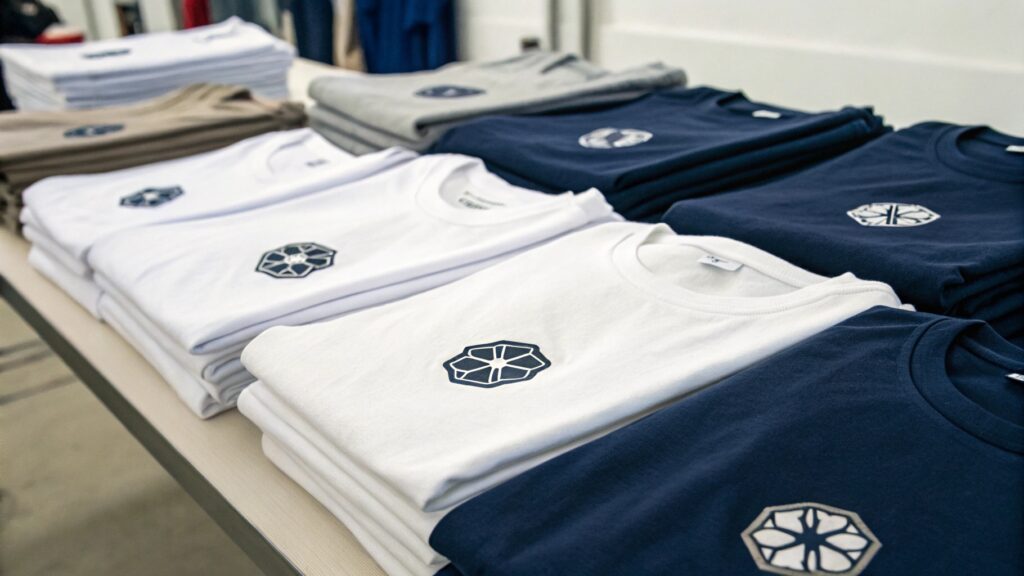
Getting high-quality logo t-shirts in bulk requires you to treat the process as a supply chain decision, not just a transaction. Success depends on the supplier's machine capacity, digitizing quality, and their ability to ensure thread consistency and fabric handling across all units at scale.
 ![]()
![]()
I have seen countless clients treat logo customization as the easiest part of the order. They think they just send a file and the shirt comes back perfect. That is simply not true. My time working in the factory showed me that translating a digital logo into physical thread is a mechanical art. If the supplier does not respect the machine, the fabric, and the thread, your brand logo suffers. I want to share my factory insights on why bulk customization is tricky. I want you to start thinking like a production manager to ensure your next 500 shirts look sharp and consistent.
Why Is Custom Embroidery So Expensive?
Are you wondering why embroidery costs more than simple screen printing? This price difference often feels confusing. Understanding the process will show you where the value is added.
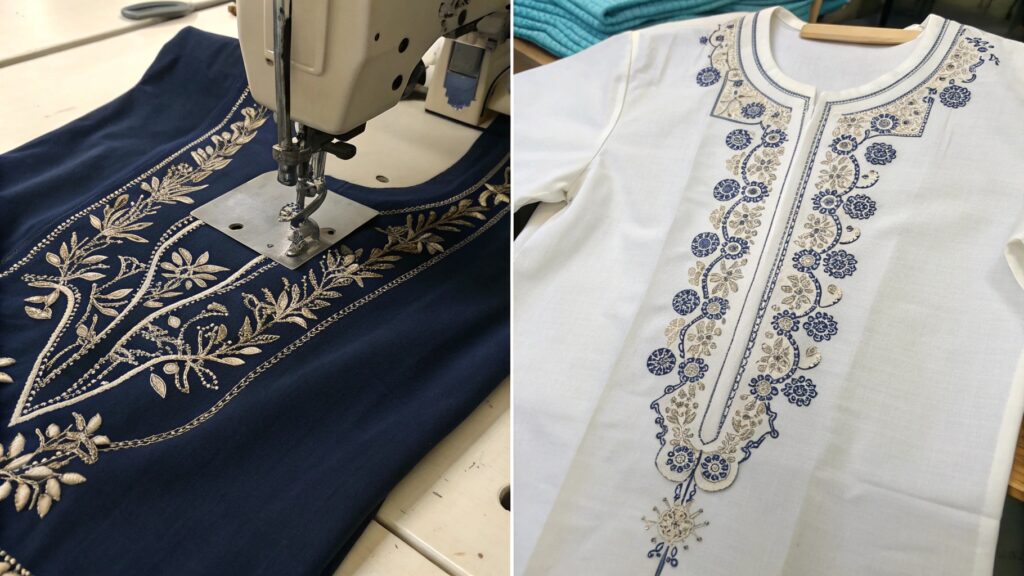
Custom embroidery is expensive because it requires a costly setup process called digitizing, which translates the logo into stitch commands. It also demands specialized, multi-head machinery and much slower production times per unit compared to printing. The cost reflects the precision, durability, and premium perceived value of the final product.
 ![]()
![]()
Most people approach bulk embroidered T-shirts1 with a “transaction mindset”—pick a supplier, send a logo, get the shirts. But in reality, successful bulk embroidery has become a supply chain decision, not a simple customization step. This is a key reason why the price is higher. The brands that consistently get sharp, durable logo embroidery do not just compare prices. They evaluate the entire production flow. They check for thread compatibility with the fabric. They look at the machine's fabric tension handling. They also assess the supplier’s in-house digitizing quality. A truly reliable bulk order starts with understanding that embroidery is a mechanical art. Your logo is not merely stitched on. It is translated into a thread-based structure. That process, called digitizing, requires a skilled technician and specialized software. This one-time setup fee is a major part of the initial cost, and it ensures the logo looks exactly right on the fabric. That means you should always ask for a stitch-test sample before placing a large order. You should also pay special attention to how your logo behaves on different GSM fabrics2. If the fabric is too light, the dense stitching can pucker or wrinkle the material. The supplier must manage this tension correctly. These layers of precision engineering are what you pay for, and they are essential for a long-lasting, high-quality result that reinforces your brand's commitment to detail.
Hidden Costs and Value in Custom Embroidery
| Cost Factor | Explanation of Expense | Value Proposition to Brand |
|---|---|---|
| Digitizing Fee | One-time file conversion into stitch patterns | Guarantees logo integrity and prevents stitching errors |
| Material/Thread | High-quality rayon or polyester threads | Superior colorfastness and durability after washing |
| Machine Time | Slower, more precise process than printing | Premium, dimensional texture and high perceived value |
How much does it cost to produce 500 printed t-shirts?
Do you feel lost trying to budget for a large t-shirt order? The wide price range for 500 shirts can be confusing. You must know the factors that drive the final quote.
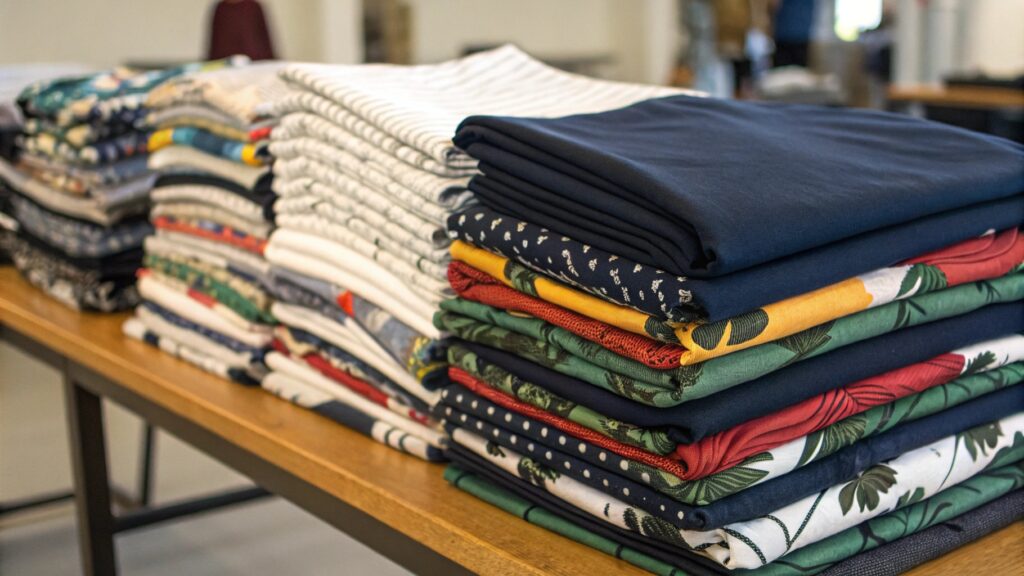
The cost for 500 printed t-shirts generally ranges from \$6 to \$15 per shirt, depending on the t-shirt blank's quality, the number of colors in the design, and the print location. High-volume orders use screen printing, which reduces the per-unit cost significantly but requires careful management of the setup fees for each color used.
 ![]()
![]()
When you order 500 t-shirts, the cost per unit drops because the fixed setup costs are spread out over a large volume. This is called economy of scale. However, several variables still impact that final price per shirt. The choice of the t-shirt blank is the first factor. A basic, thin cotton shirt costs less than a soft, ring-spun, or organic cotton shirt. Choosing a high-quality base garment immediately increases your cost but also signals higher brand quality. The complexity of your design is the next major cost driver, especially with screen printing. Screen printing requires a separate screen for every color in your logo. A two-color logo needs two screens, which means two separate setup fees and two passes on the machine. A six-color logo is much more expensive and complex to register correctly. This is why simplifying your design to one or two colors is the fastest way to save money on a bulk order. Another overlooked factor is production capacity and machine type. A supplier with modern, multi-head embroidery or automatic screen printing machines can ensure consistency across hundreds of units. Small workshops may introduce subtle variations in thread density or color shade. Bulk buyers who treat their customization vendors like manufacturing partners—sharing brand guidelines and placement rules—tend to get far better results and predictable costs. The final price always reflects the sum of the garment, the color count, and the setup labor.
Key Factors Affecting the Cost Per Unit (500 Shirts)
| Factor | Effect on Price (Per Unit) | Cost Management Tip |
|---|---|---|
| Garment Type (Blank) | Higher cost for premium, organic, or blended fabrics | Choose a medium-weight 100% cotton for best value |
| Number of Colors | Each color adds a setup fee and time to print | Limit the design to 1 or 2 spot colors for efficiency |
| Print Location | Printing on sleeves or multiple areas adds cost | Stick to a single, large print on the front or back |
How much does it cost to have a logo embroidered on a shirt?
Do you need a fast estimate for a small embroidered logo on a chest pocket? The per-unit cost changes a lot between orders. You must know what the supplier is calculating.
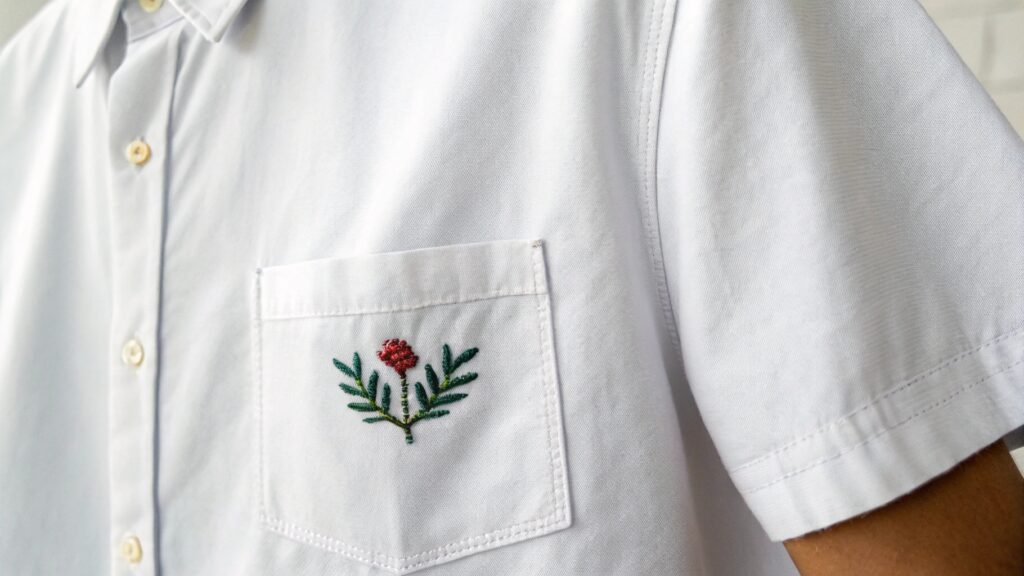
For a typical small chest logo (under 10,000 stitches), the embroidery cost is usually \$4 to \$8 per unit in a bulk order, plus a one-time \$40 to \$80 digitizing fee. The final cost is determined by the stitch count of the logo, the total quantity ordered, and the supplier's setup efficiency.
 ![]()
![]()
The cost of an embroidered3 logo is highly specific to the logo itself. It is not calculated by size in inches, but by the stitch count. Every supplier uses software to count how many needle penetrations are needed to create your design. A simple text logo might only be 5,000 stitches. A detailed crest with shading and multiple colors could easily be 20,000 stitches or more. More stitches mean more thread, more time on the machine, and higher cost. The initial digitizing fee is a fixed charge you pay upfront to convert your image file into a stitch file. This charge is critical because it ensures the machine reads the design correctly. Never bypass this step. If you use a poor digitizing file, the logo will look messy and unprofessional on the shirt. Another overlooked factor is production capacity and machine type. A supplier with multi-head embroidery machines can ensure consistency across hundreds of units, while small workshops may introduce subtle variations in thread density or color shade. Bulk buyers who treat embroidery vendors like manufacturing partners—sharing brand guidelines, PMS thread requirements, and placement rules—tend to get far better results. In short, getting custom embroidered T-shirts in bulk is about engineering consistency at scale. When you choose a supplier who understands both craftsmanship and production efficiency, your logo becomes more than decoration. It becomes a physical asset that reinforces your brand identity with every wear.
Variables Impacting Per-Unit Embroidery Cost
| Cost Variable | Low-Cost Scenario | High-Cost Scenario |
|---|---|---|
| Stitch Count | Under 5,000 (simple text) | Over 15,000 (detailed graphic) |
| Order Quantity | 500+ units (maximum economy of scale) | 50-100 units (high setup cost per piece) |
| Thread Colors | 1 to 2 colors | 6 or more colors (slows down machine time) |
Conclusion
Finding the right partner is not luck; it is a strategy. Choose a supplier with deep knowledge, full control, and clear communication. This will elevate your brand and remove your stress.
-
Explore this resource to learn effective strategies for bulk T-shirt orders, ensuring quality and cost efficiency. ↩
-
Understand how GSM affects embroidery quality and the choice of materials. ↩
-
Explore this resource to understand how embroidered logos enhance brand identity and durability, making them a valuable investment. ↩