My Steel Bottle Tastes Like Metal: Is It Safe to Put Acidic Lemon Water in My Stainless Steel Bottle?
You love drinking lemon water for health, but you fear the acidity will damage your stainless steel bottle or leach metal into your drink. This concern makes you hesitate. You need clear facts.
I believe it is safe to drink lemon water from high-quality food-grade stainless steel (304 or 316 grade) because the material naturally resists corrosion. However, you must rinse your bottle regularly and choose the right steel to avoid metallic aftertastes and maintain the protective layer.
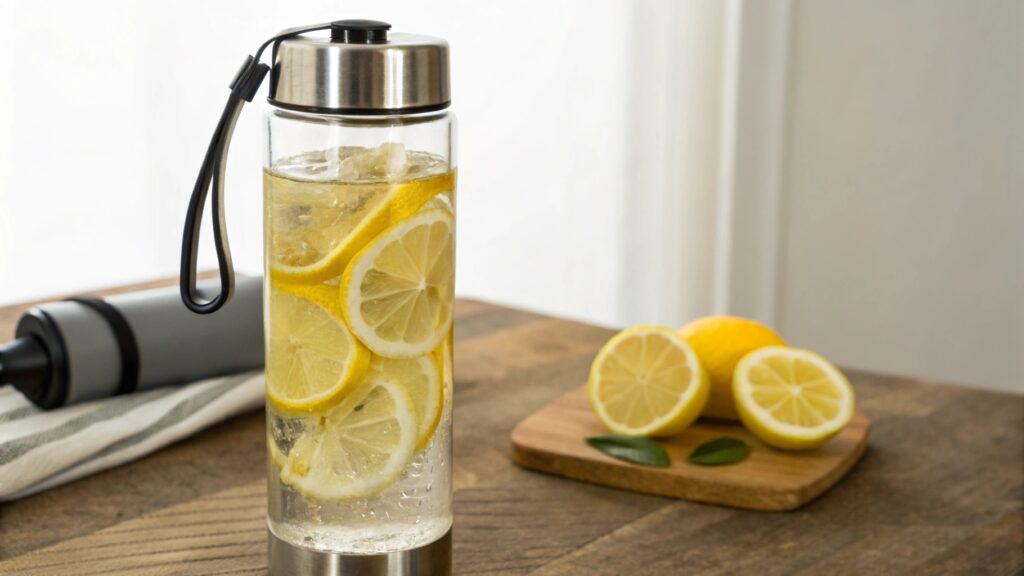
Many people worry that the acidity of lemon water might "eat through" a stainless steel bottle. This is a common fear, but the truth is more nuanced. High-quality stainless steel is specially engineered to resist corrosion, even from acidic drinks. I believe safety is not just about material reaction. It is also about usage habits. Stainless steel does not fail because of lemon water; it fails when we treat a durable material as if it is maintenance-free. I want to share my view on how to safely enjoy your citrus hydration. I will show you how to maintain the freshness of lemon without the lingering tang of metal.
What is the best container for lemon water?
You need a container that will not react with the acid in lemon water, ensuring the water tastes clean and is safe. You need a trusted material choice. I can recommend the best.
The best containers for lemon water are high-grade glass bottles, as they are completely inert and non-reactive to acid, or high-quality, food-grade stainless steel1 bottles (304 or 316 grade) that are designed with a durable, anti-corrosive layer.
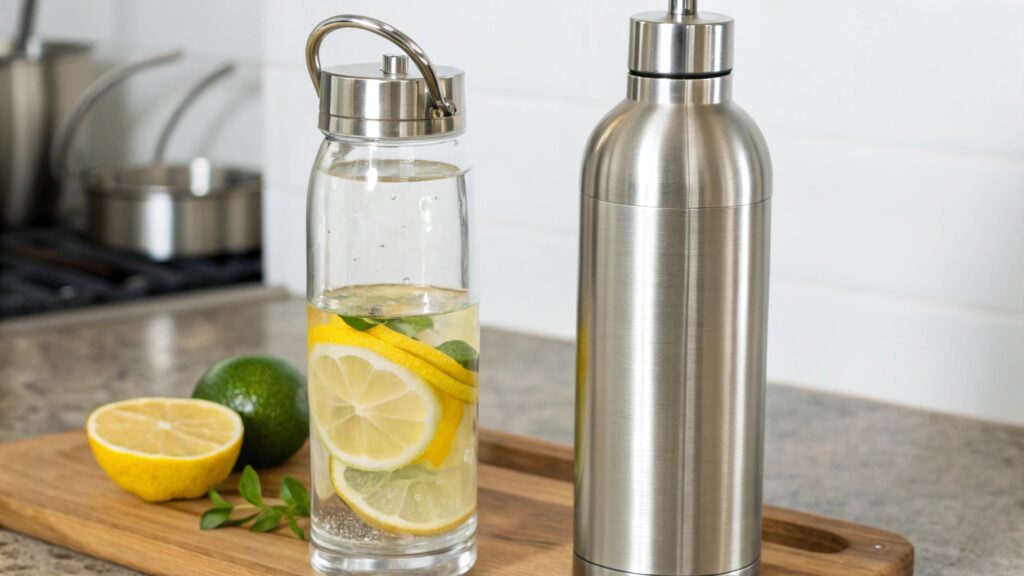
When dealing with any acidic beverage like lemon water, the primary concern is material reaction. I believe the best container for pure taste and zero reaction is glass. Glass is completely inert. It does not react with acid at all, ensuring the lemon water tastes exactly as it should. It is easy to clean and allows you to visually check for cleanliness. However, glass is fragile and less practical for travel.
For practicality and durability, food-grade stainless steel is the next best choice, provided you choose the right quality. The best quality is $304$ or $316$ stainless steel. These grades contain chromium, which forms an invisible, self-repairing oxide layer on the surface. This layer naturally resists corrosion, even when exposed to acidic drinks. This is why stainless steel has become the gold standard. I advise people to only use stainless steel bottles that are clearly marked as food-grade. If you use a bottle made from a lower-grade steel, you run a higher risk of corrosion and a metallic aftertaste. A well-chosen steel bottle with proper care can hold lemon water safely and effectively. [Personal Story Placeholder: I stopped using ceramic mugs for my daily lemon tea because I noticed the acid was starting to leave hairline cracks in the glaze. Switching to a high-grade stainless steel tumbler for that drink solved the problem entirely, ensuring the purity of the taste.]
Container Suitability for Lemon Water
| Container Material | Acid Reactivity Risk | Taste Purity Rating |
|---|---|---|
| Glass | None (Completely Inert) | Excellent (Zero taste change) |
| Stainless Steel (304/316) | Very Low (Chromium barrier resists corrosion) | Good (Must be cleaned regularly to prevent metallic tang) |
| Aluminum | High (Requires a plastic liner; risk if liner is scratched) | Poor (Often affects taste) |
Is it safe to drink lemon water out of stainless steel?
You fear that the acid will break down the metal, potentially causing health risks. This concern stops you from hydrating. I can provide assurance and important caveats.
Yes, it is safe to drink lemon water from stainless steel for daily use. High-quality 304/316 stainless steel is designed to resist corrosion. Safety concerns arise only when the acidic mixture is left sitting for long periods (over 24 hours), which can weaken the protective layer and lead to residue buildup.
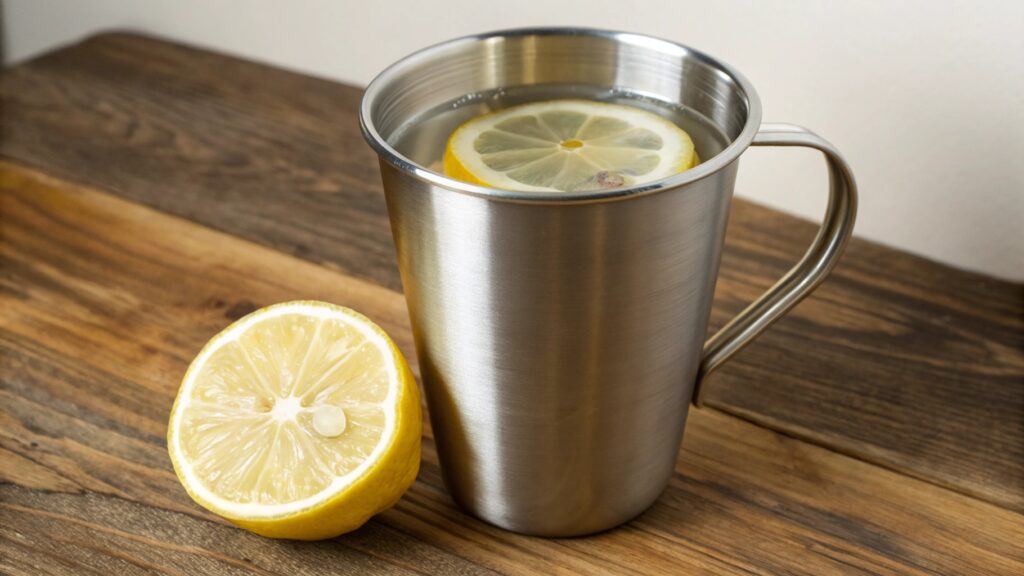
For regular, daily consumption, drinking lemon water from a good stainless steel bottle is perfectly safe. The key to its safety lies in the chromium oxide layer. This protective layer on $304$ and $316$ steel is highly resilient. It is the same material used in commercial food processing equipment that handles acidic foods all the time. However, what most users overlook is that safety is also about usage habits. The danger comes from prolonged exposure.
Letting the lemon water sit in the bottle for $24$ to $48$ hours can start to weaken that protective layer. This may not cause a health risk, but it can introduce a subtle metallic aftertaste. More importantly, leaving any organic material (like lemon pulp or sugar) in the bottle for that long creates a huge risk of microbial buildup—mold or bacteria. Stainless steel doesn't fail because of lemon water; it fails when we treat a durable material2 as if it's maintenance-free. I advise you to enjoy your lemon water, but treat the bottle like a perishable container. Rinse it out completely and air-dry it at the end of every day. If you want the freshness of lemon without the lingering tang of metal, proper cleaning is non-negotiable.
Safety and Usage Guidelines
| Usage Habit | Risk Level | Recommended Action |
|---|---|---|
| Daily Drinking | Low Risk | Rinse thoroughly every evening and air dry. |
| Sitting Overnight | Moderate Risk | Rinse immediately in the morning; potential for slight metallic taste. |
| Sitting 24+ Hours | High Risk | Not recommended; potential for microbial growth and metallic taste. |
| Choosing Quality | Low-grade steel increases risk. | Ensure your bottle is marked as 304 or 316 food-grade. |
What is the healthiest container to store water in?
You want to be sure you are using the optimal container for storing plain water long-term, maximizing both health and purity. You need the single best option. I can name it.
The healthiest container to store pure water in is glass, followed closely by high-grade stainless steel. Both materials are non-leaching and do not contain endocrine-disrupting chemicals found in some plastics, ensuring the water's chemical composition remains unchanged.
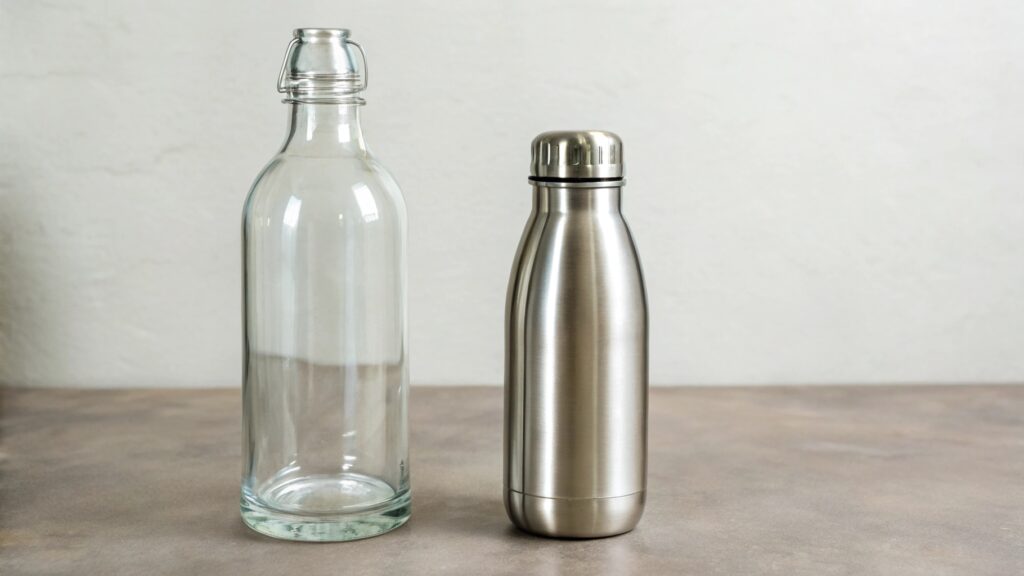
When the goal is long-term storage of plain water, the healthiest container3 must be one that is entirely non-reactive and stable. Glass is the absolute healthiest container for storage. It is chemically stable and does not interact with water in any way, ensuring the purest taste and composition, even over weeks or months. This is why glass is used in laboratories. You need not worry about any chemicals leaching out.
High-grade stainless steel ($304$ or $316$) is the second-healthiest option and is superior to almost all plastics. Its stability and non-porous nature make it excellent for short to medium-term storage. The advantage of steel over glass is its ability to block light and maintain temperature, which can be useful. I strongly advise against storing water long-term in any plastic container that is not explicitly guaranteed to be BPA-free. Older plastics, or those not rated for food contact, can degrade and potentially leach chemicals over time, especially if exposed to heat or direct sunlight. Ultimately, the healthiest container is the one that allows you to store and drink water without fear of chemical contamination. This represents a mindful choice that supports health.
Healthiest Storage Options
| Material | Health Benefit | Best for Storage Time |
|---|---|---|
| Glass | Chemically inert; zero leaching risk. | Excellent for long-term storage (days/weeks). |
| Stainless Steel (304/316) | Non-porous and highly stable. | Excellent for short-term and daily use. |
| Ceramics (Glazed) | Inert, if glaze is non-toxic. | Good, but check the safety of the glaze ingredients. |
Conclusion
Enjoy your lemon water safely in a $304$ or $316$ stainless steel bottle. Choose high-grade material, and remember to rinse and air-dry the bottle every day to prevent any metallic taste or corrosion.