My Steel Bottle Is Rusting: How Can I Make My Stainless Steel Water Bottle Last a Lifetime?
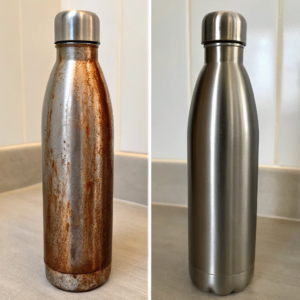
You bought a stainless steel bottle assuming it was completely rust-proof, but you saw rust spots. This feels like a product flaw. You need to know the truth.
I believe stainless steel bottles resist rust because of their chromium content, but they are not immune. A high-quality bottle lasts for years when you choose superior grades like 316, avoid acidic liquids, and practice proper maintenance to prevent moisture from weakening the protective barrier.
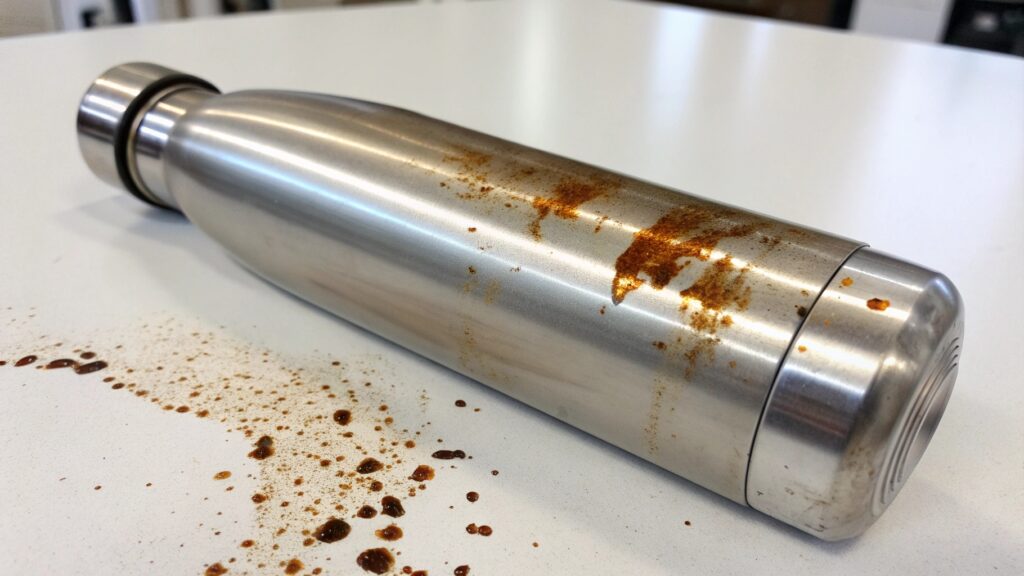
Most people buy a stainless steel water bottle believing it is completely rust-proof, but that idea is only half true. The steel resists rust because its chromium content forms a protective, invisible barrier on the surface. But environmental wear and acidic beverages can weaken that layer. I have learned that rust is not a flaw of the material. It is a lesson in understanding how materials behave in the real world. I want to share my knowledge on how to choose and care for your bottle. I will show you how to make your durable bottle last.
What are the advantages of a stainless steel water bottle?
You see many bottle options, but you need clear reasons why stainless steel is the best choice for your health and lifestyle. This justification is important. I can list the advantages.
The main advantages of a stainless steel water bottle are its superior durability and resistance to breakage, its ability to maintain drink temperature for hours, and its non-leaching, non-porous surface that ensures pure water taste and high health safety.
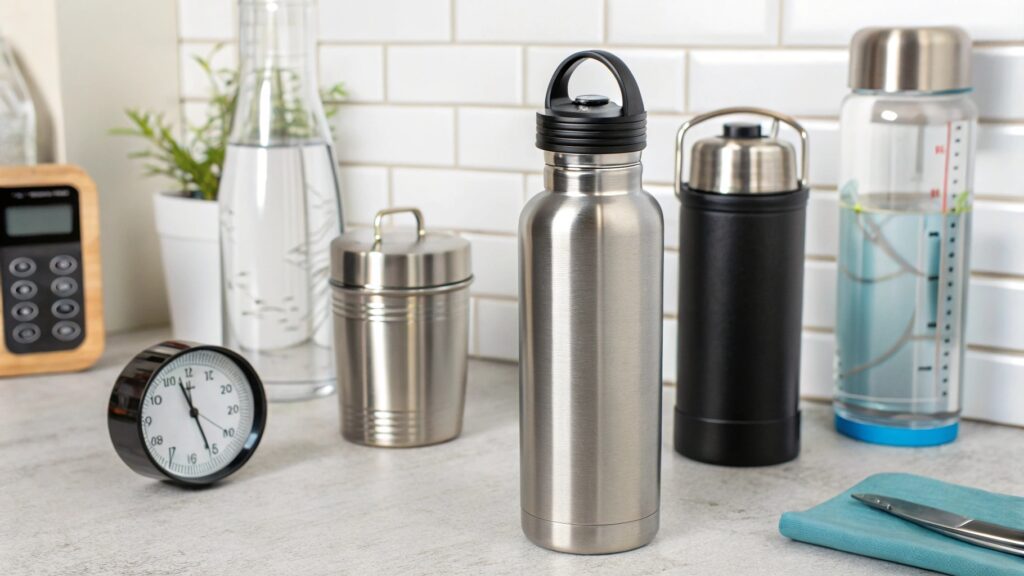
Stainless steel has become the gold standard for reusable bottles because its advantages are very clear. The first major advantage is durability. Stainless steel resists wear, bumps, and drops much better than glass or plastic. This means the bottle is built to last for years, supporting the philosophy of reuse and mindful consumption. This is important for reducing waste. The second major advantage is temperature retention. Most quality stainless steel bottles use double-wall vacuum insulation. This technology keeps drinks cold for up to $24$ hours and hot for up to $12$ hours. This makes the bottle highly functional for work, travel, or sports.
The third advantage is health and purity. Stainless steel is non-porous and chemically inert. This means it does not absorb or retain flavors from previous drinks, and it does not leach harmful chemicals like BPA or phthalates into your water, which can happen with certain plastics. For this reason, stainless steel is a healthier choice. I always recommend looking for $18/8$ food-grade stainless steel (sometimes written as $304$ grade). This number indicates a minimum of $18\%$ chromium and $8\%$ nickel, which ensures strong corrosion resistance and high material quality. This is the quality you want. This durability1 and purity are the two main reasons why this material has dominated the conscious consumer market.
Key Performance Advantages
| Advantage Category | Specific Benefit Provided | Impact on User Experience |
|---|---|---|
| Purity/Health | Non-leaching, non-porous2 material. | Water always tastes clean and free of residual flavors. |
| Durability/Longevity | Highly resistant to dents, drops, and breakage. | The bottle becomes a long-term, sustainable investment. |
| Functionality | Excellent temperature retention (hot/cold). | Supports hydration goals throughout the day regardless of external temperature. |
How long do stainless steel water bottles last?
You want to know the expected lifespan of your bottle before it needs replacing. This affects your investment decision. I can explain the factors that impact longevity.
A high-quality stainless steel water bottle, especially those made from grades 304 or 316, should last between 5 to 10 years or even longer with proper maintenance. Longevity is reduced by repeated exposure to acidic liquids, deep scratching, and neglecting regular, thorough cleaning.
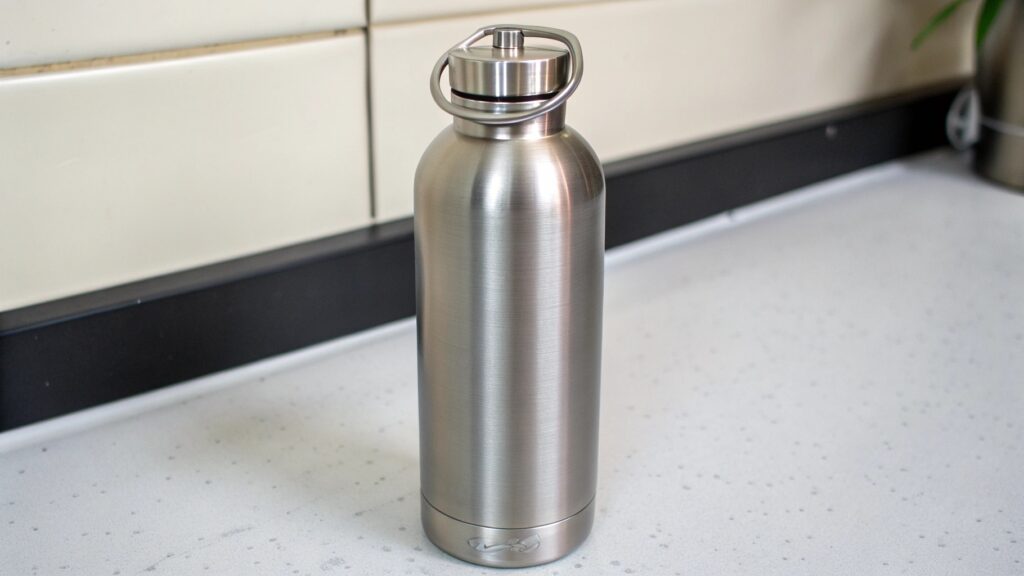
I believe a well-made stainless steel bottle is designed to be a lifetime product. The average life span for a high-quality model is easily $5$ to $10$ years or more. But the true longevity depends on two things: the material grade and your maintenance routine. Experts explain that higher-grade stainless steels like $316$ or $18/10$ (which is a form of $304$) offer stronger corrosion resistance. This is due to added nickel and molybdenum content. These grades are much more durable than lower-grade $201$ steel bottles. A better steel grade means a longer life.
However, even the best steel can suffer if the protective barrier (the chromium oxide layer) is weakened. This layer can be damaged by two main things: acidic drinks like highly concentrated coffee or tea left for long periods, or deep scratches on the inside surface. These create weak points where rust spots (pitting) can appear. The presence of rust is not automatically a sign of a "bad bottle." It is a reminder that stainless steel is resistant, not immune. Proper care, especially avoiding the use of abrasive cleaners, ensures the protective layer remains intact. The simple reality is that a bottle with the right steel grade and proper care becomes a durable, long-term asset.
Factors Affecting Bottle Lifespan
| Factor | Impact on Longevity | Recommended Action |
|---|---|---|
| Steel Grade | Higher grades ($316$) resist corrosion better. | Always purchase $18/8$ (304) grade or higher for best life. |
| Internal Damage | Scratches or pitting weaken the protective layer. | Use soft brushes and avoid metal stirrers inside the bottle. |
| Acidity Exposure | Acidic liquids (citrus, vinegar) degrade the chromium oxide layer. | Do not store highly acidic drinks for extended periods. |
How often do you need to wash your stainless steel water bottle?
You are unsure about the ideal cleaning schedule for your bottle. Improper cleaning can lead to mold, odor, or even rust. You need a clear routine. I can provide the guidelines.
You should wash your stainless steel water bottle and its lid thoroughly every day, especially if you use it for drinks other than pure water. Proper cleaning prevents moisture and acidic residue from getting trapped in the seams, which is the main cause of rust and odor.
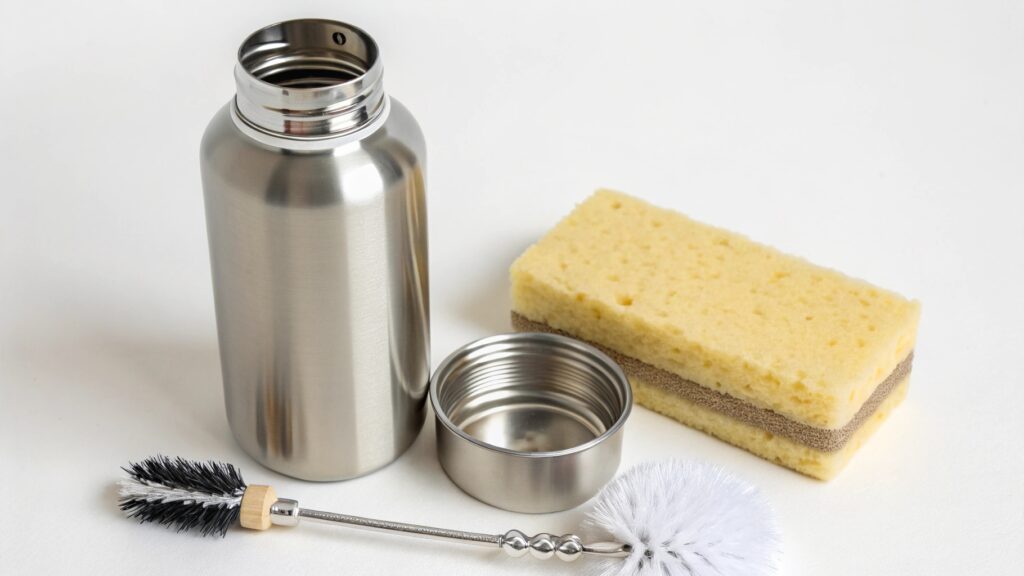
Washing your stainless steel bottle is the most important part of maintenance. You must wash it and its lid thoroughly every single day. If you use the bottle only for pure water, a quick rinse might suffice, but I recommend a full wash daily. If you use it for anything else—tea, coffee, juice, or protein shakes—a full wash with hot, soapy water is mandatory. This prevents residue buildup. Residue buildup is the main cause of bad odors, mold growth, and rust formation. Guides on bottle maintenance emphasize that even quality stainless steel can rust if not cleaned properly. This is especially true when moisture and residue from acidic drinks are trapped in the seams of the lid or the bottom of the bottle.
To wash the bottle, use a soft bottle brush and mild dish soap. Never use abrasive cleaning tools like steel wool, as these can scratch the interior surface and weaken the protective chromium layer. For deep cleaning, you can use a solution of equal parts white vinegar and water once a week. Fill the bottle and let it soak for $15$ to $20$ minutes. Vinegar is acidic, so you must rinse the bottle out immediately and thoroughly with clean water after soaking. The most important step is to dry the bottle completely. Do not seal the lid onto the bottle while it is damp. Allow the bottle and the lid to air dry separately overnight to ensure no moisture is trapped in the gasket or seams.
Daily Cleaning Routine
| Step | Action Required | Why It Is Important |
|---|---|---|
| Daily Wash | Use hot water and mild dish soap with a soft bottle brush3. | Removes daily residue and prevents mold and odor formation. |
| Rinse Thoroughly | Rinse all seams and threads of the lid very well. | Prevents soap or drink residue from weakening the steel's barrier. |
| Air Dry Completely | Leave the bottle and lid separated to air dry overnight. | Ensures no trapped moisture, which is the main cause of rust (pitting). |
| Deep Clean (Weekly) | Soak briefly with a diluted white vinegar solution. | Removes mineral deposits and stubborn stains, then rinse immediately. |
Conclusion
Your stainless steel bottle is highly resistant to rust and built to last. Choose a high grade, avoid acidic liquids, and wash and dry it thoroughly every day to ensure a lifetime of pure water.