My Enamel Pin Is Too Expensive: Why Should I Spend Money on a Piece of Tiny Art?
You see high prices for small enamel pins online and wonder if they are worth the money. This makes you hesitate to start collecting. You need to know the true value.
I believe enamel pins are worth the investment because they are meaningful micro-artworks where authenticity, craftsmanship, and limited availability drive the price. They are not just accessories, but a collectible form of identity and creative support.
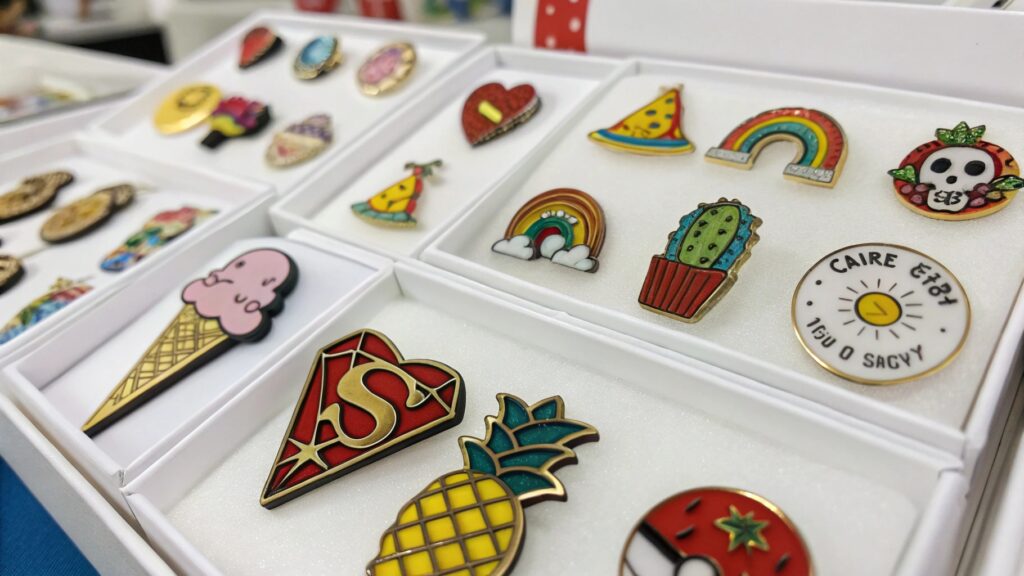
Finding the right place to buy enamel pins online is not just about choosing a marketplace. It is about discovering communities and creators whose designs tell stories that resonate with you. I have seen that the best platforms are not the biggest ones, but the ones where creativity thrives. Enamel pin shopping today feels less like a transaction and more like curating a tiny art collection. I want to share my view on the value of these small items. I will show you why the cost is justified and how to find pins that are truly meaningful.
Why are enamel pins so expensive?
You feel that a pin is a simple product, so the high price seems unfair. This misunderstanding of the production process makes you hesitate to buy. I can explain the cost.
Enamel pins are expensive because their cost is driven by high fixed setup fees (molding, tooling), the manual labor required for filling and polishing, the choice of premium materials (hard enamel1, specialized plating), and the low-volume, limited-run nature of many collectible designs.
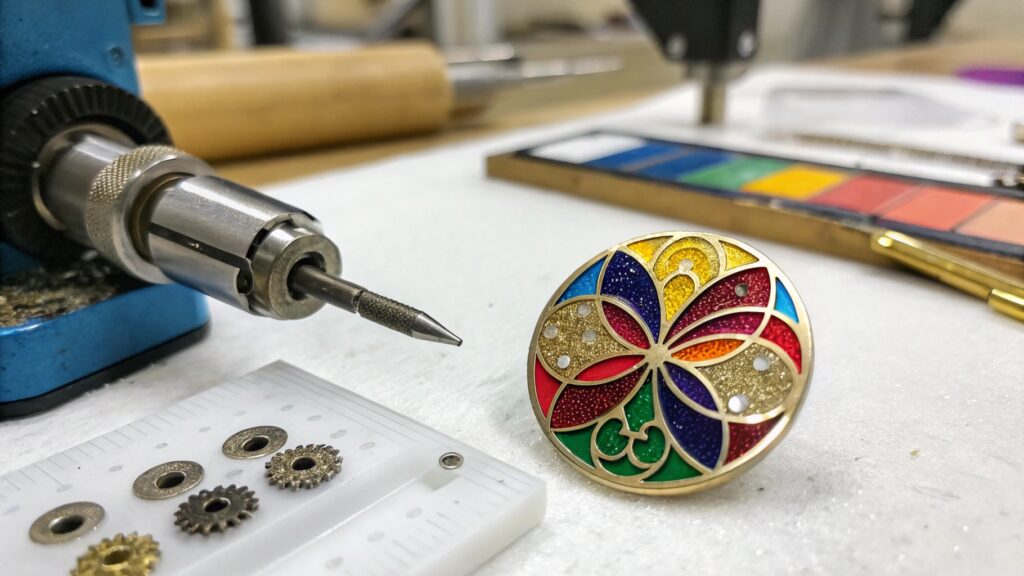
The price of an enamel pin is not just based on the size of the final product. It is heavily influenced by the fixed manufacturing costs. I see three main reasons why a quality pin costs more. The first is tooling and molding. Every custom pin design requires a unique steel mold to be created. This is a one-time fixed cost that can be significant. If a creator orders only $100$ pins, that mold cost is spread across those $100$ pins, making the unit price high. This is why limited-run pins are often more expensive.
The second reason is manual labor. Most quality enamel pins are hand-filled with color, especially soft enamel pins. Hard enamel pins require multiple polishing stages and baking at high temperatures. These processes are time-consuming and labor-intensive, which increases the unit cost. The third reason is material quality. Makers use expensive options like specialized plating (e.g., black nickel, antique gold) and secure, premium backings (like deluxe locking clasps) to ensure the pins last for years. I have found that cheap pins often use low-quality metal that breaks or fades quickly. You are paying for a collectible item that will last, not a disposable accessory. The best platforms ensure your pins feel substantial—something you can keep for years rather than months.
Factors Driving Pin Cost
| Cost Factor | How It Increases Unit Price | Consumer Value Gained |
|---|---|---|
| Tooling/Molding | High fixed setup cost; higher unit price for low quantity. | Ensures unique design and shape fidelity. |
| Manual Labor | Hand-filling and extensive polishing required. | Guarantees clean lines, vibrant colors, and quality finish. |
| Material | Use of premium metal plating and locking clutch backings. | Provides durability, longevity, and a high-end feel. |
| Authenticity | Low-volume, supporting independent artists. | You own a unique, limited-edition micro-artwork. |
Do enamel pins scratch easily?
You worry that your new pins will scratch and lose their value quickly, especially since you plan to wear them often. This makes you hesitant to wear them. I can explain the durability.
Soft enamel pins are more prone to scratching because the color sits recessed below the raised metal lines. Hard enamel pins are much more scratch-resistant because the entire surface is polished smooth and flat, offering a durable, prestige finish.
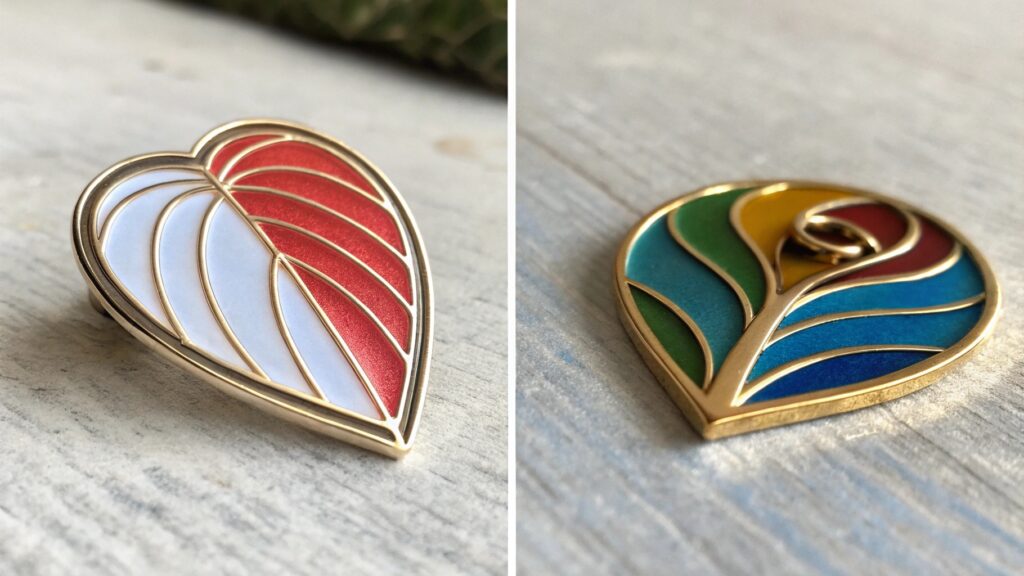
Whether an enamel pin scratches easily depends entirely on the type of enamel used. The key difference is the surface texture. Soft enamel pins have raised metal lines that define the design, and the colored enamel sits slightly lower. This gives the pin texture and depth. Because the color is recessed, the raised metal lines take the brunt of any contact, but if the pin is rubbed against a hard surface, the recessed enamel itself can be scratched.
Hard enamel pins are far more scratch-resistant. During production, the enamel is filled up to the top of the metal lines, and the entire surface is then ground down and polished until it is completely smooth and flat. This creates a durable, polished surface that is much harder to scratch. However, even hard enamel pins can be scratched by sharp objects or abrasive rubbing. I advise collectors to choose hard enamel for pins they plan to wear every day on items like backpacks or jackets where they will face heavy use. For display pins or pins worn on softer clothing like a lanyard, soft enamel2 is fine. Proper storage—pins should be kept on a cork board or display banner, not loosely tossed in a container—is the best way to prevent scratching.
Enamel Type and Scratch Resistance
| Enamel Type | Surface Texture | Scratch Resistance | Recommended Use |
|---|---|---|---|
| Hard Enamel | Smooth, flat, and highly polished. | High resistance; durable for daily wear. | Backpacks, jackets, high-contact areas. |
| Soft Enamel | Raised metal lines, recessed color layer. | Moderate resistance; prone to minor scratches if rubbed. | Display boards, lanyards, casual wear. |
Can I order custom enamel pins?
You want to turn your own design into a pin but do not know the process or the best type of supplier. This limits your creative projects. I can explain how to order.
Yes, you can order custom enamel pins by submitting a vector-based design to a specialty custom manufacturer. You must first choose your enamel type (hard or soft), metal plating finish, and a secure backing style, and be prepared to meet the Minimum Order Quantity (MOQ).
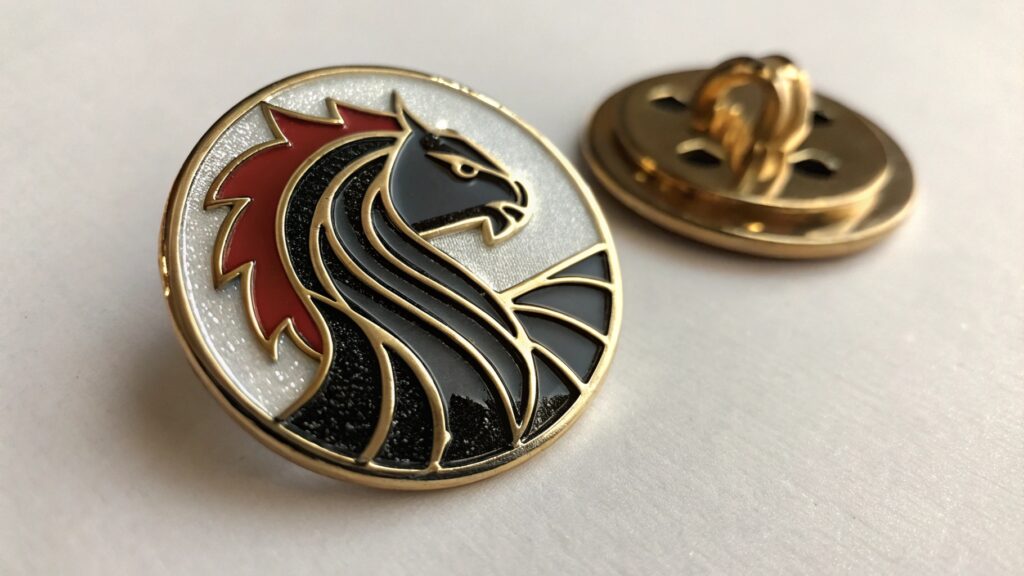
Ordering your own custom enamel pins is a very rewarding process, but it requires technical preparation. The first step is to finalize your artwork. Your design must be submitted as a vector file (.AI or .EPS). This allows the manufacturer to separate the colors and create the metal mold tooling accurately. You cannot use a simple JPG file. The next crucial step is choosing your specialty custom manufacturer. Large marketplaces offer variety, but specialty pin websites bring quality control. They understand plating, polishing, and enamel depth in a way that generic stores rarely do.
You must then make several key choices:
- Enamel Type: Will you choose hard enamel for a smooth, high-end, legacy look, or soft enamel for a textured, vibrant, and slightly more affordable pin?
- Plating: Do you want standard nickel, gold, or a unique matte black or antique finish?
- Backing: Do you need a standard rubber clutch for cost, or a secure, deluxe locking clutch to ensure the pin never falls off?
Be aware of the Minimum Order Quantity (MOQ), which is usually $100$ to $200$ pieces. The final price is determined by the size and complexity of your design. The right supplier will provide a digital proof showing the metal lines and color separation before production starts. This ensures your pins feel substantial3 and reflect your original vision.
Custom Pin Ordering Checklist
| Step | Requirement | Purpose |
|---|---|---|
| Design Submission | Vector File (.AI, .EPS) | Essential for creating the metal mold tool. |
| Enamel Choice | Hard vs. Soft Enamel | Determines final look, texture, and durability. |
| MOQ Acceptance | Must agree to the minimum order quantity (usually 100+). | Controls the unit cost by spreading the mold fee. |
| Proofing | Supplier provides a digital or physical sample photo. | Verifies design accuracy before mass production. |
Conclusion
Enamel pins are not expensive; they are collectible micro-artworks. Focus on supporting independent creators who prioritize quality and artistry, and your pins will become meaningful, long-lasting expressions of identity.