How Do You Start a Customised Gift Business That Actually Scales?
Do you want to start a business but fear high inventory costs? Many entrepreneurs fail because they try to offer too many options. You need a smarter way to grow your brand.
You start a customised gift business by mastering controlled personalisation. Pick a tight niche, like corporate onboarding kits, and design base products that are easy to customise. Test demand with mockups and preorders before you buy stock. This keeps your margins high and your risk very low.
I have spent many years in the printing and gifting industry. I started in a small factory and saw how much money companies waste on the wrong products. Many people think they need a thousand different items to be successful. I learned that the opposite is true. You need a few great items and a very strong system. If you want to build a business that makes money and keeps clients happy, you must change your focus. Please read on to learn how I built Latitude and how you can do the same.
Is Gifting Business Profitable?
Many people think gifting is just a small hobby for the holidays. They worry that the margins are too thin to make a real living. This fear stops many great ideas from even starting.
The gifting business is very profitable if you focus on the corporate sector1 and repeat orders. The global market is growing by billions of dollars every year. By using high-quality base products and efficient systems, you can achieve high profit margins while providing great value to your clients.

The Profit is in the Process
I often tell my clients that the real money is not in the product itself. It is in the "moat" you build around your service. In my experience, profitability comes from operational discipline. If you make a mistake on a logo, you lose your profit for that whole order. That is why I use standardized artwork templates. These templates prevent errors before they happen. I remember a time when a simple spelling error on 200 mugs cost a small business their entire monthly profit. I don't want that to happen to you. You must see every gift as a system. This system includes the base item, the printing method, the packaging, and the delivery.
Scaling Without Losing the Touch
To make a good profit, you need to scale. But if you scale too fast without a plan, you lose the "personal touch" that customers pay for. I suggest starting with a small set of "Base SKUs." These are high-quality items that you know well. When you master these few items, your speed increases. Faster turnaround times mean you can take more orders. Clients like Jacky are always looking for a one-stop solution. They want someone who understands branding and can deliver fast. If you can provide that, they will pay a premium price.
Factors That Drive Profit
| Profit Factor | Low Margin Strategy | High Margin Strategy |
|---|---|---|
| Product Range | Hundreds of cheap items | A few premium, customisable items |
| Customer Type | One-time personal buyers | Repeat corporate clients |
| Workflow | Manual and messy | Standardised and automated |
| Error Rate | High (kills profit) | Low (protects profit) |
I believe that the real moat is your experience and reliability. When you show a client that you can handle their project from start to finish without any stress, you become a partner. Partners get paid more than simple vendors. You should focus on building long-term relationships. This is how I grew Latitude from a small idea into a trusted brand.
What Are the 5 Categories for Gifts?
Many new business owners get overwhelmed because they do not know what to sell. They try to sell everything to everyone. This makes their marketing weak and their brand confusing.
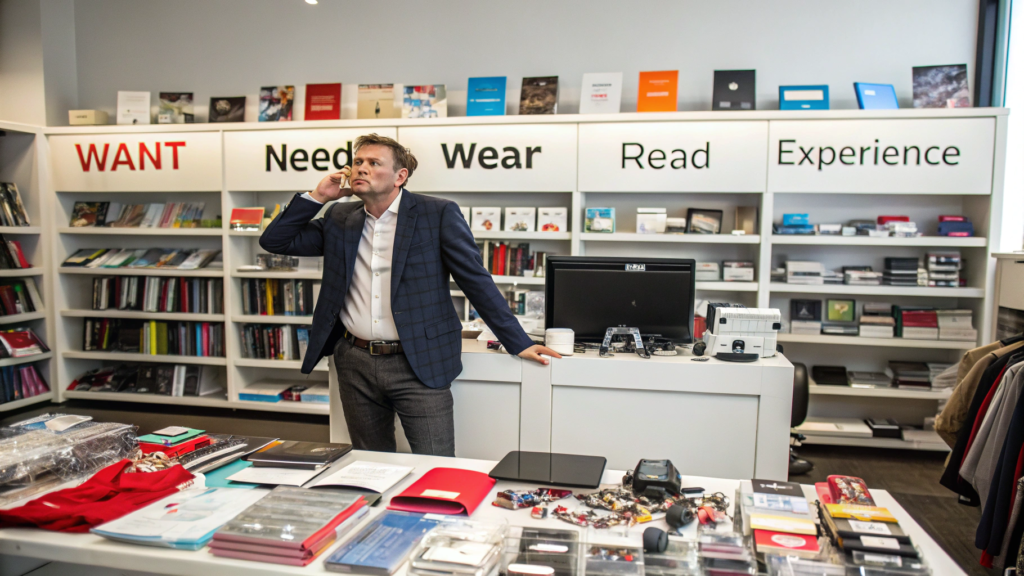
The five main categories for gifts are things to Want, Need, Wear, Read, and Experience. This framework is often called the "5 Gift Rule." It helps you categorize your products so you can market them effectively to different types of customers and occasions.
Choosing Your Specialty
When I first started Latitude, I had to decide which of these categories to focus on. For corporate branding, the "Need" and "Wear" categories are usually the strongest. A gift that someone needs, like a high-quality power bank, stays on their desk for a long time. A gift they can wear, like a premium jacket, turns them into a walking billboard for the brand. I always use critical thinking to look at these categories from the receiver's point of view. If I give a book (Read), will they actually read it? If I give a voucher (Experience), will it make them remember my brand?
The Power of the "Experience" Category
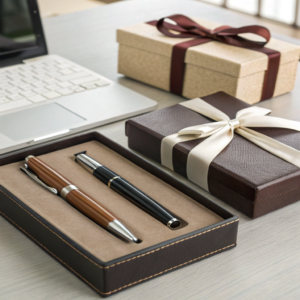
Lately, I see a big shift toward the "Experience" category. This includes things like curated food boxes or DIY kits. These gifts are great because they create a memory. People like Jacky want to tell a story with their gifts. They don't just want to give an object; they want to give a moment. I have found that mixing categories is a great way to stand out. For example, you can give a nice notebook (Need) with a set of luxury pens (Want). This makes the gift feel more complete and thoughtful.
Understanding the 5 Gift Rule
| Category | Definition | Business Example |
|---|---|---|
| Want | Luxury or "wish list" items | High-end tech or designer accessories |
| Need | Practical, everyday tools | Notebooks, power banks, or umbrellas |
| Wear | Items for the body | T-shirts, hoodies, or caps |
| Read | Educational or inspirational | Books, journals, or magazines |
| Experience | Memorable events or food | Coffee sets, spa vouchers, or workshops |
I suggest you pick two or three categories and become an expert in them. Don't try to master all five at once. If you want to help corporate clients, focus on items they "Need" and "Wear." These have the highest utility and the best branding potential2. Once you have a strong base, you can add "Want" or "Experience" items to your catalog. This step-by-step approach keeps your business organized and easy to manage.
What Are the Top 3 Most Popular Gift Categories?
You might wonder which items sell the most in the real world. Knowing the top trends helps you pick the right inventory and avoid products that stay on the shelf for years.
The top three most popular gift categories are Personalised Stationery, Tech Gadgets, and Apparel. These items are popular because they combine high utility with great branding space. They are the most requested items by marketing managers who want to build brand awareness.
Why Stationery Still Wins
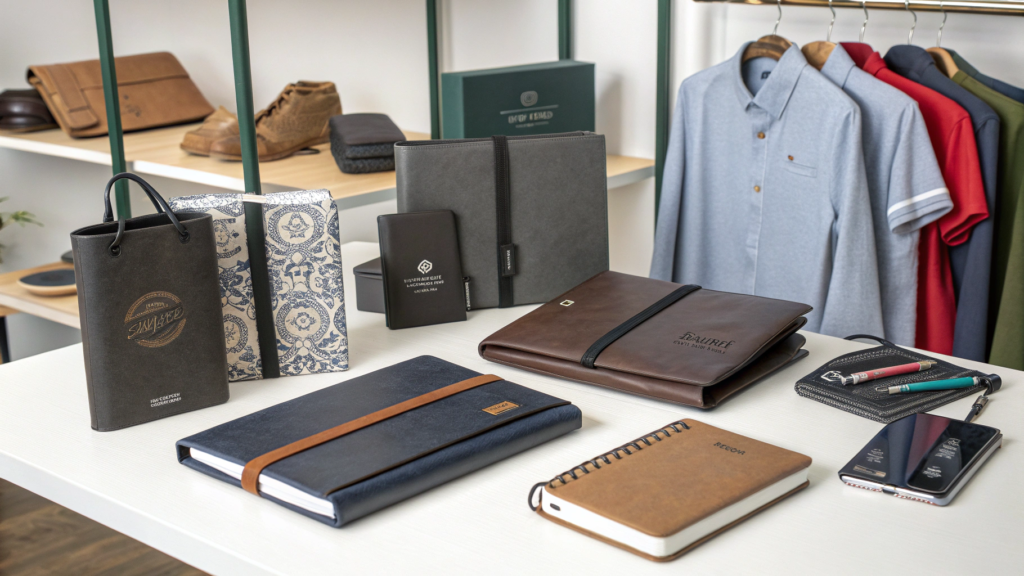
In my years at the factory, I saw more notebooks and pens than anything else. People always ask me if stationery is dying because of digital tools. My answer is always "No." A nice notebook is a physical record of a person's thoughts. It feels premium in a way that an app does not. When you put a client's name on a leather journal, it becomes a personal treasure. This is why personalised stationery is still number one. It is affordable for the business but very valuable to the receiver. I have helped many clients design journals that their customers use for years.
The Rise of Tech and Apparel
Tech gadgets, like wireless chargers and Bluetooth speakers, are the second most popular choice. They have a high "perceived value." Even a small speaker feels like a "big" gift. The third category is apparel. In Singapore, many companies love high-quality polo shirts or windbreakers. This is because apparel creates a sense of belonging. When employees wear a company jacket, they feel like a team. I always tell my clients to invest in good fabric. If a shirt is uncomfortable, no one will wear it. Then, your branding is wasted. You must choose items that fit into a modern, professional lifestyle.
Comparing the Top 3 Categories
| Category | Why It Is Popular | Best Personalisation Method |
|---|---|---|
| Stationery | High utility, personal feel | Debossing or Foil Stamping |
| Tech Gadgets | High perceived value | Laser Engraving or UV Printing |
| Apparel | High brand visibility | Embroidery or Silk Screen Printing |
I believe that if you master these three categories, you will never run out of work. They are the "bread and butter" of the gifting industry. I always look for innovative designs within these categories. For example, a notebook made of eco-friendly stone paper3 is a great way to update a classic item. This keeps your brand looking fresh and modern. By focusing on these popular areas, you can grow your business fast while staying within your budget.
Conclusion
Starting a customised gift business is profitable if you focus on a few high-quality categories and build strong systems. Choose popular items like stationery and tech to build a reliable and scalable brand.