How Do You Ensure Your Custom Logo T-Shirt Looks Professional?
Do your custom shirts look cheap and unprofessional? This ruins your brand's image. Many businesses waste money on bad prints that people refuse to wear or quickly throw away.
A professional custom logo T-shirt requires high-quality vector artwork, a printing method matched to your volume and design complexity, and the right fabric selection to ensure the ink bonds perfectly and lasts through many washes.
 ![]()
![]()
I spent many years in a printing factory watching brands fail because they rushed the process. They ignored the small details that make a shirt great. If you want to avoid these common mistakes and create something people actually want to wear, you must understand how the process works. Let us look at the best ways to get your logo onto fabric so your branding stays sharp and durable.
How to Print a Logo on Cloth the Right Way?
Are you struggling to get your logo onto fabric correctly? Poor execution leads to fading and peeling. This makes your brand look unreliable and lowers your perceived value.
To print a logo on cloth, you must choose between screen printing1 for bulk, Direct-to-Garment (DTG) for high detail, or embroidery for premium feel, while always starting with clean vector artwork to ensure a sharp and professional finish.
 ![]()
![]()
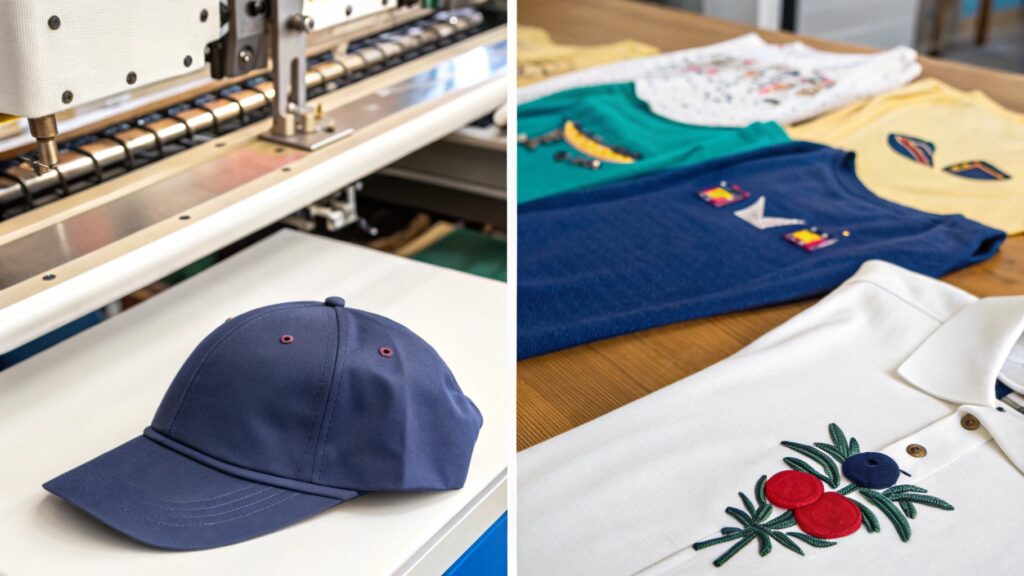
I always tell Jacky that the printing machine is less important than your preparation. You need clear vector artwork. This is the foundation of every good shirt. If your art file is blurry on your screen, it will be blurry on the cloth. We use critical thinking to match the printing method to your specific goal. Screen printing is the classic choice for longevity. It uses thick ink that stays bright even after fifty washes. DTG is much better for complex, colorful photos because it works like an inkjet printer for clothes. Embroidery adds a high perceived value that makes a brand look established. Many people ignore fabric choice, but it is a huge factor. Ink reacts differently to 100% cotton than it does to polyester. You must run test prints to check the wash durability before you order hundreds of shirts. A professional shirt is a branding decision, not just a production task. It shows you care about the customer's experience and comfort.
Choosing the Best Method for Your Brand
- Screen Printing: This is the gold standard for large orders. It is cost-effective and very durable.
- Direct-to-Garment (DTG): Use this for small runs with many colors. The ink feels soft and goes into the fibers.
- Embroidery: This is perfect for polo shirts or hats. it looks expensive and lasts forever.
Use this table to decide which method fits your project:
| Method | Best For | Durability | Perceived Value |
|---|---|---|---|
| Screen Printing | Bulk orders (50+) | Very High | Medium |
| DTG Printing | Small orders, Photos | Medium | Medium |
| Embroidery | Logos on Polos/Hats | Highest | Very High |
When you match the method to the design, the results are much better. I have seen shirts from ten years ago that still look good because the brand chose the right ink and fabric. This is how you build brand consistency. You want people to reach for your shirt in their closet every week. If the logo stays bright, your brand stays in their mind.
Can a Normal Printer Print on Clothes at Home?
Are you trying to save money by using a home printer for your company shirts? This often leads to messy, ruined garments. You end up wasting more money than you save.
A normal home printer2 cannot print directly onto clothes, but you can print your logo onto specialized heat transfer paper and use a heat press or iron to apply the design to the fabric for a temporary result.
 ![]()
![]()
I see people try to use their office inkjets to make "professional" shirts all the time. It simply does not work well. The ink in a home printer is water-based and made for paper. It will wash out or smudge almost instantly on cloth. For a branding manager like Jacky, this is a total disaster. Professional industrial printers3 use special textile inks or cured plastisol. These are designed to stretch and move with the fabric without cracking. If you really must use a home printer, you have to use transfer paper. But even then, the quality is quite low. It feels like a stiff, plastic sticker sitting on your chest. We need to think critically about the message this sends to your clients. Does a stiff, peeling logo represent a high-quality company? No, it does not. It is much better to invest in professional DTG or screen printing. These methods ensure the shirt stays in someone's closet for years. Home methods are fine for a one-day party, but they are not for real business branding.
Why Industrial Printing Beats Home Methods
- Ink Chemistry: Textile inks bond with fibers. Home inks sit on the surface and fade.
- Heat Curing: Industrial prints are baked in a dryer to lock the color. Irons do not get hot enough for a permanent bond.
- Stretch Factor: Professional prints can stretch. Home transfers often crack as soon as you put the shirt on.
See the comparison below to understand the risks:
| Feature | Home Transfer | Professional Print |
|---|---|---|
| Wash Life | 2-5 washes | 50+ washes |
| Hand Feel | Stiff/Plastic | Soft/Natural |
| Image Clarity | Low/Grainy | High/Crisp |
If you want to save your budget, do not cut corners on the printing. A cheap shirt that ruins your brand image is actually the most expensive mistake you can make. I always advise my clients to spend a little more on professional execution. It pays off when you see your logo looking fresh a year later.
Can I Put a Logo on a Shirt for Personal Use?
Do you want to wear your own brand but fear it is too expensive for just one shirt? High setup costs often stop small personal projects from starting.
Yes, you can easily put a logo on a shirt for personal use by using Direct-to-Garment (DTG) or heat transfer services, which allow for single-unit production without the expensive setup fees of screen printing.
 ![]()
![]()
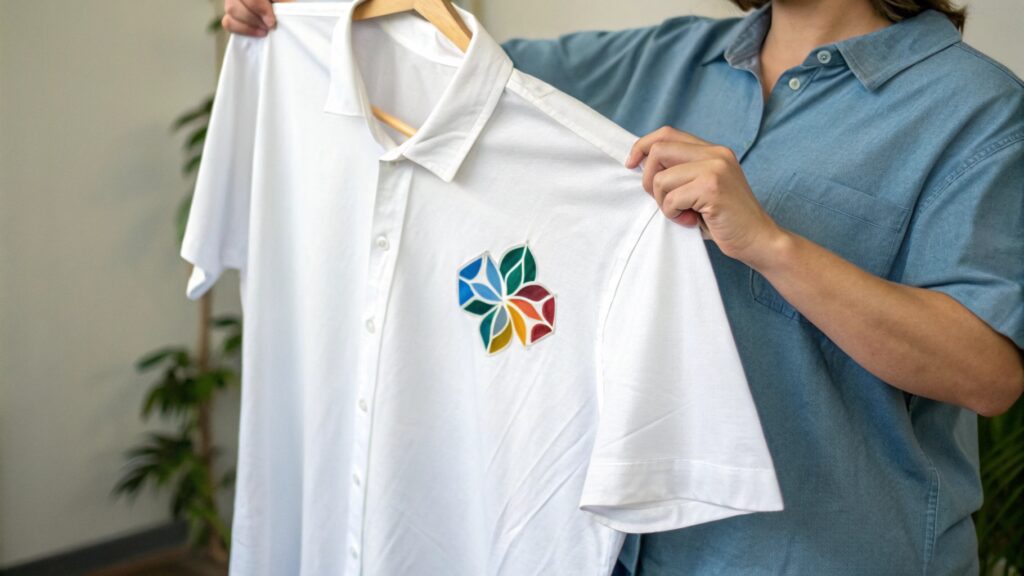
I believe every business owner should be proud to wear their own designs. Even if you only need one or two shirts for a small event, you can still get professional results. In the old days, you had to order at least fifty shirts because screen printing setup was so expensive. Now, technology like DTG makes single prints very easy and affordable. You just upload your vector file and the machine prints it directly onto the shirt. This is a perfect way to test a design before you do a big marketing push. I often encourage Jacky to do a personal test run for himself first. It allows him to check the placement of the logo. Is it too high? Is the color exactly right? These small tweaks make the final bulk order much better. A personal shirt is also a great way to test the "hand feel" of the fabric. You should always aim for something you would personally buy in a retail store. If you love wearing it, your customers will too.
Benefits of Small-Batch Personal Printing
- Low Risk: You can test new logo ideas without spending thousands of dollars.
- Quality Check: You get to see how the ink looks on the specific fabric you chose.
- Customization: You can make unique shirts for special team members or VIP clients.
Here is a simple plan for your personal project:
| Step | Action | Why it Matters |
|---|---|---|
| 1. Create Vector | Save as AI or PDF | Keeps the logo edges sharp |
| 2. Choose Fabric | Pick 100% Ringspun Cotton | Better ink absorption and comfort |
| 3. Select Method | Choose DTG for 1 unit | No setup fees for a single shirt |
Personal use is the best way to learn about the branding process. When you wear your own logo, you see it from the customer's perspective. You notice the placement and how it feels after a long day. This experience helps you make better decisions for your company’s future corporate gifts. At Latitude, we love helping people turn their ideas into physical products they are proud to wear.
Conclusion
Printing a professional logo T-shirt requires clear vector art and the right printing method. Matching your design to the correct fabric ensures your brand stays visible and respected for a long time.
-
Explore this link to understand the classic method of screen printing, its benefits, and how it can enhance your branding. ↩
-
Find out the limitations of using a home printer for fabric and why professional methods are recommended. ↩
-
Learn about the benefits of using industrial printers for high-quality, durable fabric prints. ↩