What Size Is a Standard Grocery Paper Bag?
Are you struggling to find the right paper bag size for your retail products? Choosing the wrong dimensions can lead to wasted space, increased costs, or bags that tear under the weight of groceries.
A standard grocery paper bag, often called a "1/6 BBL" (barrel), typically measures 12 inches wide, 7 inches deep, and 17 inches high. These bags generally hold between 20 to 25 liters and are made from 60 lb to 70 lb heavy-duty Kraft paper for strength.
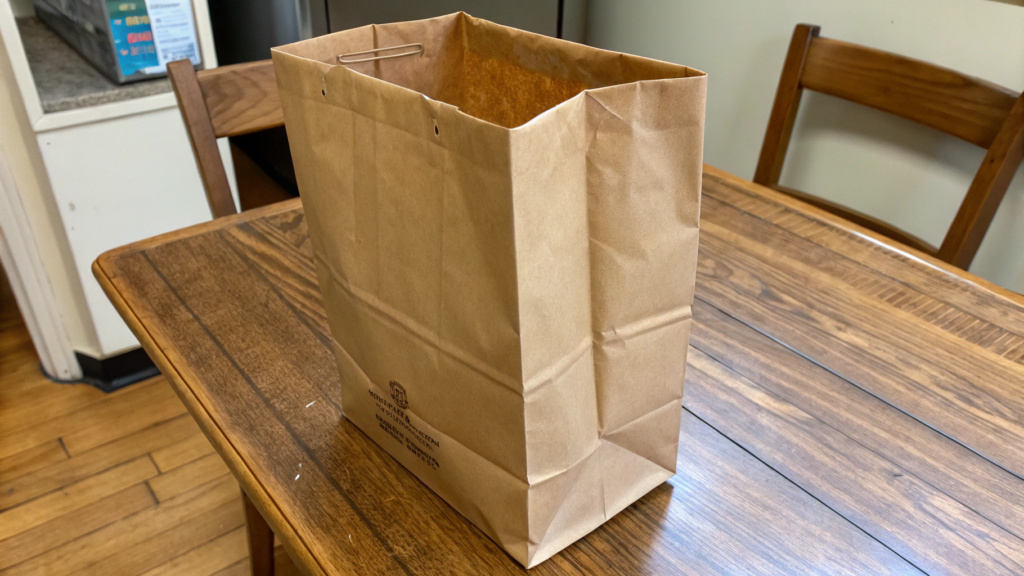
I remember my early days in the printing factory, standing next to stacks of brown Kraft paper. I realized then that a bag is not just a container; it is a piece of engineering. If the gusset—that fold on the side—is even a few millimeters off, the whole bag loses its balance. For marketing managers like Jacky, getting these specifications right is the first step in ensuring a smooth customer experience. If you want to understand how these simple brown bags handle the heavy lifting of branding and utility, let's look closer at the details.
How Many Liters Is a Typical Paper Grocery Bag?
Do you ever wonder if your current bags are actually big enough for a full grocery run? Using bags that are too small forces customers to use more units, which increases your costs and creates more waste.
A typical large grocery paper bag holds approximately 20 to 25 liters of volume. This capacity is designed to fit standard grocery items like cereal boxes, milk cartons, and produce, providing enough space for a significant load while remaining easy for a person to carry comfortably.
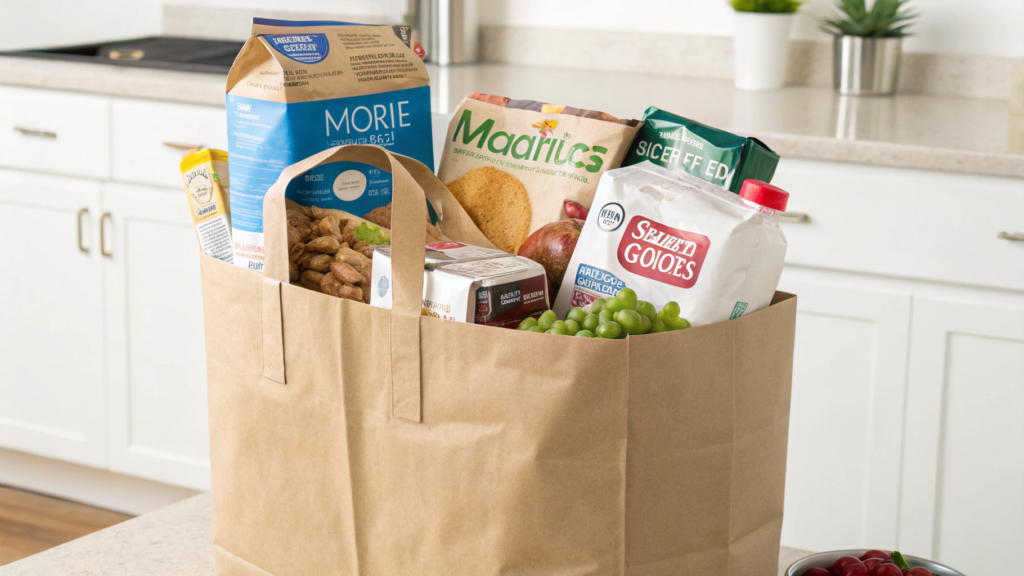
When I talk to clients about volume, I always tell them to think about "usable space1." A bag might look big, but if the paper is too thin, you can never fill it to its 25-liter capacity without it breaking. In my experience, the 20-22 liter range is the "sweet spot" for most medium-sized retail shops in Singapore. It offers a balance between being helpful to the customer and being cost-effective for the business.
I see many brands trying to save money by picking smaller bags, but this often backfires. If a customer has to carry three small bags instead of one large one, they feel inconvenienced. From a branding perspective, a larger bag also provides a bigger "canvas" for your logo. It moves through the streets and catches more eyes. We should look at how different sizes translate to real-world use:
| Bag Category | Approx. Liters | Common Dimensions (WxDxH) | Best For |
|---|---|---|---|
| Small (Sack) | 4 - 6L | 6" x 3.5" x 11" | Bakeries, Medications |
| Medium | 10 - 14L | 8" x 5" x 15" | Takeaway food, small gifts |
| Standard (Large) | 20 - 25L | 12" x 7" x 17" | Weekly groceries, apparel |
| Extra Large | 30L+ | 14" x 10" x 15" | Bulky winter wear, wholesale |
I believe that choosing the right volume is about understanding user behavior. A bag that is too big for a small item feels like a waste, but a bag that is too small for a big item is a failure. By matching the liter capacity to your average transaction size, you show the customer that you understand their needs.
How Thick Is a Grocery Bag?
Are you tired of customers complaining that their bags ripped before they even reached their car? Thin paper might save you a few cents upfront, but the damage to your brand reputation when a bag fails is much more expensive.
Grocery bags are measured by basis weight, with a standard bag typically being 60 lb to 70 lb (approx. 100-115 GSM). This thickness provides the "burst strength" needed to carry heavy glass jars and canned goods without the bottom dropping out or the sides tearing easily.
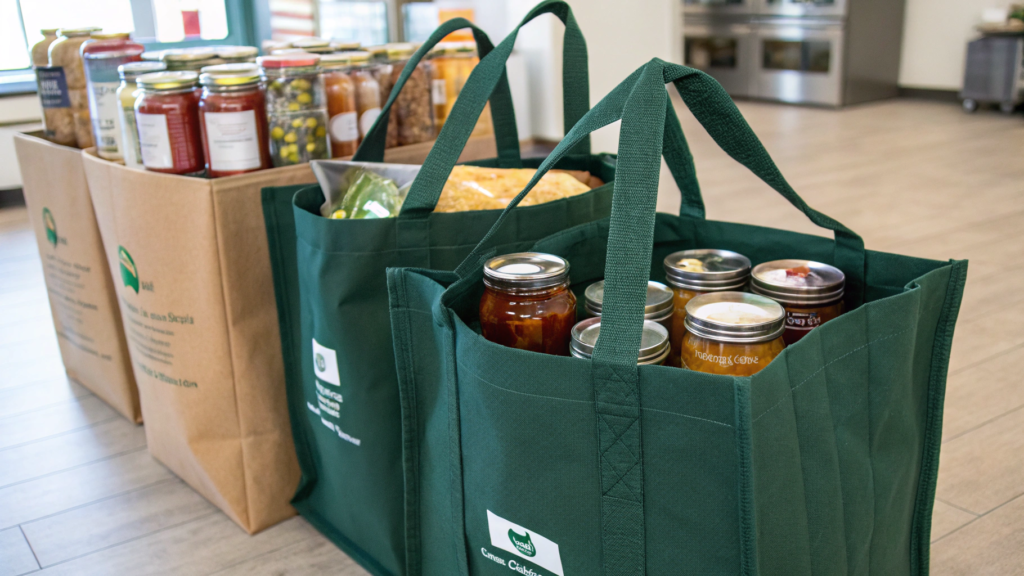
In the factory, we used to test the "burst strength" of different paper grades. I learned that the weight of the paper—usually called Kraft paper—is the secret to its success. For a marketing manager like Jacky, choosing the right thickness is a balancing act. If the paper is too thick (like 100 lb), the bag becomes stiff and hard to open. If it is too thin (like 40 lb), it feels like a cheap napkin.
Most standard grocery bags use "Natural Kraft2" because the long fibers in the wood pulp make it very strong. Even when the paper feels thin to the touch, those fibers are interlocking to hold the weight. However, I always remind my clients that moisture is the enemy of thickness. Even a 70 lb bag will fail if it gets wet from frozen peas or rain. That is why I often suggest using bags with reinforced handles or turned-over tops if the contents are heavy. Here is how paper weight affects the "feel" and performance of the bag:
| Basis Weight (lb) | Thickness (GSM) | Strength Level | Typical Use |
|---|---|---|---|
| 30 - 35 lb | 50 - 60 GSM | Light | Pharmacy bags, light snacks |
| 50 - 55 lb | 80 - 90 GSM | Medium | Small retail items, light gifts |
| 60 - 70 lb | 100 - 115 GSM | Heavy Duty | Standard groceries, heavy cans |
| 80 lb+ | 130 GSM+ | Premium | Luxury retail, heavy wine bottles |
I often see these bags as a bridge to better habits. Because a paper bag has a "controlled durability3," it encourages people to be mindful. You can't just throw it around like a plastic bag. You have to pack it carefully. This slight limitation actually makes the user more aware of the items they are carrying, which fits perfectly with today’s move toward conscious consumption.
Conclusion
Standard grocery bags usually measure 12x7x17 inches, hold about 20-25 liters, and use 60-70 lb paper. Choosing these correct specs ensures your brand stays reliable, professional, and environmentally responsible.