What Are The Most Effective Tote Bag Design Strategies Today?
Are you tired of seeing your brand’s busy logo lost in a sea of visual noise? That visual clutter creates real problems. Focus on simplicity to make your brand stand out instead.
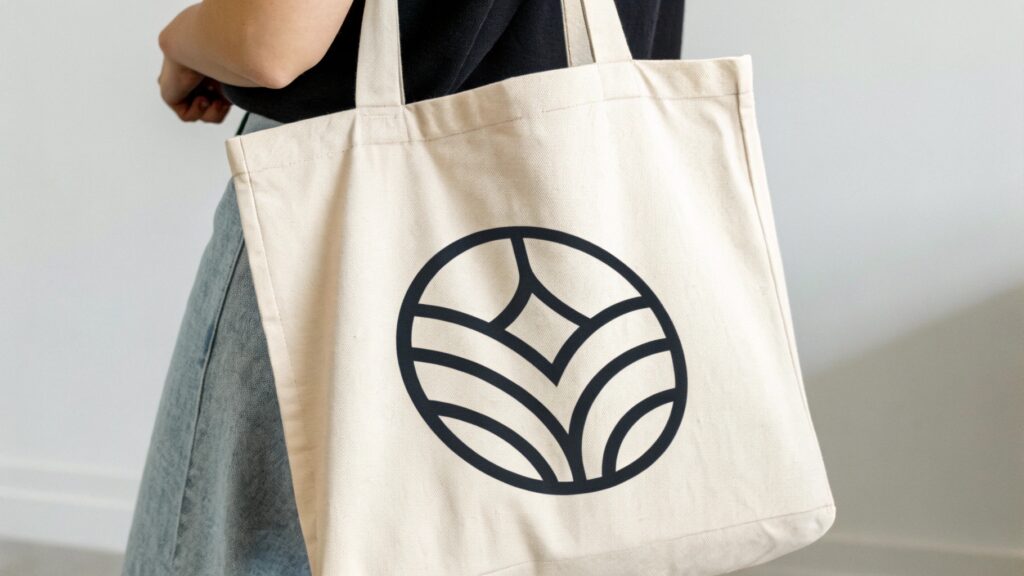
The most effective strategy is modern simplicity, which makes your bag look expensive and intentional. Focus on strong typography, ample negative space, and quality materials. This approach turns a simple tote bag into a timeless accessory, inviting personal interpretation and quiet confidence for the wearer.
 ![]()
![]()
I have seen thousands of designs come through the factory over the years. Many clients try to put too much information on the bag. They want to show everything at once. This approach almost always fails to grab attention. My experience taught me that less is often more. A simple design is a powerful design strategy in today's market. I want to share how you can use minimalism to create tote bags that look purposeful, modern, and high-end, helping your brand speak louder by saying less.
What Are Some Creative Tote Bag Design Ideas?
Feeling stuck with the same old boring logo placement on your bags? Lack of fresh ideas leads to gifts that feel basic. You can unlock new ideas by embracing intentional simplicity.
Creative ideas focus on subtle impact: using typography as art, integrating a single high-quality texture, or using the bag's seam lines as a design element. Instead of complex illustrations, consider monochrome line drawings or abstract shapes. The goal is to create visual interest using minimal elements.
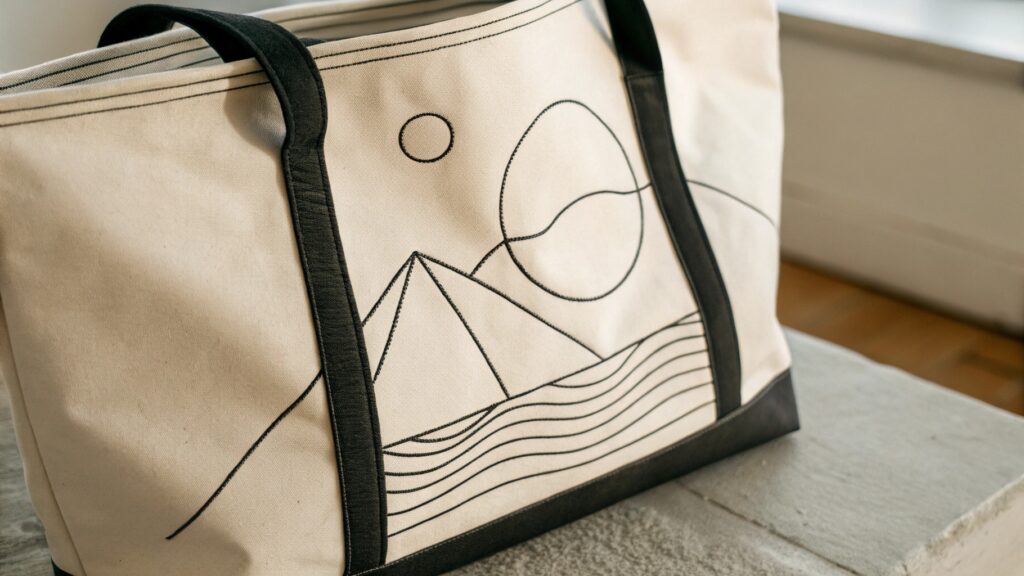
Simple tote bag designs are no longer a compromise. They are a focused design strategy. In a world saturated with loud graphics and overdone branding, minimalism has become a form of quiet confidence. I saw this trend start with independent artists and small brands, and it works great. A simple design forces the creator to think more intentionally about balance. They must consider the weight of the typography. They must focus on the precise placement of a single icon. They need to find harmony between the negative space1 and the fabric texture. This is why many successful brands gravitate toward clean layouts. They scale well across different products. They feel timeless. They speak to consumers who prefer a subtle identity over visual noise. What makes simple tote bag design powerful is that it invites personal interpretation. A monochrome line drawing or a short, smart phrase can resonate more deeply than a crowded illustration. The viewer completes the story in their own mind. When simplicity is done right, it does not look plain. It looks purposeful. That is exactly what today’s buyers are searching for: designs that feel effortless, modern, and meaningful without trying too hard. We guide clients to focus on these intentional choices.
Key Creative Minimalist Techniques
| Design Element | Goal of the Strategy | Example Concept |
|---|---|---|
| Typography Focus | Treat text as a primary graphic element | One word printed extra large on the bottom corner |
| Monochrome Graphics | Create contrast and sophistication with color limitations | A single black line art illustration on a cream bag |
| Negative Space | Use empty areas to draw the eye to the key element | Centering a small icon with lots of surrounding white space |
How to Make Your Bag Look Expensive?
Are your promotional totes feeling cheap and disposable, not high-end? A low-quality feel damages your brand image quickly. You can elevate the perceived value without increasing cost too much.
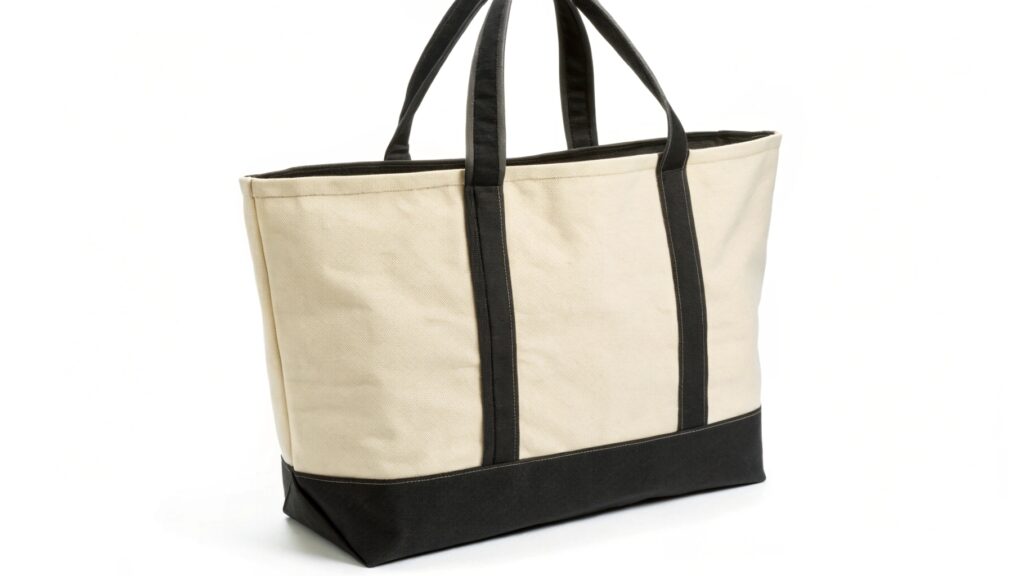
To make a bag look expensive, focus on tactile quality, not complexity. Use thick, durable cotton or canvas, choose refined printing methods like subtle embroidery or high-density silk-screening, and limit your color palette to two classic colors, such as black and cream or navy and white.
 ![]()
![]()
Making a corporate gift look expensive is often about the execution, not the price tag. I learned early on that the fabric choice is vital. A thin, translucent material will always look cheap, no matter how good the design is. We suggest clients invest slightly more in a heavier-weight canvas or a structured jute material. This small cost change dramatically increases the bag's perceived value. The quality of the handles is another easy area to improve. Thick, reinforced handles feel better in the hand and suggest durability. This simple detail tells the user that the bag is built to last. Furthermore, the printing technique plays a huge role in the final look. Cheap vinyl transfers or patchy silk-screening make the product look unprofessional. We often steer clients toward techniques that integrate the logo more subtly. For instance, blind debossing on a patch of faux leather sewn onto the canvas looks very high-end. Subtlety is key here. Think about luxury brands. They do not shout their logos; they whisper them. We use color restraint as another tool. A bag with three or four loud colors looks promotional. A bag using only a deep black logo on a natural cotton base looks sophisticated and refined. This color choice shows confidence. It suggests that the brand does not need flashy colors to be noticed. This focus on tactile quality2 and subtle execution is what separates a disposable giveaway from a valued item.
High-Impact Material and Customization Choices
| Area of Focus | Budget-Friendly Upgrade | High-End Option |
|---|---|---|
| Fabric Weight | 8 oz standard canvas | 12 oz heavy canvas or duck cotton |
| Logo Placement | Large, center silk screen | Small, bottom-right embroidered patch |
| Handle Material | Self-fabric thin handles | Reinforced woven straps or leather accents |
| Printing Method | Standard silk screen | High-density ink or subtle, tonal embroidery |
How to Make a Fancy Tote Bag?
Do you feel like your tote bag designs are functional but lack sophistication? Simple utility is not enough to elevate your brand. You need to add refined touches to achieve that fancy look.
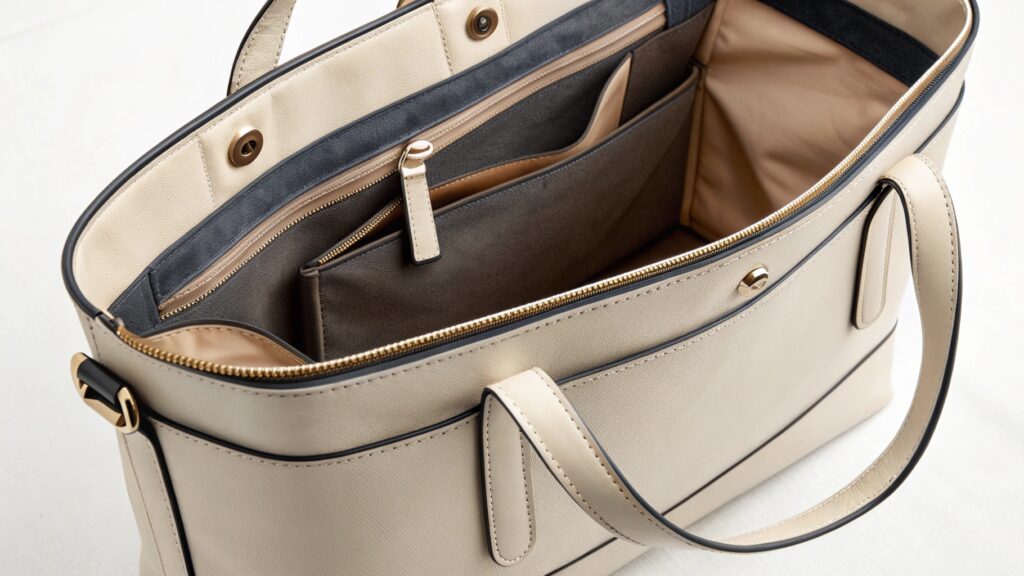
To create a fancy tote bag, focus on unexpected details and clean finishing. Use interior pockets, magnetic clasps, or contrasting inner linings. A bag becomes fancy when it moves beyond basic carrying function and offers intentional features that suggest thoughtfulness and a higher level of design.
 ![]()
![]()
A truly "fancy" tote bag is one that feels intentional and well-designed, not just customized. It is the small, unexpected details that add flair and function. I have learned that features like a simple magnetic snap closure instead of an open top immediately upgrade the feel. This small addition makes the bag feel more secure and gives it a structured shape. Similarly, adding a contrasting lining—like a light gray interior inside a dark navy bag—adds a pop of unexpected visual appeal when the bag is opened. These features make the user feel like the bag was designed for them. Think about utility pockets3. Most plain totes lack internal structure. Adding a small internal pocket with a zipper for keys or a phone turns the bag into a daily utility item instead of just a temporary promotional item. This attention to function shows the brand cares about the user's daily life. It is not always about what you put on the bag; it is about what you put in the bag's construction. We often suggest features like a reinforced bottom panel to help the bag stand up on its own. This small engineering detail instantly elevates the bag's appearance and practicality. When we combine high-quality fabric, subtle branding, and these clever functional additions, the result is a tote bag that truly feels fancy and valuable. This approach shifts the bag from being a gift to being a desired accessory, which is the ultimate branding goal.
Practical Features for a 'Fancy' Upgrade
| Feature Category | Basic Tote Feature | Fancy Tote Upgrade |
|---|---|---|
| Closure | Open top or small snap | Magnetic snap or high-quality zip |
| Interior | None or single pouch | Padded laptop sleeve or multiple utility pockets |
| Structure | Unlined, slouchy fabric | Fully lined interior with structured piping |
| Straps | Simple sewn straps | Adjustable cross-body strap or webbing with metal hardware |
Conclusion
Finding the right partner is not luck; it is a strategy. Choose a supplier with deep knowledge, full control, and clear communication. This will elevate your brand and remove your stress.