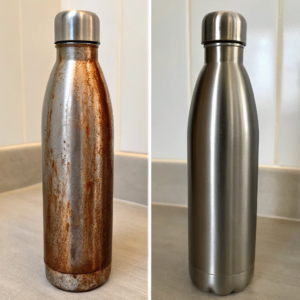
How to Get Rust Out of a Stainless Steel Water Bottle?
Are you shocked to find red or brown rust spots inside your favorite reusable flask? Many people assume stainless steel never rusts, but improper care can quickly damage its protective surface.
You can get rust out of a stainless steel water bottle safely by using a paste of baking soda and water or a warm white vinegar soak. Scrub gently with a soft bottle brush to lift the stains without scratching the metal.
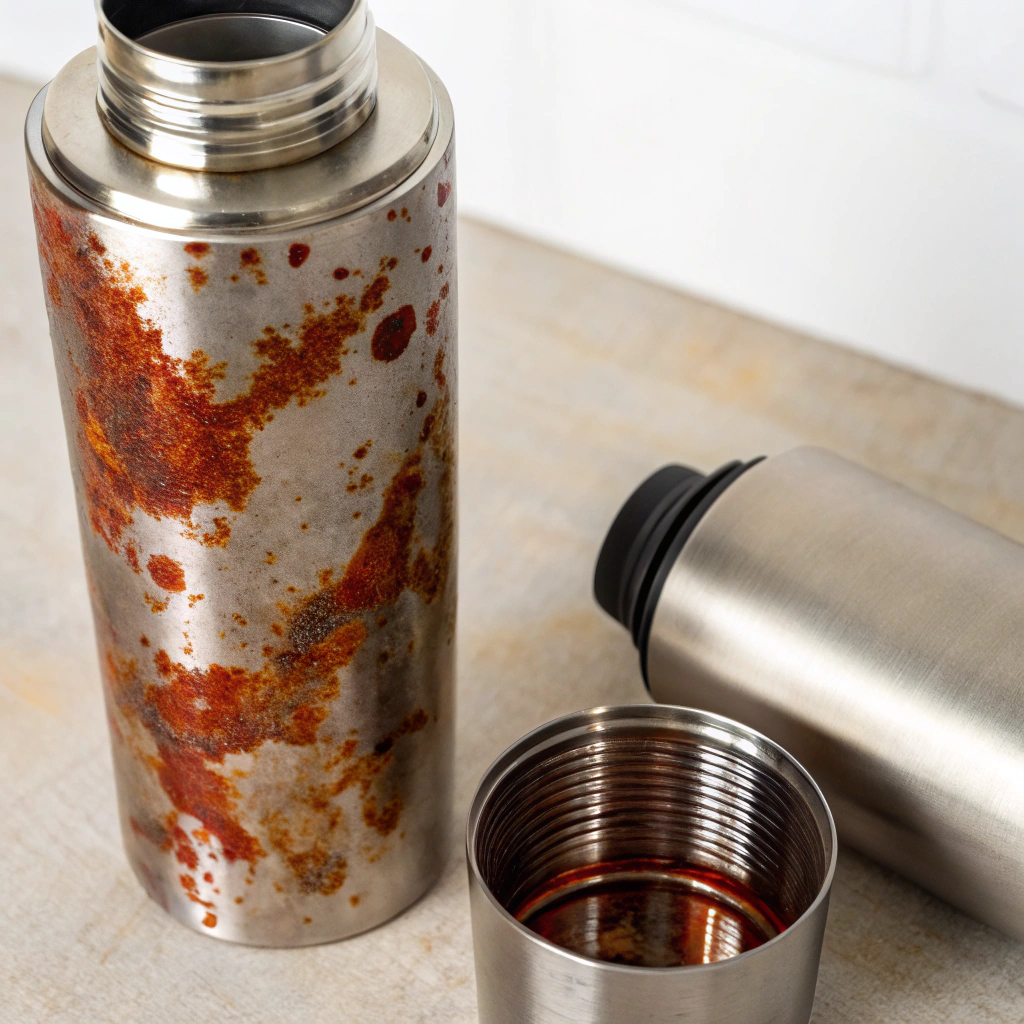
I spent years working on production floors handling metal promotional gifts like custom mugs and flasks. I know exactly how steel reacts to moisture, cleaning chemicals, and daily wear. When a client contacts Latitude Experience Pte Ltd worried about a rusty corporate gift, I always tell them the same thing: do not throw it away just yet. Let us look at how rust forms and how you can fix it easily.
Can You Remove Rust from a Stainless Steel Water Bottle?
Do you think a rusted bottle is completely ruined and ready for the trash bin? Throwing away a premium flask because of minor surface stains wastes money and harms our environment.
You can absolutely remove rust from a stainless steel water bottle if the corrosion is only on the surface. Simple household ingredients like baking soda dissolve the oxidation and restore the clean look of the metal interior.
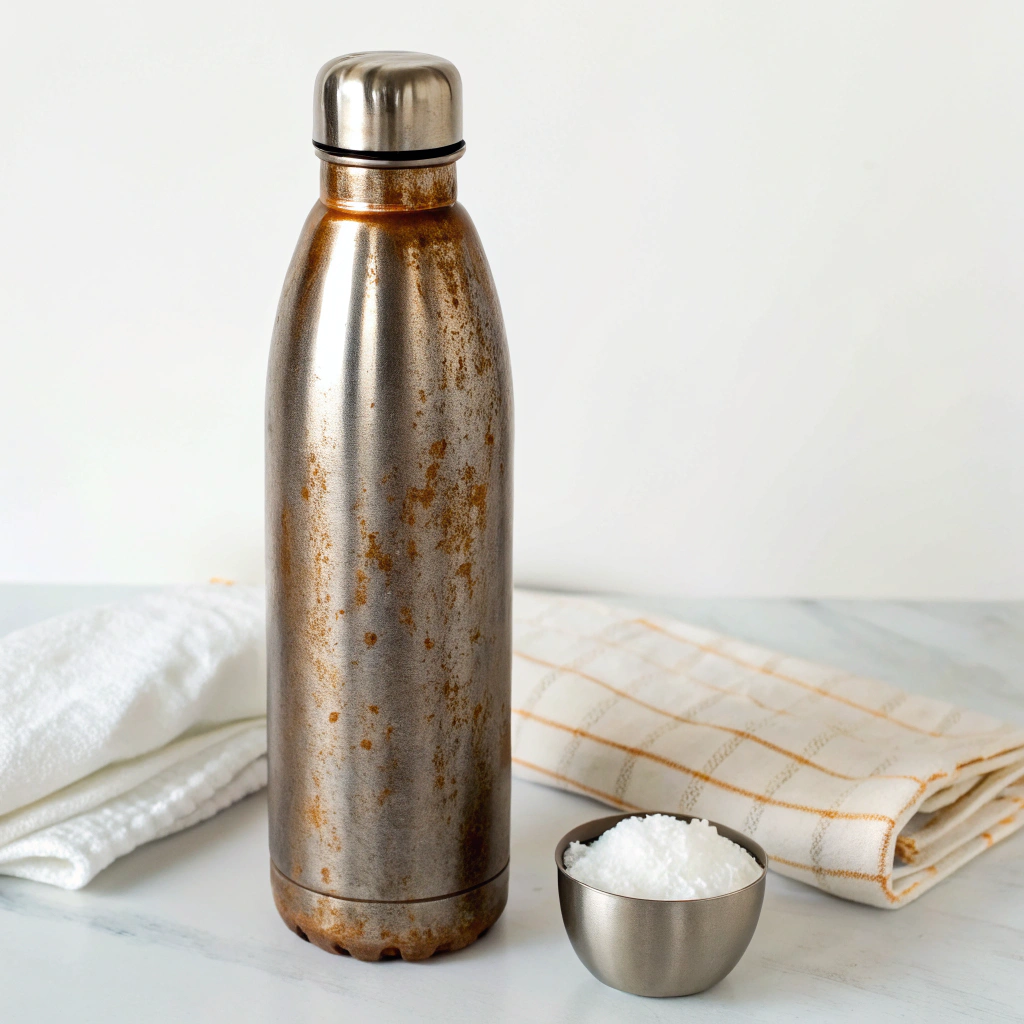
In my experience, true stainless steel contains chromium, which forms an invisible shield against rust. However, harsh dish soaps, acidic drinks, or hard water minerals can break this shield down over time. When oxygen hits the exposed iron underneath, surface rust appears. The good news is that you can lift this rust off without buying heavy chemicals. Let us look at the safest natural cleaning methods to restore your bottle.
Top Natural Cleaning Methods
- Baking Soda Paste: Mix equal parts baking soda and warm water to create a thick paste for stubborn rust spots.
- White Vinegar Soak: Fill the bottle with vinegar and let it sit overnight to dissolve deep mineral scaling.
- Lemon Juice Solution: Use natural lemon juice and warm water to lift lighter oxidation stains easily.
We must compare these gentle methods with harsh cleaning practices that you should always avoid.
| Safe Cleaning Method | What It Does | Dangerous Method to Avoid | Why It Ruins the Bottle |
|---|---|---|---|
| Baking Soda Paste | Lifts rust stains gently | Steel Wool Scrubbing | Scratches steel and causes more rust |
| White Vinegar Soak | Dissolves mineral scaling | Chlorine Bleach | Corrodes the metal and creates deep pits |
| Soft Bottle Brush | Cleans inside corners | Harsh Metal Scrapers | Punches through the protective layer |
Is It Safe to Drink From a Rusty Stainless Steel Water Bottle?
Are you worried that drinking from a bottle with tiny brown spots will make you sick? It is incredibly unsettling to see discoloration in the water you drink every single day.
It is generally not safe to drink from a heavily rusted stainless steel bottle because rust traps harmful bacteria in its rough texture. While tiny rust spots are not toxic, the metallic taste and bacterial risks mean you should clean the bottle before using it again.
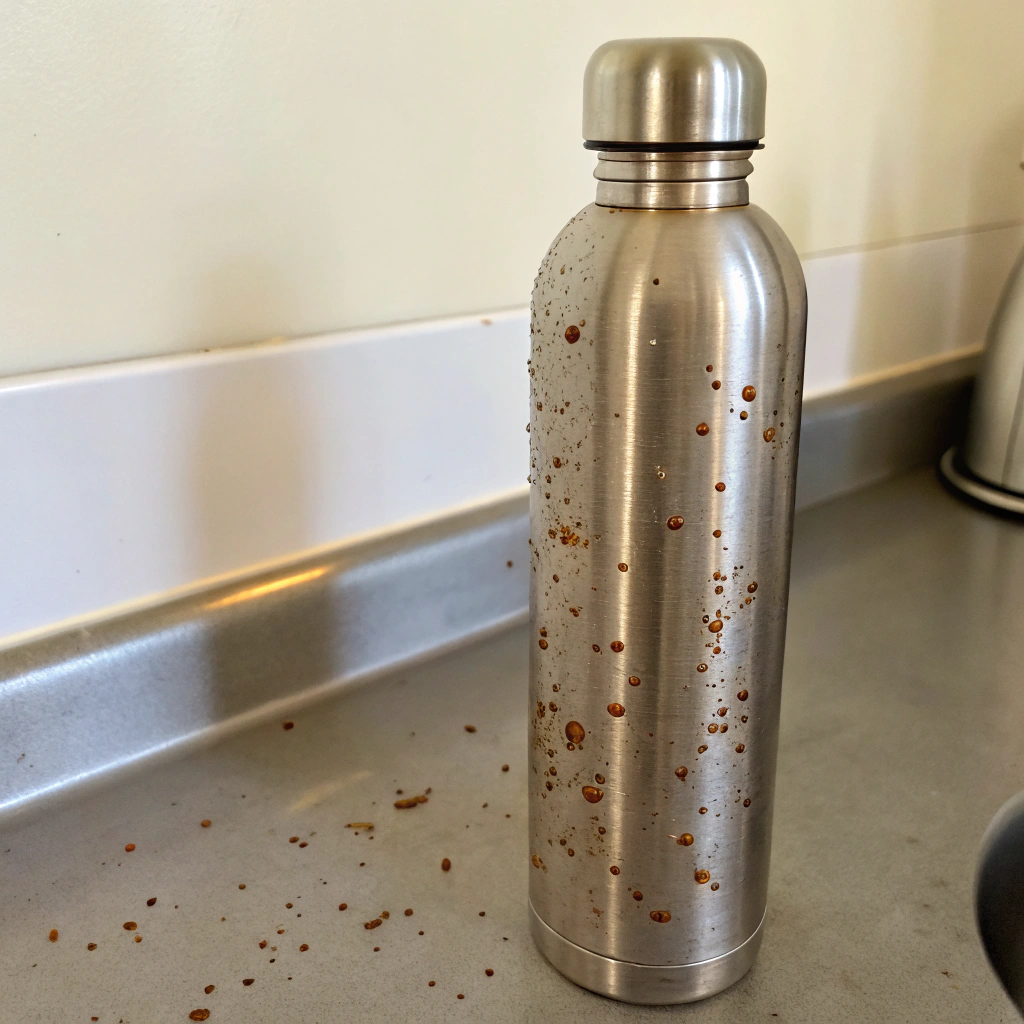
When running quality checks in the factory, I learned that smooth surfaces are the easiest to keep clean. Once rust creates a rough patch inside your bottle, standard washing cannot reach the tiny crevices. Bacteria from your mouth can hide in those spots and grow quickly. Also, drinking rusty water gives your beverages an unpleasant metallic flavor that ruins your morning coffee or tea. Let us look at the specific safety risks associated with keeping a damaged bottle.
Hidden Risks of Rusty Flasks
- Bacterial Growth: Rough, oxidized surfaces act like a sponge for mold and harmful germs.
- Metallic Taste: Iron oxide alters the flavor of clean drinking water instantly.
- Lid Leaks: Rust around the screw threads can break the airtight seal and cause messy leaks.
Can Rusted Stainless Steel Be Restored?
Do you want to know if your bottle can regain its original shine and stay rust-free in the future? Many people clean the rust out once, only to find the spots returning a week later.
Rusted stainless steel can be fully restored because the material has a self-healing properties. Once you remove the surface rust, the chromium in the steel reacts with oxygen to rebuild its protective shield naturally.
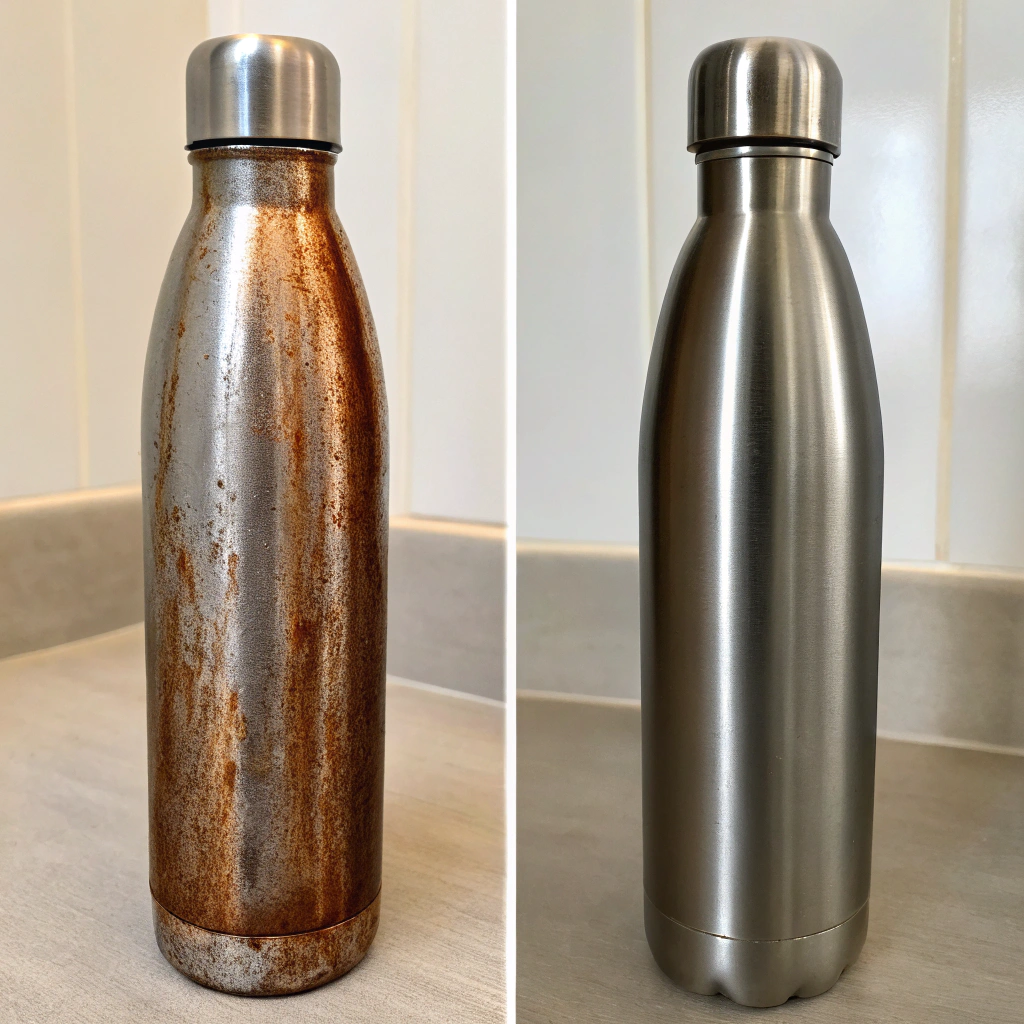
The secret to a successful restoration is allowing the bottle to air-dry completely in a well-ventilated area after cleaning it. In the production world, we call this passivation. When the clean steel meets fresh air, it fixes its own protective oxide layer within twenty-four hours. If you trap moisture inside by closing the lid too soon, the rust will return immediately. Let us break down a simple weekly care routine to keep your stainless steel looking brand new for years.
| Maintenance Step | How to Do It | How Often | Long-Term Benefit |
|---|---|---|---|
| Gentle Wash | Use warm water and mild dish soap | Daily | Prevents mineral and sugar buildup |
| Air Drying | Leave the lid off and turn upside down | Daily | Stops moisture from trapping oxygen |
| Vinegar Rinse | Swirl warm vinegar inside the base | Weekly | Dissolves hard water scaling |
Conclusion
Getting rust out of a stainless steel water bottle requires using gentle ingredients like baking soda, scrubbing with a soft brush, and letting the metal air-dry completely to restore its defense.