Paper Bags: Are They the Best Strategic Choice for Modern Branding?
Are you still using generic plastic packaging and missing a chance to connect with eco-conscious customers? Poor packaging fails to communicate your brand's values.
Yes, paper bags are a superior strategic choice for modern branding because they signal responsibility, transparency, and thoughtful design to consumers. They serve as mobile branding assets and their natural, tactile feel elevates the perceived value of the product inside, directly aligning your brand with sustainability and conscious consumption.
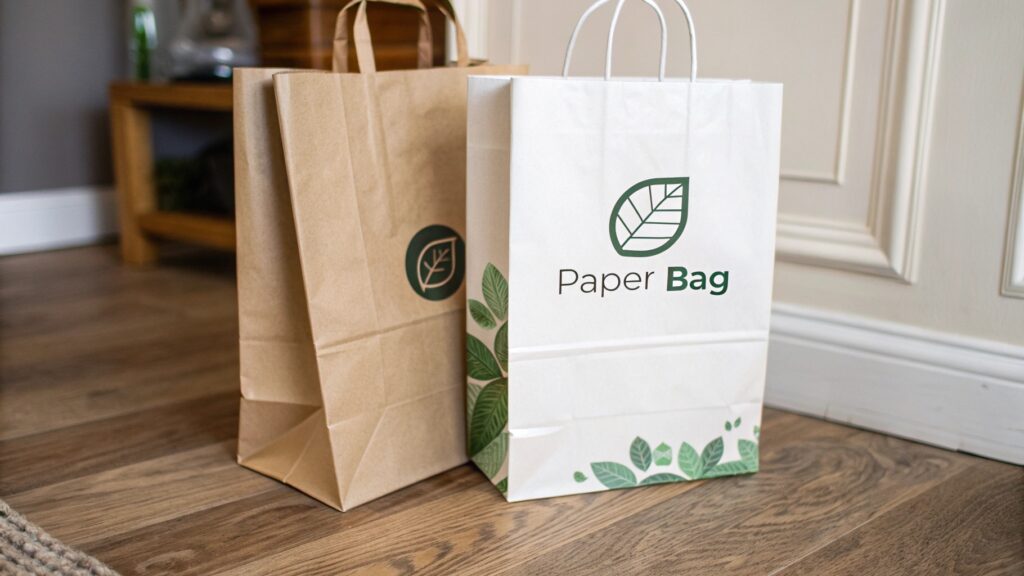
In my experience helping businesses grow, I’ve learned that consumers judge a product long before they open it. The packaging is your first, often silent, communication. Choosing paper bags is not just a material switch; it is a powerful way to redefine the kind of relationship you want with your customers. The real benefit is how they communicate values without saying a word. Now, let’s explore the key reasons why paper beats plastic in today’s market.
Why is it Better to Use Paper Bags Instead of Plastic Bags for Branding?
Do you feel your current plastic packaging sends the wrong message to environmentally aware customers? Plastic often communicates cheapness and waste.
It is better to use paper bags instead of plastic because paper conveys a silent message of sustainability, authenticity, and premium intent. Unlike disposable plastic, paper bags are fully recyclable and compostable1, aligning your brand with the conscious consumption values that drive modern purchasing decisions, thus enhancing your reputation.
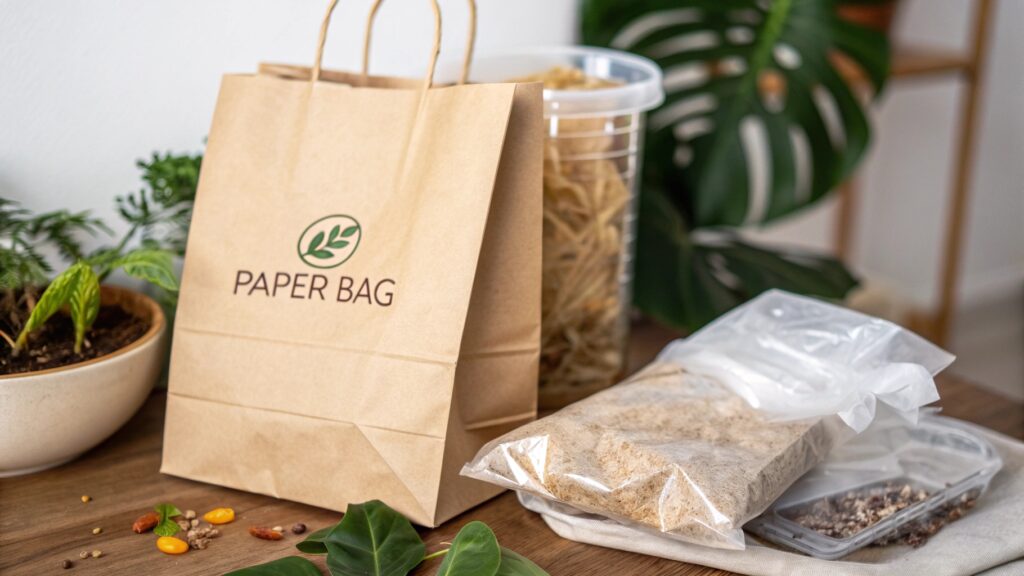
This choice is deeply strategic; it influences consumer psychology. I see the difference every day. Unlike plastic, which is often seen as flimsy and temporary, paper has weight and tactility; it feels "intentional." This subtle physical difference often elevates the perception of the product inside. For example, a simple kraft paper bag can make even everyday items feel more curated and high-quality. The structural and natural aesthetic of a well-crafted paper bag tells a story of sustainability and purpose that plastic simply cannot match. Paper is honest. Furthermore, from a branding perspective, custom-printed paper bags double as mobile branding assets—they become free advertising carried through streets, cafés, and offices. This free exposure reinforces your message continuously. This is something plastic bags, which are quickly discarded, fail to achieve. The decision to use paper is an easy way to show customers that you are responsible and transparent about your environmental impact, which is a major factor in customer loyalty today. Choosing paper bags is more than an operational change; it is a branding decision that directly shapes how your customers remember you.
| Feature | Paper Bags (The Perception) | Plastic Bags (The Perception) |
|---|---|---|
| Tactility | Intentional, Curated, High-Quality | Flimsy, Disposable, Generic |
| Environmental | Responsible, Sustainable, Fully Recyclable | Wasteful, Polluting, Harmful to Nature |
| Branding | Mobile Asset, Value-Aligned | Quickly Hidden, Low Brand Impact |
By choosing paper, you signal that every detail of your business has been thoughtfully considered.
What are the Practical Advantages of Using a Modern Paper Bag?
Are you concerned that switching to paper bags means sacrificing durability and strength for heavier items? Past versions of paper bags were often fragile.
The practical advantages of modern paper bags include reinforced bottoms and strong twisted handles, allowing them to carry heavy goods while remaining fully recyclable or compostable. They are also easy to stack and store, and their flat surfaces provide an excellent, high-quality medium2 for complex, branded printing.
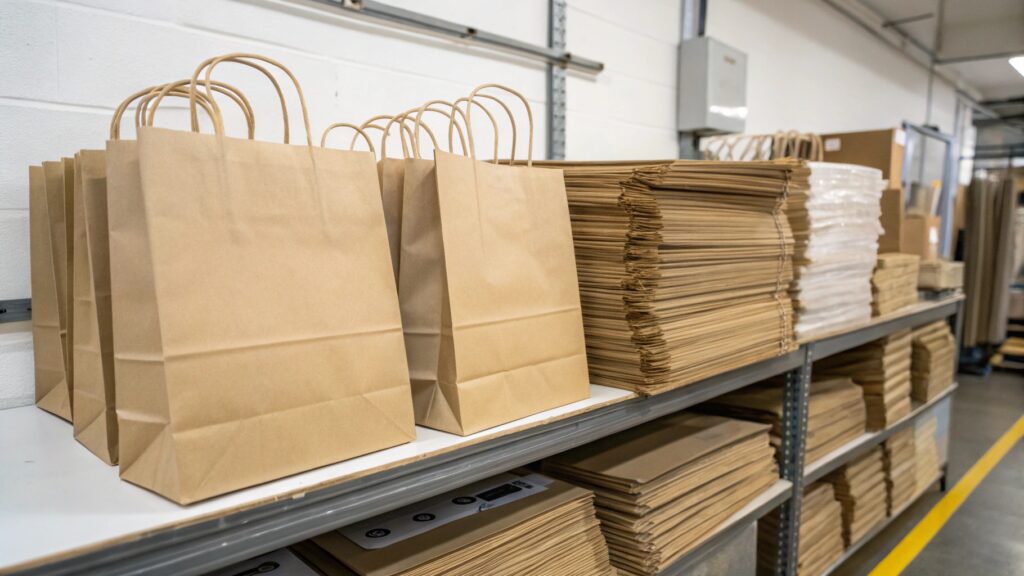
Modern paper bags have evolved far past the weak versions of the past. When working with brands, I emphasize that they no longer have to choose between durability and eco-responsibility. Today's options successfully bridge that gap. First, consider structural integrity. Modern paper bags use thick gsm (grams per square meter) options and are designed with reinforced bottoms and strong, twisted paper handles. This allows them to securely carry heavy groceries, multiple garments, or even bulkier items, addressing the common concern about strength. Second, they offer superior printing quality. Unlike the slick, often difficult-to-print surface of plastic, paper provides a natural, matte surface that holds high-quality inks beautifully. This is vital for using them as a mobile branding asset. Third, storage and logistics are easier. Paper bags are typically designed to fold flat, making them much easier and more space-efficient to store in bulk than bulky plastic carriers. These practical elements ensure that the bags are not only eco-friendly but also operationally efficient and capable of handling the demands of a high-volume retail or service business. This fusion of strength and sustainability makes them a genuinely smart packaging choice.
| Practical Advantage | Operational Benefit | Material Enhancement |
|---|---|---|
| Durability | Safe carriage of heavy or bulky goods | Reinforced gussets and thick GSM paper |
| Logistics | Space-efficient storage and easy stacking | Designed to fold flat and stack neatly |
| Branding | High-quality, vibrant logo and graphic representation | Excellent surface for complex printing techniques |
The key is choosing the right construction—a small detail that makes a huge difference in customer satisfaction.
Which Type of Bag is the Most Environmentally Friendly for Packaging?
Are you confused by the conflicting claims about which type of packaging—paper, plastic, or reusable—is truly the most eco-friendly3 option? The answer is complex, but crucial.
A simple paper bag is often considered the most environmentally friendly single-use option because it is made from a renewable resource (wood fiber) and is widely recyclable and compostable, breaking down rapidly in the environment. While reusable bags have a lower long-term impact, for necessary single-use packaging, paper offers the best combination of source sustainability and end-of-life disposal.
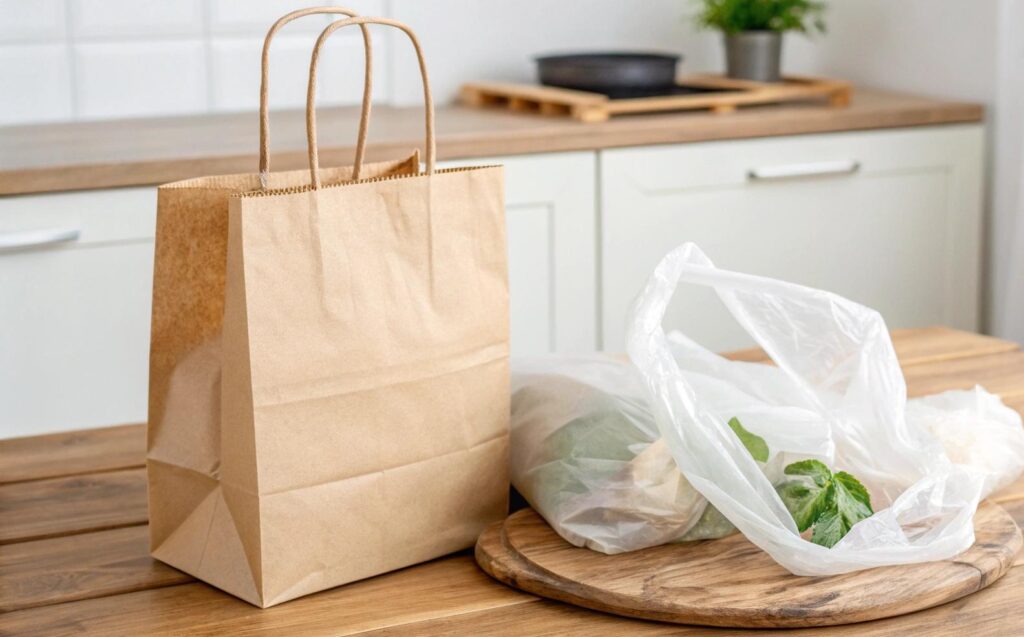
When assessing environmental impact, we must look at the entire lifecycle, from sourcing to disposal. Paper bags are sourced from renewable resources (trees, often from sustainably managed forests), and the paper recycling process is well-established globally, requiring less energy than recycling many types of plastic. Most paper bags will also naturally compost very quickly if they end up outside of a recycling stream. This is a massive advantage over most conventional plastic bags, which can take hundreds of years to break down and cause widespread pollution. However, I must be transparent; making paper bags requires more water and energy during the manufacturing process than plastic. This is why the reusable bag (cotton or non-woven PP) is considered the best long-term solution, but only if it is used hundreds of times. Since many businesses still require a single-use option, paper bags are the best compromise. They show a clear commitment to reducing plastic waste, a visual cue that consumers trust. Ultimately, the biggest strategic benefit of packaging paper bags is that they align your brand with the core values driving today’s purchasing decisions—sustainability, authenticity, and conscious consumption. This alignment is powerful.
| Bag Type | Sourcing & Renewal | End-of-Life Disposal | Environmental Trade-off |
|---|---|---|---|
| Paper Bag | Renewable resource (wood fiber) | Easily Recyclable; Biodegradable/Compostable | Higher manufacturing energy/water use |
| Plastic Bag | Non-renewable resource (petroleum) | Difficult to recycle; Takes centuries to degrade | Lower manufacturing energy/water use |
| Reusable Tote | Various (cotton, plastic) | Must be used hundreds of times to offset initial impact | High initial material and production cost |
For a strategic, single-use choice that communicates responsibility, paper is the clear leader.
Conclusion
Choosing paper bags is a strategic branding decision that communicates sustainability and quality. They are practically durable, offer excellent branding opportunities, and are the best single-use option for aligning your business with conscious consumer values.