Is it safe to wash a bleach bottle to drink off?
Thinking about washing out an empty household chemical container to use as a backup water jug? While stretching the life of plastic sounds eco-friendly, reusing chemical bottles for drinking water carries serious, invisible dangers.
No, it is absolutely not safe to wash and drink out of a bleach bottle. Household bleach bottles are made from plastics designed for chemicals, not food. The plastic can absorb chlorine compounds over time, which means toxic chemical residues can slowly leach back into your drinking water even after multiple heavy rinses.

I have spent more than a decade studying material safety and production lines in the gifting industry. I started out on a humble printing factory floor, and that hands-on experience taught me that industrial plastics behave very differently based on their intended use. Chemical bottles are never manufactured to food-grade safety standards. Trying to scrub one clean for hydration is a risk that simply isn't worth it. Let's break down exactly what happens to the material and why safety experts are so against it.
What are the first signs of bleach poisoning?
Are you worried that someone in your home might have accidentally swallowed a trace amount of household cleaner? Chemical ingestion can happen fast, especially when household liquids are stored in the wrong containers.
The first signs of bleach poisoning include immediate burning in the mouth and throat, severe coughing, gagging, nausea, and vomiting. You may also notice a strong chlorine smell on the person's breath or redness around their lips.

In my years managing corporate health and wellness kits for teams at Latitude, I have learned that clear emergency knowledge saves lives. If anyone drinks from a bottle and experiences a sudden burning sensation, you must act instantly. Bleach is highly corrosive. It immediately attacks the sensitive tissue of the esophagus and stomach lining.
I always tell managers like Jacky that the biggest hidden danger is confusion. If you put water into an old bleach bottle, a child or coworker might think it still contains cleaner, or worse, think a bottle actually filled with toxic chemical is just water. This psychological slip is how accidents happen. If poisoning occurs, do not induce vomiting, as this forces the corrosive chemical back up the throat, causing double the damage. Call emergency services or a poison control center immediately and have them drink small amounts of milk or water if they can swallow.
| Poisoning Stage | Common Physical Symptoms | Immediate Action |
|---|---|---|
| Immediate (0-5 mins) | Mouth burning, coughing, choking, drooling | Rinse mouth with water; do not force vomiting |
| Early (5-30 mins) | Severe stomach pain, vomiting, chest tightness | Call emergency medical services immediately |
| Advanced (30 mins+) | Low blood pressure, dizziness, breathing failure | Keep person calm and upright for paramedics |
How long is bleach in a bottle good for?
Do you have an old jug of liquid cleaner sitting in your laundry cupboard that you assume lasts forever? Like many household products, chemical stability drops much faster than people realize.
Liquid household bleach is generally good for about six months to one year after the manufacture date. After six months, it begins to break down naturally into salt and water, losing its disinfecting power by roughly 20% every year.

From a production standpoint, I have seen how quickly liquid compounds change when exposed to air and room temperatures. Bleach is not a stable liquid. Even stored inside its original plastic container, the active ingredient (sodium hypochlorite) degrades every day. I always remind our procurement clients that buying chemical supplies in massive bulk sizes often results in wasted money because the fluid weakens before it can be used up.
As the liquid degrades into salt and water, it can actually put extra stress on the plastic casing. If a bottle sits for years, the plastic can become brittle and thin. This degradation is another reason why that specific plastic should never be trusted for food or drink storage later on. True sustainability means knowing when a product has reached the absolute end of its useful life. The safest route is to drop the expired container into a proper recycling bin rather than trying to upcycle it into your kitchen.
| Storage Condition | Useful Lifespan | Impact on Chemical |
|---|---|---|
| Cool, Dark Cabinet | 6 to 12 Months | Slow, normal degradation into saltwater |
| Hot Garage / Sun Exposure | 2 to 3 Months | Rapid breakdown; plastic becomes brittle |
| Diluted with Tap Water | 24 to 48 Hours | Loses almost all disinfecting power instantly |
Is it okay to soak a water bottle in bleach?
Are you dealing with a stubborn patch of black mold inside your favorite sports flask and looking for the strongest disinfectant possible? While you need to kill the germs, using industrial chemicals on your drinkware requires extreme caution.
It is okay to use highly diluted bleach to sanitize a water bottle, but only if the bottle is made of glass or hard plastic. You must use a very weak mix (one teaspoon of bleach per liter of water) and rinse it thoroughly with hot water afterward.
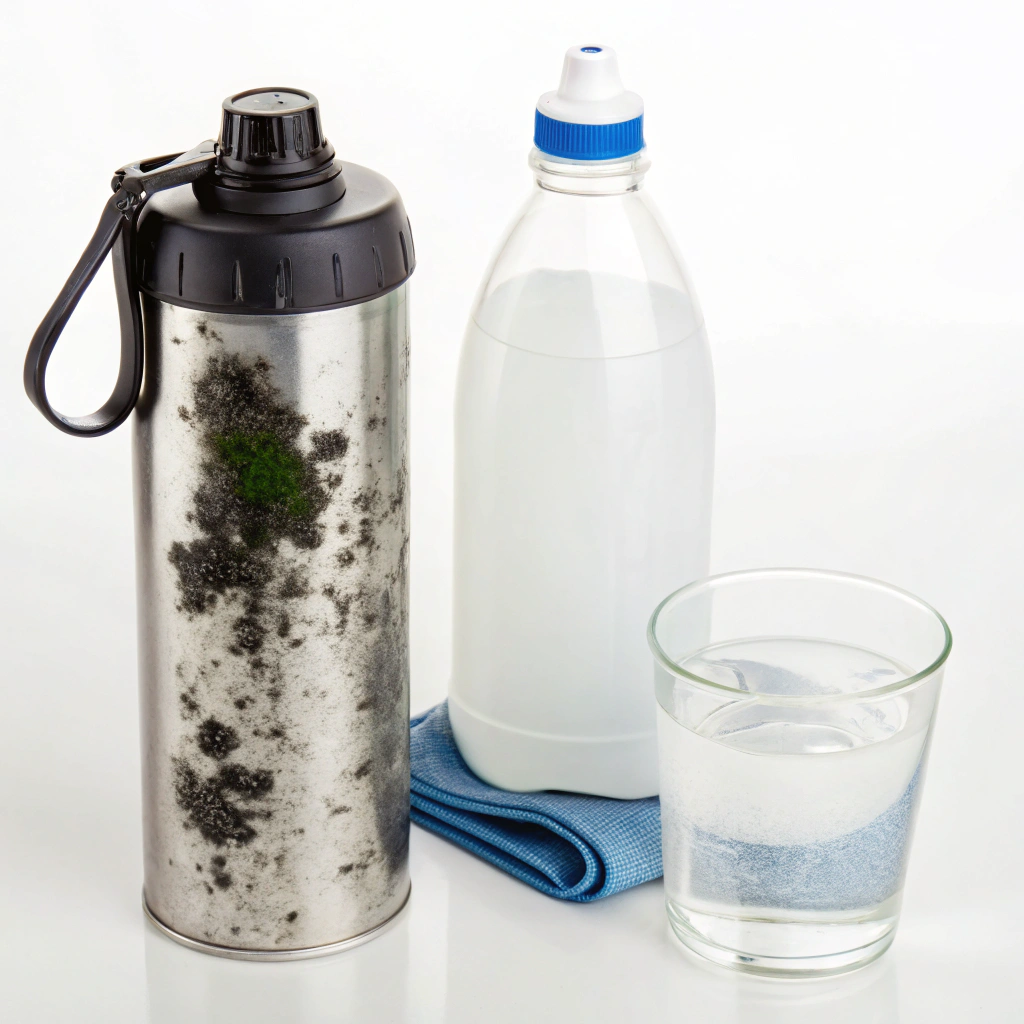
I have seen many beautiful 304 stainless steel water bottles ruined because someone soaked them in a strong bleach bath overnight. This is a massive mistake. Chlorine bleach reacts aggressively with stainless steel. It strips away the invisible protective chromium oxide layer on the metal, which leads to pitting, black stains, and permanent rust. If your steel bottle has mold, you should use white vinegar or baking soda instead.
If you are sanitizing a safe material like glass or Tritan plastic, you must ensure the rinse cycle is perfect. Any leftover chemical can cause stomach irritation or ruin the taste of your next drink. At Latitude, when we supply high-quality drinkware to teams, we always include a specific care card. We advocate for mild dish soap and a good bottle brush as your daily routine. A clean bottle should be maintained through daily habits, not through occasional rescues with harsh industrial chemicals.
| Bottle Material | Bleach Safe? | Recommended Deep Cleaner |
|---|---|---|
| Stainless Steel (304/18/8) | NO (Causes rust and pitting) | Baking Soda + Warm Water soak |
| Borosilicate Glass | Yes (Highly diluted only) | White Vinegar or Boiling Water |
| Tritan / PP Plastic | Yes (Highly diluted only) | Mild Dish Soap + Bottle Brush |
| Silicone Lids & Straws | NO (Absorbs chemical odor) | Boiling water soak (5 minutes) |
Conclusion
Reusing a bleach bottle for drinking water is highly dangerous due to permanent chemical absorption in the plastic and the risk of accidental poisoning. Recycle chemical jugs properly and choose certified food-grade stainless steel or Tritan bottles to ensure your daily hydration stays completely safe.
My Role
About me:
Latitude Experience Pte Ltd was founded by Francis Loh, a passionate advocate for branding through corporate gifts. Beginning his career in a humble printing factory, Francis gained hands-on experience in production, design, and client servicing. With a deep understanding of the printing and gifting industries, he later established Latitude to help businesses elevate their brand presence through meaningful, well-crafted promotional gifts.
Over the years, Latitude has supported numerous clients in growing their businesses with practical and impactful gifting strategies. Grateful for the opportunities the industry has brought him, Francis is now committed to giving back—sharing his knowledge, insights, and experiences to help others succeed in their branding journey through corporate gifts.