How Do I Remove the Taste of Stainless Steel from My Water Bottle for Pure Clarity?
Are you noticing a faint metallic taste in your water, even from a new stainless steel bottle? This metallic taste ruins the crispness of your water and makes hydration unpleasant.
**To remove the taste of stainless steel from water, the problem is usually a surface residue or incomplete passivation, not the metal itself. Deep-clean the bottle using a solution of white vinegar (1 part) and water (4 parts) and let it soak overnight. This acidic solution removes any clinging factory oils or mineral residue. Rinse thoroughly afterward. A consistent, simple cleaning routine is essential to maintain the bottle's neutral taste.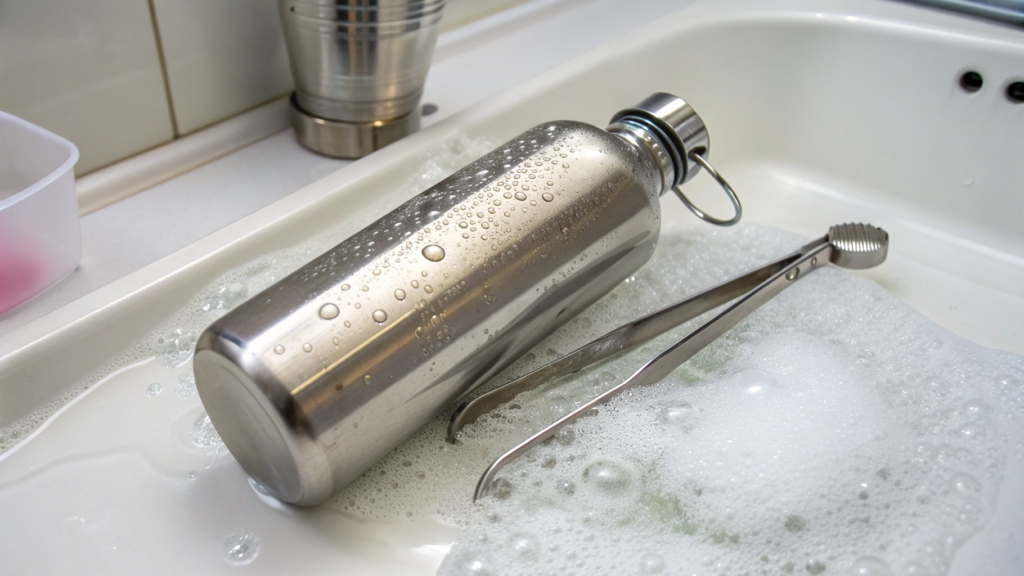
I have always maintained that high-quality stainless steel (18/8 grade) should be chemically inert and taste neutral. If you taste metal, it means something is interfering with the metal's natural stability. It is often a remnant from the manufacturing process—a fine film of polishing compound or oil—that was not fully washed out. Sometimes, the taste is caused by a biofilm build-up from repeated use, which creates an off-flavor that people mistakenly identify as "metal." For my clients, I stress that reliably great-tasting water requires a blend of chemistry knowledge and a simple cleaning discipline. The fix is usually cheap and easy. You just need to restore the bottle's chemically inert, clean surface. Let me share the methods that work best.
How do I make my water not taste like metal, and is the bottle at fault?
Are you wondering if the metallic flavor is coming from your tap water or the bottle itself? You need to isolate the cause to fix the issue.
The metallic taste is usually caused by residue in the bottle or a reaction between the water's minerals and the stainless steel's surface. To eliminate the taste, ensure you are using an 18/8 (304 grade)1** stainless steel bottle, which is chemically inert. Then, deep-clean the bottle with a mild acid, like white vinegar or lemon juice, to remove any factory oils or mineral scale. This process restores the bottle's neutral surface2.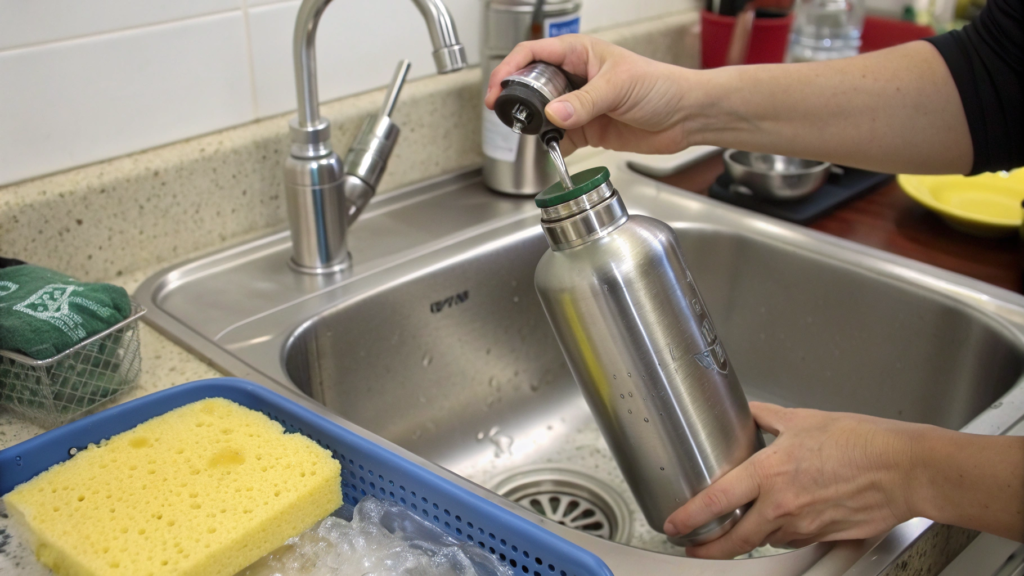
When I encounter this issue, I first confirm the bottle's quality. High-quality stainless steel forms a thin, stable chromium-oxide layer. This layer prevents the metal from touching the water. If you taste metal, this protective layer is being blocked or hasn't fully formed on a brand new bottle.
The Vinegar and Baking Soda Fix
This is the most effective two-step process to restore taste purity:
- Acid Soak (Residue Removal): Fill the bottle a quarter of the way with white vinegar. Top it up with hot water. Screw the lid on loosely and let it sit overnight. The acid breaks down factory oils, residual glue, or mineral deposits that are trapping off-flavors.
- Base Scrub (Odor Neutralization): After rinsing the vinegar, add a teaspoon of baking soda and a splash of water. Use a bottle brush to scrub the interior, paying special attention to the neck and the base. Baking soda is a gentle abrasive that neutralizes any lingering odors.
Checking the Lid and Seal
Sometimes the "metallic" taste is actually a mild plastic or rubber odor coming from the lid's silicone gasket or plastic spout. If the main bottle is clean, disassemble the lid. Soak the gasket separately in the vinegar solution. The lid and its seals must be kept just as clean as the bottle body to ensure pure taste. A good, minimal-contact lid is key to preserving clarity.
| Cleaning Agent | Primary Function | Application |
|---|---|---|
| White Vinegar | Removes residues, mineral scale, factory oils | 1 part vinegar, 4 parts water; soak overnight |
| Baking Soda | Neutralizes odors, gentle abrasive | Scrub with brush after vinegar soak |
| Bottle Brush | Physical removal of biofilm in crevices | Essential for narrow-neck bottles |
How to get rid of steel taste in water bottle quickly after cleaning?
You have cleaned the bottle, but a slight metallic ghost remains. You need a fast, simple rinse to neutralize the lingering odor.
After deep-cleaning3 with vinegar or baking soda, the lingering "steel" taste is usually a remnant of the cleaner itself. To get rid of it quickly, rinse the bottle with a mixture of cold water and a few drops of fresh lemon juice**. The natural citric acid neutralizes any residual baking soda or vinegar. Then, fill the bottle with cold tap water and let it sit open in the refrigerator for an hour before sealing and using.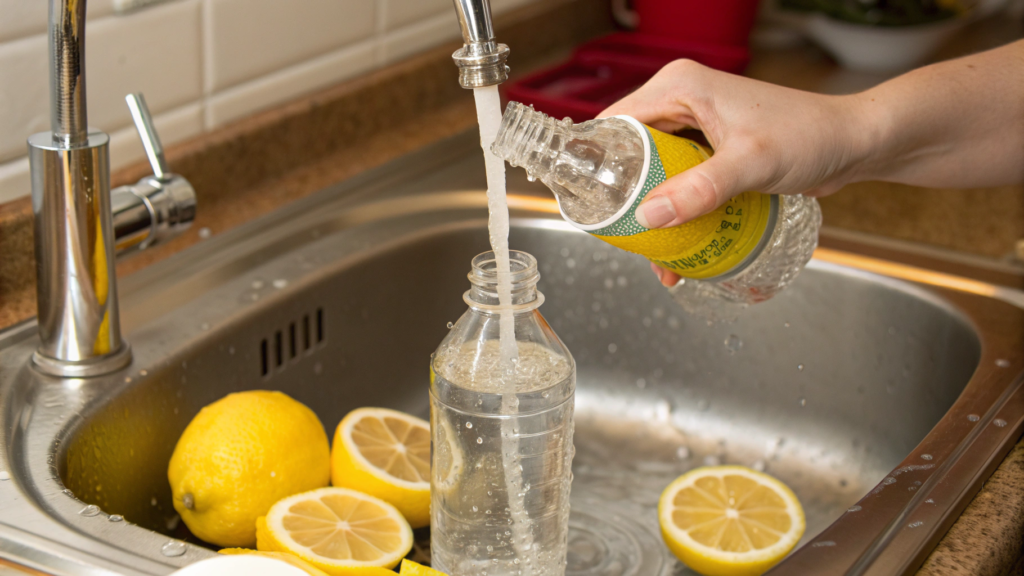
I have found that a simple rinse is often overlooked. You must ensure all cleaning agents are fully removed. If you used baking soda, the taste might be a slight alkalinity. If you used vinegar, it might be a subtle sourness. Both can be mistaken for an off-flavor.
The Lemon Neutralization Technique
Lemon juice is a perfect neutralizer. Its light, natural acidity quickly balances any residual flavors on the inert stainless steel surface. The taste you are trying to achieve is nothing. The rinse process is about restoring true neutrality.
- Cold Rinse: Use very cold water. Cold temperatures naturally subdue off-flavors.
- Lemon Drop: Add just a few drops of fresh lemon juice—do not overdo it.
- Final Airing: After the final rinse, dry the bottle completely. Do not seal a wet bottle. Let it air-dry upside down on a rack. Sealing a wet bottle traps humidity and allows new odors and bacteria to start forming immediately. A dry, clean, open surface is the goal.
Preventative Routine
The best way to prevent the metallic taste is a daily simple rinse and a weekly deep clean. Never leave sugary or flavored drinks in the bottle overnight. Sugars create the perfect environment for bacteria and biofilm, which cause the unpleasant "off-taste" that users often confuse with metallic leaching.
What happens if I drink water that tastes like metal, and is it a health concern?
Are you worried that a metallic-tasting water bottle is dangerous or toxic? You need to know when to clean and when to replace the product.
**In most cases, drinking water that tastes faintly like metal from a new stainless steel bottle is not a major health concern. The flavor is typically caused by harmless surface residue or mineral buildup. However, a persistent, strong metallic taste, especially in older or dented bottles, could indicate a failure of the stainless steel's passivation layer. While still usually non-toxic, if the taste is strong and persists after cleaning, you should replace the bottle to ensure continuous safety and pure flavor.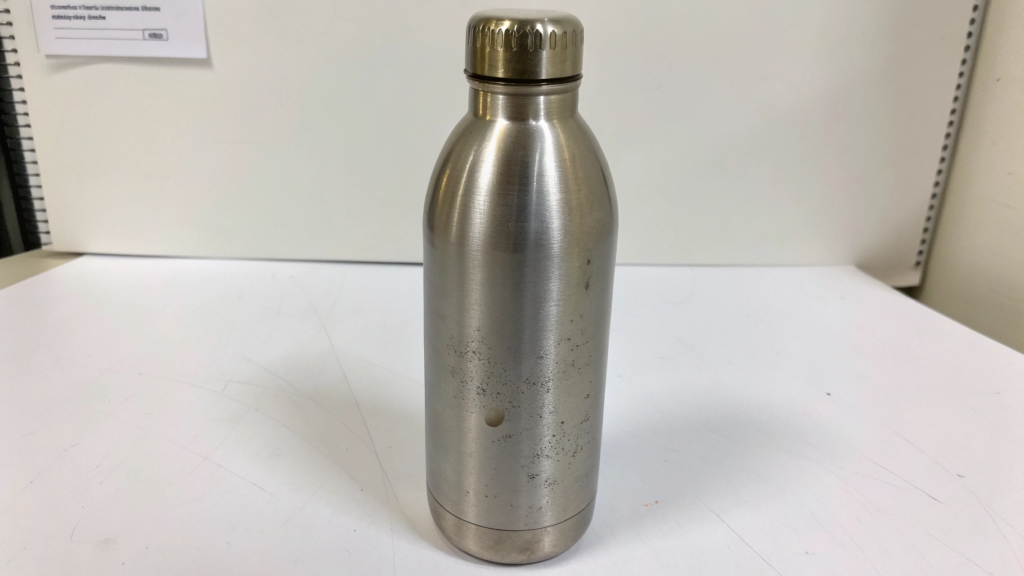
As a supplier, I always stress safety first. The good news is that 18/8 stainless steel is food-grade for a reason. Its components (iron, chromium, nickel) are stable and generally not toxic at the trace levels that might be released if the passivation layer is temporarily broken.
When to Clean vs. When to Replace
- New Bottle/Faint Taste: CLEAN. This is almost certainly residue. Use the vinegar and baking soda method.
- Used Bottle/Off-Taste: CLEAN. This is 99% a biofilm issue. This is not toxic at first, but it is unhygienic and unpleasant.
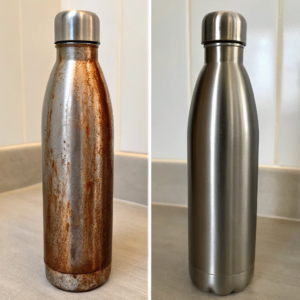
- Old, Dented Bottle/Strong, Persistent Taste: REPLACE. A strong metallic taste that will not go away after a deep clean might suggest that the metal itself is degrading due to rust or a prolonged failure of the passivation layer. While rare in 18/8 steel, any breakdown is a sign the material is no longer inert. Since water bottles are a key health item, replace it when you can no longer guarantee the pure, neutral taste.
Protecting the Integrity
The key to lifelong pure-tasting water is maintaining the inert surface. Never store harsh chemicals or cleaning products in the bottle. Always store the bottle with the lid off to allow for complete air circulation and drying. This simple habit protects the steel's surface and guarantees that every sip tastes fresh and clean, just as the manufacturer intended.
Conclusion
Remove the metallic taste by deep-cleaning with a vinegar soak to remove residue. Follow with a baking soda scrub and a lemon rinse. Store the bottle dry and open to maintain its neutral, inert surface.
-
Explore this link to understand why 18/8 stainless steel is essential for safe and taste-neutral water bottles. ↩
-
Understand the significance of maintaining a neutral surface in your water bottle for optimal taste. ↩
-
Find effective deep-cleaning methods to ensure your water bottle remains safe and taste-free. ↩