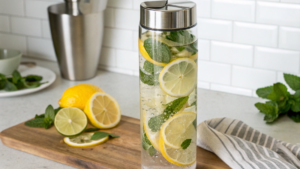
Can I use a steel bottle for infused water?
Drinking plain water can get boring, so you add lemon or mint for flavor. But you might worry that the acid in the fruit will damage your metal bottle or make the water taste like iron. This worry stops you from enjoying a healthy habit.
Yes, you can safely use a stainless steel bottle for infused water. High-quality food-grade stainless steel (304 or 18/8) is non-reactive. This means it will not leach chemicals or change the taste of your drink, even with acidic fruits like lemons or oranges.
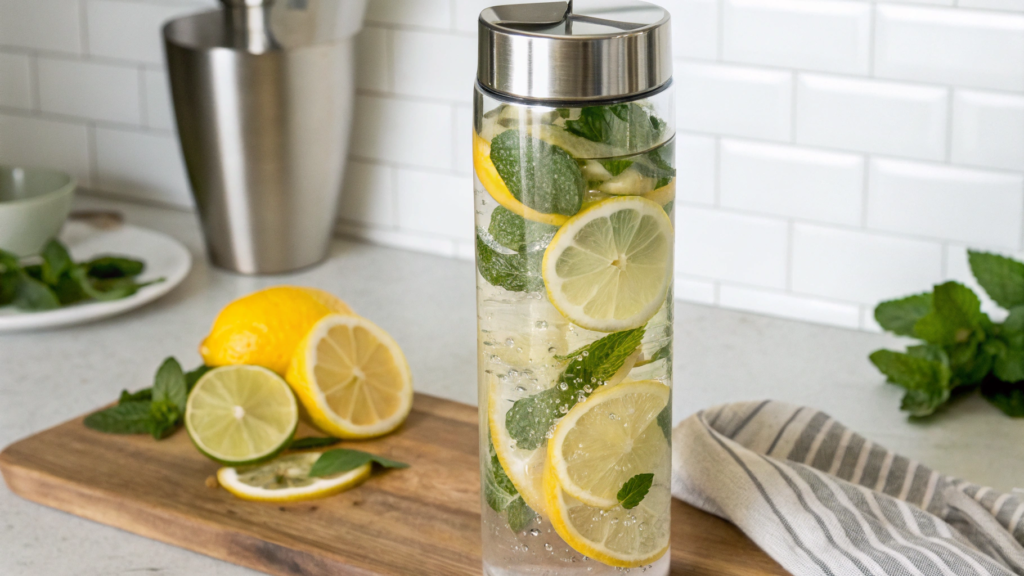
I have spent years on the factory floor watching how different materials are treated and printed. I know that many people fear "metal poisoning" from their bottles, but the truth is about the quality of the steel. If you use a high-quality insulated bottle, you actually get a better experience than plastic. It keeps your fruit fresh and your water cold for an entire day. But you have to treat the bottle as a system, not just a bucket. If you want to know how to keep your infusions tasting fresh without "ghosting" flavors, stay with me.
Is it safe to drink water in a stainless steel bottle?
You want a bottle that lasts forever, but you hear stories about metallic tastes or "leaching." This makes you feel like you are trading convenience for your health.
It is completely safe to drink from a stainless steel bottle if it is made from 304-grade (18/8) steel1. This material is used in professional kitchens and hospitals because it does not harbor bacteria and does not react with food or liquids.
Why Grade Matters
When I talk to marketing managers like Jacky about corporate gifts, I always check the "spec sheet." Cheap "stainless" steel can sometimes have a metallic smell. That is usually 201-grade steel, which is not as resistant to rust. Always look for 18/8 stainless steel. The "18" is chromium (for rust resistance) and the "8" is nickel (for shine and strength). In the printing factory, we only used high-grade steel because it holds the paint better and stays safe for the user.
Safety Comparison: Steel vs. Others
| Feature | 18/8 Stainless Steel | Cheap Plastic | Glass |
|---|---|---|---|
| BPA/Chemicals | Zero | High Risk | Zero |
| Durability | Excellent | Medium | Low (Fragile) |
| Reaction to Acid | Non-reactive | Can degrade | Non-reactive |
Does stainless steel give off microplastics?
You are likely trying to reduce your plastic waste to help the planet and protect your body. But you might wonder if the lid or the coating of a metal bottle has the same problems.
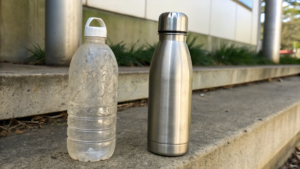
No, stainless steel does not give off microplastics because it is a solid metal alloy. By switching to a steel bottle, you significantly reduce your daily exposure to microplastics that are commonly found in disposable plastic water bottles.
A Clean Break from Plastic
Microplastics are a huge concern for people who value sustainability. When I see a brand move from plastic to steel, I see a brand that cares about the long-term. Steel is a "forever" material. It doesn't shed fibers or particles into your drink. However, remember that most steel bottles have a silicone seal in the lid. This is a food-safe material, not a plastic, and it won't break down into microplastics. This makes steel one of the cleanest ways to carry your water.
Environmental Impact
- Endless Recyclability2: Steel can be melted down and turned into new products forever.
- Durability: One steel bottle can replace thousands of plastic ones over its life.
- No Leaching: It stays safe even if it sits in a hot car, unlike plastic.
What is the healthiest material for a water bottle?
You want the absolute best for your body, but you are overwhelmed by choices: Glass, Steel, Ceramic, or Tritan? You don't want to make a choice that you'll regret in six months.
The healthiest materials are glass and 18/8 stainless steel. Glass is perfectly inert but fragile. Stainless steel is just as safe but much more durable and offers insulation to keep your water at a healthy, refreshing temperature.
The "Ghosting" Problem
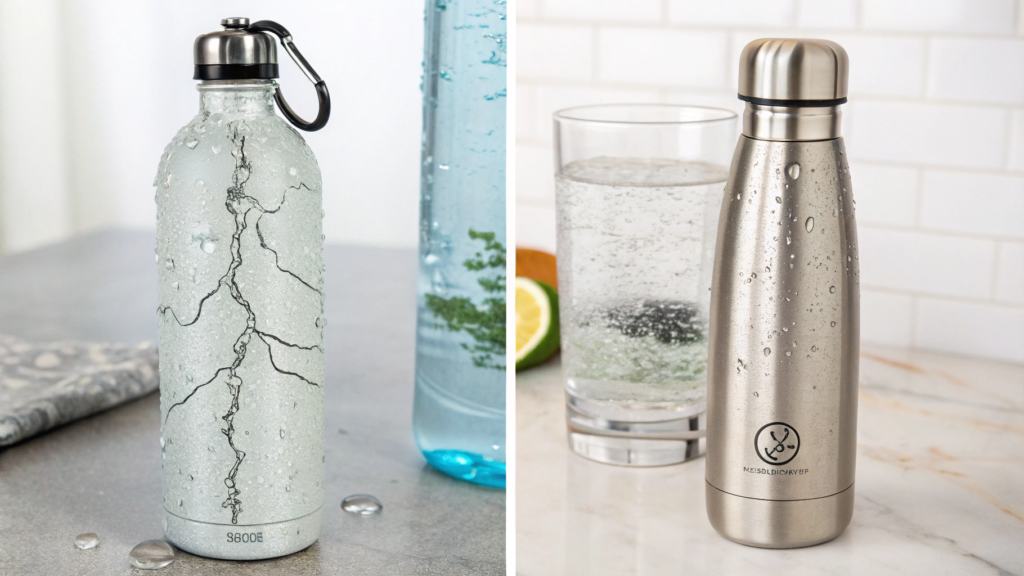
I have noticed a common issue with infused water: "ghosting." This is when your water today tastes like the cucumber you put in the bottle three days ago. People think it’s the metal, but it’s actually the silicone seal or the lids. Citrus oils and mint can stick to these soft parts.
To keep your bottle at its healthiest, you must take it apart. Remove the silicone ring and wash it separately. I use a simple mix of vinegar and water to clear out old smells. This is part of the "intentional thinking" I apply to my gear—taking care of the tool so it can take care of you.
Wildcard: Ceramic-Lined Steel
If you are a "flavor purist" and you don't like the feeling of metal on your lips, you should look at ceramic-lined stainless steel. It gives you the durability of steel but the completely neutral taste of a ceramic mug. It’s a great middle ground that many marketing managers are starting to choose for premium gifts.
Healthy Material Ranking3
- Borosilicate Glass: Purest taste, zero reaction, but breaks easily.
- 18/8 Stainless Steel: Extremely safe, durable, and keeps drinks cold.
- Ceramic-Lined Steel: Best for flavor purists who want a "mug" feel.
- Tritan Plastic: Good for the gym (lightweight), but still a synthetic material.
Conclusion
Stainless steel is an excellent, safe, and sustainable choice for infused water. It protects your health by avoiding chemicals and microplastics4 while keeping your infusions fresh. Just remember to clean the seals regularly to keep the flavors sharp and clean.
Would you like some tips on the best fruit combinations that won't leave a lasting scent in your bottle?
-
Explore the benefits of 304-grade steel, widely used in kitchens for its safety and durability. ↩
-
Find out how stainless steel's recyclability contributes to sustainability. ↩
-
Get insights into the best materials for water bottles to ensure your health and safety. ↩
-
Understand the impact of microplastics on health and why switching to steel can help. ↩