What Are the Best Types of Lapel Pins for Telling a Brand Story?
Are you looking for a lapel pin that makes a lasting impression, not just a trinket? The "best" pins are micro-products designed for purpose. I will show you how to match the finish to your story.
**The best types of lapel pins are defined by how well the manufacturing technique (material, scale, and finish) aligns with their intended purpose. For high perceived value and longevity, hard-enamel pins are superior, while soft-enamel pins offer better textural detail and lower cost. The ideal pin balances craftsmanship with production awareness, ensuring the tiny metal disc becomes a durable token of identity.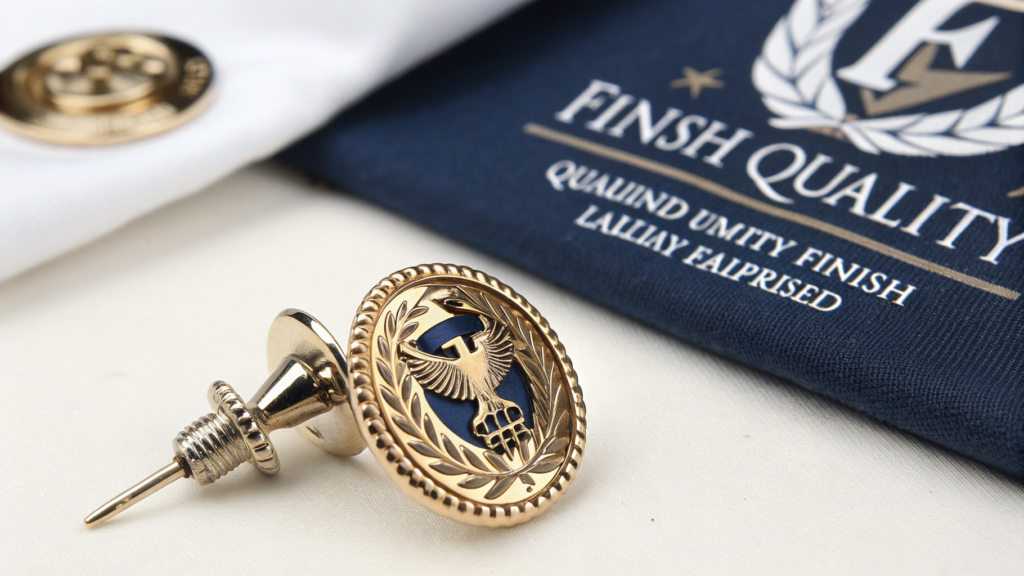
When I first started in production, I viewed lapel pins simply as small metal discs. I quickly realized they are miniature marketing tools. A poorly made pin ends up in a drawer. A well-crafted pin is worn and talked about. My take is that the best pins balance craftsmanship with a smart production plan. Let me break down how to choose the right technique to serve the story you want the pin to tell.
What is the Best Material for Lapel Pins to Maximize Value?
Do you worry about choosing a material that looks cheap or causes allergies? The material and plating set the tone for quality. This choice affects both perceived value and wearability.
**The best material for lapel pins is typically brass or a nickel-free zinc alloy because they offer excellent moldability for detailed designs and are more hypoallergenic than standard cheaper metals. Plating choices like matte black PVD, antique brass, or gold significantly maximize perceived value and durability, transforming a base metal into a premium, collectible item.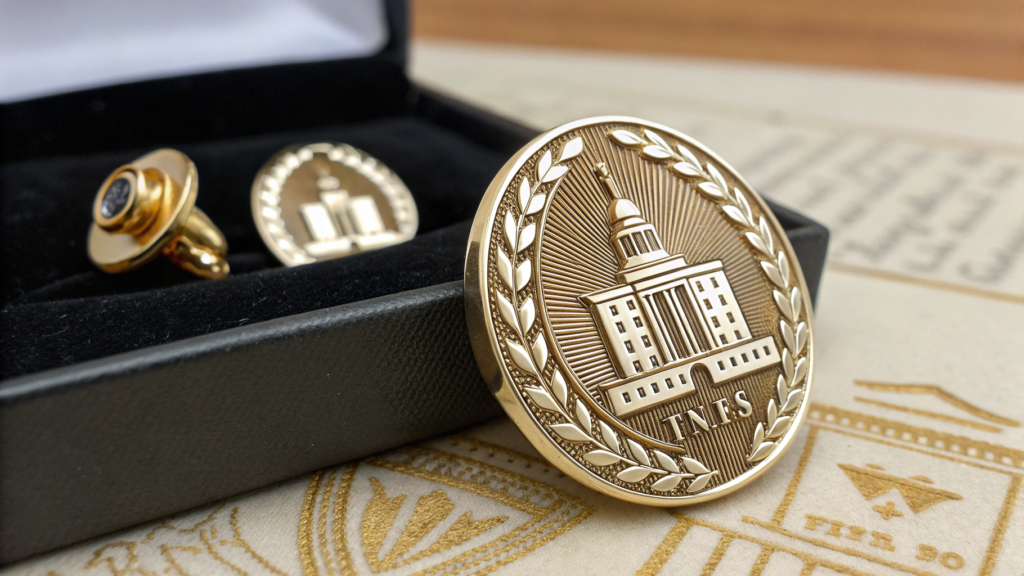
I always advise clients like Jacky to look beyond the enamel color and focus on the metal base. The base material dictates the pin's weight, feel, and detailing capability. Brass is fantastic for premium pins because it allows for very fine detail in the die-striking process and has a pleasant, heavy feel. Nickel-free zinc alloys are a great alternative, especially when budget matters, as they are easily cast and address the common concern of nickel allergies. The material choice shapes the perceived quality. I learned early on that the pin's weight often equates to its value in the recipient's mind. But the most critical part is the plating.
How Does Plating Impact the Pin's Final Look and Feel?
Plating is the final layer that transforms the pin. It is not just about the color; it is about the finish. A high-shine gold plating suggests luxury and traditional awards. An antique brass finish suggests heritage, history, and a worn, authentic feel. For modern, sleek brands, a matte black PVD plating provides a clean, contemporary look that reduces glare. When a brand chooses a finish, it is choosing a visual language. For a brand reinforcing trust and legacy, I would recommend antique plating. For a tech brand, I would suggest nickel or matte black. My experience has shown that these small finish details dramatically reduce returns and increase daily wearability because they elevate the pin from a cheap handout to a desired accessory. We insist on robust fasteners, like locking clutches, over simple butterfly clutches because the backing determines if the pin stays attached to the jacket or bag.
| Metal Base | Best Use Case | Key Advantage | Plating Options |
|---|---|---|---|
| Brass | Premium, Fine Detail, Longevity | High weight and excellent detailing | Gold, Silver, Antique Brass, Nickel |
| Zinc Alloy | Budget, Complex Shapes (Casting) | Cost-effective and versatile | Nickel-free options available |
| Recycled Metals | Sustainability Focus | Strong ethical storytelling | Matte finishes to highlight texture |
We always emphasize testing a 1:1 sample for legibility. Even the best materials fail if the artwork is too complex at pin scale. Simplifying the design, limiting tiny text, and choosing a base metal that can handle the chosen plating are crucial steps in turning a small design into a durable token of identity that people actually want to wear.
Are Soft or Hard Enamel Pins Better for Collectibility?
Are you deciding between the smooth finish of hard enamel1 and the textured feel of soft enamel? The choice impacts both the budget and the pin's intended use. The difference is about longevity versus detail.
**For collectibility, longevity, and high perceived value, hard enamel pins are superior because the enamel is polished flush with the metal lines, creating a smooth, jewelry-like finish that resists chipping. Soft enamel pins, however, are better for budget-conscious campaigns and designs requiring distinct texture or fine recessed details, as the metal lines stand proud above the recessed color.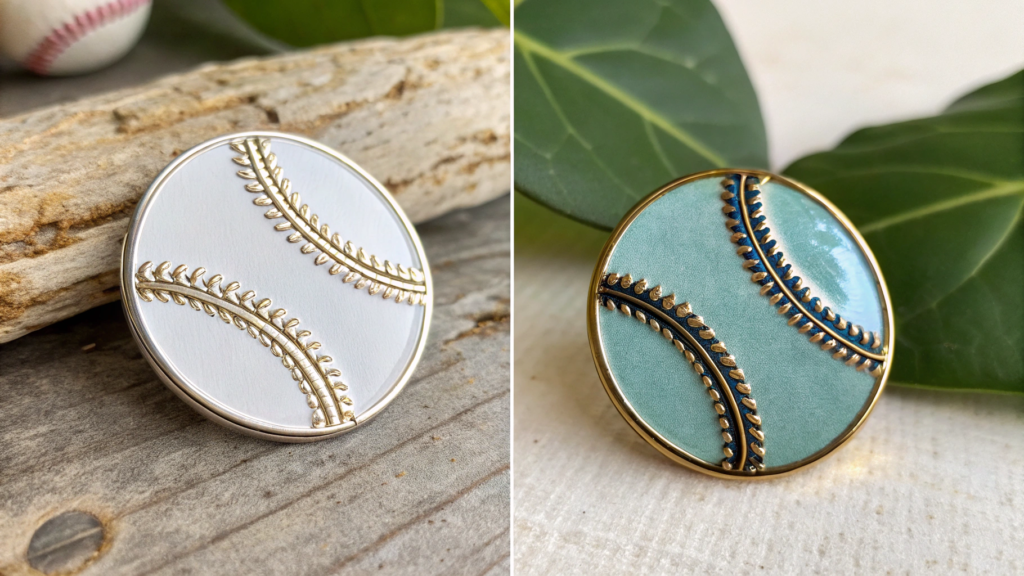
This is the most common question I get in the lapel pin world. The difference between hard and soft enamel is not about quality—it is about the process and the finish. Hard enamel is essentially tiny glass powder fired at high heat, and then the final surface is polished flat and flush with the metal boundary lines. This process results in a very smooth, durable, high-quality finish that gives the pin a premium, heirloom feel, which is why it is often chosen for anniversary awards or collectible series. Soft enamel, in contrast, is fired at a lower temperature, and the color sits in the recessed areas, creating distinct valleys and ridges. The metal lines feel raised, giving the pin texture and contrast.
When Should You Choose Soft Enamel Over Hard Enamel?
You should choose soft enamel2 when budget and visual detail are your top priorities. Because soft enamel requires fewer firing and polishing steps, the unit cost is significantly lower, which is perfect for large-scale giveaways or event merchandise. Furthermore, the recessed areas in soft enamel naturally capture light and shadow, which can make fine details or complex logos pop more than the flat, smooth look of hard enamel. If your design has fine lines or needs a strong, noticeable texture, soft enamel is the smarter choice. My insight is that scalable programs use soft enamel because the tooling and Minimum Order Quantity (MOQ) are usually more forgiving, making per-unit pricing more predictable. The final decision is about matching the pin's purpose to the manufacturing reality. If the pin is meant to be a simple, fun, high-volume item, soft enamel wins. If it is meant to be a high-value, long-term token of appreciation, hard enamel is the better investment.
What is the Difference Between Lapel Pins and Enamel Pins?
Are you confused about the exact terminology for these small accessories? The terms are often used interchangeably, but there is a clear technical relationship. Understanding the difference helps you specify the right product.
*A lapel pin is the general term for any small ornamental accessory attached to clothing, particularly the lapel. An enamel pin is a type* of lapel pin, specifically one where the design is created using an enamel filling (either hard or soft) within metal recesses. Thus, all enamel pins are lapel pins, but not all lapel pins use enamel.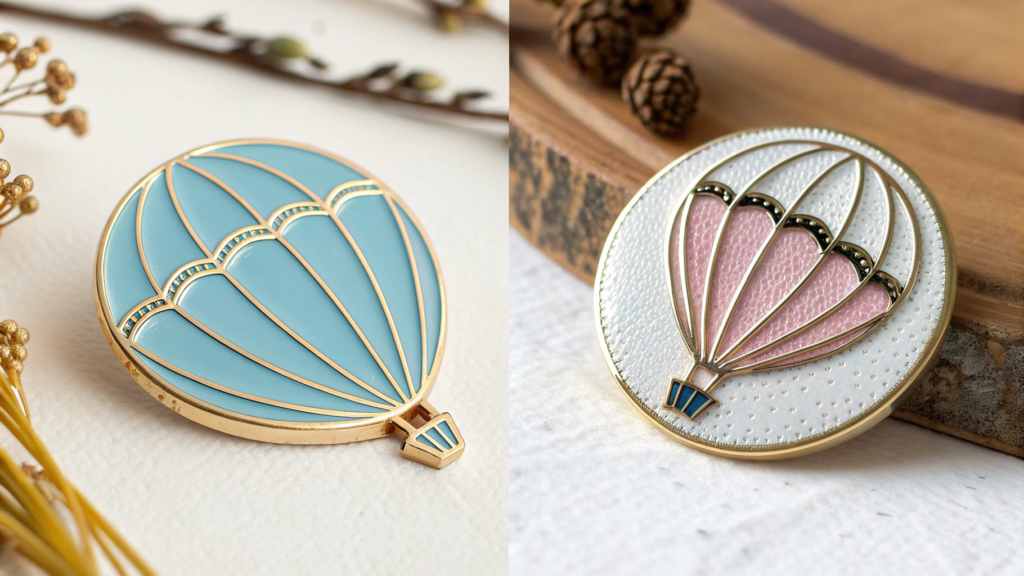
In the industry, we use "lapel pin" as the umbrella category. It includes enamel pins, but also other techniques that do not use enamel. For example, a pin made with a die-struck process—which means the metal is struck by a die to create raised and recessed areas—but left uncolored is a lapel pin, but not an enamel pin. Another example is an offset-print pin3, where a photographic image or complex gradient is printed onto a metal surface and covered with an epoxy dome. This is a lapel pin, but it does not use the enamel filling process. The distinction matters because it helps you choose the correct manufacturing method for your artwork. If Jacky's company logo uses a photographic element or a gradient (a smooth transition of colors), I would immediately recommend an offset-print pin, not an enamel pin, as enamel cannot replicate photographic details well.
How Does the Manufacturing Process Define the Pin Type?
The manufacturing process is what defines the pin type. The classic enamel pin is made by stamping metal, filling the recessed areas with color, and then finishing it. An offset-print pin requires digital printing and epoxy coating. A die-cast pin is made by pouring molten metal into a mold, allowing for complex 3D shapes that are difficult to achieve with the traditional die-striking used for flat enamel pins. We always advise clients to treat the packaging and a short provenance note as part of the product experience. A custom backing card with a QR code linking to the pin's story or the brand's values dramatically increases the pin's perceived value and memorability, regardless of the technique used. The best pin is one where the production technique is chosen to support the intended function, ensuring the small metal disc is a lasting and effective tool for branding.
Conclusion
The "best" lapel pin is a micro-product that matches its purpose: hard enamel for premium value, soft enamel for texture and budget, and materials like brass for longevity. Choose the technique that best tells your brand's story.