Can Paper Bags with Handles Be Reused Multiple Times for Real Sustainability?
Are you curious if a paper bag with handles offers genuine sustainability? The answer is more complex than a simple "yes." I believe true reusability depends entirely on intelligent design and your careful use.
Yes, paper bags with handles can be reused multiple times, but their longevity is driven by the bag's engineering—specifically the paper's weight (GSM), reinforced gussets, and securely anchored handles. A well-made kraft bag used for dry, lightweight loads can significantly reduce waste and outperform dozens of single-use plastics in lifecycle impact, proving their practical sustainability.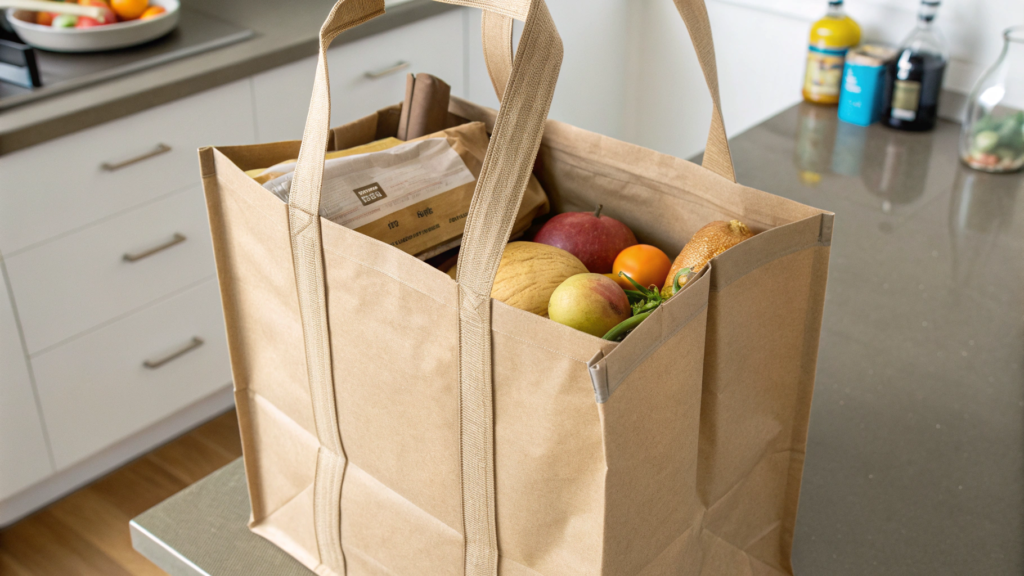
When I discuss sustainable packaging with clients like Jacky, the paper bag always comes up. It seems like a simple, low-tech solution, but its real sustainability runs deeper than the "eco" sticker. A flimsy, thin bag will fail immediately. A heavy-duty, well-made kraft bag, however, can become a reliable tool. I will share how we can measure success by realistic reuse cycles, not just by what the bag is made of.
How Many Times Can You Realistically Reuse a Paper Bag?
Do you find your paper bags failing after just one or two uses? That is a design problem, not a material problem. The reuse potential is determined by three key levers.
The realistic number of reuse cycles for a paper bag with handles ranges from 3 to 20+ uses, depending entirely on three factors: the paper's weight (a heavier 140+ GSM provides more strength), the nature of the load (light, dry items are ideal), and user behavior (careful folding and avoiding moisture). A quality bag should be able to withstand 5 to 10 typical shopping trips easily.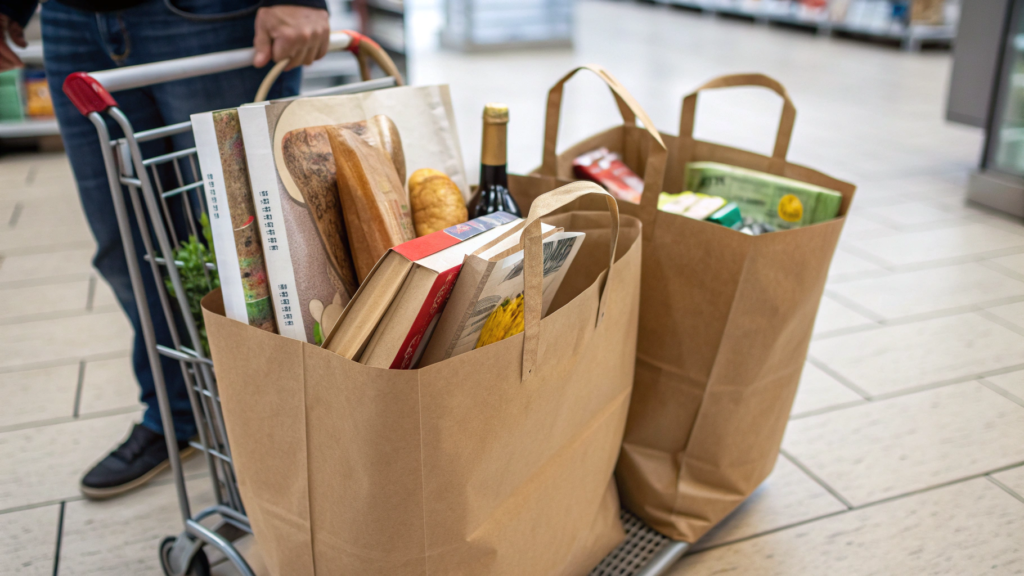
In the printing and packaging industry, we know that durability1 is engineered, not accidental. When a client needs a high-reuse bag for corporate gifting or retail, I focus on three levers: Engineering, Behavior, and Function. Engineering is about the specs: paper weight (GSM), reinforced gussets (the folds at the bottom), and handle anchoring (glued, sewn, or patched). A simple, thin-pulpy checkout bag will fail quickly. A high-quality kraft bag with securely attached rope handles can survive 20–30 trips if used properly. Behavior is the user's part: avoiding wet items, not overloading the bag, and folding it properly between uses. Minor fixes, like reinforcing a slightly torn handle with a simple piece of tape, can dramatically extend its life. Function means recognizing the bag's limits—it is great for dry goods, books, or secondary uses like storage, but not for heavy groceries or liquids.
Why Does Handle Anchoring Matter More Than the Paper Itself?
The handles are the most common point of failure. A paper bag is only as strong as the connection point of its handles. The strongest bags use handles that are either sewn into the paper layers or reinforced with a patch of heavier material glued firmly to the inside of the bag. Weaker, single-use bags often have handles that are just glued onto the surface. When you put weight into the bag, the paper around the glue rips first. By specifying a strong anchoring method, we are designing for repeat use. Jacky, as a Marketing Manager, understands that a handle failure reflects poorly on his brand’s attention to quality. A durable handle shows the brand is committed to creating a reliable product. This is a subtle yet powerful branding statement that suggests reliability and longevity.
| Paper Bag Feature | Impact on Reuse Cycles | Brand Perception |
|---|---|---|
| Heavy Paper (140+ GSM) | High: Resists tears and punctures | Durable, Premium Quality |
| Secure Handle Anchoring | Highest: Prevents common failure point | Reliable, Thoughtful Design |
| Untreated Kraft Paper | High: Maintains strength when dry | Natural, Easily Recyclable |
When brands design for predictable reuse by targeting these levers, the paper bag moves from being a simple carryout container to a pragmatic, low-tech tool that genuinely reduces overall waste. This means measuring success by realistic reuse cycles, not just by a vague "eco" label.
Why Don't Paper Bags Always Have Handles Anymore?
Have you noticed that some retailers are ditching the handles on their paper bags? This is often a move driven by two factors: cost savings and an attempt to simplify end-of-life recycling.
Some retailers eliminate handles on paper bags primarily to reduce production costs and to simplify the recycling process, as handles often contain materials (plastic film, rope, or specific glues) that can complicate pulping. However, this shift reduces the bag's reusability and utility, potentially leading consumers to discard them sooner, which undermines the core goal of waste reduction.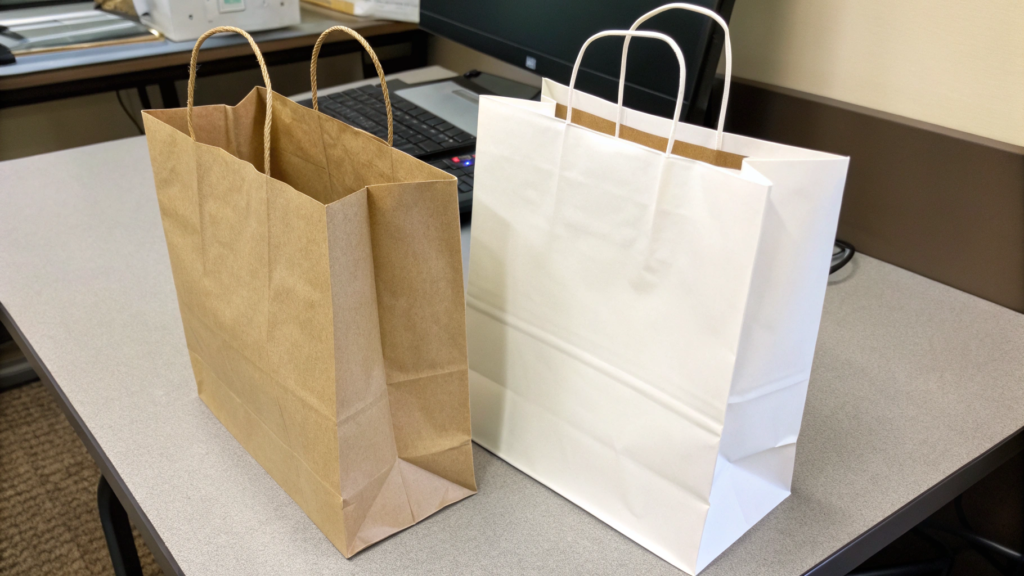
From a production standpoint, handles add complexity and cost. Attaching a twisted paper or rope handle requires extra machinery and materials, which increases the unit price compared to a simple, handle-less sack. For high-volume, low-margin retailers, removing the handle saves significant money. The second reason is recycling integrity. While paper is recyclable, the handles sometimes contain materials that are not easily separated in the standard pulping process. For instance, some rope handles are made of cotton-poly blends, and flat paper handles often use strong glues or plastic coatings to secure the attachment points. If a recycler aims for the purest paper pulp, these additions become contaminants.
Does Removing the Handle Really Improve Sustainability?
I argue that removing the handle is often a short-sighted approach that hurts true sustainability. The primary driver of a paper bag's positive lifecycle impact is its reuse. By removing the handle, the bag becomes much less functional, especially for carrying multiple items or using it as a secondary shopping bag. A bag without a handle is less likely to be reused. If a consumer throws away a handle-less bag after one use, its lifecycle impact is worse than a bag with a handle that was reused five times. The better solution is to design the handle for recycling. This means specifying handles made from 100% paper materials attached with water-based inks and glues. This design philosophy—designing for repeat use and honest disposal—is far more effective than simply reducing functionality for the sake of cheaper production or easier processing. We focus on finding solutions that satisfy both the brand's need for an attractive presentation and the consumer's need for a functional, repeatable carrying tool.
Are Paper Bags with Handles Recyclable at the End of Their Life?
Do you stop reusing your handled paper bags because you are unsure if they are recyclable? Most bags are, but you must look closely at two parts: the handle material and any coating.
Yes, most standard kraft paper bags with handles are recyclable, but recyclability depends on handle composition and coating. Bags with 100% paper handles (flat or twisted) and no plastic coating are easily recyclable. However, bags with thick rope, plastic-tipped handles, or glossy plastic coatings may need the handles removed before disposal, or they may be rejected by standard facilities.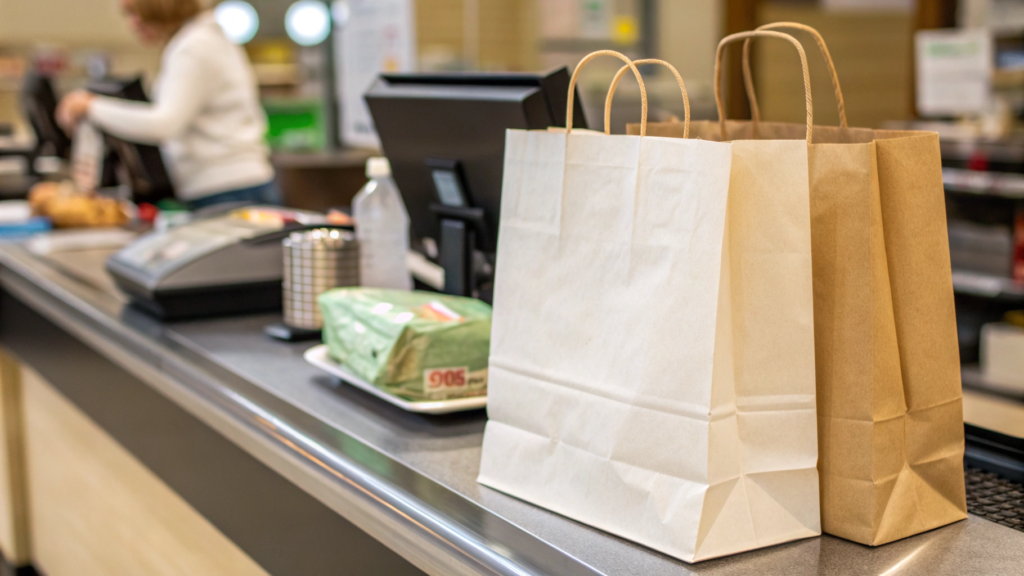
This is where honest lifecycle thinking is critical. A reusable item eventually becomes waste, and its end-of-life integrity is a measure of its true sustainability. If a paper bag is made from untreated kraft paper and has paper handles secured with water-based glue, it can go straight into the paper recycling bin. This is the ideal scenario we promote. However, problems arise with hybrids. Many high-end retail paper bags have features that reduce recyclability despite their multiple uses. These features include: a glossy, non-recyclable plastic coating, heavy rope or ribbon handles made from synthetic fabrics, or large metal eyelets for the handles. We advise Jacky's company to use clear recycling labels on the bag to guide the user.
How to Maximize the Recyclability of Your Paper Bag?
The consumer has a role in maximizing the bag's recyclability. If your paper bag has a synthetic rope handle or a plastic coating, you should remove those parts before placing the paper body into the recycling bin. The paper body itself, even if it has a small amount of non-paper glue, is usually accepted. This small behavioral step—separating the paper from the rope or plastic—ensures the pure paper fiber can be captured and reused. The reality is that a heavier kraft bag that is reused 15 times and then responsibly recycled is a far more sustainable product than a thinner bag used once, even if the latter is technically "more recyclable." The focus must always be on reuse cycles2 first, and then on end-of-life integrity. When brands specify clean, untreated paper, water-based inks, and easily separable handles, they make the consumer's job easy and the product genuinely sustainable.
Conclusion
Paper bags with handles offer excellent sustainability when designed for durability and repeat use. Focus on high paper weight, strong handle anchors, and responsible reuse to maximize their value and minimize environmental impact3.