How Much Does It Really Cost to Print Logos on Custom T-Shirts?
Are you just focused on the cheapest price per shirt, ignoring long-term brand impact? This limited view can cost your business more in the end.
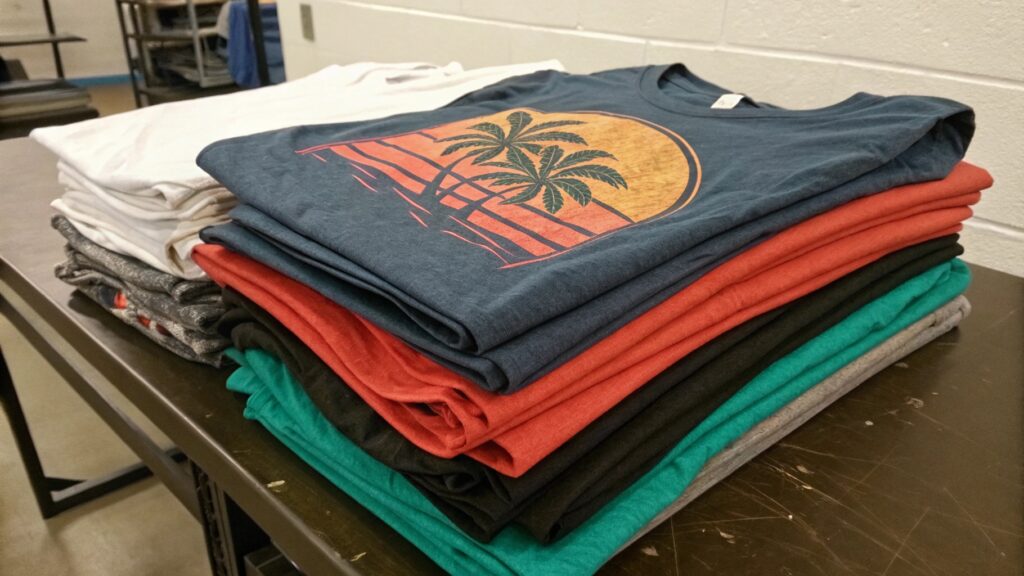
The true cost of custom logo T-shirts is determined by strategic choices like the printing method, number of colors, and order volume; these choices directly influence the quality, durability, and ultimately, the perceived value of your brand.
 ![]()
![]()
Early in my career, I saw businesses constantly choosing the cheapest options, only to have their logos peel off after a few washes. This damages credibility. If you are a branding manager, you need to see T-shirts as an investment, not an expense. The price you pay is merely one part of the equation; the real value lies in the strategy behind the print. Let us dive into the details to ensure your custom shirts enhance your brand, not cheapen it.
Can I Design My Own T-Shirt Online and Still Achieve Professional Quality?
Are you relying solely on basic online design tools, worried that you cannot achieve a truly professional result? Limited tools can restrict your vision.
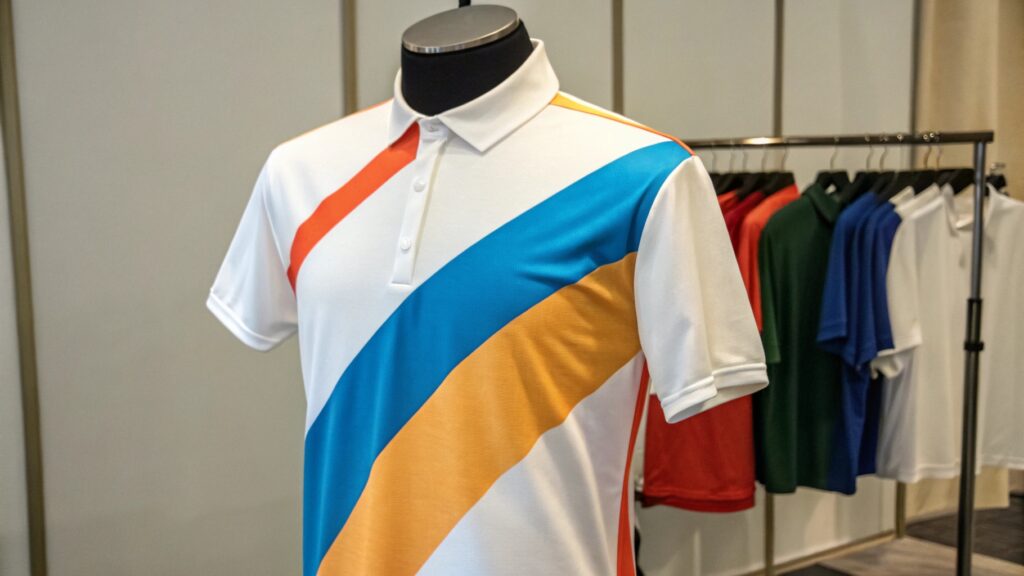
Yes, you can design your own T-shirt online, but achieving professional quality requires using high-resolution vector graphics, understanding color separation, and selecting a supplier who provides expert design checks and consultation before the final print execution.
 ![]()
![]()
Many clients, especially those managing busy marketing roles like Jacky, look for speed and convenience by using online design platforms. While these tools are excellent for mock-ups, they often fall short when dealing with the technical requirements of high-quality printing. I always emphasize that the digital design must be print-ready1. This means the artwork must be provided as vector files, ensuring that the logo can be scaled without losing resolution. Imagine a complex logo with fine details; a low-resolution file will result in a blurry or pixelated final print, which reflects poorly on your brand's attention to detail. This is a critical factor for premium branding. We must critically ask: Does my design process ensure that what I see on the screen is exactly what the customer sees on the shirt, at a high quality level? This is where the supplier's expertise becomes essential. A reliable partner should act as a safety net, checking for common errors like incorrect color modes (RGB vs. CMYK/Pantone) and ensuring proper logo placement and sizing for the garment.
The Three Technical Pillars of Professional T-Shirt Design
- Vector Files: Using formats like AI or EPS ensures your logo remains crisp and scalable, which is vital for screen printing or embroidery.
- Color Accuracy: Matching colors to a Pantone reference (or providing exact hex codes) ensures brand consistency across different merchandise.
- Resolution Check: The design needs to be at least 300 DPI (dots per inch) at the final print size for sharp, clear detail, especially for Direct-to-Garment (DTG) printing.
To maintain professional quality when designing online, follow this preparation guide:
| Design Aspect | Technical Requirement | Brand Impact of Failure |
|---|---|---|
| Artwork Format | Vector (.ai, .eps) or High-Res Raster (300 DPI) | Logo appears blurry or pixelated |
| Color Specification | Pantone Solid Coated Codes (e.g., PMS 286 C) | Brand colors look faded or incorrect |
| Print Placement | Exact measurements (e.g., 2 inches below collar) | Shirt looks amateurish and unbalanced |
The difference between a DIY online design and a professionally printed shirt often comes down to these technical details. Investing a little time in getting the files right and choosing a supplier who verifies the artwork is the best way to ensure the final product elevates your brand's image.
What is the Cheapest T-Shirt Printing Method and Is It Worth the Savings?
Are you searching for the lowest possible cost, potentially sacrificing print quality and durability? Chasing the bottom line often leads to short-lived merchandise.
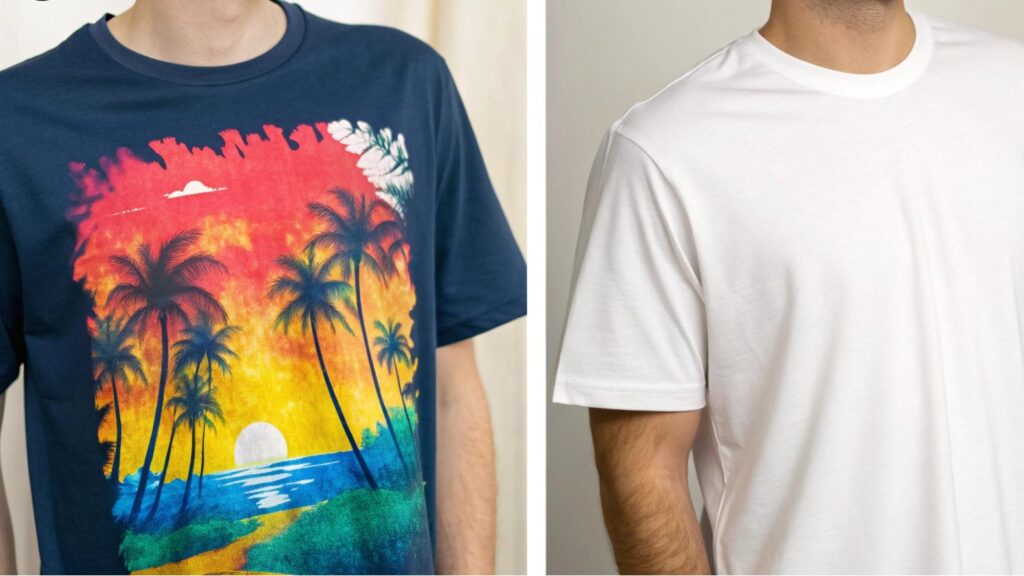
The cheapest printing method is typically Vinyl Heat Transfer for very small, single-color orders or Screen Printing for large bulk orders (500+ shirts); however, the savings may not be worth it if the method does not match your logo's complexity or the shirt's intended lifespan.
 ![]()
![]()
When clients ask about the cheapest option, I always shift the conversation from cost to cost-per-wear. A shirt printed cheaply with vinyl that cracks after three washes has a higher true cost than a slightly more expensive screen-printed shirt that lasts three years. The "cheapest" method depends entirely on your needs. For very high-volume orders, screen printing becomes the most cost-effective solution because the high initial setup cost (making the screens) is spread across thousands of units, driving the per-unit price down significantly while offering excellent durability. However, if your logo has many colors (more than 6) or subtle photographic gradients, Direct-to-Garment (DTG)2 printing is often a better choice, even if the per-unit cost is slightly higher, because it handles complexity perfectly. The critical consideration is: Does this printing method preserve the integrity and professional look of my complex brand logo? A single-color logo on 500 shirts should always use screen printing. A full-color, photographic design on 50 shirts should use DTG.
Cost vs. Quality Comparison of Popular Methods
- Screen Printing: Best for large volumes, 1-6 solid colors. Offers high durability and vibrant color saturation. High initial setup cost, but low cost per shirt.
- Direct-to-Garment (DTG): Best for low volumes, full-color complexity, and photographic images. No setup cost, but higher ink/labor cost per shirt.
- Vinyl Heat Transfer: Best for individual names/numbers and very small, single-color orders. Low quality and prone to cracking/peeling quickly.
Use this table to align your needs with the appropriate method:
| Method | Best For | Typical Order Size | Cost-Per-Wear Rating |
|---|---|---|---|
| Screen Printing | Simple logos, solid colors | High (100+) | Excellent (Very Durable) |
| Direct-to-Garment (DTG) | Complex, multi-color logos | Low to Medium (1-100) | Good (Soft feel, good wash) |
| Vinyl Transfer | Names, numbers, single color text | Very Low (1-10) | Poor (Prone to peeling) |
The small extra investment in a superior printing method ensures that your corporate gift is a long-lasting billboard for your brand, not a piece of disposable merchandise. When budgeting, always factor in the longevity and quality that reflects the professionalism of your company.
What T-Shirt Designs Sell Best and Align with Strong Corporate Branding?
Are you struggling to create a design that people actually want to wear, rather than just store in a drawer? A forgettable design wastes your entire marketing budget.
The best-selling T-shirt designs for corporate branding are those that feature minimalist logos, subtle aesthetic branding, and high utility, making the wearer feel like they are promoting a lifestyle or statement, not just acting as a walking advertisement for a company.
 ![]()
![]()
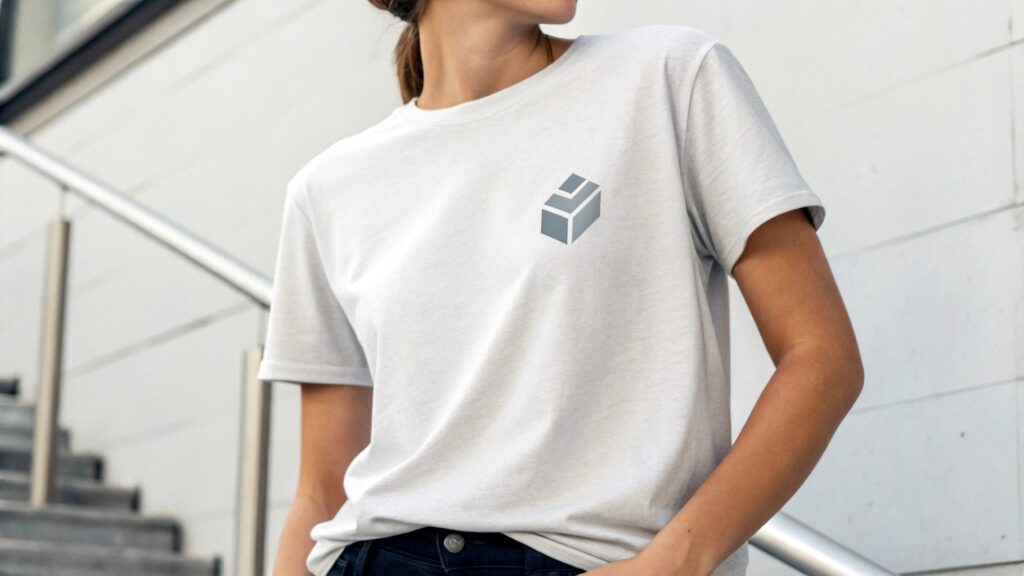
This is the most critical branding question. I have seen marketing managers overthink this, leading to busy, cluttered designs that nobody wants to wear publicly. Think about Jacky's perspective: he values high-quality, well-designed items. The designs that sell best, or more accurately, the designs that are worn most often, are the ones that prioritize the wearer's comfort3 and style over the company's advertising needs. This often means moving away from a large, centered, aggressively placed logo. Instead, focus on a small, minimalist logo placed on the sleeve, the back yoke, or the chest pocket area. This subtle approach signals confidence and sophistication. It makes the shirt feel more like desirable apparel and less like a uniform. The shirt becomes an aspirational item. The key insight is: People wear what reflects their taste. If your design is stylish, they become voluntary brand advocates. If it is purely promotional, they treat it like a giveaway.
Strategic Design Approaches for Wearability
- The Minimalist Logo: Use a small, high-quality, embroidered or subtly printed logo in a low-visibility spot (e.g., hip or cuff). This creates a premium feel.
- The Statement Graphic: Incorporate a graphic or phrase that relates to your company's mission or industry culture, but is stylish and standalone. This appeals to niche interests.
- High-Quality Base Garment: Choose soft, comfortable fabrics and modern fits (e.g., ringspun cotton, eco-friendly blends). The better the shirt feels, the more it is worn.
To maximize wearability and branding, consider this design shift:
| Design Strategy | Example Placement | Wearer's Perception | Brand Benefit |
|---|---|---|---|
| Aggressive Branding | Large logo centered on the chest | "I am wearing an ad." | Low use, short lifespan |
| Subtle Branding | Small embroidered logo on the sleeve | "I like this shirt, and I support this brand." | High use, long-term visibility |
By creating a product that people genuinely want to wear, you transform a simple expense into a powerful, long-term marketing asset. The best designs are those where the company's logo is a detail, not the entire focal point. This is how T-shirts truly become an investment in your brand's image.
Conclusion
The cost of a custom T-shirt is not just the price tag; it is the strategic investment you make in quality printing and design. This ensures your shirts become valuable, lasting assets for brand awareness.