Why Does Water Taste Better from a Stainless Steel Container Compared to Other Materials?
Are you tired of your water tasting faintly of plastic or metal? The container material is the number one reason your water lacks that crisp, fresh taste.
**Water often tastes better from a stainless steel container due to a blend of chemistry and thermal engineering. High-quality stainless steel (typically 18/8 grade) is chemically inert, meaning it prevents corrosion and does not leach flavors or chemicals into the water. This effect is maximized when the bottle is double-wall insulated, keeping the water colder. Colder water tastes naturally crisper and fresher.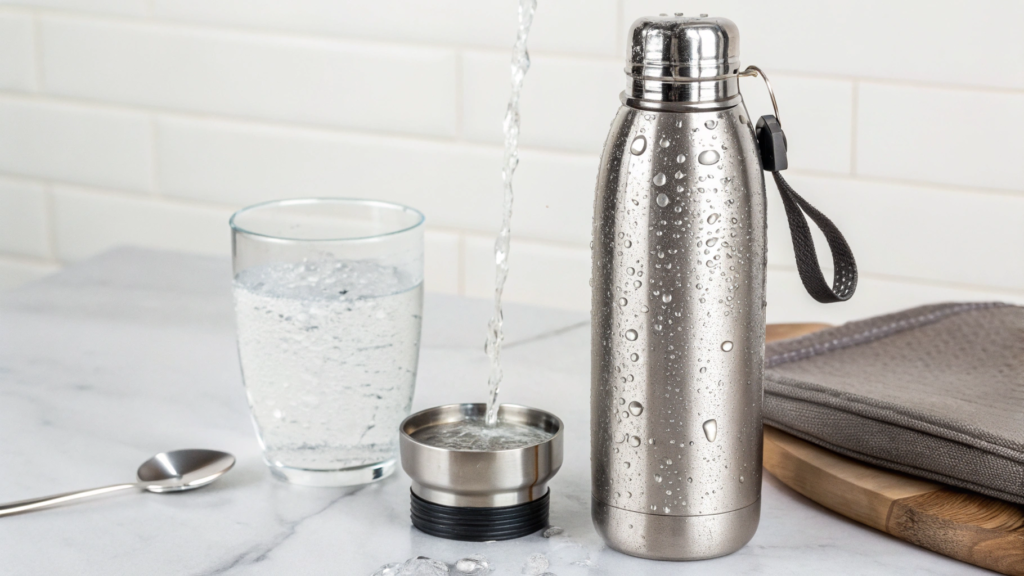
I have spent years studying the relationship between materials and flavor transfer. When it comes to corporate gifts, the best products enhance the user experience. For a water bottle, that means pure taste. I learned that the superior taste from stainless steel is not magic. It is engineering. The metal forms a thin, stable chromium-oxide layer. This layer prevents metal corrosion. This keeps the surface completely neutral. This stability is the key to clarity in every sip. If you want reliably great-tasting water, you must choose an unlined 18/8 double-wall bottle. This choice minimizes chemistry and maximizes freshness. Let me break down the reasons why this simple metal provides the best taste experience.
Why does water taste better in stainless steel, and how does the finish matter?
Are you wondering what makes stainless steel taste neutral when other metals do not? The surface quality is crucial to preventing flavor transfer.
**Water tastes better in stainless steel because the metal's passive layer makes the surface chemically inert. This prevents the metal from reacting with the water's minerals or absorbing previous flavors. The interior finish matters greatly. A smooth, mirror-polished stainless steel interior reduces microscopic crevices where food residues and biofilm can collect, ensuring the bottle stays clean and neutral-tasting.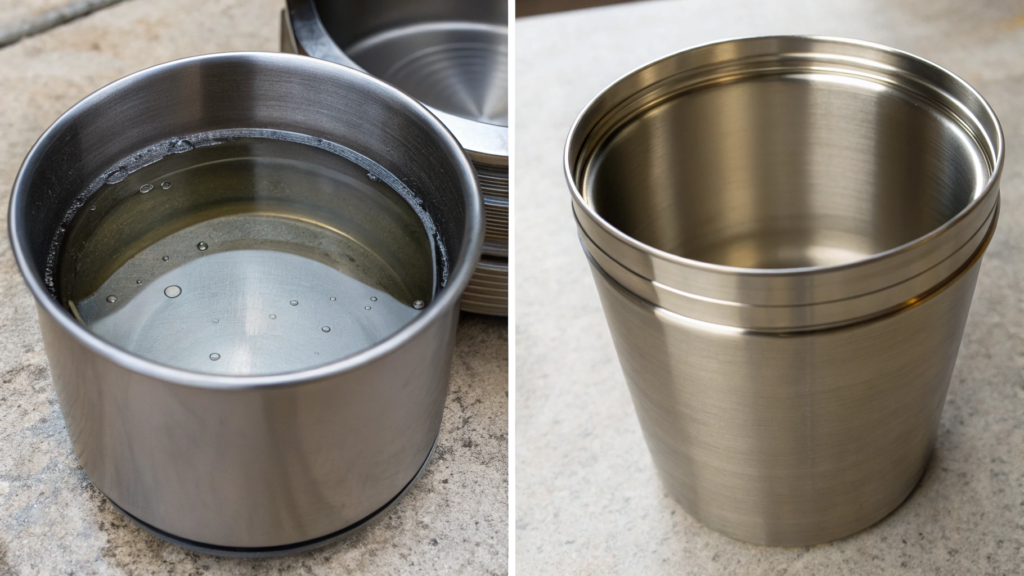
I often tell clients that the quality of the bottle is defined by the quality of the surface you cannot see. Stainless steel (18/8 grade) is a blend of iron, chromium, and nickel. The chromium immediately reacts with oxygen to form a non-reactive layer. This layer is called the passivation layer. This stability is what keeps the taste pure.
The Role of Chemical Inertness
The passivation layer acts as a perfect barrier. It prevents the metallic iron underneath from touching the water. If the water touched the bare iron, you would get a faint, unpleasant metallic taste. Because stainless steel1 is inert, you can put acidic drinks (like lemon water) in it. The metal will not react. This keeps the water tasting exactly as it should: clear and clean.
The Importance of the Polished Finish
A rough surface has tiny pits and valleys. These are perfect breeding grounds for bacteria and residual flavor compounds from coffee or juice. Even if you clean the bottle, the residue can cling to these microscopic crevices. A high-quality stainless steel bottle has a smooth, often mirror-polished interior. This finish is crucial. It minimizes the surface area where residue can collect. This feature is directly tied to flavor neutrality and hygiene.
The Lid and Gasket Problem
Do not forget the lid. The lid is often the source of bad taste in an otherwise good bottle. Low-grade plastic or silicone seals and gaskets can impart unpleasant odors into the water. The best bottles use a minimal-contact design. They often feature a stainless steel spout and only use small, food-grade silicone gaskets where necessary for sealing. This small design choice preserves the purity delivered by the stainless steel body.
| Feature | Impact on Water Taste | Quality Check |
|---|---|---|
| Passivation Layer | Prevents metallic leaching and reaction | Use unlined 18/8 or 304 grade steel |
| Interior Finish | Reduces crevices for biofilm/residue | Look for a smooth, polished interior |
| Lid Seal | Can impart plastic/silicone odors | Prefer stainless steel spout with food-grade silicone gasket |
Is it better to drink water out of glass or stainless steel, and how does temperature factor in?
When comparing the two safest materials, which one provides the best drinking experience? The answer often lies in temperature and context.
**For flavor purity and zero chemical interaction, glass is marginally superior due to its absolute inertness. However, stainless steel is generally better for a superior drinking experience because its double-wall vacuum insulation2 keeps water cold for hours. Colder water tastes naturally crisper and fresher to the human palate. Stainless steel is also far more practical and durable for everyday use.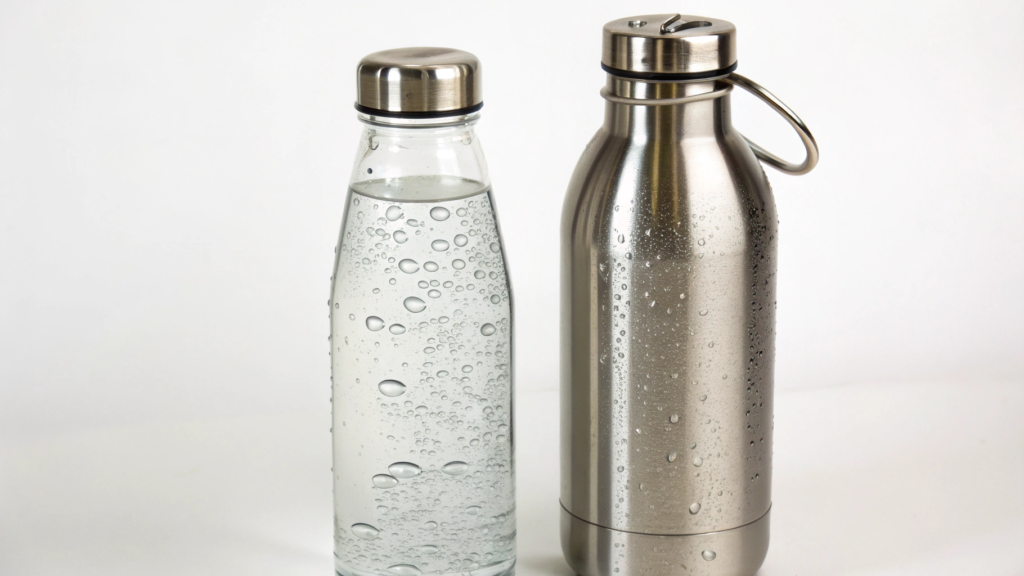
I often get asked which of the two non-toxic materials is best. Both are excellent choices. Glass provides the purest possible taste. It is fully transparent. But stainless steel's engineering makes it the practical winner for daily hydration.
The Power of Cold Water
The biggest factor that makes water taste "better" is temperature. Studies show that colder water activates specific sensory receptors in the mouth. This creates a perception of freshness and crispness. The vacuum-sealed, double-wall construction of insulated stainless steel bottles is the best way to keep water cold for eight to twenty-four hours. Glass bottles, even those with silicone sleeves, are poor insulators. For all-day hydration, stainless steel is simply better because it maintains the optimal taste temperature.
Context and Durability
- Glass: Best for desk use, home use, or when you are sipping infused water where flavor purity is the only concern. The major drawback is fragility.
- Stainless Steel: Best for active use, commuting, and long days. Its durability ensures the vessel remains safe and functional, and its insulation guarantees cold, crisp water.
I advise clients to choose stainless steel for promotional items. The superior durability guarantees that the product will be carried and seen for years. This maximizes the return on the branding investment.
Which metal is healthiest for drinking water, and why does the internal lining matter so much?
When health is the top priority, which metal offers the highest level of non-toxicity and safety?
**Food-grade stainless steel (18/8) is the healthiest metal for drinking water because it is non-reactive and does not require an internal lining. This is the crucial health difference: stainless steel's safety is guaranteed by its inherent structure. Aluminum, while a metal, must rely entirely on an inner epoxy or ceramic coating to prevent leaching. If that coating is scratched, the bottle poses a safety risk.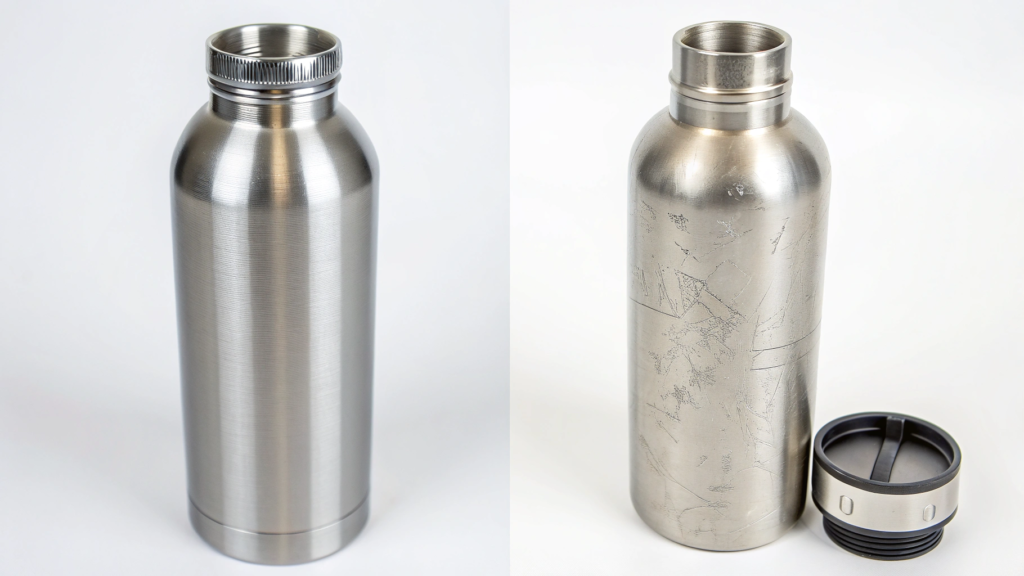
True safety means eliminating all variables. I learned that aluminum bottles, while very light, introduce a major variable: the liner. The liner is the weakest point of the entire system.
The Stainless Steel Advantage: No Liner, No Risk
Stainless steel's passivation layer makes it safe by itself. You can drop it, dent it, or wash it vigorously. The material remains inert. This is why it is used for surgical tools and professional kitchen equipment. It is naturally BPA-free3 and will not leach trace metals.
The Aluminum Liner Risk
Aluminum is safe only if its internal liner is 100% intact. This liner is often a plastic resin or epoxy. It can be easily compromised by a sharp object, a dent from a fall, or aggressive cleaning. If the liner fails, the reactive aluminum is exposed to the water. This dependency on a thin coating is the primary reason I advise against using aluminum for long-term corporate gifts, especially those intended for active use. The risk of the lining failing is too high.
| Material | Health Assurance | Risk Factor | Practicality for Brand |
|---|---|---|---|
| Stainless Steel (18/8) | Highest (Inert, no liner) | Zero risk of leaching or microplastics | High durability, guaranteed longevity |
| Aluminum (Lined) | Dependent on coating | High risk of liner failure if dropped | Lightweight, but health risk if damaged |
Conclusion
Water tastes better from a stainless steel container due to the double-wall insulation that keeps water cold and the 18/8 grade's inert surface. Choose a polished interior and a quality lid for the best, safest drinking experience.