Custom Enamel Pins: Are They the Best Way to Showcase Your Brand Identity?
Your brand needs a collectible item that lasts. Custom enamel pins are tiny but carry immense storytelling power for any identity.
Custom enamel pins are miniature, wearable symbols of belonging that merge artistry with tangible purpose. They are highly effective marketing tools for employee recognition and promotion because they offer a physical connection between a brand and its audience in a digital world.
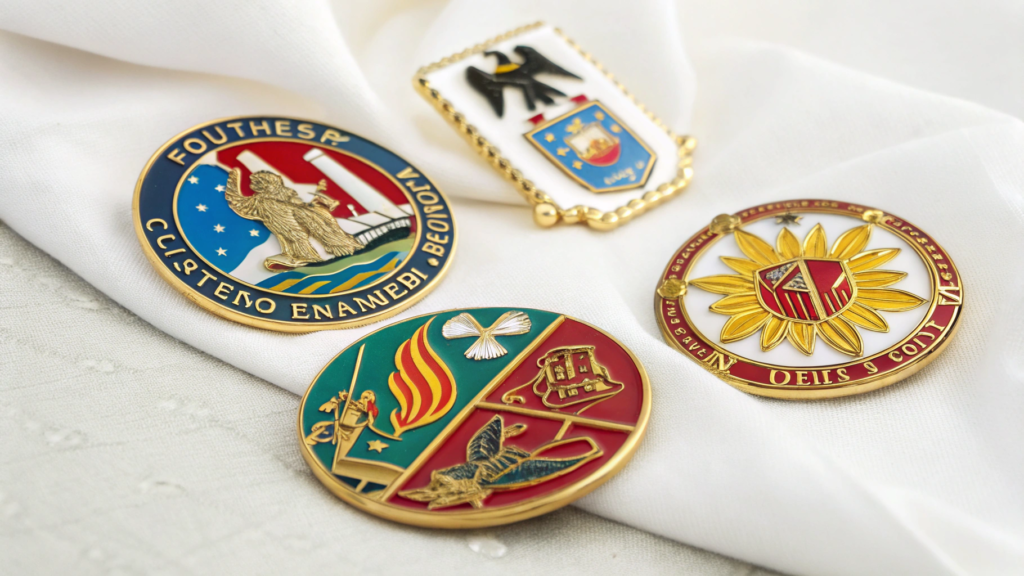
Custom enamel pins and lapel pins may be tiny in size, but they carry immense storytelling power. In an era when brand identity is expressed through personalization, these pins have become more than decorative accessories $\text{—}$ they’re wearable symbols of belonging and pride. From my perspective, what sets custom enamel pins apart is their ability to merge artistry with purpose. A well-designed pin doesn’t just feature a logo; it captures the spirit of a brand, event, or community. They’re tactile, collectible, and surprisingly emotional $\text{—}$ each one representing a moment, a message, or a shared value. For businesses, customized lapel pins offer an affordable yet high-impact marketing tool, perfect for employee recognition, product launches, or promotional giveaways. In a world dominated by digital impressions, enamel pins bring back something rare: a physical connection between a brand and its audience. It’s proof that sometimes, the smallest details create the most lasting impressions.
What Is the Difference Between a Lapel Pin and an Enamel Pin?
Do you use "lapel pin" and "enamel pin1" interchangeably? They are related, but one term describes the function, and the other describes the material.
A lapel pin is a general term describing where the item is worn (on a lapel or collar), while an enamel pin describes what the pin is made of $\text{—}$ specifically, metal filled with enamel coloring. All enamel pins can be lapel pin2s, but not all lapel pins are enamel pins.
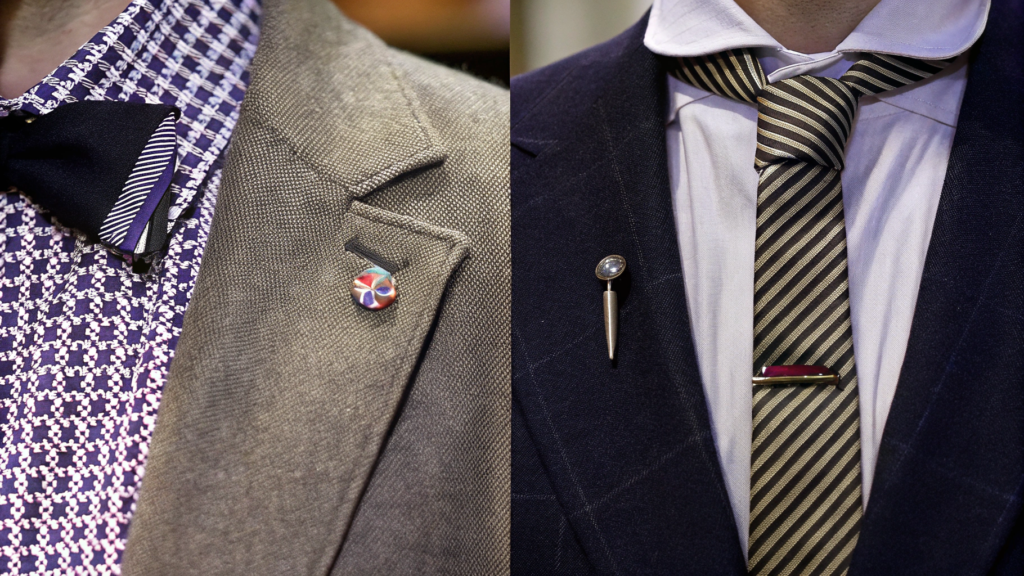
This distinction is important for product ordering, a detail I always clarify for clients like Jacky who manage marketing budgets. A lapel pin is purely a functional category. It refers to any small metal decorative object attached to clothing using a clutch or post backing, meant to sit on a lapel, collar, tie, or bag strap. This category includes pins made from simple stamped metal, acrylic, or even wood. An enamel pin, however, refers specifically to the construction. It means metal is used as a base, and the recessed areas of the design are filled with enamel, which is a powdered glass mixture that is cured with heat. Because enamel provides a vibrant, durable, and smooth finish, it is often the premium choice for branding detailed logos3 or colorful art. My hands-on experience in production showed me that an enamel pin has a superior, heavier feel compared to cheap stamped metal pins. If your design has multiple distinct colors that need to stay perfectly separate, the enamel process, particularly hard enamel, is designed to achieve that sharp separation. Essentially, "lapel pin" tells you where it goes; "enamel pin" tells you how it's made and usually suggests higher quality.
Pin Type Classification
| Term | Defines | Example Construction |
|---|---|---|
| Lapel Pin | Location/Function (Where it’s worn) | Stamped Metal, Acrylic, Hard Enamel, Soft Enamel. |
| Enamel Pin | Material/Finish (How it's made) | Metal base with recessed areas filled with colored glass powder. |
Why Are Custom Enamel Pins So Expensive?
You see the small size and wonder why the final cost is high. The expense comes from the metalwork and precision needed for quality.
Custom enamel pins are expensive due to the detailed metal mold creation, plating costs, and precise color filling required for quality. Unlike a simple print, enamel requires multiple, distinct manufacturing steps that add labor and material costs.
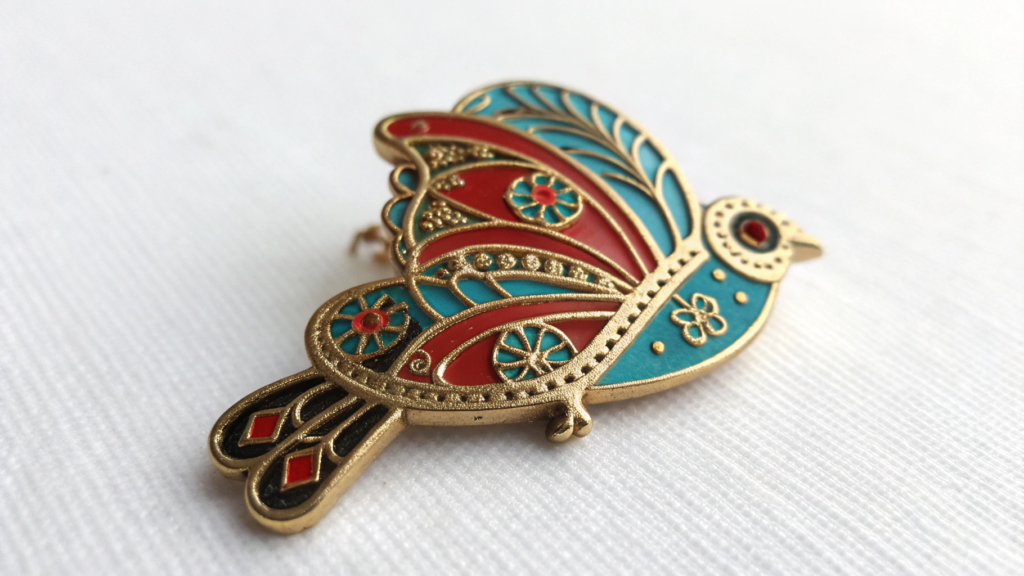
The cost of an enamel pin isn't just the material; it's the tooling and labor intensity. When I first started working with custom merchandise, I was surprised by the upfront costs. The main expense is the creation of the metal mold or die. This mold is necessary to stamp or cast the metal base (like brass or iron) to the exact shape of your design. This is a fixed cost that must be paid regardless of whether you order 50 pins or 500. Furthermore, the complexity of the design dictates the cost. If your design needs multiple metal outlines (metal lines separating each color section), the mold becomes more complex and costly. After molding, each color slot must be hand-filled with enamel powder, which is a labor-intensive process. If you opt for plating, like 18k gold or black nickel, that adds material cost too. For a small business owner like Jacky, this high initial cost is why ordering low quantities is expensive per piece. The cost-per-unit drops dramatically only once you reach higher volumes that absorb the initial mold creation fee. It’s an investment in a premium, tactile marketing item.
Are Soft or Hard Enamel Pins Better?
This is the biggest decision in enamel pin ordering. The "better" choice depends entirely on the look and feel you want for your brand message.
Hard enamel pins are generally considered better for premium, long-lasting branding because the enamel is polished smooth, making the pin durable and flat. Soft enamel pins have a recessed, textured surface that highlights the metal lines but can be less resilient to scratching.
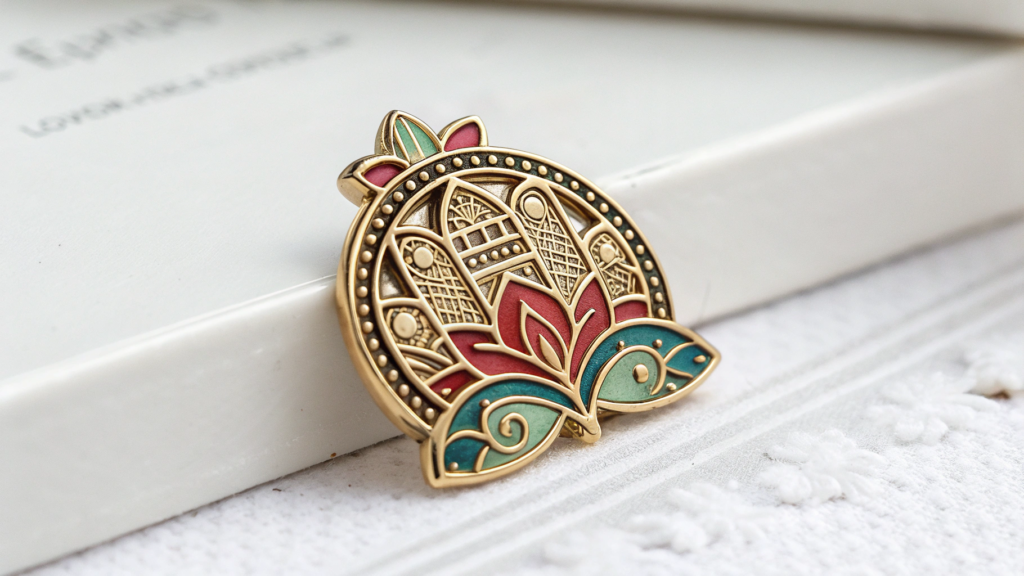
The choice between hard enamel and soft enamel defines the final product's character. Hard enamel (or cloisonné) is the more premium option. Here, the enamel is filled level with the metal outline and then polished down. The result is a smooth, jewelry-like finish that feels very substantial in the hand. I recommend this for high-value recognition awards or core brand logos where longevity is key. The metal lines are very thin, giving a sleek look. Soft enamel, on the other hand, is less expensive because the enamel is filled below the metal line. This creates a textured, 3D effect where you can feel the metal separating the colors. Soft enamel pins are often plated with antique finishes (like antique silver) to highlight this texture. While durable, the recessed areas can potentially trap dirt or be scraped if the pin gets heavily snagged. For a modern, sleek aesthetic that speaks to quality, hard enamel wins. For a more vintage, tactile feel that emphasizes the metal artwork, soft enamel works well. Both are vastly superior to simple painted metal pins, but hard enamel offers that lasting, tactile impression that truly resonates with the audience.
Comparison of Enamel Pin Types
| Feature | Hard Enamel (Cloisonné) | Soft Enamel |
|---|---|---|
| Surface Finish | Polished smooth, level with metal lines. | Textured, recessed color below the metal lines. |
| Durability | Very high; less prone to chipping. | Good, but texture can trap dirt or wear over time. |
| Aesthetic | Sleek, clean, jewelry-like, modern. | Dimensional, vintage, emphasizes metal outline. |
| Cost | Generally higher due to polishing step. | Generally lower. |
Conclusion
Enamel pins are powerful, physical brand tokens that offer collectible value; choose hard enamel for premium polish or soft enamel for tactile, vintage texture.
-
Discover the intricate process of making enamel pins and why they are a popular choice for custom designs. ↩
-
Explore this link to understand the versatile uses and significance of lapel pins in fashion and branding. ↩
-
Explore how enamel pins serve as effective marketing tools for showcasing detailed logos and designs. ↩