Why Should Your Retail Brand Re-Invest in High-Quality Paper Bags for Better Storytelling?
Are you still relying on cheap, flimsy plastic or paper bags that rip easily? A poor-quality bag destroys the premium feel of your product and hurts your brand's image.
Retail paper bags are a critical, quiet intersection of function and brand storytelling. The best bags protect the product, reduce environmental impact across a measurable lifecycle, and act as a continued physical brand touchpoint. Investing in high-quality kraft or recycled paper with reinforced construction ensures the bag is durable enough for reuse. This transforms a disposable expense into a measurable brand asset that increases perceived quality.
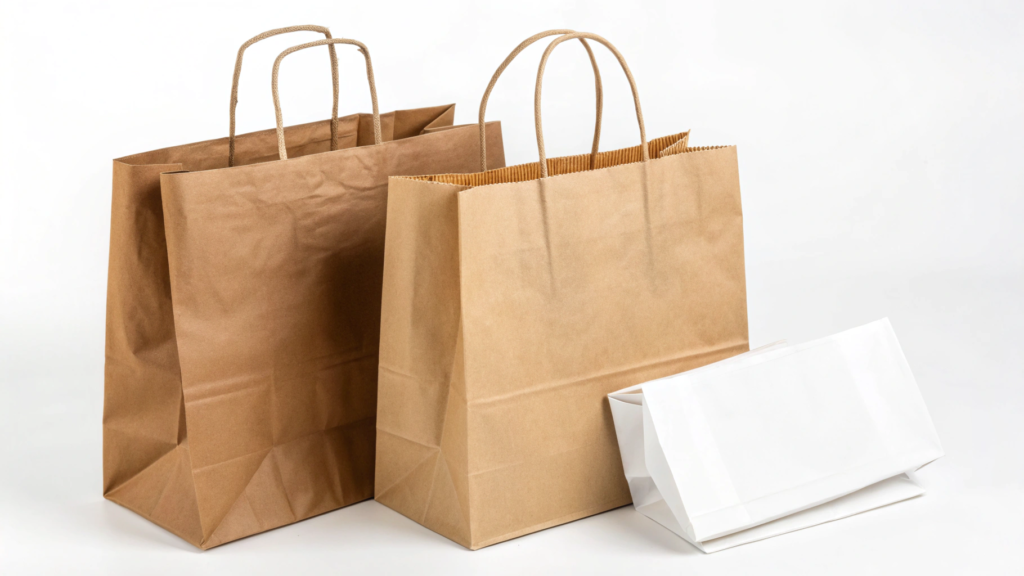
I have always seen the retail bag as the final handshake with the customer. It is the last physical item your customer touches when they leave your store. If that handshake is weak—if the bag tears—it undermines the entire in-store experience. I learned early in my career that every detail matters in branding. The weight of the paper, the strength of the handle, and the quality of the print all speak volumes about your commitment to quality. I advise businesses to treat the retail paper bag not as a cheap accessory, but as a deliberate product. It must tell a story of care and sustainability. When a brand takes this approach, the bag earns a second life, continuing to promote the brand long after the purchase. This is the difference between a simple expense and a smart investment.
Why did stores stop using paper bags, and why are they coming back now?
Are you confused about the historical shift away from and back to paper bags? Understanding this history is key to making a modern, responsible choice.
Stores initially moved away from paper bags largely due to plastic's lower unit cost and superior water resistance in the mid-20th century. However, paper bags are making a strong comeback now due to consumer demand for sustainability and the need to reduce plastic waste. New manufacturing processes that increase paper bag strength and utilize high levels of recycled content make them a preferred, eco-conscious choice for modern retail brands.
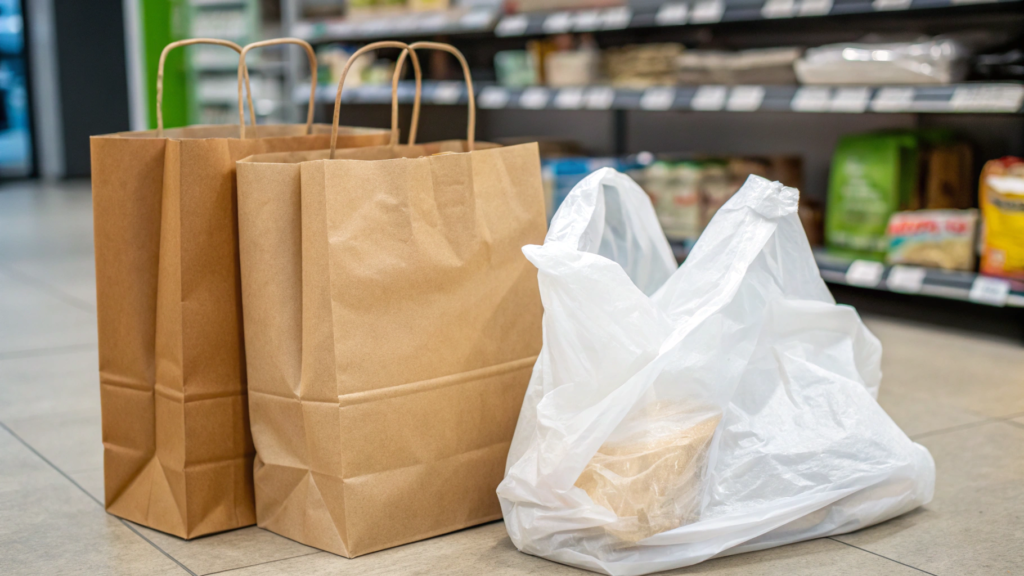
When I was younger, I saw the rise of the plastic bag. It was cheap, strong against rain, and easy for stores to order in massive quantities. But the hidden cost to the environment was massive. The retail world is now correcting this mistake.
The Shift to Plastic: Cost and Function
The primary drivers for the shift to plastic were cost efficiency and functional simplicity. Plastic bags are much lighter than paper. This made shipping and storage much cheaper for retailers. Plastic is inherently waterproof, which protected goods better on a rainy day. However, this focus on low unit cost overshadowed the material’s lack of recyclability and its long-term environmental damage. Many brands simply viewed the bag as a cost center to be minimized. This perspective is now outdated.
The Return of Paper: Sustainability and Brand Values
The return to paper is driven by consumer values. Today's customers are actively looking for brands that reduce their environmental footprint. Paper is renewable, recyclable, and biodegradable. The latest generation of retail paper bags is designed with better engineering. They use stronger, thicker kraft paper1 and more reliable handles. This increased durability allows for reuse, which is the ultimate goal. For a brand, using a recycled-content paper bag is a simple, visual way to communicate your commitment to a circular economy2. This positive association strengthens your brand image.
Paper as a Premium Experience
Paper bags, especially those with an unbleached or natural kraft finish, offer a texture and aesthetic that feels more premium and authentic than thin plastic. The crispness of the paper, combined with a clean logo, elevates the product inside. This enhances the in-store experience and makes the customer feel good about their purchase. I recommend treating the paper bag as an extension of your store’s design. This attention to detail is noticed by customers and often shared on social media, adding to your brand's organic reach.
| Bag Type | Historical Advantage | Modern Disadvantage | Modern Branding Strategy |
|---|---|---|---|
| Plastic Film | Low unit cost, waterproof | Non-renewable, pollution liability | Avoid for premium or sustainable brands |
| Paper (Kraft) | Recyclable, biodegradable | Higher unit cost, low water resistance | Use recycled/unbleached for eco-storytelling |
Why are paper bags not banned, and how does the lifecycle impact matter?
Are you confused about why some places charge for paper bags while others charge for plastic? You need to understand the true environmental balance.
Paper bags are generally not banned because, despite having a larger carbon footprint during production, their impact is offset by their high recycling rate and biodegradability. Their lifecycle advantage—being made from renewable resources and breaking down quickly—makes them a less harmful choice than plastic. The critical factor is reducing the bag's environmental impact by maximizing its reuse cycles, not just its material.
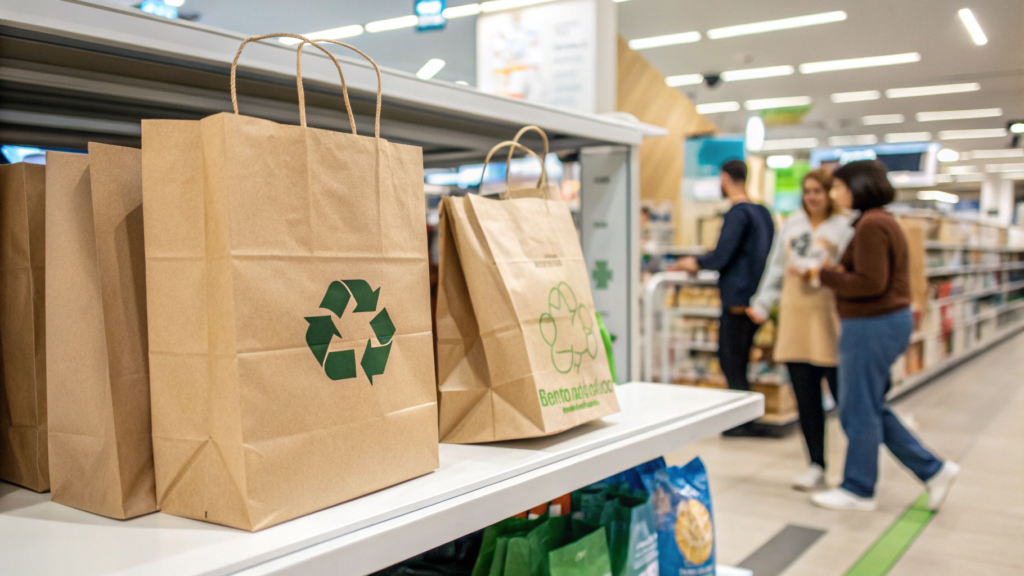
The environmental debate is complex. When you only look at manufacturing, paper bags can be intensive. They use more water and energy than plastic to produce. But the lifecycle is the full story. I believe in looking at the whole picture, from raw material to disposal.
Lifecycle Impact vs. Production Impact
The reason paper remains a viable option is its end-of-life status. Paper bags are easily recycled in standard recycling streams. They biodegrade quickly, typically within weeks, unlike plastic, which lasts for centuries. This difference in disposal is critical for a retailer's overall environmental responsibility. Paper comes from trees, a renewable resource, whereas most plastic comes from fossil fuels. When you use paper with high recycled content, you further reduce the production impact, making the bag a truly "green" product.
The True Cost of Reuse
The environmental cost of any bag is high if it is only used once. To make a paper bag environmentally superior to a plastic bag, the paper bag needs to be used at least 3 to 7 times. This is why construction and quality are so important. A thin, unreinforced paper bag that tears after one use is environmentally no better than single-use plastic. A smart brand designs the bag with wide gussets, robust handles, and thick paper stock (120-150 GSM). This design encourages and withstands multiple uses. This focus on durability is the most effective way to reduce the bag's lifecycle impact.
Certification and Transparency
Brands must demand transparent supply-chain data from their suppliers. Look for certifications like FSC (Forest Stewardship Council) for responsibly sourced virgin paper. If you use recycled content, ask for verification. Greenwashing is common. It is your brand's responsibility to ensure the claims about sustainability3 are credible. This transparency not only helps the environment but builds immense trust with your conscious customers. This is the difference between checking a marketing box and telling an honest story.
| Material Feature | Brand Storytelling Advantage | Lifecycle Consideration |
|---|---|---|
| High Recycled Content | Direct commitment to circular economy | Reduces manufacturing energy/water use |
| Unbleached Kraft Finish | Authentic, natural, low-chemical look | No bleaching chemicals that impede recycling |
| FSC Certification | Responsible forestry sourcing | Verifiable, ethical raw material sourcing |
Are paper bags coming back, and how do I design for their second life?
Are you sure paper bags are the future, and how can you make yours stand out in a reusable way? The design must invite customers to keep the bag.
Yes, paper bags are strongly coming back as retailers embrace both sustainability and premium packaging. To maximize this trend, you must design for a "second life." This involves using durable handles, specifying high-quality paper, and incorporating modular branding elements. This design approach makes the bag functional beyond the first purchase, transforming it into a piece of portable advertising.
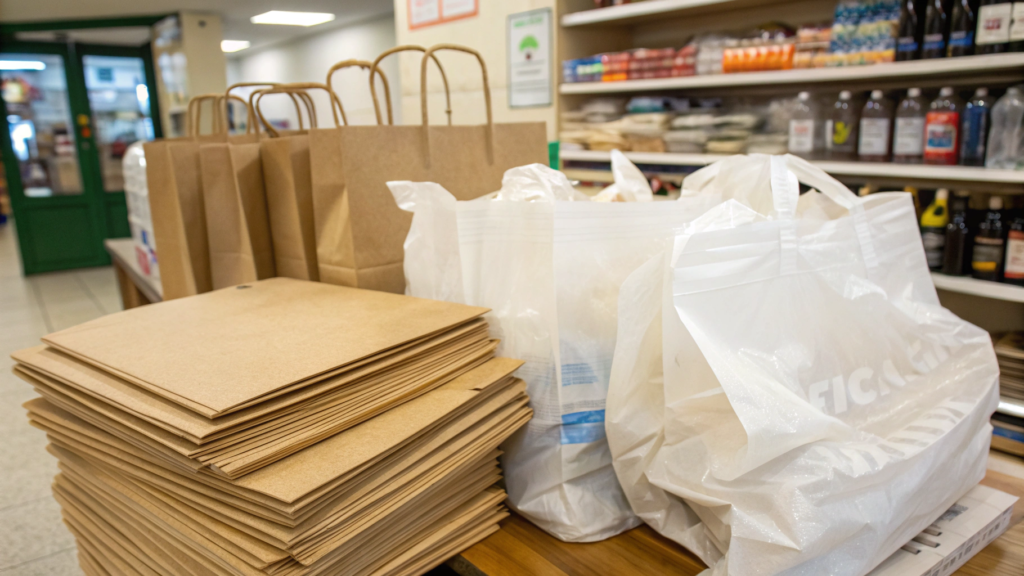
I believe the paper bag is here to stay. It is the perfect blend of tradition and modern environmental consciousness. For a retail bag to succeed today, it cannot be seen as disposable. It must be designed to be kept.
Designing for Strength and Function
The core design elements that encourage reuse are strength and utility. The handles are the key point of failure. Look for reinforced handles, such as twisted paper handles glued with strong patches, or sturdy cotton/rope handles for a premium look. The bottom of the bag must also be reinforced. A square bottom with a wide, securely glued seam ensures the bag sits flat and supports weight. Wide gussets (the side folds) are also critical. They increase the carrying capacity and structural integrity when the bag is full. Focus on these engineering decisions, not just the front graphic.
Modular Branding and Storytelling
A logo that is too large or too loud turns the bag into a simple advertisement. This limits its second life. A more effective approach is modular branding. This means putting a small, subtle logo on the gusset or using a removable, branded tag tied to the handle. The removable tag can contain a QR code that links to your brand's sustainability story or an exclusive offer. This invites interaction. It gives the bag a purpose beyond carrying goods. When the branding is subtle, the customer is more likely to use the bag for everyday purposes. They are effectively carrying your brand for free.
The Investment in Quality
You must specify high-quality materials, such as 120 GSM or higher kraft paper. This is a deliberate investment. It increases the unit cost slightly. However, if the bag is reused even five times, the cost per brand impression drops significantly lower than a cheap, disposable item. A high-quality bag signals that your brand values quality in all areas, including the packaging. This is a powerful, non-verbal communication tool that builds brand equity with every use.
Conclusion
Retail paper bags are a crucial asset. Choose high-quality, durable paper with strong construction to guarantee a long life and multiple reuse cycles. This approach turns the bag into a valuable, portable advertisement for your responsible brand.