Why Do You Use a Bullet Journal System?
Do you feel like your focus is broken by too many apps and alerts? You try to stay organized, but you still feel like you are just reacting to your day.
You use a bullet journal system to regain clarity and focus on what is important. It is a manual tool that forces you to think about your tasks. This helps you filter out noise and design your day with a clear and calm mind.

I have spent my whole career in the printing and gift industry. I have seen thousands of notebooks. I used to think a notebook was just for notes. But then I realized it can be a tool to manage your whole life. If you want to stop feeling busy and start being productive, you cannot afford to look away now. This system changed how I run my business, and it can change your life too.
What is the Point of a Bullet Journal?
Most people spend their time doing things that do not matter. We live in a world where everyone wants our attention. It is very easy to lose track of your own goals.
The point of a bullet journal1 is to practice doing things on purpose. It is a filter for your life. By writing things down by hand, you slow down your brain. This helps you see which tasks are truly worth your time and energy.
Awareness is the Real Power
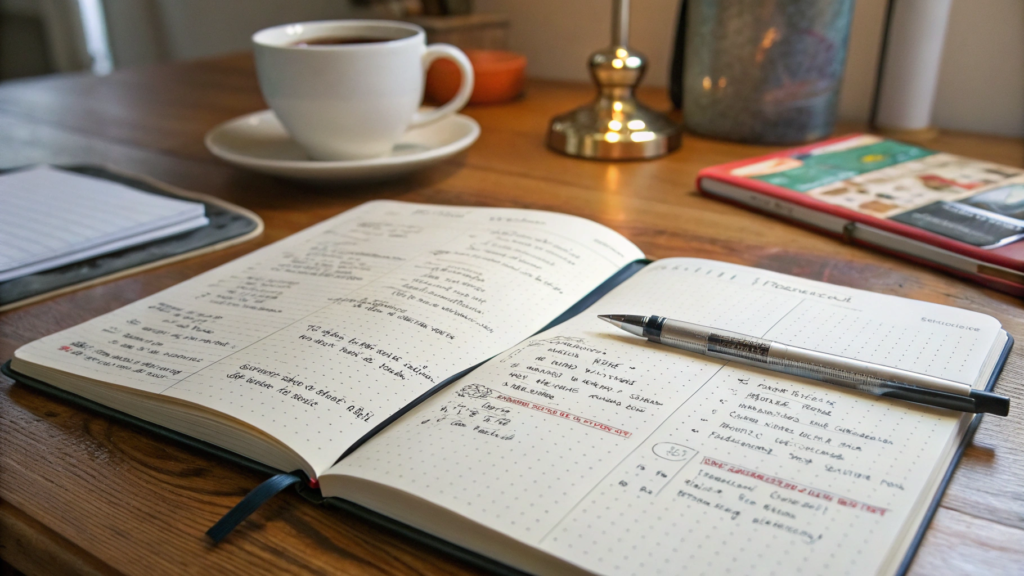
I believe the real power of this system is not just about a list of tasks. It is about awareness2. When I worked in a small printing factory, I had a million things to do. I felt like I was drowning. The bullet journal helped me see the patterns in my work. I started to see what was draining my energy. I learned to let go of things that did not help my brand or my clients. This is not just a calendar. It is a tool for making better decisions. You become the designer of your day instead of a person who just reacts to emails.
Building Your Filter
You need a way to tell the difference between a real priority and just "noise." A bullet journal does this through a process called migration. If you do not finish a task, you have to rewrite it. This creates a bit of resistance. You start to ask yourself if that task is actually important. If you are too lazy to write it again, it probably was not that important anyway. This simple habit keeps your list clean and your mind sharp.
Noise vs Signal in Your Day
| Type of Input | How the Journal Handles It | The Result |
|---|---|---|
| Random Ideas | Capture them in a "Brain Dump" | You don't forget them, but they don't distract you. |
| Urgent Emails | Log them as a task to do later | You finish what you are doing first. |
| Repeating Tasks | Move them to the next day or delete | You see what is a waste of your time. |
What is the Difference Between Bullet Journaling and Normal Journaling?
Many people get confused and think a journal is just a diary. They think they need to write long stories about their feelings every single night. This feels like too much work.
Normal journaling is usually a long record of thoughts and feelings. Bullet journaling is a fast system for tasks, events, and notes. It uses a shorthand style called Rapid Logging. This makes it a tool for action and productivity rather than just a personal record.
The System of Rapid Logging
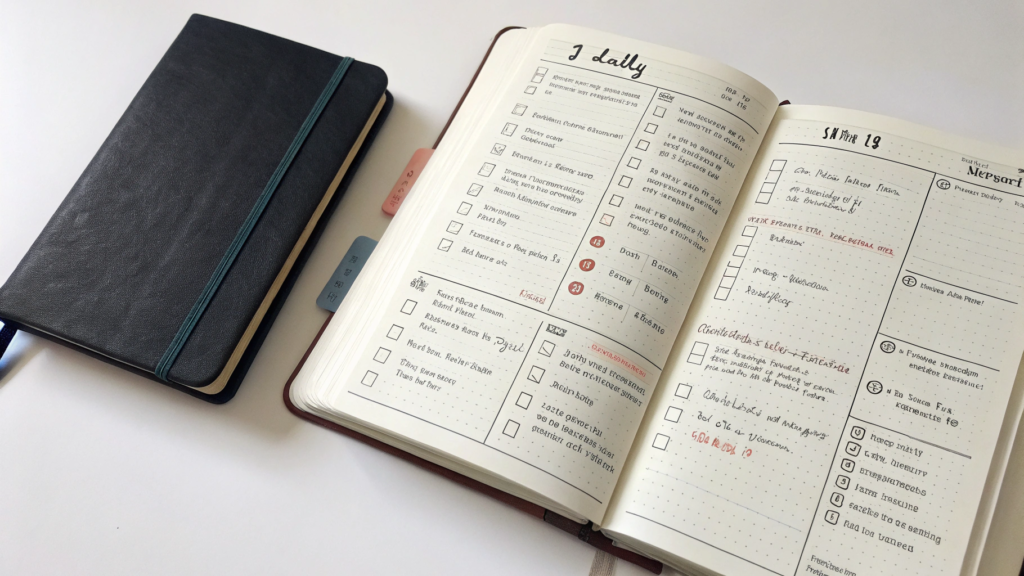
In my work with Latitude, I help people like Jacky find the best tools for their branding. Jacky has a very busy schedule. He does not have time to write three pages of text every morning. That is why bullet journaling is great for professionals. You use simple dots for tasks and circles for events. This is fast. I call this "helpful resistance." Writing by hand is slower than typing, but it is faster than a diary. It is just the right speed to help you remember your plan for the day.
Moving Your Tasks
The biggest difference is what we call "Migration." In a normal journal, you just leave the old pages behind. In a bullet journal, you look at your old tasks. You decide which ones to move forward. This forces you to close open loops in your brain. I found that this stopped me from worrying about things I forgot to do. I knew exactly where everything was. It turns your notebook from a passive record into an active management system.
Comparing Styles
| Feature | Normal Journaling | Bullet Journaling |
|---|---|---|
| Format | Long paragraphs | Short bullet points |
| Goal | Emotional release | Task management and focus |
| Speed | Slower / Reflective | Very fast / Action-oriented |
| Structure | None / Freeform | Highly structured but flexible |
What Are the 4 Types of Journals?
If you are new to this, you might not know which style fits you. You might try one way and find it does not work for your lifestyle. This makes people give up.
The four main types are the daily diary, the gratitude journal3, the bullet journal, and the goal journal. Each one solves a different problem. You can choose one that matches your current needs, whether that is for your mental health or your career growth.
Finding Your Match
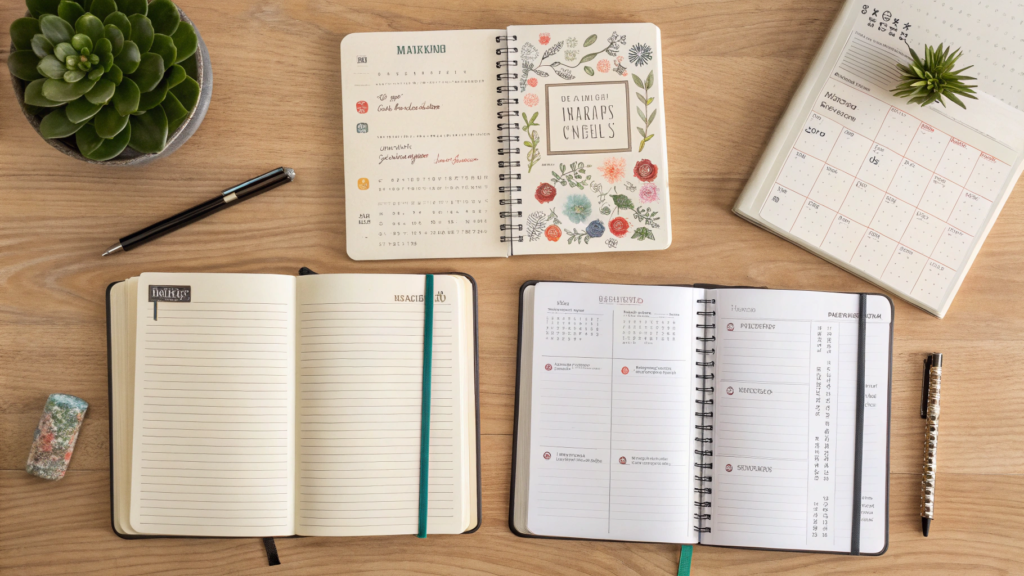
I have seen many people start a journal because it looks pretty on social media. But for someone like Jacky, the goal is brand awareness and project management. He needs a goal journal or a bullet journal. For me, when I started my business, I used a goal journal to track my sales and client growth. Later, I added a gratitude journal to help me stay positive during hard times. You do not have to pick just one. You can mix them together in one notebook.
How to Use Each Type
A daily diary is for your memories. A gratitude journal is to make you feel happy by writing what you are thankful for. A bullet journal is for your "to-do" list and your schedule. A goal journal is for big projects, like a five-year plan for your business. I think it is best to start with a bullet journal because it is the most flexible. It can hold all the other types inside it. It adapts to you. You do not have to change your life to fit the book.
Journal Types and Their Uses
| Journal Type | Primary Focus | Best For |
|---|---|---|
| Daily Diary | Past events and feelings | Memory keeping and therapy. |
| Gratitude Journal | Positive thinking | Mental health and happiness. |
| Bullet Journal | Present tasks and planning | Productivity and daily organization. |
| Goal Journal | Future achievements | Career growth and big projects. |
I always tell my clients that a good gift is one that someone actually uses. A notebook is a great gift because it allows a person to choose their own type of journaling. Whether you are a student or a manager, having a place to put your thoughts is very powerful. It turns your messy ideas into a clear plan.
Conclusion
The bullet journal is a tool for awareness and intentional living. It helps you focus on what matters and ignore the noise in a busy world to design your best life.