Why are gift cards and gift certificates so much more than just a discount?
Many people see gift cards as just a way to offer a discount. This thinking is a problem. It makes businesses miss out on a big opportunity.
Gift cards and gift certificates are powerful tools for brand trust and future revenue. They are not just for discounts. They act as a promise of a future experience. They help businesses get cash now and build strong customer relationships for later.

I've spent years in the branding world. I used to think gift cards were simple. I thought they were just for people who did not know what to buy. But I was wrong. I started to see how a simple card could do so much more. It can build trust. It can bring in money. It can tell a story. This is a journey I want to share with you. It's about seeing past the simple paper or plastic card. It is about understanding what it really means for a brand. I've learned that these cards are a secret weapon for businesses that know how to use them.
What is the difference between gift cards1 and gift certificates?
The names sound similar. People often use them to mean the same thing. This can lead to a lot of confusion. It can cause problems for both the business and the customer.
Gift certificates are typically paper-based, non-reloadable, and may have an expiration date. Gift cards are usually plastic or digital, often reloadable, and can be used like a debit card. The main difference is in their format and the technology used to manage their value and usage.
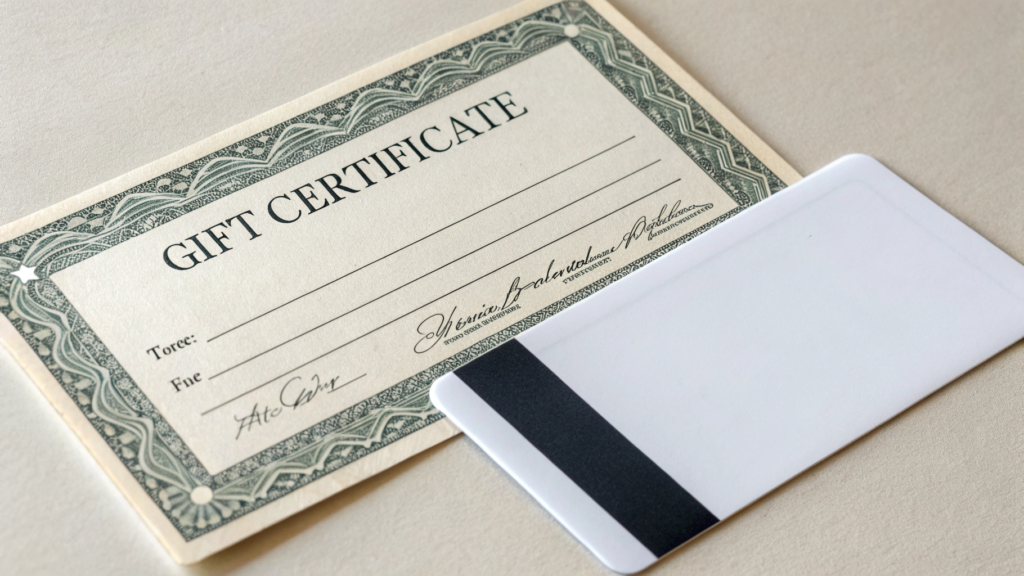
When I started in the industry, I had to learn these small but important details. I saw that a business that knows the difference can manage its finances better. It can also give a better experience to its customers. A gift certificate is more like a voucher. You can only use it once. A gift card is more like a currency. It can be used many times until the balance is gone. For a brand, this difference is key. It affects how you track sales and customer behavior. It also changes how you market them. For example, a gift certificate might be good for a special event. A gift card might be better for an ongoing promotion. My experience in a printing factory taught me the basics of materials and design. I saw how a paper certificate felt different from a plastic card. The plastic card felt more solid, more valuable. This small detail can change a customer's perception of your brand. I realized that the format itself sends a message. A paper certificate feels personal, maybe for a small local shop. A plastic card feels modern and professional, maybe for a larger company.
The Purpose Behind the Form
Both products have a similar purpose, but their form dictates their use. A paper certificate is a simple, low-tech way to offer a discount or a specific service. A digital or plastic card is a more modern solution.
| Feature | Gift Certificate | Gift Card |
|---|---|---|
| Format | Paper or digital voucher | Plastic or digital card |
| Reloadable | No | Yes, often |
| Expiration | Yes, sometimes | Less common due to laws |
| Tracking | Manual or basic system | Digital, real-time tracking |
| Usage | Single use | Multiple uses until balance is zero |
Strategic Value for the Brand
The choice between a certificate and a card is a strategic decision. A certificate might be used for a quick promotion. A gift card can be a long-term part of a brand's strategy. It gives customers a feeling of continued connection to the brand. This is because they can hold onto the card and use it over time. This makes the brand stay on their mind for longer.
What is a gift certificate used for?
Many people think a gift certificate is only for special occasions. They see it as a last-minute gift option. This is a very limited view. It misses the real potential of these simple pieces of paper.
A gift certificate is used to create a short-term promise of a future purchase or service. They are often tied to specific promotions2, services, or events. They are great for driving immediate foot traffic and encouraging first-time customers to try a product or service without a full commitment.

I've helped many brands use gift certificates3 in smart ways. It’s not just about selling them; it’s about using them to solve a problem. For example, a spa might offer a gift certificate for a new type of facial. This helps them get new clients to try it out. A restaurant might use them to boost sales during a slow season. The certificate acts as a short-term tool to bring in cash and customers. It’s a way to turn future demand into money now. I've learned that the true value of a gift certificate is in its simplicity and its ability to signal a clear purpose. It's a low-risk way for a customer to try something new. For a business, it is a way to get a new customer in the door. The simple, direct nature of a certificate is a feature, not a limitation. In my own journey, I saw how a printed voucher for a free t-shirt printing service could bring in new business. It was a simple offer, but it worked. The person who came in with the voucher often ended up buying more. This taught me that the first purchase is just the beginning. The goal is to build a long-term relationship.
The Power of Liquidity
Gift certificates help with a brand's cash flow. They get money for a sale before the customer even uses the product. This helps with managing inventory and daily operations.
| Use Case | Example | Strategic Benefit |
|---|---|---|
| Seasonal Promotions | A holiday-themed certificate for a special service | Drives sales during key periods, generates upfront cash. |
| Referral Programs | Give a certificate to a new customer referred by an existing one | Lowers customer acquisition cost, builds trust through referral. |
| Event Giveaways | A certificate for a free product at a trade show | Captures leads and encourages follow-up visits. |
| Customer Recovery | A certificate for a free item after a service issue | Helps rebuild trust and brings a customer back to the brand. |
The Carrier of Brand Trust
A gift certificate is a promise. It says, "We trust that you will come back." When a customer buys one, they are showing that they trust the brand. This trust is a valuable part of a brand's identity.
What are the three types of gift cards?
Thinking of gift cards in a simple way can make you miss out on their full power. They are not all the same. There are different types, and each one has a different purpose. This understanding can help a brand use them more effectively.
The three main types of gift cards are open-loop, closed-loop, and semi-closed loop. An open-loop card can be used anywhere that accepts a major credit card. A closed-loop card is limited to a single store or brand. A semi-closed loop card can be used at a group of specific stores or brands.
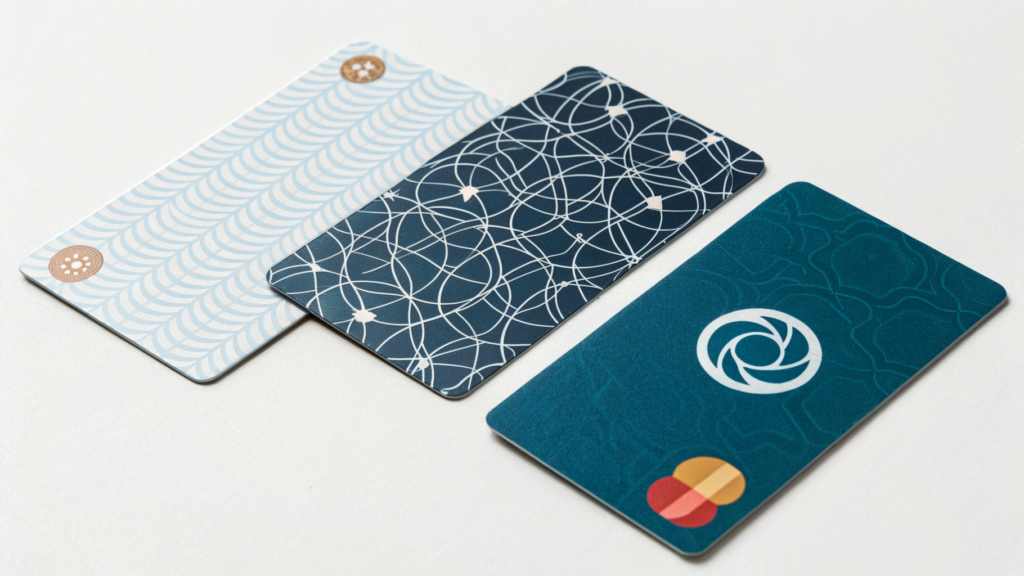
I've worked with many different types of brands. I saw how each one needed a different kind of gift card. A large retail company might want to use a closed-loop card. It keeps the money inside their business. A group of small businesses might work together to create a semi-closed loop card. This helps them all get more business. An open-loop card is more like cash. It is very flexible. My own experience has shown me that the best choice depends on the brand's goals. For a small, single-location business, a closed-loop card is perfect. It ensures the money comes back to you. For a company with many partners, a semi-closed loop card is better. It allows for collaboration and shared marketing efforts. In the printing factory, I saw how different cards were designed. Some had simple logos. Others had complex magnetic stripes and security features. These details showed me that a gift card is not just a card. It is a tool with many different functions. The design and technology behind it show its purpose. This is a lesson I bring to my clients today.
The Strategic Value of Each Type
Each type of gift card has its own strategic benefits. The choice of card type can help a brand with its marketing, sales, and partnerships.
| Card Type | Example | Strategic Advantage |
|---|---|---|
| Closed-Loop | A Starbucks gift card | Retains 100% of the funds within the brand's ecosystem. |
| Semi-Closed Loop | A gift card for a local shopping mall | Promotes a group of businesses and encourages cross-selling. |
| Open-Loop | A Visa or Mastercard gift card | Provides maximum flexibility for the recipient, useful for corporate rewards. |
The Power of Data and Growth
The different types of cards also give different kinds of data. A closed-loop card gives a lot of information about a single customer. An open-loop card gives less data. This data is very useful. It can help a brand learn about who their customers are and how they shop. This helps them improve their marketing.
Conclusion
Gift cards and gift certificates are not just discounts. They are powerful tools for building brand trust, securing revenue, and creating a path for long-term customer loyalty and growth.