Reusable Water Bottles: Is Carrying One the Simplest Leverage Move for a Better Day?
You might see many people carrying a water bottle and wonder if it is just a passing trend or if a reliable hydration habit truly offers tangible benefits for your daily life and well-being.
Carrying a reusable water bottle is one of the simplest leverage moves for better days because it promotes consistent hydration, leading to clearer thinking, steadier energy, and fewer excuses to buy overpriced, single-use drinks, positively influencing both personal health and environmental choices.
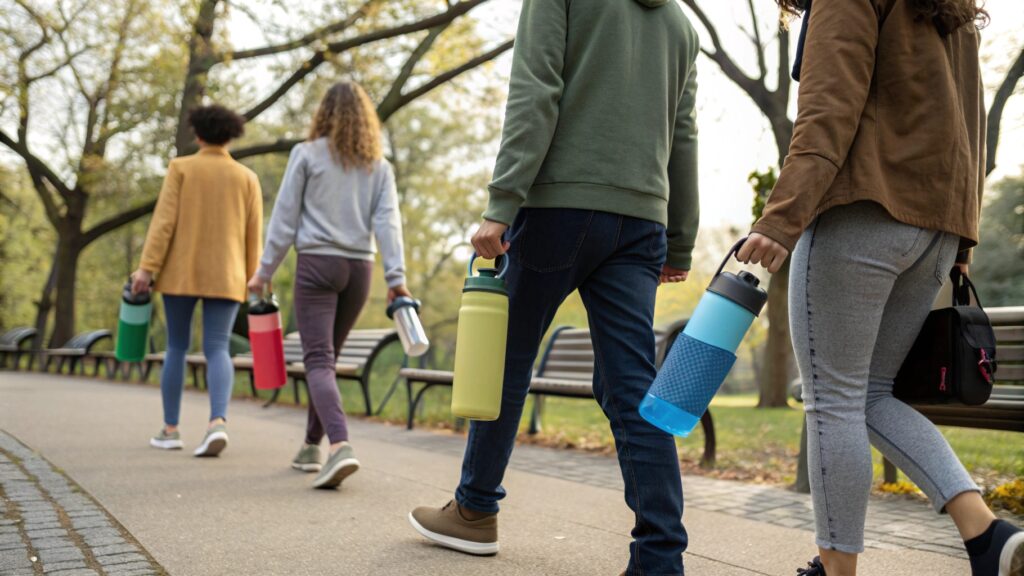
I do carry a water bottle outdoors every day—but not because it is a virtue signal. Over the years, I have learned that a small, reliable hydration habit is truly one of the simplest ways to have a better day. It is about more than just avoiding thirst. Consistent hydration leads to clearer thinking, steadier energy, and fewer impulse snacks throughout the afternoon. The trick is not the bottle itself but the systems you attach to it—choosing a size that fits your bag, finding a cap you actually enjoy using, and having a simple refill plan.
Do You Carry a Water Bottle?
You should carry a water bottle because it is the most effective way to ensure consistent daily hydration, allowing you to maintain better focus and energy levels while reducing your reliance on purchasing expensive, disposable bottled drinks, making it a critical choice for both health and sustainability.

The decision to carry a water bottle is a practical one rooted in efficiency and self-care. I carry one every day because it removes friction from the hydration process. If you rely on finding water when you are already thirsty, you are usually too late; dehydration has already started to affect your cognitive function and energy levels1. The simple presence of a bottle acts as a visual cue, reminding you to take small, frequent sips rather than gulping water when you are desperately thirsty. This consistent intake is what stabilizes your energy. Furthermore, there is a clear sustainability calculus. A refillable bottle pays back its carbon and waste "debt" only if you replace disposable purchases consistently. By carrying my own, I eliminate the excuse to buy an overpriced plastic bottle, which saves both money and waste.
What are the Key Benefits of Carrying a Daily Water Bottle?
| Benefit Category | Specific Advantage | Impact on Daily Life |
|---|---|---|
| Cognitive Health | Maintains blood flow and nutrient transport to the brain. | Leads to clearer thinking and better decision-making. |
| Financial/Sustainable | Eliminates the need to buy disposable plastic bottles. | Saves money and reduces individual plastic waste footprint. |
| Energy Management | Prevents the energy slump caused by dehydration. | Provides steadier energy without relying on caffeine or sugar. |
| Behavioral Nudge | The bottle acts as a constant, easy reminder to drink. | Makes hydration an automatic habit, not a conscious effort. |
My practical rule is simple: pick one bottle that solves $80\%$ of your outings—commuting, running errands, and short hikes. For me, a moderate-sized insulated stainless steel bottle is the best choice because it keeps water cold and fresh, which I enjoy. The enjoyment factor is crucial; a bad-tasting or warm bottle kills the habit faster than inconvenience does. Socially, carrying a bottle quietly reshapes what is normal; it signals self-care without words and subtly nudges environments toward better refill infrastructure.
Should You Carry a Water Bottle When You Run?
Yes, you should carry a water bottle when you run, especially for runs lasting longer than 45 minutes or in hot, humid conditions, because maintaining fluid balance is essential for performance, preventing heat exhaustion, and supporting muscle recovery.

Runners often debate whether the slight added weight of water is worth the disruption to their stride. For short runs (under 30 minutes) in moderate conditions, you can often pre-hydrate effectively. However, for any run longer than $45$ minutes or in elevated temperatures, carrying water moves from being a convenience to a necessity. When you run, your body loses fluids rapidly through sweat to regulate temperature. A loss of just $2\%$ of your body weight from fluid can significantly impair your performance and elevate your heart rate. By carrying water, you give yourself the power to control your hydration and energy levels. This allows you to push further and recover faster. You need to view the water not as an added weight, but as fuel and maintenance. The key consideration for runners is finding a comfortable carrying system that minimizes sloshing and distraction.
How Does Hydration Affect Running Performance and Safety?
| Impact Area | Effect of Dehydration During Running | Benefit of Carrying Water |
|---|---|---|
| Core Temperature | Increases body temperature, risking heat exhaustion. | Allows for constant cooling through sweat production. |
| Performance | Causes premature fatigue and reduces muscle efficiency. | Sustains energy and maintains muscle function and coordination. |
| Cramping | Often linked to electrolyte and fluid imbalance. | Helps to regulate fluid balance, preventing muscle cramping. |
| Cognitive Function | Can cause mental fogginess and impaired decision-making. | Maintains focus, which is crucial for navigating trails or traffic. |
I speak from experience here. When I first started running, I tried to tough it out without water, only to hit a wall of exhaustion half a mile from home. Now, I use a simple system, ensuring I have enough fluid to take small sips every 15 minutes. Even for short runs, having a compact backup of water on hand for a sudden change in temperature or unexpected duration is always a smart choice. Running is hard enough; you should not make it harder by risking dehydration.
How Do Runners Carry a Water Bottle?
Runners carry a water bottle using specialized gear designed to distribute the weight comfortably and minimize sloshing, most commonly through handheld bottle2s with straps, hydration belts that fit smaller bottles around the waist, or vests/backpacks for longer distances.

The technology for carrying water while running has advanced significantly, moving far beyond simply holding a bottle in your hand. The goal is to make the water feel like an extension of your body, minimizing bounce and sloshing. For short runs (under 90 minutes), the most common solution is a handheld bottle. These bottles often feature a curved shape and an adjustable strap that wraps around the hand, allowing the runner to maintain a natural grip without actually having to squeeze the bottle. For mid-distance runs (up to 2 hours), many runners prefer a hydration belt that securely holds one or two small, contoured bottles around the lower back. These belts are great for keeping the arms free and distributing the weight evenly. For long-distance or trail running, a hydration vest or backpack is the preferred method. These vests have a bladder that holds a large volume of water and uses a tube for hands-free drinking, which is essential when you need to focus on complex terrain. The key is to test the system before race day or a long run. A poorly fitted belt or vest will bounce, chafe, and distract you, which completely defeats the purpose of staying hydrated.
What are the Pros and Cons of Common Hydration Systems for Runners?
| Carrying System | Capacity (Relative) | Ideal Running Distance | Pros and Cons |
|---|---|---|---|
| Handheld Bottle with Strap | Small (10-18 oz) | Short to Mid-Distance (Up to 90 min) | Pros: Easy access, simple, inexpensive. Cons: Can feel heavy in one arm, slightly alters gait. |
| Hydration Belt / Waist Pack | Medium (20-40 oz total) | Mid-Distance to Longer Training | Pros: Frees hands, good for storing keys/gels. Cons: Can bounce or chafe if not tightly secured around the waist. |
| Hydration Vest / Pack | Large (40+ oz) | Long-Distance / Trails / Marathons | Pros: High capacity, even weight distribution, holds other gear. Cons: Higher cost, can be hot in very warm weather. |
| Pocket/Fanny Pack | Very Small (Soft flask) | Short-Distance / Commute Runs | Pros: Minimalist, no bounce if pocket is tight. Cons: Very limited capacity, often only 5-8 oz. |
I personally use a small, soft flask that I can carry in my shorts pocket for anything under an hour. When I run longer, I switch to a simple hydration belt. I learned that the best system is the one you forget you are wearing. A great tip for belt users is to fill the bottles only halfway or slightly more, which reduces the slosh3ing sound and movement. By choosing the right tool for the job, you remove the friction of carrying water, making it easy to focus on your run while still prioritizing your health and performance.
Conclusion
Carrying a water bottle is a simple, effective habit that significantly improves daily clarity and energy, and for runners, it is a performance necessity for runs over 45 minutes, with specialized handheld or vest systems ensuring that hydration is comfortable and distraction-free.
-
Exploring the connection between hydration and energy can improve your workout efficiency and overall health. ↩
-
Learning about handheld bottles can help you find a convenient and effective way to stay hydrated while running. ↩
-
Learning about slosh can help you select hydration gear that enhances your running experience without distractions. ↩