My Pin Is Just a Badge: How Can I Make My Custom Enamel Pin a Legacy Statement?
Your custom pin is a small, cheap accessory that gets tossed aside quickly. This misses a chance to build identity and pride. You need a better strategy now.
I believe a custom enamel pin is a powerful, miniature expression of pride, belonging, and culture. A well-designed pin transcends promotion because it captures emotion, turning your brand from a simple logo into a lasting legacy.
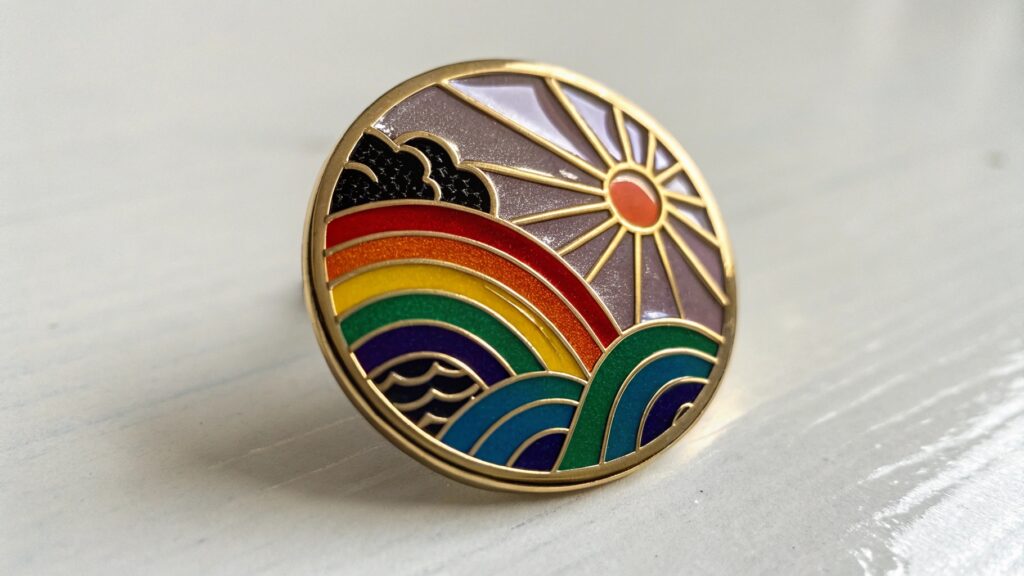
When I look at a lapel pin, I see something that a digital banner ad can never be: a tangible connection. Pins have quietly changed from simple accessories into powerful symbols. They are not just metal and enamel. They are miniature expressions of purpose and unity. I have seen the most successful organizations use custom pins as part of their internal culture strategy. I want to share my view on how you can design a pin that people actually want to wear with pride. I will show you how to design for meaning, not just for visibility.
What is the difference between a pin and a lapel pin?
You use the words 'pin' and 'lapel pin' without knowing the true difference. This confusion can lead to ordering the wrong style for your purpose. I can clarify the terms.
A 'pin' is a general term for any small item with a sharp backing. A 'lapel pin' is a specific type of pin designed to be worn on the lapel of a jacket or clothing, usually featuring high-quality enamel or metal to symbolize affiliation or achievement.
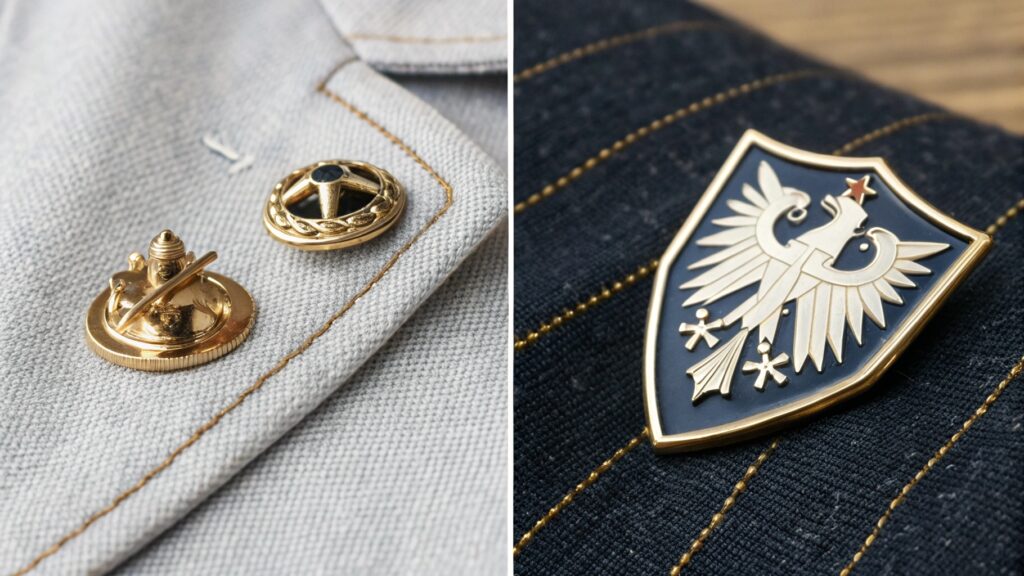
The difference between a pin and a lapel pin1 is mostly about intention and quality. The word "pin" is a very general term. It can refer to anything that fastens with a needle, like a safety pin or a simple button badge. A lapel pin is a specific, higher-end category. It is made to be a formal or semi-formal accessory. This is why lapel pins often use quality materials2 like hard enamel, soft enamel, or die-cast metal finishes, such as antique gold or matte black. The act of pinning it on transforms it from a simple object into a statement of affiliation.
I advise organizations to use the term 'lapel pin' when they want to communicate prestige, achievement, or corporate identity. A lapel pin is designed to be endured. This is why the backings are often high-quality, like a rubber clutch or a deluxe locking clasp, instead of a simple safety clasp. The type of pin you choose should match the emotion you want to capture. A low-cost pin is okay for a large event giveaway. A high-quality lapel pin is best for an employee recognition award or a special client gift. This attention to quality shows that the item is earned. People wear them with pride because they belong to what the pin represents. [Personal Story Placeholder: We once made small, intricate lapel pins for a non-profit organization. We used a premium antique silver finish and a deluxe clutch. The organization found that people treasured the pins and wore them to every event, confirming the perceived value of the quality.]
Pin Terminology and Usage
| Term | Typical Material/Finish | Purpose/Wearing Context |
|---|---|---|
| Pin (General) | Tin, plastic, low-cost metal. | Large giveaways, simple promotion, temporary events. |
| Lapel Pin | Hard or soft enamel, die-cast metal, premium finish. | Corporate culture, recognition, formal branding, achievement. |
| Enamel Pin | Metal base filled with colored enamel paint. | Expressing identity, club membership, personal collection. |
Can you design your own pins?
You have a great idea for a pin, but you are not sure if your design can actually be produced in metal and enamel. You worry about technical limits. I can guide you.
Yes, you can absolutely design your own pins, but you must simplify your artwork for production. I advise using clean lines, defining clear color sections, and considering the texture and depth created by either hard enamel (flat) or soft enamel (raised metal lines).
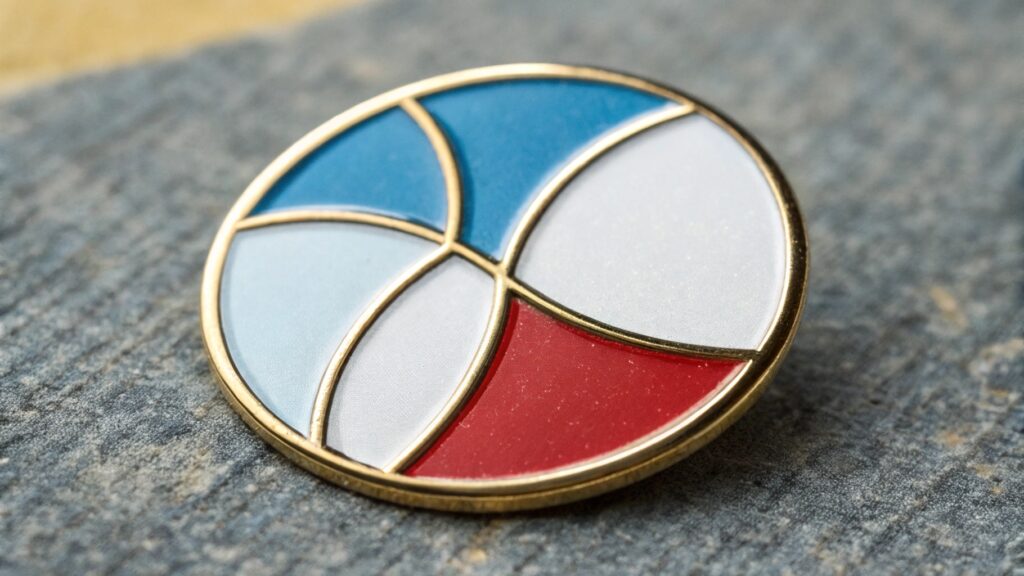
The key to designing a great pin is intentionality. It is not about adding glitter for attention. It is about distilling what your brand or cause stands for into a tiny, wearable form. When you design your own pin, you must treat the pin size seriously. A complex logo will look muddy and unclear when it is shrunk down to $2$ centimeters. I advise using vector files for your artwork and simplifying the shapes and text. The lines in your design must be thick enough to be translated into the metal frame that holds the enamel color.
The biggest choice you face is between soft enamel and hard enamel. Soft enamel pins have raised metal lines, giving the design depth and texture. The colored enamel sits slightly lower than the metal frame. This technique is often more vibrant and gives a slightly artisanal look. Hard enamel pins are polished flat across the entire surface. The metal and the enamel are level, which gives the pin a polished and prestigious look. Hard enamel is usually more durable. Adding custom backings, like an engraved company motto on the back, or premium finishes, like matte black plating, can elevate the piece from a giveaway to a keepsake. A well-designed pin should silently communicate unity and culture.
Enamel Types and Design Intent
| Enamel Type | Texture and Finish | Ideal Design Intention |
|---|---|---|
| Soft Enamel | Recessed color, raised metal lines, textured feel. | Depth, vibrant color contrast, artisanal or whimsical designs. |
| Hard Enamel | Smooth, flat, highly polished surface, durable. | Prestige, formal corporate logos, classic design, longevity. |
| Die-Struck | Metal only, no color filling, detailed texture. | Subtle, elegant, antique or premium metal finishes. |
How much is it to make custom pins?
You have a design, but you do not know how to budget for production. You need a clear understanding of the factors that drive the cost. I can explain the pricing.
The cost to make custom pins is mainly based on the quantity you order, the pin size, and the complexity of the design. Soft enamel is usually less expensive than hard enamel, and adding premium finishes like antique metal or custom backings will increase the final unit price.
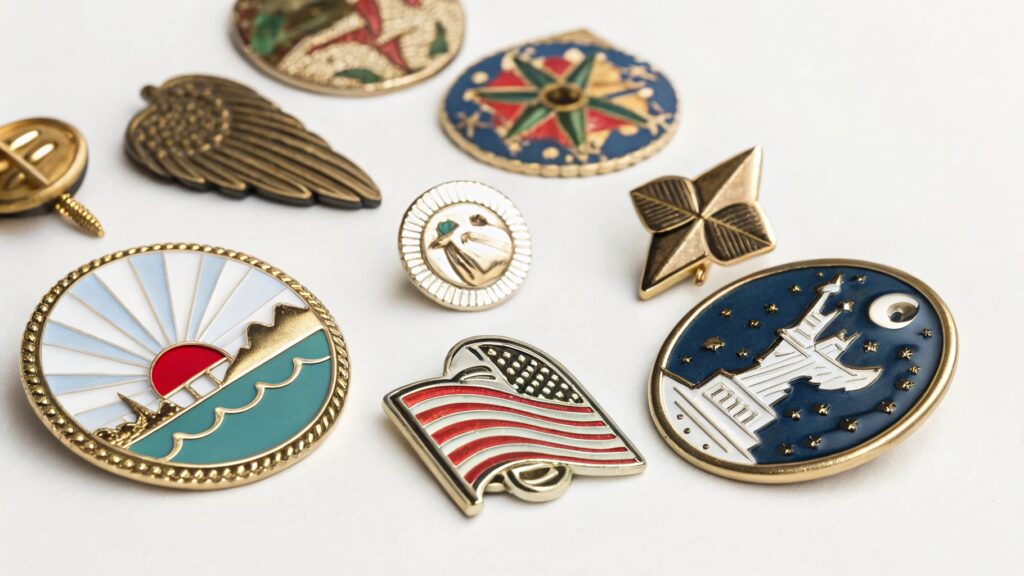
Pricing custom pins is always a blend of fixed costs and material choices. The single biggest factor that impacts the unit price is the quantity ordered. The supplier has to create a custom mold for your design, and that mold cost is spread out across every pin you buy. So, ordering $500$ pins will make the per-unit cost much lower than ordering $50$ pins. This is the economy of scale in action. The next key cost factor is the pin size. A larger pin uses more metal and enamel, which naturally increases the material cost.
The complexity of the design also matters. Using many different enamel colors requires more time for filling and processing, which increases labor costs. Hard enamel pins often cost more than soft enamel pins because of the extra steps required to polish the surface until it is perfectly flat. I always advise my clients to consider the premium finishes. Adding an antique gold or matte black plating costs more than standard shiny nickel plating. Also, choosing a specialty backing, like a deluxe locking clasp instead of a rubber clutch, will add to the price. [Personal Story Placeholder: A new client once asked me for a detailed, hard enamel3, full-color pin and only wanted $100$ pieces. I showed them that by simplifying the design to two colors and switching to soft enamel, they could afford $300$ pins for the same budget, giving them a much better ROI.] The best approach is to decide on your budget first. Then, you can adjust the size and complexity to meet that target.
Factors that Determine Pin Cost
| Cost Factor | How It Impacts Unit Price | Strategy to Reduce Cost |
|---|---|---|
| Quantity | Higher quantity significantly lowers the price. | Order the maximum possible number in one batch. |
| Pin Size | Larger pins use more material and metal. | Aim for a smaller, impactful design (2.5 cm is ideal). |
| Enamel Type | Hard enamel requires more polishing time. | Choose soft enamel for vibrant, cost-effective pins. |
| Plating/Finish | Specialty finishes like antique or matte plating cost more. | Stick to standard shiny nickel or black nickel plating. |
Conclusion
Custom pins are enduring symbols of identity and belonging. Design for meaning, choose your materials with intention, and let your signature pin tell a story worth wearing.