My Company T-Shirt Is Just a Uniform: How Can I Make Our Custom Shirt a Piece of Wearable Culture?
Your company shirts look cheap and stiff, so employees never wear them outside of mandatory events. This wastes your budget. You need better design.
I believe a well-designed company T-shirt translates brand culture into something people want to wear, turning employees into walking ambassadors by balancing branding with premium fit, comfortable fabric, and subtle, thoughtful design.

Creating a company T-shirt is about more than just printing a logo on fabric. It is about translating your brand’s culture into a wearable item. I have seen the huge difference a high-quality shirt makes. A good T-shirt can unify teams during events and become part of your company’s visual identity. The key is to make the shirt feel like fashion, not a uniform. I want to share my view on how to balance branding with wearability. I will show you how to design a shirt that builds authenticity and emotional connection for your brand.
How much does it cost to make a company shirt?
You need to budget for new staff shirts, but you do not know the true factors that affect the final price. This uncertainty makes planning hard. I can simplify the cost.
The cost to make a company shirt1 depends mainly on the quantity ordered, the quality of the T-shirt fabric (e.g., premium cotton), and the printing method chosen (screen printing is cheapest for high volume, DTG for high detail and low volume).
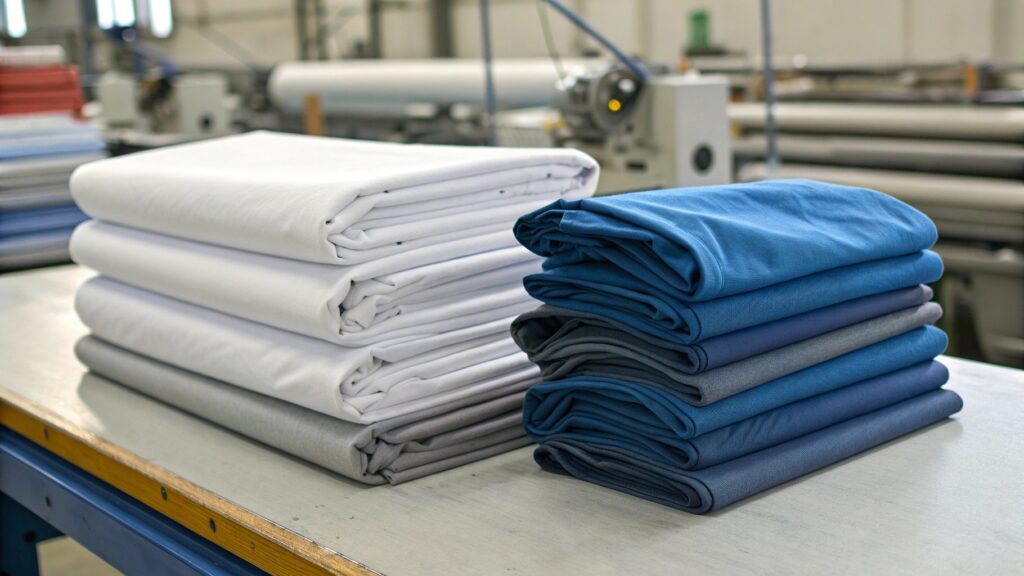
The total cost of a company shirt is driven by three main factors. The first is volume. Just like with pins, the unit price drops significantly as your order quantity increases. The setup costs for printing, such as making screens for screen printing2, are fixed. This means ordering $500$ shirts is much more cost-effective per shirt than ordering $50$ shirts. The second factor is the blank shirt quality. A shirt made from $100\%$ premium ring-spun cotton or a tri-blend fabric will always cost more than a basic, heavy cotton t-shirt. However, the premium fabric ensures a better feel and a modern fit, making the shirt more likely to be worn. This improves your brand visibility.
The third cost factor is the printing complexity. Screen printing is the most cost-effective choice for large orders with one or two logo colors. If your logo has many colors or requires high-resolution detail, you might need Direct-to-Garment (DTG) printing, which is often more expensive, especially for dark shirts or small batches. I advise you to balance these costs carefully. Investing slightly more in a premium cotton fabric and a subtle logo placement can make a big difference in how people perceive your brand’s attention to detail. This investment turns the shirt from an expense into a long-term marketing asset. [Personal Story Placeholder: I once designed shirts for a food delivery startup. We used a slightly higher-cost tri-blend fabric with a subtle, minimalist logo embroidered on the sleeve. The team loved the comfort and wore them daily, making the initial higher unit cost worth the daily brand exposure.]
Key Cost Drivers for Custom Shirts
| Cost Factor | Impact on Unit Price | Recommended Action |
|---|---|---|
| Quantity | Higher quantity lowers the per-unit price significantly. | Order in high volume to spread out the fixed setup costs. |
| Fabric Quality | Premium cotton or blend fabrics are more expensive. | Choose a comfortable, modern fit to guarantee frequent wear. |
| Printing Method | DTG for few units/many colors; Screen Printing for bulk/few colors. | Match the print method to your budget and design complexity. |
| Design Complexity | Many colors or large print areas increase material use and labor. | Simplify the design to one or two colors for cost control. |
What do I need to create my own t-shirts?
You have the idea, but you are not sure about the technical and material requirements to start production. Missing a step can delay your launch. I can list the essentials.
To create your own T-shirts, you need four things: a final, vector-based logo design; a blank shirt style (fit and color); the chosen printing method (e.g., Screen Print); and a reliable supplier who can provide physical fabric samples and accurate mock-ups.
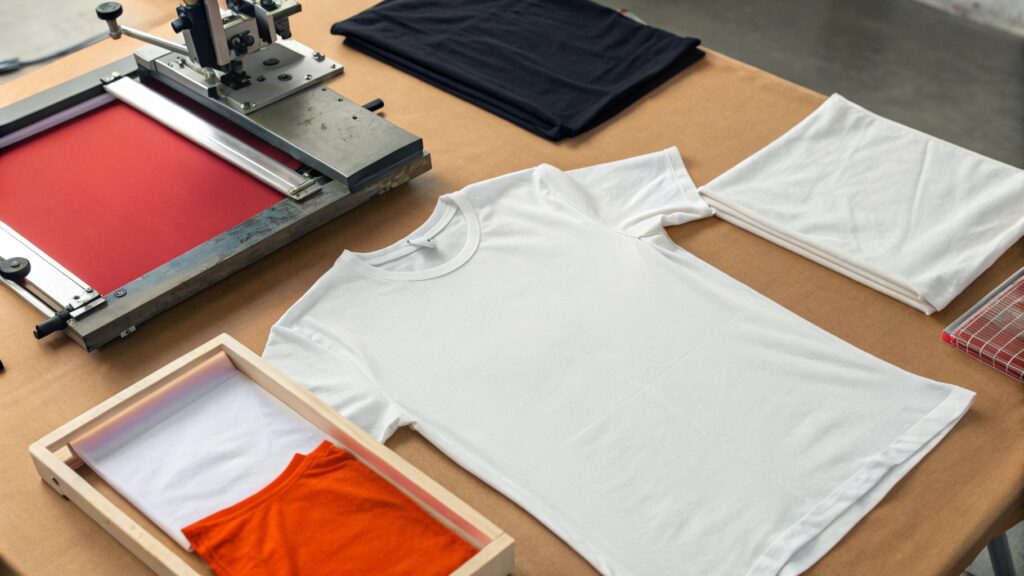
Creating a T-shirt requires moving from an idea to a technical specification. The first thing you absolutely need is your final logo design in a vector file. This means a file format like .AI or .EPS. This file type allows the printer to scale the logo up or down without any loss of quality. A pixelated image will ruin the shirt. The second step is selecting the blank shirt. You must decide on the fabric type (cotton, polyester, blend) and the fit (e.g., slim fit, unisex, fashion fit). The fit can make or break the shirt's wearability. The best company T-shirts feel like fashion, not uniforms.
The third step is selecting the printing technique. Your choice here impacts the look and the cost. For durability and cost on bulk orders, screen printing is the best choice. For high-detail, full-color designs, DTG is necessary. Finally, you need a reliable supplier who can give you physical samples of the fabric before you commit to the bulk order. Seeing and touching the fabric is essential for checking quality. [Personal Story Placeholder: I once had a client who approved a design based only on a digital mock-up. When the shirts arrived, the gray color was too dark. This taught me that you must always see a physical fabric sample and a final printed proof before mass production starts.] Customization gives companies a powerful storytelling tool, and the right preparation ensures that story is told clearly.
Checklist for T-Shirt Production
| Essential Requirement | Purpose | Importance Level |
|---|---|---|
| Vector Artwork | Ensures scalability and high-quality print clarity. | Critical |
| Blank Shirt Sample | Confirms fabric comfort, color, and fit. | Critical |
| Defined Print Method | Determines cost, color output, and print durability. | High |
| Logo Placement Proof | Verifies logo size, position, and alignment on the shirt. | High |
Is $25 too much for a custom shirt?
You see custom shirts priced at $25 or more and wonder if you are overpaying for simple apparel. This makes you question the value. I can explain the fair price.
No, $25 is not too much for a custom shirt if that price includes premium features like high-quality, comfortable cotton, complex multi-color printing, or low-volume ordering. A lower-cost shirt often means poor quality that reflects badly on your brand's attention to detail.
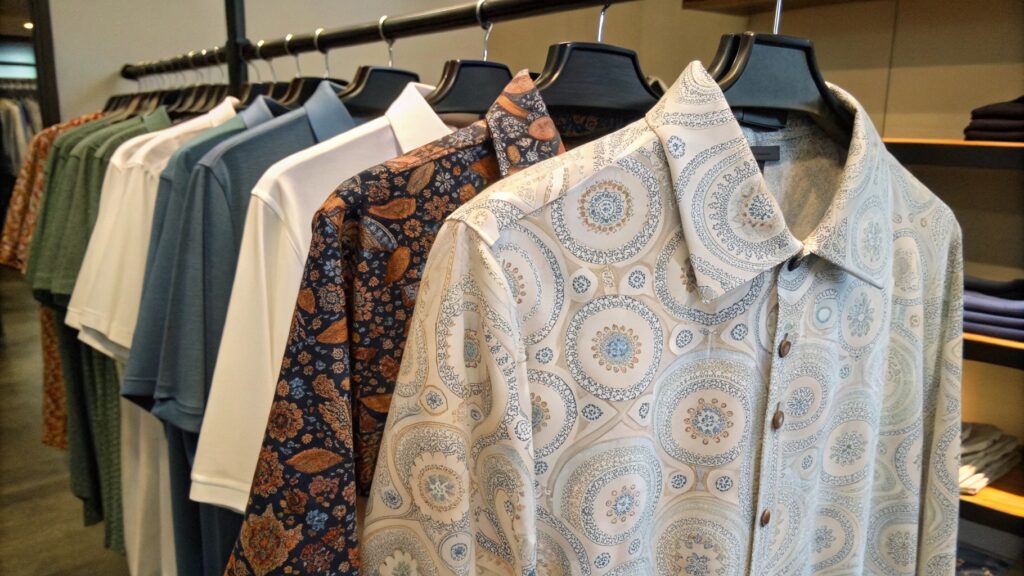
The perceived value of a custom shirt is not just about the cost of the raw materials. It is about the quality of the experience and the longevity of the garment. If a custom T-shirt costs $25, that price is likely covering several key premium factors. It might include a premium cotton3 fabric or a unique blend that is incredibly soft. This comfort factor means the employee will actually wear it often, maximizing your brand's exposure. The price might also reflect the use of complex printing techniques, such as multi-color screen printing or detailed DTG, which have higher setup and labor costs.
Furthermore, if you are placing a low-volume order, the unit price will naturally be higher because the fixed costs (like design work and screen creation) are divided among fewer shirts. You are paying for the supplier's time and expertise in small batch production. The risk of buying a shirt that costs $5$ to $10$ is that it will be made from rough, heavy cotton, have a stiff print, and shrink after one wash. That shirt is a poor reflection of your brand. In 2025's competitive market, authenticity and emotional connection matter more than ever. A slightly higher investment in a quality shirt shows that your brand values attention to detail and your employees’ comfort. The $25$ shirt becomes a walking asset. The $5$ shirt becomes a dust cloth.
Factors Justifying a $25+ Price
| Factor | Value Provided | Result for Your Brand |
|---|---|---|
| Premium Fabric | Superior comfort, fit, and minimal shrinking. | Guarantees the shirt is worn frequently and proudly. |
| Complex Printing | High detail, vibrant color, and durable application. | Logo looks professional and lasts through many washes. |
| Low Volume Order | Allows you to produce custom shirts for small teams or events. | Flexibility to manage inventory and avoid overstock. |
| Ethical Sourcing | Confirms the garment was made sustainably or fairly. | Aligns the shirt with corporate social responsibility values. |
Conclusion
Creating a company shirt is strategic. Invest in premium fabric and thoughtful design to make it feel like fashion, so your shirt becomes a powerful piece of wearable brand culture.