Is Your "Eco-Friendly" Kraft Paper Bag Strategy Just Greenwashing?
Are you using Kraft paper bags simply to check a sustainability box? Many businesses believe the material alone makes them eco-friendly. This ignores the hidden costs of production and single-use habits. This is a common, costly mistake.
The true sustainability of a Kraft paper bag depends not on its material, but on its sourcing, the production process's water/energy use, and whether it is part of a circular reuse system or a disposable one. To genuinely reduce your carbon footprint, prioritize recycled or certified virgin fibers and focus on encouraging the customer to reuse the bag before composting it.
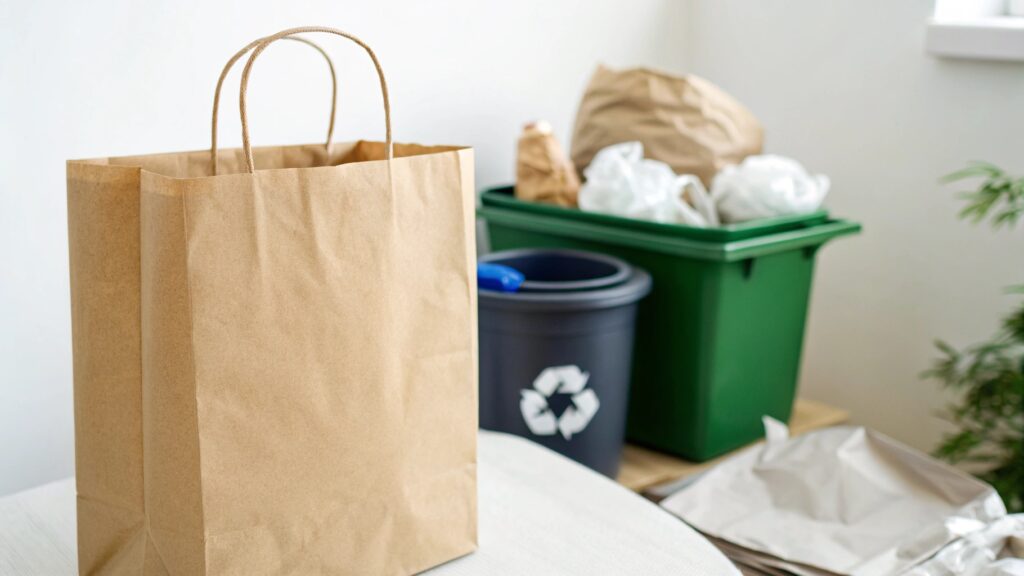
When I first saw the rise of Kraft paper, it looked like a simple solution to the plastic problem. Natural color, natural material—what could be better? But in the manufacturing world, I learned that the real environmental cost is often hidden. For a marketing manager like Jacky, who needs his brand to be genuinely authentic, the "green" image must be more than just a marketing statement. It has to be a reality rooted in responsible sourcing and operational transparency. We need to stop seeing the bag as a simple container and start seeing it as a component of a larger, circular system.
Is Kraft Paper 100% Recyclable?
The term "recyclable" is often used broadly, but paper bags can have contaminants that stop them from being fully recycled. This lack of certainty confuses consumers and undermines your brand's commitment.
Standard, plain Kraft paper is 100% recyclable1 because it is made from long, strong wood fibers. However, its recyclability is compromised by coatings, adhesives, or contaminants. Bags with plastic linings, large amounts of ink coverage, or food residue must be separated or discarded, which often prevents them from entering the standard recycling stream.
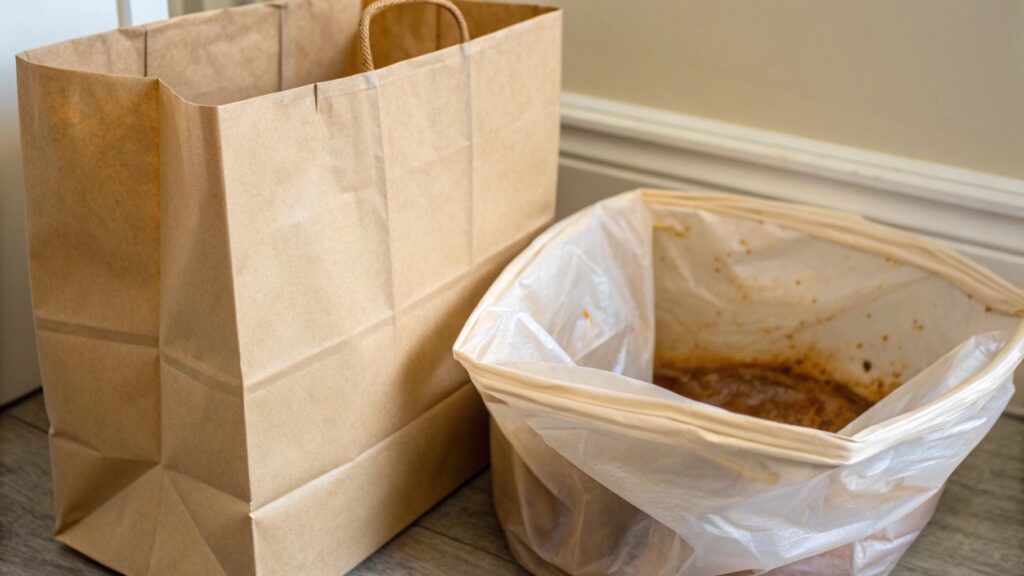
For a business aiming for true sustainability, the answer to this question must be clear and transparent. Yes, the core material, Kraft paper (made from wood pulp), is inherently recyclable. The problem comes from the design and the use. If your bag has a glossy finish, a plastic window, or a heavy, non-water-soluble adhesive on the handles, it complicates the process for the recycling facility. For a brand like Jacky's, the intentionality of the design is paramount. We must prioritize designs that use minimal, water-based inks for printing the logo and use paper-based handles secured with simple, easily removable glue. This design choice ensures the bag has the highest chance of being fully recycled. Furthermore, the true sustainability of the bag starts with using recycled fibers. Bags made from 100% post-consumer recycled paper reduce the demand for virgin wood pulp, which is a key step in reducing the environmental footprint of the final product.
| Bag Feature | Impact on Recyclability | Strategic Design Choice | Brand Message Conveyed |
|---|---|---|---|
| Coatings/Linings | Significantly reduces or eliminates recyclability. | Avoid plastic films; use plain paper only. | Commitment to True Circularity |
| Ink Coverage | Heavy, non-water-based inks2 can complicate recycling. | Minimal, water-based, single-color printing. | Subtlety and Environmental Responsibility |
| Handle Material | Plastic or synthetic handles must be manually removed. | Choose paper twist handles or rope made from natural fibers. | Quality and Ease of Disposal |
Is Kraft Paper Environmentally Friendly?
Paper is made from trees, which seems environmentally friendly. But the paper-making process itself requires huge amounts of water and energy. This is the hidden environmental cost that must be addressed.
Kraft paper is environmentally friendly only when its production process is managed responsibly. The main environmental cost lies in the high water consumption, chemical usage (for bleaching), and energy demand of the paper mills. True eco-friendliness requires sourcing from FSC-certified sustainable forests and ensuring the manufacturing process minimizes these resource costs.

We need to be honest about the supply chain. Compared to single-use plastic, Kraft paper breaks down faster and has lower long-term pollution risks. However, the initial ecological advantage shrinks considerably if the wood pulp is not sourced from a sustainable forest. For Jacky, this means demanding FSC (Forest Stewardship Council) certification from his supplier. FSC certification guarantees that the wood used comes from forests managed responsibly, which addresses deforestation and protects biodiversity. Furthermore, the energy used in the mill is critical. Choosing a supplier that uses renewable energy sources or has high efficiency standards for water treatment significantly reduces the bag's overall footprint. The most critical factor, however, is reuse. When a paper bag is used once and discarded, its environmental cost-to-use ratio is very high. By designing a durable, high-quality bag that customers want to reuse for groceries or gifts, your brand actively participates in reducing waste and carbon footprint, truly making the paper bag an environmentally friendly choice.
How Long Does Kraft Paper Take to Decompose?
Biodegradability is a key promise of paper, but the actual time it takes to decompose depends on the disposal environment. Misunderstanding this can lead to improper disposal and environmental harm.
Plain Kraft paper decomposes quickly, typically within 2 to 6 weeks in a well-managed composting environment. In contrast, plastic bags can take hundreds of years. However, if the paper bag is buried in a landfill (where oxygen and moisture are limited), decomposition can take much longer. This emphasizes the need for proper composting or recycling3 over landfill disposal.
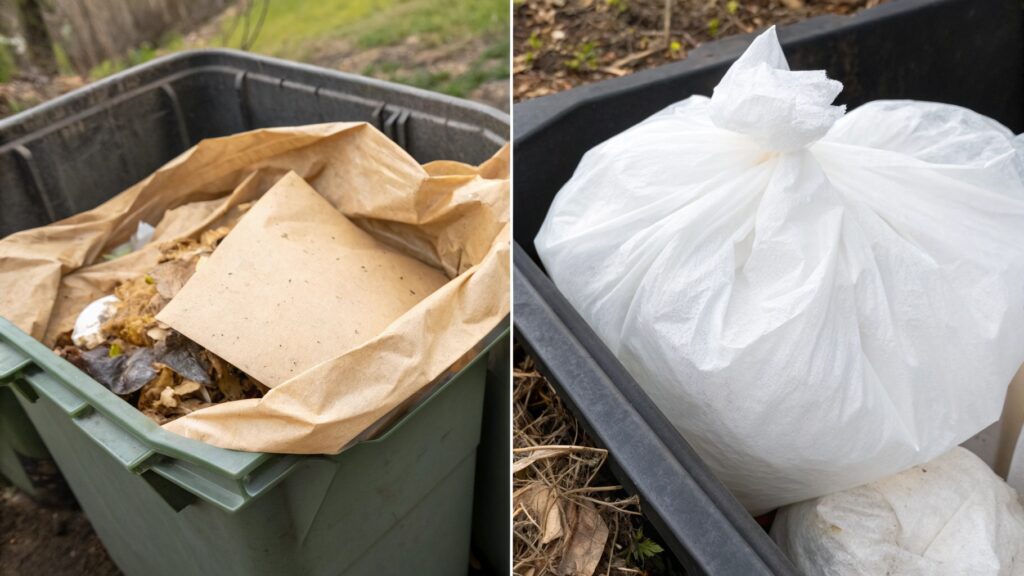
The biodegradability of Kraft paper is its strongest advantage over plastic, but it is not a magical solution. In optimal conditions—like a moist compost pile where bacteria and oxygen are abundant—it breaks down very fast. This is the biodegradable promise. For businesses, this means that if a bag cannot be recycled due to food residue, it should be designed to be easily compostable. The entire system must be considered. We must communicate clearly to the consumer. A subtle message on the bag that says, "Please Reuse, then Compost" encourages the right habit. The shift toward sustainability is not about simply swapping materials; it is about rethinking habits. The environmental impact is not determined by the bag on day one, but by how the consumer chooses to use and dispose of it over its entire lifecycle. True eco-friendliness starts not with the bag itself, but with how we choose to use it, turning a potential disposable item into a component of a genuine, brand-aligned circular system.
Conclusion
A Kraft paper bag is only a sustainable solution when it is part of a circular system. Prioritize FSC-certified materials, minimal printing, and designs that encourage multiple reuses to ensure your brand's commitment is authentic and impactful.
-
Explore the nuances of Kraft paper's recyclability to ensure your brand communicates its environmental commitment accurately. ↩
-
Find out how using water-based inks can improve the recyclability of packaging and reduce environmental impact. ↩
-
Learn effective composting and recycling methods to maximize the environmental benefits of paper products. ↩