Is Your Custom Logo T-Shirt a Walking Joke, or a Smart Brand Statement?
Are you wasting money on cheap shirts that fade fast? Many businesses treat a custom tee as a simple giveaway. This results in a flimsy product that does not reflect your brand's true value. This is a common, costly mistake.
The best custom logo t-shirt is a search for voice, not just fabric, blending intentional humor or messaging with technical print quality and ethical sourcing to create a durable, wearable statement. Prioritize print method, fabric cut, and art ownership to ensure your design lasts and your brand's message is clear and intentional.
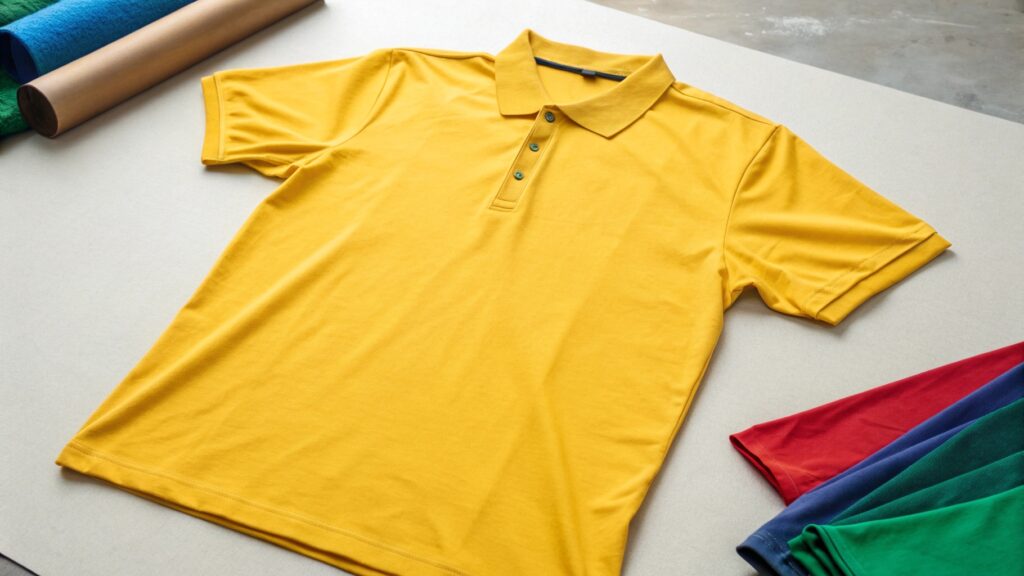
I have seen countless t-shirts produced, from basic event shirts to high-end retail quality. When clients ask me for a custom tee, they often think only about the logo size. But the shirt is more than a canvas for your logo. For a marketing manager like Jacky, the t-shirt is a tactile piece of brand experience. The shirt’s cut, the fabric's feel, and the print's durability all tell a story about your company. If you are going to use a t-shirt to communicate a message—whether it is humor, a company motto, or event branding—you need to make sure the quality ensures the laugh or the message actually lasts.
How to Get a Printed Image on a Shirt?
You have a great design idea, but how does the ink actually stick to the shirt? Choosing the wrong printing method can ruin the design and make your shirt feel cheap. This is a frustrating technical problem.
Getting an image printed on a shirt requires matching the artwork style to the correct printing technique; bold, flat graphics need durable screen printing, while full-color, photographic images require digital methods like Direct-to-Garment (DTG) or dye-sublimation for clarity and gradient fidelity.
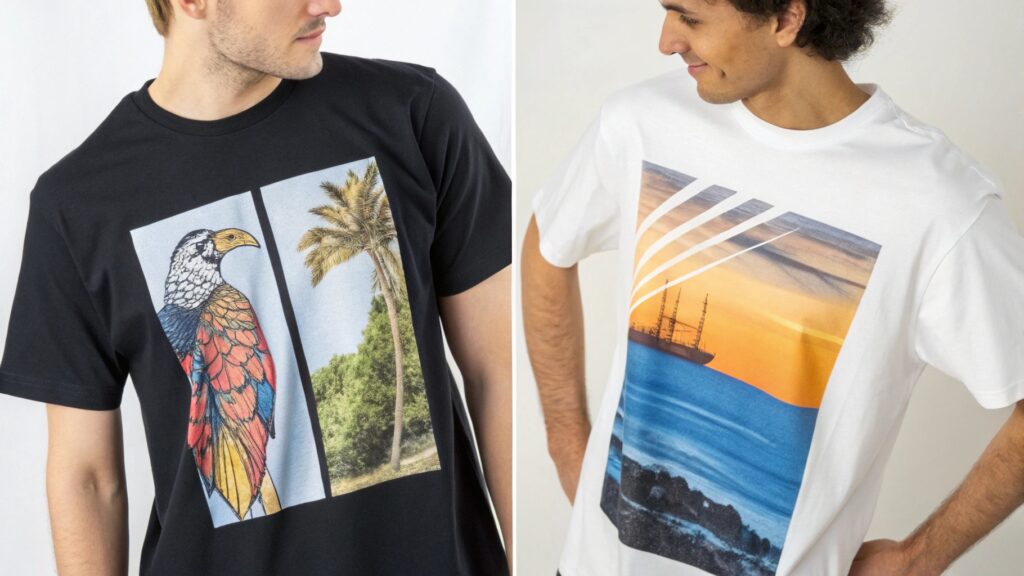
This is where the technical details1 really matter for Jacky’s quality goals. I always teach clients to start with the artwork itself. The look of the design dictates the best method for the best outcome. If your design is a simple logo or text with bold, flat colors, then screen printing is your strongest choice. Screen printing applies a thick layer of ink that is incredibly durable and survives dozens of washes. It is the best choice for a lasting impression. However, if your design is a complex image, a photograph, or a graphic with many color gradients, you must use Direct-to-Garment (DTG) printing. DTG works like a large inkjet printer, spraying ink directly onto the fabric. It offers amazing detail and color variety, but the print might not be as durable as screen printing. We need to be intentional here. If you choose DTG for a simple logo, you are probably spending too much for a weaker print. If you choose screen printing for a photograph, the final image will look blocky and bad. You also need to consider the fabric weight and cut. A heavy, mid-weight shirt makes a funny line or a clever design look intentional and professional. Putting a clever phrase on a flimsy tee makes the whole message read as cheap or thoughtless. Choose the print method to support the art, and choose the shirt to support the message.
| Artwork Type | Best Print Method | Primary Benefit | Durability and Feel |
|---|---|---|---|
| Simple Graphics/Text | Screen Printing | Maximum durability, vibrant colors. | Highest longevity, slightly heavier feel on the shirt. |
| Complex/Photographic | Direct-to-Garment (DTG) | High detail, full-color gradients. | Softer feel, but durability is less than screen printing. |
| All-Over Print | Dye Sublimation | Seamless, edge-to-edge designs. | Excellent wash resistance, only works on polyester fabrics. |
Is There a Website Where I Can Design My Own T-Shirt?
You want control over your design, but you do not want to be limited by generic templates. Finding the right platform that balances creativity and operational simplicity is difficult. This search can be time-consuming and confusing.
Yes, you can design your own t-shirt on various print-on-demand (POD) platforms like Printful or Printify, which offer quick customization tools and direct-to-consumer fulfillment. For originality and unique voice, explore independent artist marketplaces like Redbubble or TeePublic, as these often provide truly unique, pre-vetted designs.
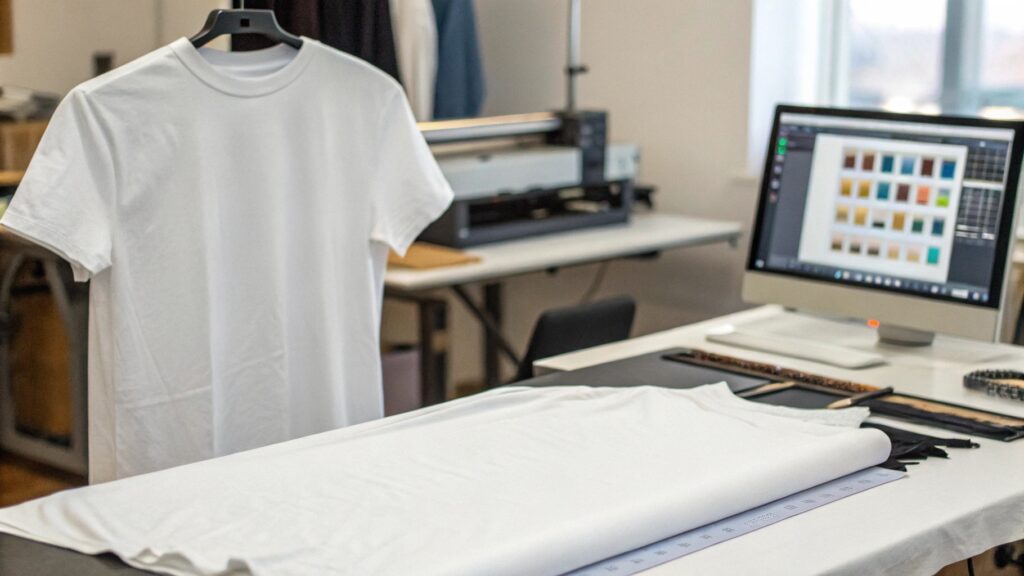
The key to a successful custom shirt design is finding the right partner. I divide the available platforms into a few categories, and each one solves a different problem. For flexibility and quick customization, the print-on-demand platforms are great. They let you upload your logo, choose the shirt model, and quickly see a mockup. They handle all the logistics. This is fast and flexible. However, if your goal is originality and a unique voice, you should look at the independent artist shops. These marketplaces thrive on original ideas—cheeky, clever, subtle, or loud. When you buy from these places, you are buying someone's specific style, which is often much more impactful than a corporate design. If you need tactile quality and durability for large, bulk orders, neither of those is the best choice. For bulk, you should always go to a local screen-printer or a specialized vendor like Latitude. These experts manage the process, can offer superior quality control, and are necessary if you want your logo joke or statement to survive dozens of washes without cracking or fading. Always ask any vendor for a physical sample if the quality and feel of the shirt are important to your brand. Never trust a digital mockup alone.
Can I Use AI for T-Shirt Design?
AI is the new buzzword, and it promises endless design possibilities. However, relying too much on AI for your core branding can lead to generic, copyrighted, or ethically tricky designs. This is a new, complex risk.
You can use AI for t-shirt design2 to generate concepts and quick mockups, but you must be extremely mindful of copyright and ownership. AI-generated art often lacks a human voice and can inadvertently use copyrighted material, creating ethical and legal risks for your brand if the final design is used commercially.
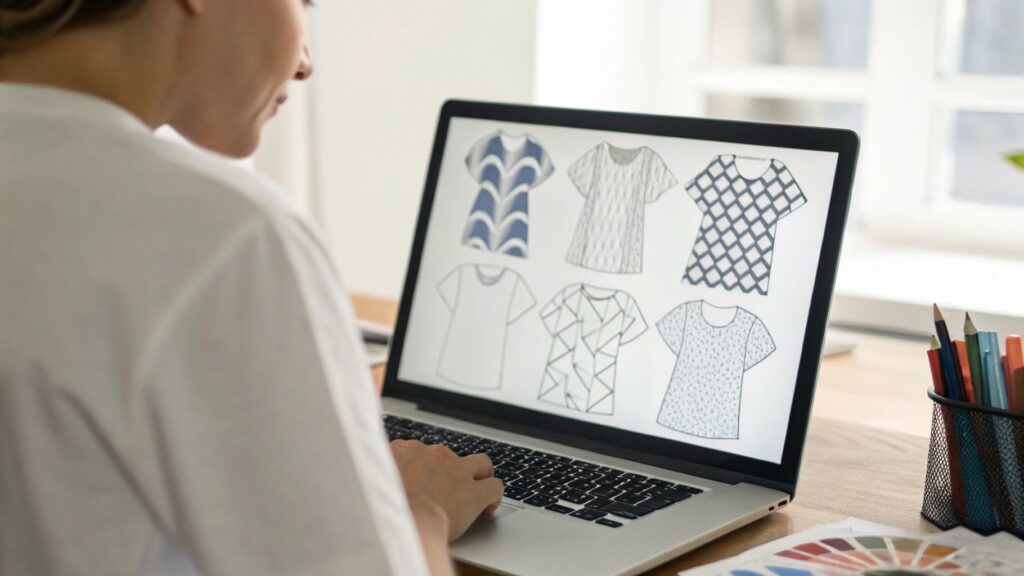
Using AI for a custom t-shirt design is tempting because it is fast. You can use it to generate a hundred ideas in an hour. But for a professional brand, AI presents two big problems: ethics and legal risk. First, the ethical dimension means you must be mindful of copyright. AI tools are trained on millions of images, and the design it creates might unintentionally mimic a trademarked character or a unique piece of art. Using that for a commercial t-shirt could lead to a legal takedown or offense. Always prioritize creators who can give you print-ready files and who own their art. Second, AI can often miss the subtlety of human voice. Humor in apparel is judged by its intent—is it cheeky and ironic, or just a generic meme? AI often gives you the generic meme. My practical rule for Jacky is this: Use AI for concept inspiration, but pay a human designer to finalize the art. This ensures your final product has a clear, ownable voice. Treat a custom logo t-shirt3 as a serious statement about your brand. When you choose to make that statement, choose quality and clear ownership to make sure the laugh, or the message, lasts a long time.
Conclusion
A custom logo t-shirt is a serious marketing investment. Choose your print method, fabric quality, and sourcing with intentionality to ensure your shirt is a durable, ethical, and memorable brand ambassador.
-
Understanding the technical details of t-shirt printing ensures you choose the right method for your design, enhancing quality and durability. ↩
-
Explore the potential and limitations of using AI in the creative process of t-shirt design. ↩
-
Explore this resource to learn essential tips for creating impactful custom logo t-shirts that resonate with your brand identity. ↩