How Can You Choose a Water Bottle That Your Clients Will Actually Use Every Day?
Are you tired of spending money on corporate gifts that just sit in a kitchen cabinet? A bad water bottle is a waste of money and fails to promote your brand.
A good water bottle builds brand loyalty by fitting perfectly into your client's daily routine. You must choose high-quality materials like 316 stainless steel and focus on ergonomics. This ensures the bottle is easy to carry, simple to clean, and keeps drinks at the right temperature all day long.
 ![]()
![]()
I have spent many years in the printing and gifting industry, and I have seen it all. I started in a humble factory where I saw how products were made from the ground up. I know that a gift only works if it adds value to someone's life. If you want to stop wasting your marketing budget on items that people throw away, you need to read the rest of this guide.
Is 304 Stainless Steel Better Than 316 for Water Bottles?
Many people think all metal bottles are the same. This mistake leads to rusty bottles or water that tastes like metal. You need to know which material protects your health and your brand.
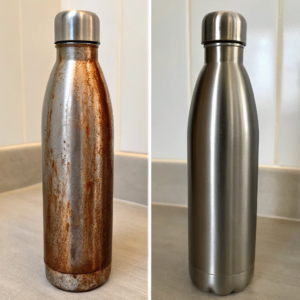
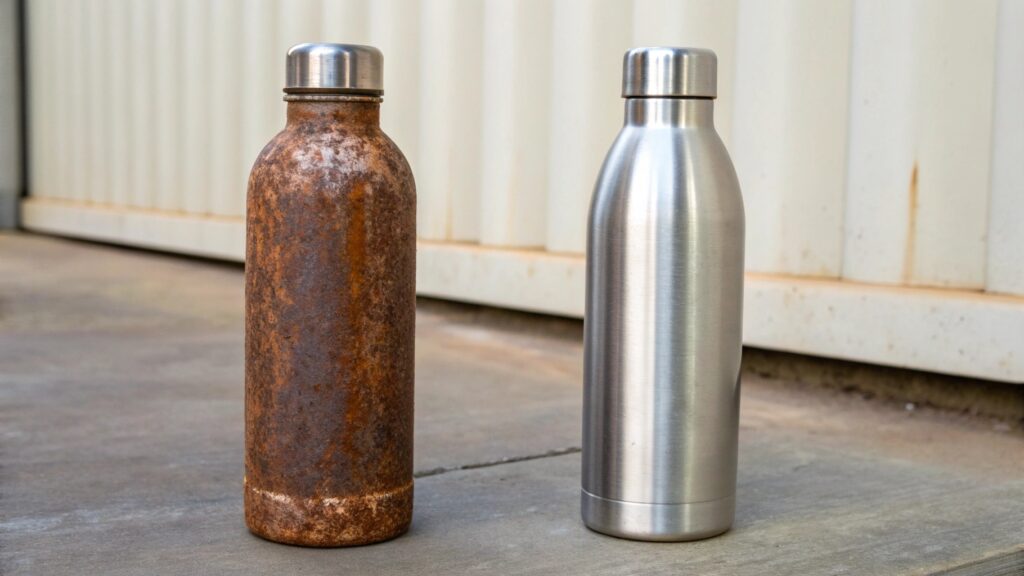
316 stainless steel is generally better than 304 because it has higher corrosion resistance1 due to added molybdenum. While 304 is the standard for most bottles, 316 is a "medical grade" metal that handles acidic drinks like coffee or tea much better over a long time.
 ![]()
![]()
Understanding the Metal Grades
In my experience at Latitude, I often see clients get confused by numbers like 18/8 or 18/10. These numbers tell you how much chromium and nickel are in the steel. 304 steel is usually 18/8. It is great for water and very common. However, 316 steel is 18/10 and has that special ingredient called molybdenum. This makes it much stronger against salt and acids. If your clients live in a coastal place like Singapore, or if they like to put lemon in their water, 316 is the safer choice. It prevents that "iron" taste that happens when cheap metal starts to break down.
Why Price Matters for Your Brand
I always tell managers like Jacky that the cheaper option often costs more in the end. 316 steel costs more to produce, but it lasts much longer. If you give a 316 steel bottle, you are telling your client that you care about quality and their health. A bottle made of 304 is fine for simple water, but 316 is a premium statement. It shows you go the extra mile. When a gift lasts for years without rusting, your brand stays in the client's hand for years too.
Comparison of Steel Types
I created this table to help you see the differences clearly. It makes it easier to justify the cost to your boss or team.
| Feature | 304 Stainless Steel | 316 Stainless Steel |
|---|---|---|
| Common Name | 18/8 Food Grade | 18/10 Medical Grade |
| Corrosion Resistance | Good | Excellent (Best for acids/salt) |
| Price Point | Affordable | Premium |
| Best Use | Daily water drinking | Coffee, Tea, Juices, and Sports |
How to Check a Good Water Bottle?
A leaky bottle in a laptop bag is a marketing disaster. It makes your company look careless and causes a lot of stress for your clients. You must know how to spot quality.
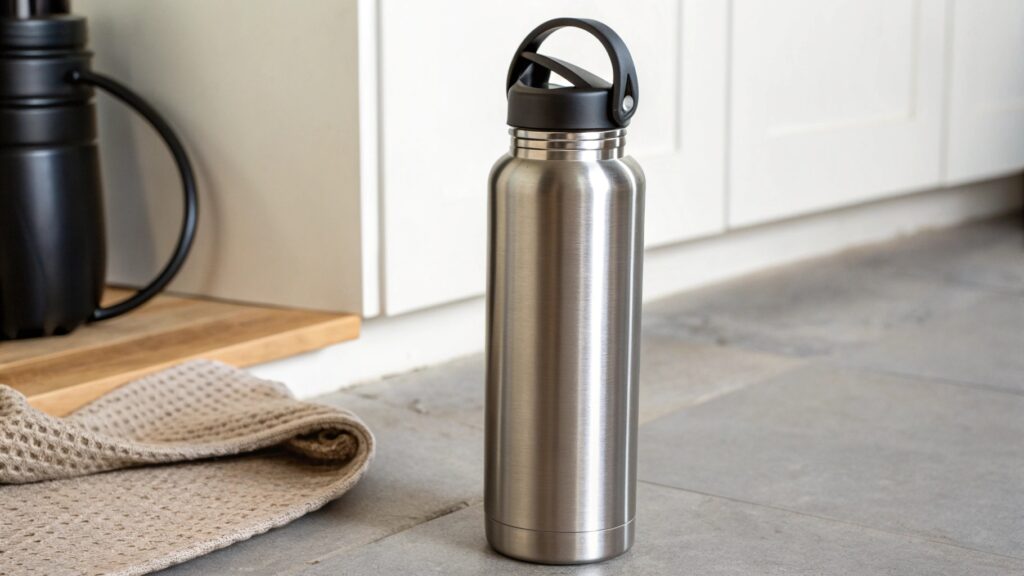
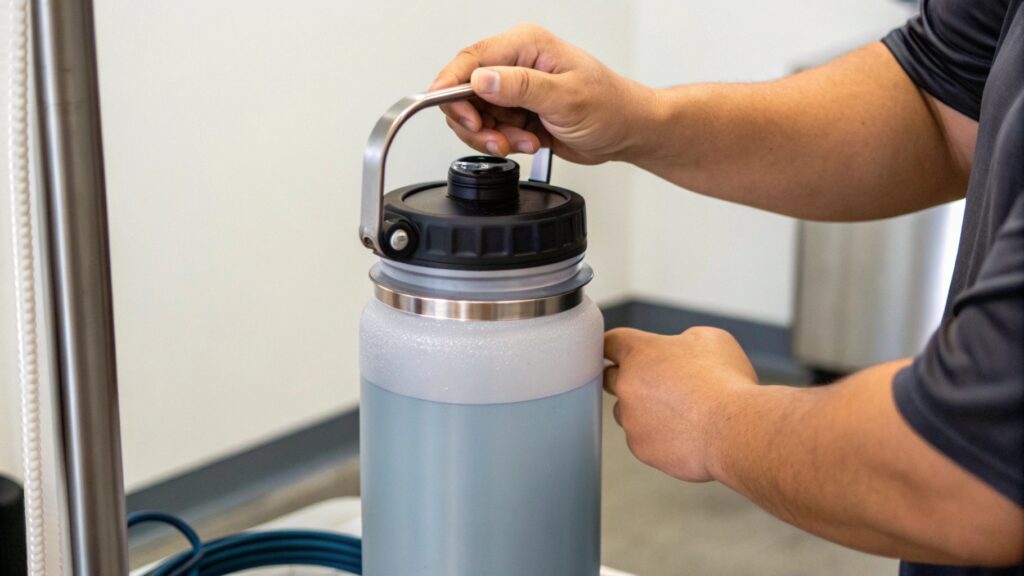
To check a good water bottle, you should test the lid seal for leaks and feel the weight. A quality bottle has smooth edges, a sturdy handle, and a vacuum seal that prevents the outside from getting hot or cold when filled.
 ![]()
![]()
The Importance of Ergonomics and Lids
When I started in design and production, I learned that the lid is the most important part of the bottle. If the lid is hard to open or breaks easily, the bottle is useless. I always test the "one-hand opening" feature. Many of our clients are busy people who are often on the phone or driving. They need a bottle that works with one hand. Also, look at the mouth size. A wide mouth is great for adding ice, but a narrow mouth is easier to drink from while walking. The best bottles find a balance between these two needs.
Testing the Insulation Performance
I have a simple trick to check insulation. Fill the bottle with boiling water and wait one minute. If the outside of the bottle feels hot, the vacuum seal2 is bad. A good bottle should stay cool on the outside no matter how hot the liquid is inside. This is what we call "sweat-proof" design. For a manager like Jacky, ensuring this performance is key. You don't want your logo to be covered in condensation or for your client to burn their hand. Quality control at the factory level is the only way to ensure every bottle in your 500-piece order works perfectly.
Key Quality Indicators
Use this checklist when you receive a sample from your supplier. It will save you from making a big mistake with your budget.
| Checkpoint | What to Look For | Why it Matters |
|---|---|---|
| Lid Seal | Silicone ring is thick and secure | Prevents leaks in bags |
| Finish | No chips or scratches in the paint | Maintains professional brand look |
| Threads | Smooth screwing action | Easy to open and close every day |
| Base | Non-slip or heavy bottom | Prevents the bottle from tipping over |
What is the Healthiest Type of Water Bottle?
People are more worried about chemicals like BPA than ever before. If you give a bottle that smells like plastic, your clients might be afraid to use it. You must choose safe materials.
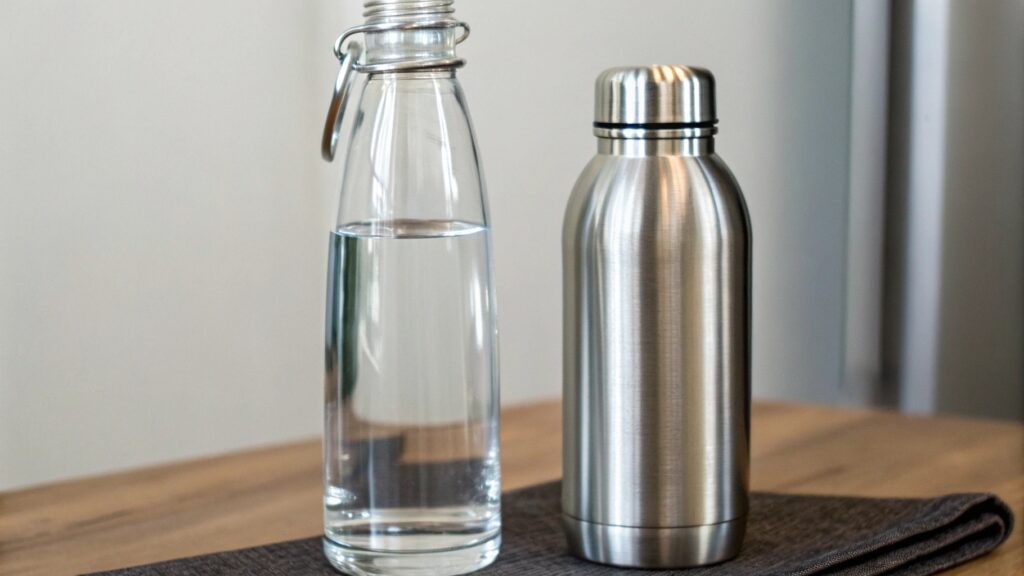
The healthiest water bottles are made from glass or 316 stainless steel. These materials do not leach chemicals into your drink. Glass provides the purest taste, while high-grade stainless steel offers a safe, non-reactive surface that is also very durable for travel and sports.
 ![]()
![]()
Comparing Glass, Plastic, and Steel
I believe that the healthiest choice often depends on your lifestyle. Glass is the king of purity. It does not change the taste of your water at all. However, glass is heavy and can break. For a corporate gift, this might be a risk. Stainless steel is the best middle ground. It is light, tough, and very safe if you use 304 or 316 grades. We also see a lot of "Tritan" plastic now. It is BPA-free3 and very clear. It is good for sports because it is so light. But for long-term health and the "no-plastic" movement, steel and glass are the winners.
Promoting Wellness Through Your Brand
When you choose a healthy bottle, you are joining the wellness journey of your client. I have seen how this changes the relationship between a brand and a customer. You are not just giving a "thing." You are giving a tool for a better life. At Latitude, we help you pick materials that match this message. For Jacky, this solves the challenge of finding eco-friendly and innovative designs. A healthy bottle tells a story of care and responsibility. It shows that your company thinks about the person, not just the sale. This is how you build a brand that people trust for a long time.
Material Health Comparison
This table shows how different materials rank in terms of health and safety for daily use.
| Material | Health Rating | Taste Purity | Portability |
|---|---|---|---|
| Glass | 5/5 (Best) | 5/5 (Perfect) | 2/5 (Heavy/Fragile) |
| 316 Stainless | 5/5 (Best) | 4/5 (Great) | 5/5 (Light/Tough) |
| BPA-Free Plastic | 3/5 (Good) | 3/5 (Okay) | 5/5 (Very Light) |
| Cheap Aluminum | 1/5 (Avoid) | 1/5 (Metallic) | 4/5 (Light but dents) |
Conclusion
Choosing a high-quality water bottle made from 316 stainless steel or glass is the best way to protect your clients' health and your brand's reputation for long-term loyalty.