How are custom T-shirts printed?
I've learned that printing a custom T-shirt is about more than just putting a design on fabric. It's about picking the right method to make sure your design looks great and lasts.
Custom T-shirts are printed using several different methods, including screen printing, direct-to-garment (DTG), and heat transfer. The best method depends on your design, the number of colors you're using, how many shirts you need, and your budget.

From my experience in the printing industry, I know that the final shirt is a mix of art and science. The right technique makes all the difference.
How does custom ink print their shirts?
Do you ever wonder how companies like Custom Ink get designs onto T-shirts? They use a mix of methods to handle all kinds of orders.
Companies like Custom Ink use a combination of printing methods, primarily screen printing for large orders with simple designs and direct-to-garment (DTG) printing for smaller orders with complex, multi-color artwork. They choose the method that best fits the specific design and quantity of each order.
I've learned that a good printer doesn't just use one method. They choose the right tool for the job. This is how they give you the best result for your specific needs.
What are the main printing methods used by large custom T-shirt companies?
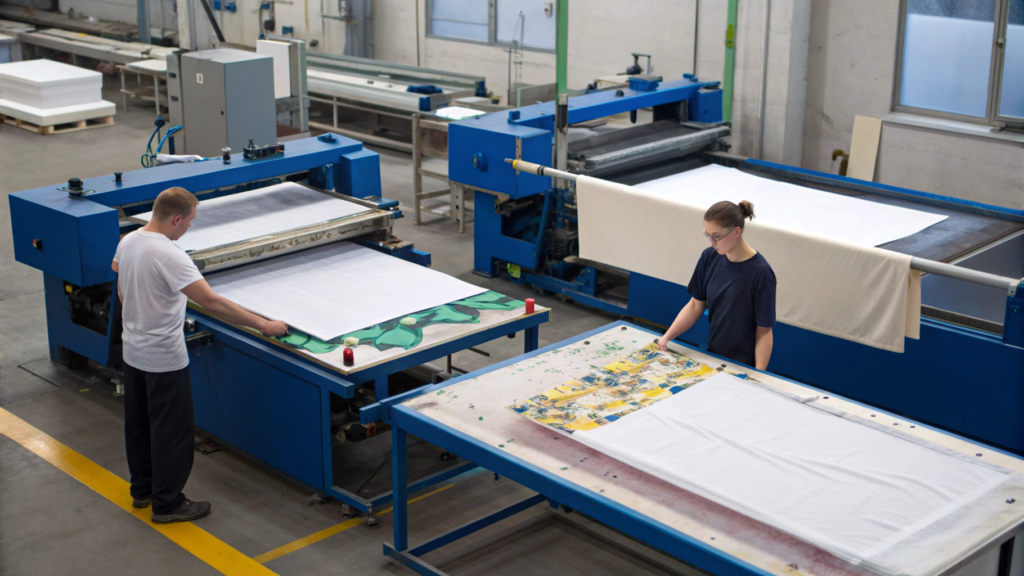
When I think about how big companies print T-shirts, I think about their efficiency. They use different methods to be as effective as possible. For screen printing, they create a stencil for each color in a design. They then push ink through the stencil onto the shirt. This method is fast and cost-effective for large orders. The colors are very vibrant. For direct-to-garment (DTG) printing1, it's like using a big inkjet printer. It sprays ink directly onto the shirt. This is perfect for detailed, full-color designs and small orders. It doesn't need stencils, so it's very fast to set up.
| Method | Best For | How It Works | Pros | Cons |
|---|---|---|---|---|
| Screen Printing | Large orders, simple designs, vibrant colors. | A stencil is made for each color, and ink is pushed through it. | Durable, bright colors, cost-effective for bulk. | High setup cost, not good for complex designs or photos. |
| Direct-to-Garment (DTG) | Small orders, complex designs, photos. | An inkjet printer sprays ink directly onto the fabric. | High detail, many colors, no minimum order size. | Less vibrant colors on dark shirts, not as durable as screen printing. |
| Heat Transfer | Small runs, custom names or numbers. | A design is printed on special paper and then pressed onto the shirt with heat. | Quick, good for one-offs, can be very detailed. | Less durable, can have a plastic-like feel. |
I once helped a local business order custom shirts for a big event. The design was simple with two colors, and they needed 200 shirts. I recommended screen printing because it was the most cost-effective and the colors would pop. The shirts came out great and were very durable. This showed me that matching the printing method to the order is key to a good outcome.
Is screen or digital printing better?
Are you trying to choose between screen printing2 and digital printing? It's a common question, and the answer depends on what you need.
Neither screen printing nor digital printing is always better; they are best for different situations. Screen printing is ideal for large bulk orders, simple designs, and vibrant colors. Digital printing is better for small orders, complex designs with many colors, and detailed images like photos.

From my experience, the choice is not about which is better. It is about which is better for your specific project. It's a strategic decision.
When should you choose screen printing vs. digital printing?
When a client asks me to choose between screen and digital printing, I help them look at their needs. Screen printing is the right choice if you have a simple design with a few colors and you need a lot of shirts. It has a high setup cost for each color, so it's cheaper per shirt when you order in bulk. The print is also very durable. Digital printing, on the other hand, is great for smaller orders. It is also the best choice for designs with a lot of detail or many colors, like a photograph. The cost per shirt is the same no matter how many you order. The print is not as durable as screen printing.
| Factor | Screen Printing | Digital (DTG) Printing |
|---|---|---|
| Cost | More expensive setup; cheaper per shirt for large orders. | No setup cost; cost per shirt is consistent regardless of quantity. |
| Quantity | Best for large quantities (typically 24 shirts or more). | Best for small quantities (1-24 shirts) or one-off prints. |
| Design | Best for simple designs with a few solid colors. | Best for complex designs with many colors, gradients, and fine details. |
| Durability | Very durable; the ink is thicker and bonds well with the fabric. | Less durable; the print can fade or crack over time. |
| Feel | Can feel slightly raised or textured on the shirt. | Feels very soft, with the ink soaking into the fabric. |
I once had a client who wanted to print shirts for a family reunion. The design had a photo of the family. I told them that digital printing was the only way to get the photo to look good. For another client who needed 500 shirts with a simple company logo, screen printing was the clear winner for quality and cost. This taught me that the best choice is always the one that matches the design and quantity.
What is the best way to print custom T-shirts3?
Are you ready to get custom T-shirts made but don't know which printing method to choose? It's a big decision that affects the look, feel, and cost.
The best way to print custom T-shirts is to select a method that aligns with your specific needs. For large orders with simple designs, screen printing is best. For small orders with detailed designs, digital printing is the best choice. For specialized effects or small quantities, heat transfer can be a good option.
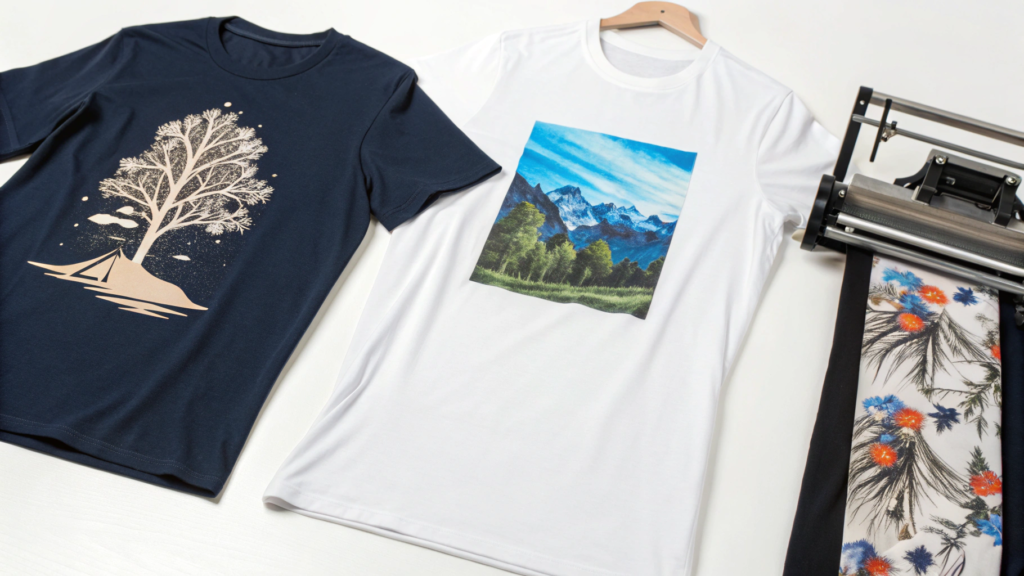
From my experience, the "best" way is not about one single method. It is about making a smart choice that fits your goal, whether it is for a business, an event, or a personal gift.
How do you choose the right printing method for your T-shirts?
When it comes to printing T-shirts, you need to think about a few things to make the best choice. The first thing is the design. Is it a simple logo or a full-color photo? Simple designs are great for screen printing. Detailed designs need digital printing. The second thing is quantity. How many shirts do you need? For a large order, screen printing is almost always cheaper. For a small order, digital printing is the way to go. The third thing is the final look and feel. Do you want a vibrant, durable print or a soft, detailed one? Screen printing gives you a durable feel, while digital printing gives you a soft feel.
| Method | Best For | When to Choose |
|---|---|---|
| Screen Printing | Simple, durable designs in bulk. | Choose this if you need 50+ shirts with a bold, two-color logo. |
| Digital (DTG) Printing | Complex, multi-color designs in small quantities. | Choose this if you need a single shirt with a photograph or a detailed drawing. |
| Heat Transfer | Personalization or special effects. | Choose this if you want to add a name and number to a few sports jerseys. |
| Sublimation | Full-color, all-over prints on light-colored polyester shirts. | Choose this for sports jerseys or vibrant, photo-quality prints on a specific type of fabric. |
I once had a client who was starting a small clothing brand. They wanted to test a few designs. I recommended they start with digital printing because it allowed them to print a small number of shirts with no high setup cost. This let them see what sold without a big investment. Later, when they found a popular design, they switched to screen printing for larger orders to save money. This showed me that the best way to print is the way that makes the most sense for your project at that moment.
Conclusion
Custom T-shirts are printed in different ways. Screen printing is for big orders, and digital printing is for small, detailed ones. The best method depends on your design and quantity.