Different Lids and Caps for Stainless Steel Water Bottles: Which One Suits Your Lifestyle?
Are you tired of leaky lids or slow sips? The lid of your water bottle defines its function, hygiene, and how well it fits into your daily routine.
Different stainless steel water bottle lids—like the screw cap, straw lid, or flip-top—are designed to optimize specific functionalities like leak-proofing, quick access, or insulation. The choice of lid is what truly customizes the bottle to match the user's lifestyle and activity level.
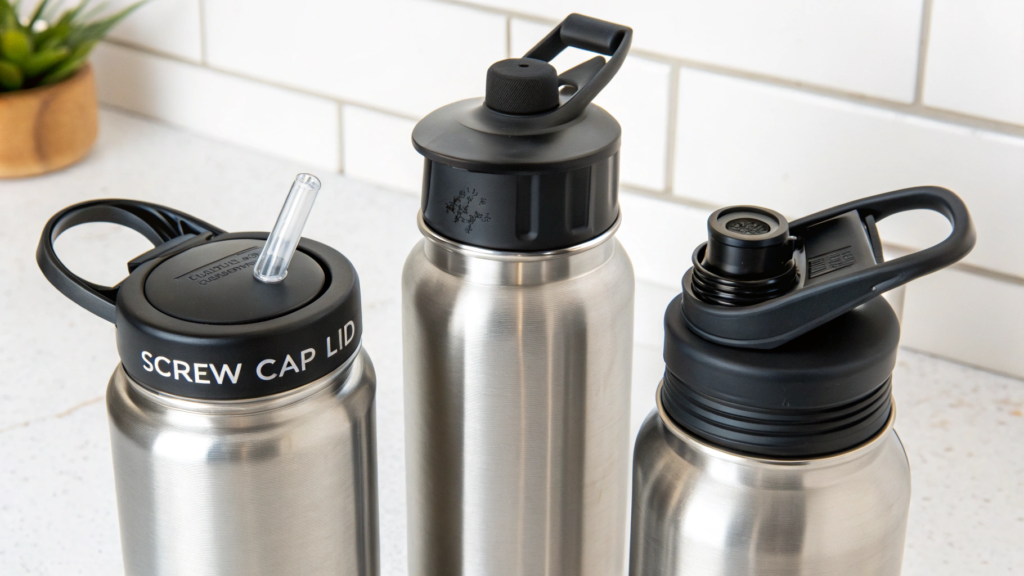
The lid of a stainless steel water bottle might seem like a small detail, but it’s often what defines the functionality, hygiene, and personality of the entire bottle. From my perspective, the growing variety of lids $\text{—}$ flip tops, straw lids, screw caps, and carabiner loops $\text{—}$ reflects how hydration has become lifestyle-driven. A sports enthusiast values a straw lid for quick sips on the move, while an office worker might prefer a leak-proof screw cap that pairs seamlessly with a professional aesthetic. Wide-mouth lids appeal to those who love versatility $\text{—}$ easy refilling, ice cubes, and effortless cleaning $\text{—}$ while insulated caps keep drinks colder for longer. The beauty lies in customization: the same stainless steel bottle can serve vastly different needs simply by switching lids. This evolution highlights a broader truth $\text{—}$ modern design isn’t about uniformity, but adaptability. A well-designed lid transforms a bottle from a container into a personal hydration system that moves effortlessly with you.
What Is the Difference Between the Different Water Bottle Caps?
Not all caps are created equal. You must understand the pros and cons of each major type to select the right tool for your hydration habits.
Water bottle caps differ primarily in their opening mechanism, affecting hygiene, speed of drinking, and leak resistance. The main types are the Screw Cap (maximum leak-proof security), the Straw Lid (quick, vertical sipping), and the Flip-Top (fast, one-handed operation).
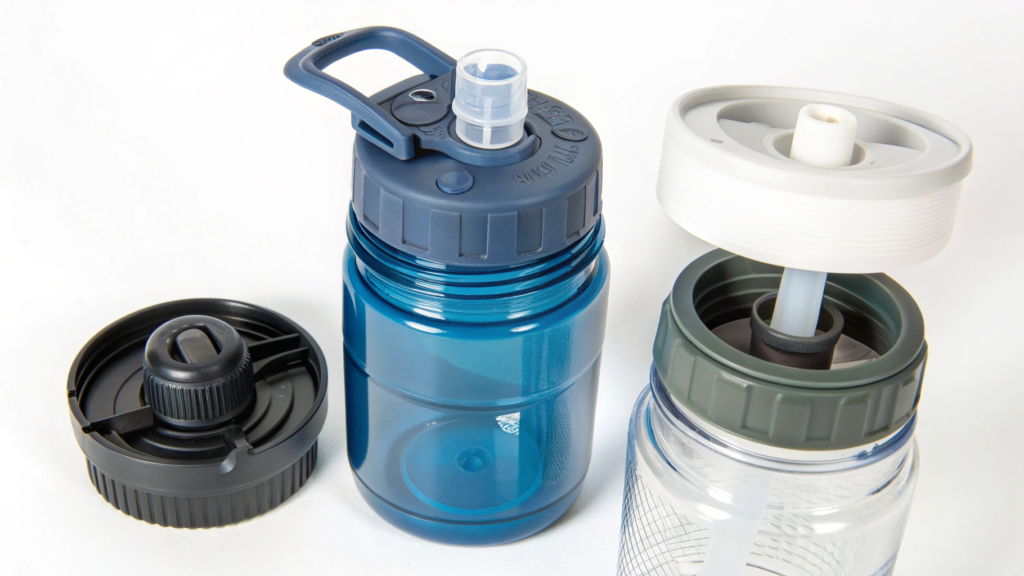
When selecting an insulated bottle for a client like Jacky, the lid is the central point of friction $\text{—}$ or flow $\text{—}$ for the user. The simple Screw Cap (or Chug Cap) offers the highest level of leak security because it provides a complete, sealed closure, making it ideal for tossing into a briefcase or backpack. The trade-off is that it requires two hands and full removal for drinking. The Straw Lid is the most popular for active users, offering quick, vertical access without tilting the bottle. This makes it perfect for driving, working out, or quick desk sips, but it often has a higher risk of minor leaks if the spout is left open. The Flip-Top Lid offers a faster, wider sip than the straw and can often be operated one-handed, making it a versatile middle ground. Furthermore, some lids are insulated themselves, adding an extra barrier against temperature loss, which is crucial for maximizing cold retention in hot weather. The best cap depends entirely on how the user interacts with the bottle throughout their day.
Common Water Bottle Cap Styles
| Cap Style | Primary Benefit | Primary Trade-off | Ideal Use Case |
|---|---|---|---|
| Screw Cap (Chug) | Maximum Leak Security/Insulation. | Requires two hands to open/close completely. | Travel, high-security backpacks, office desks. |
| Straw Lid | Quick, vertical, no-tilt sipping. | Can leak if spout is left open; harder to clean. | Driving, gym workouts, fast-paced environments. |
| Flip-Top Lid | Fast, one-handed operation, wide sip. | Less secure than screw cap; moving parts can break. | General portability, easy access during meetings. |
Are All Stainless Steel Water Bottles the Same?
Stainless steel bottles may look similar, but their performance and safety vary hugely. You must look beyond the shine.
No, all stainless steel water bottles are not the same; performance depends heavily on the grade of steel, the quality of the vacuum insulation1, and the cap design. High-quality bottles use 18/8 food-grade stainless steel2 and superior copper-lined vacuum technology for maximum temperature retention.
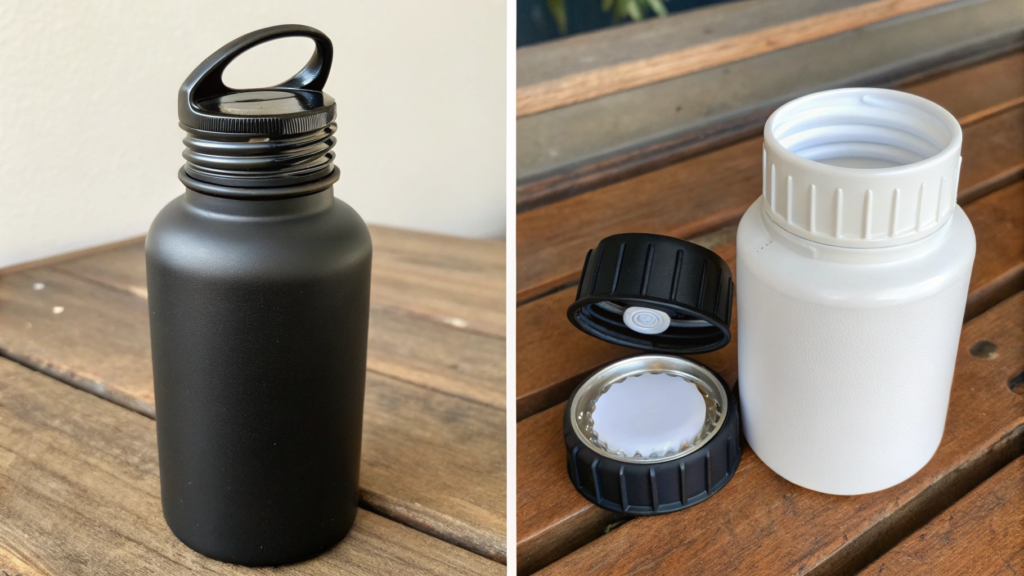
As someone who works with materials, I know that two pieces of metal can look identical but perform completely differently. The primary difference lies in the steel grade and insulation technology. High-quality bottles use 304 grade stainless steel, specifically the 18/8 composition (18% Chromium, 8% Nickel), which resists rust, corrosion, and flavor retention, making it safe and durable. Lower-grade steel might be cheaper but is prone to leaching or rust over time. The second critical difference is the vacuum insulation. True performance requires a high-quality double-wall construction3 where the air between the walls is evacuated to create a vacuum. The best designs also feature an internal copper lining, which adds an extra layer of thermal reflection, significantly boosting the bottle's ability to keep drinks cold for up to 24 hours. A cheap, imitation "insulated" bottle often uses a poor vacuum or simply air between the walls, causing rapid temperature loss.
What Is the Difference Between a Bottle Lid and a Cap?
The terms "lid" and "cap" are often used interchangeably, but in design, they can imply different functional roles and sizes of the closure.
A bottle "cap" often refers to a simple, smaller closure placed over a narrow opening (like a sports bottle spout), while a "lid" typically describes a more comprehensive closure that covers a wider opening, often including a secondary feature like a handle or seal. However, in common usage, both terms refer to the item that seals the bottle.
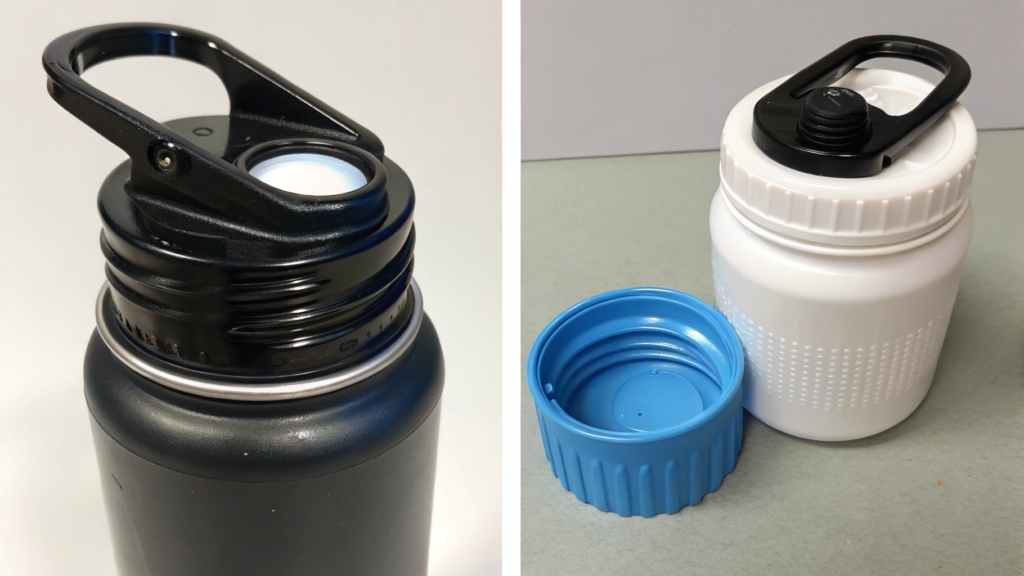
While the functional difference is subtle, the distinction between a lid and a cap often relates to the scale and complexity of the closure. A cap is often seen as the final, simple seal, like the small cover over a spout on a straw lid. A lid usually encompasses the entire mechanism that seals the main mouth of the bottle, often featuring a larger diameter and incorporating multiple functions. For example, the entire flip-top mechanism with the handle would be the lid, while the small snap-closure that covers the drinking hole might be the cap. The most important factor for the consumer is not the name, but the quality of the seal. A good lid/cap relies on a high-quality silicone or rubber gasket to create a leak-proof barrier. If the gasket is flimsy or missing, the entire function of the bottle fails. When sourcing, I focus on the hygiene factor $\text{—}$ wide lids are better for cleaning, as the user can easily reach the interior.
Conclusion
The lid is the functional definition of the bottle; choose a screw cap for leak security, a straw lid for quick sipping, and always ensure the steel is 18/8 food-grade for quality.