Why Don't We Use Metal Ice Cubes Instead Of Water Ones?
Ever wonder why those shiny metal cubes hasn't replaced the ice tray in your freezer? While they look high-tech and sleek, they often fail to keep your drink as cold as a simple cube of frozen water.
We don't widely use metal ice cubes because they lack the cooling power of water. As water ice melts, it undergo a "phase change" that absorbs a massive amount of heat without warming up. Metal cubes only get warmer as they sit in your drink, making them far less efficient at chilling.
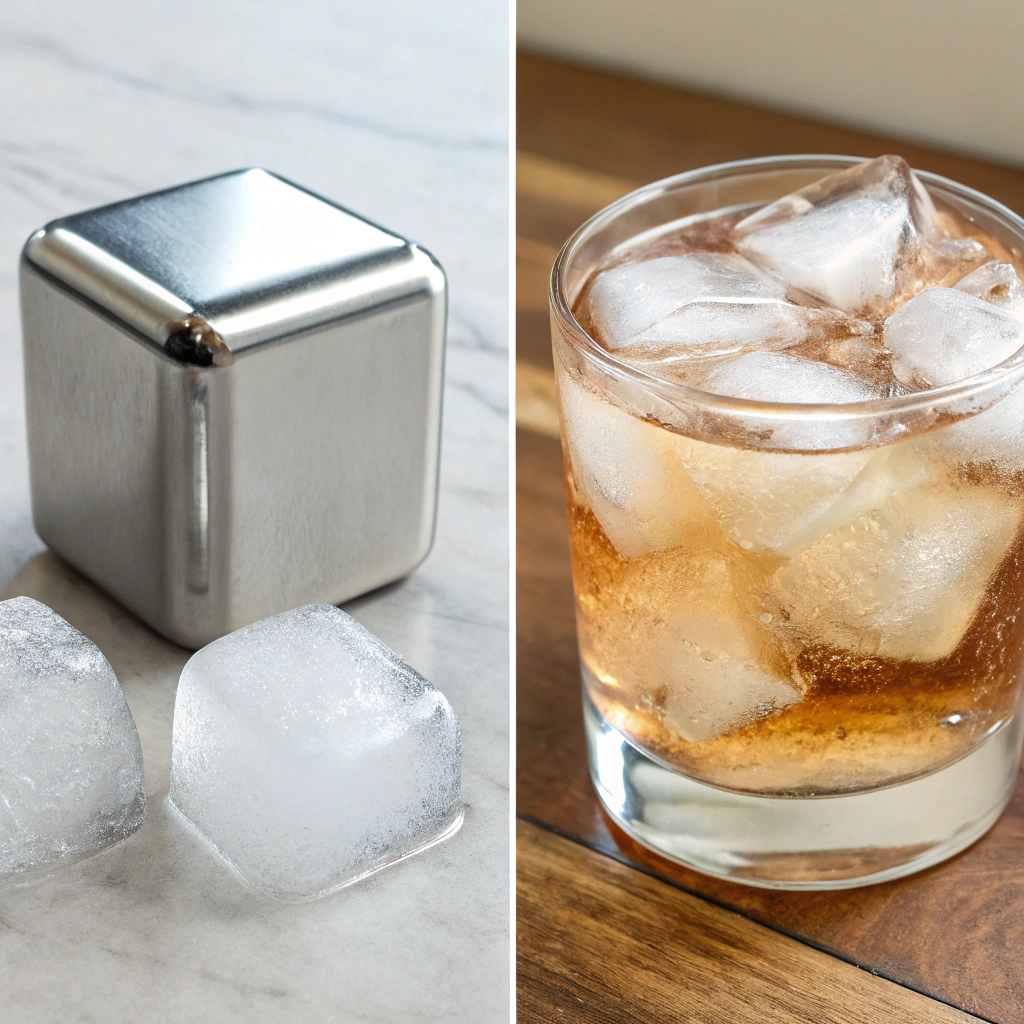
I have seen many trends come and go in the gifting world. A few years ago, everyone wanted metal ice cubes because they looked "premium" for corporate sets. However, managers like Jacky soon realized that while they look great, they don't actually perform as well for a soda or a juice. I always tell my clients that a gift should solve a problem. If the problem is "my drink is warm," water ice is still the king of physics. Metal cubes are a niche tool, not a total replacement for the classic ice cube.
Do Metal Ice Cubes Have Water In Them?
If metal doesn't melt, how does it stay cold for more than a minute? Many people think these cubes are just solid blocks of steel, but there is usually a "secret ingredient" hidden inside the shell.
Most high-quality metal ice cubes1 are hollow and filled with a non-toxic freezing gel or a mix of water and ethanol. This liquid core freezes at a lower temperature than water, helping the metal shell stay cold for a longer period than a solid piece of metal would.
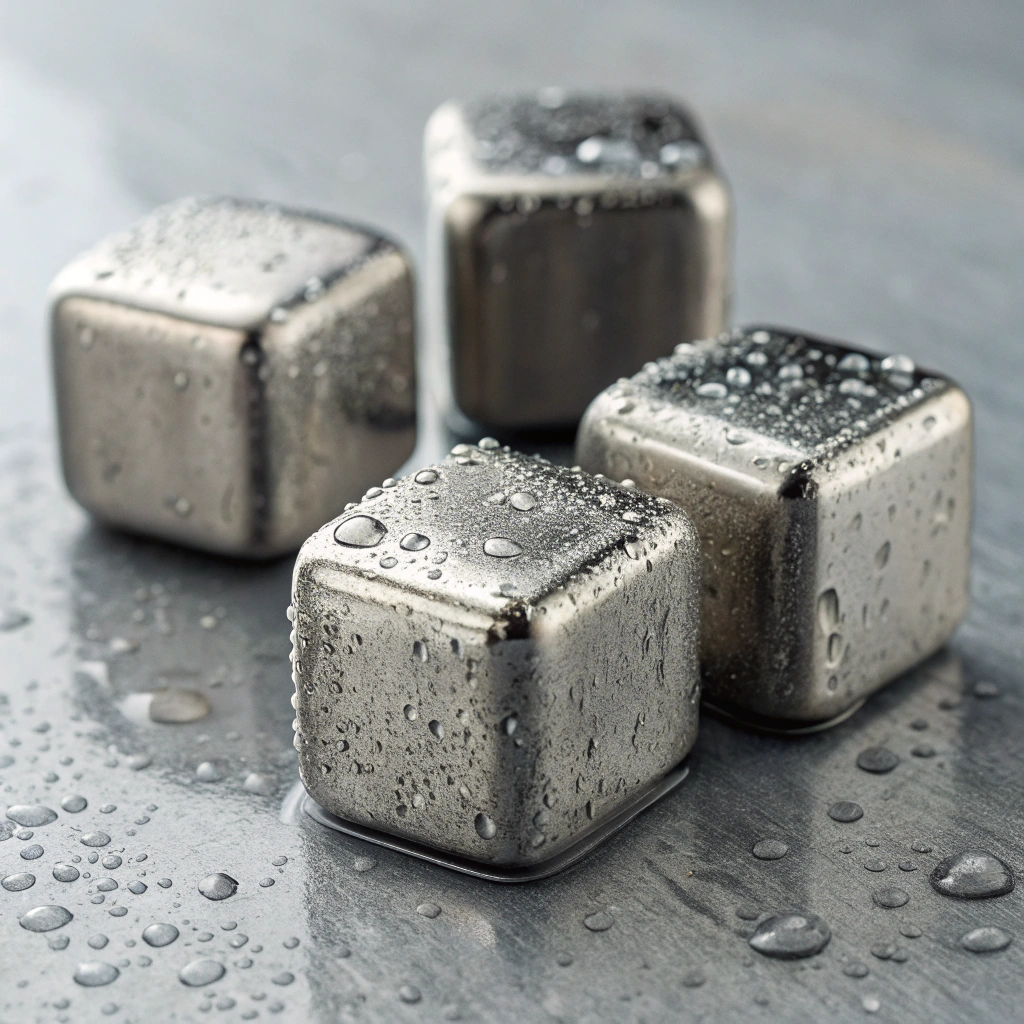
When I was working in production design, I learned that a solid block of steel loses its "cold" very fast. That is why manufacturers put a cooling gel inside. This gel tries to mimic the "phase change" of real ice. However, even with the gel, the metal wall of the cube acts as a barrier. It doesn't "conform" to the liquid like melting ice does. I once gave a set to a friend, and he noticed that while the cubes were freezing to the touch, his drink was still only "cool," not "cold." This is a key detail for Jacky to remember: metal cubes are for chilling a drink slightly, not for making it ice-cold.
To understand the difference, look at how these cubes work:
| Feature | Solid Metal Cube | Gel-Filled Metal Cube | Traditional Water Ice |
|---|---|---|---|
| Cooling Method | Sensible heat (gets warm) | Internal phase change | External phase change (melts) |
| Duration | Very Short | Moderate | Long |
| Dilution | Zero | Zero | High (Melts into drink) |
| Surface Contact | Poor (Rigid) | Poor (Rigid) | Excellent (Conforms to glass) |
The reason water ice wins is because it melts. As it turns to water, it moves around the glass and touches more of your drink. Metal cubes just sit at the bottom. For a branding manager, this means metal cubes are best for "sipping" drinks like whiskey or high-end spirits where you don't want water to ruin the flavor. They are a "specialist" gift, not a "general" one.
Are Metal Ice Cubes Bad For You?
Is it safe to drop a piece of heavy metal into something you are about to swallow? Safety is the biggest concern for any brand manager, and you need to know exactly what is going into those cubes.
Metal ice cubes are safe as long as they are made from high-quality 304 food-grade stainless steel. This material is rust-proof and does not leach chemicals. However, you must ensure the cubes are sealed perfectly; if the internal cooling gel leaks out due to a crack, you should discard the cube immediately.
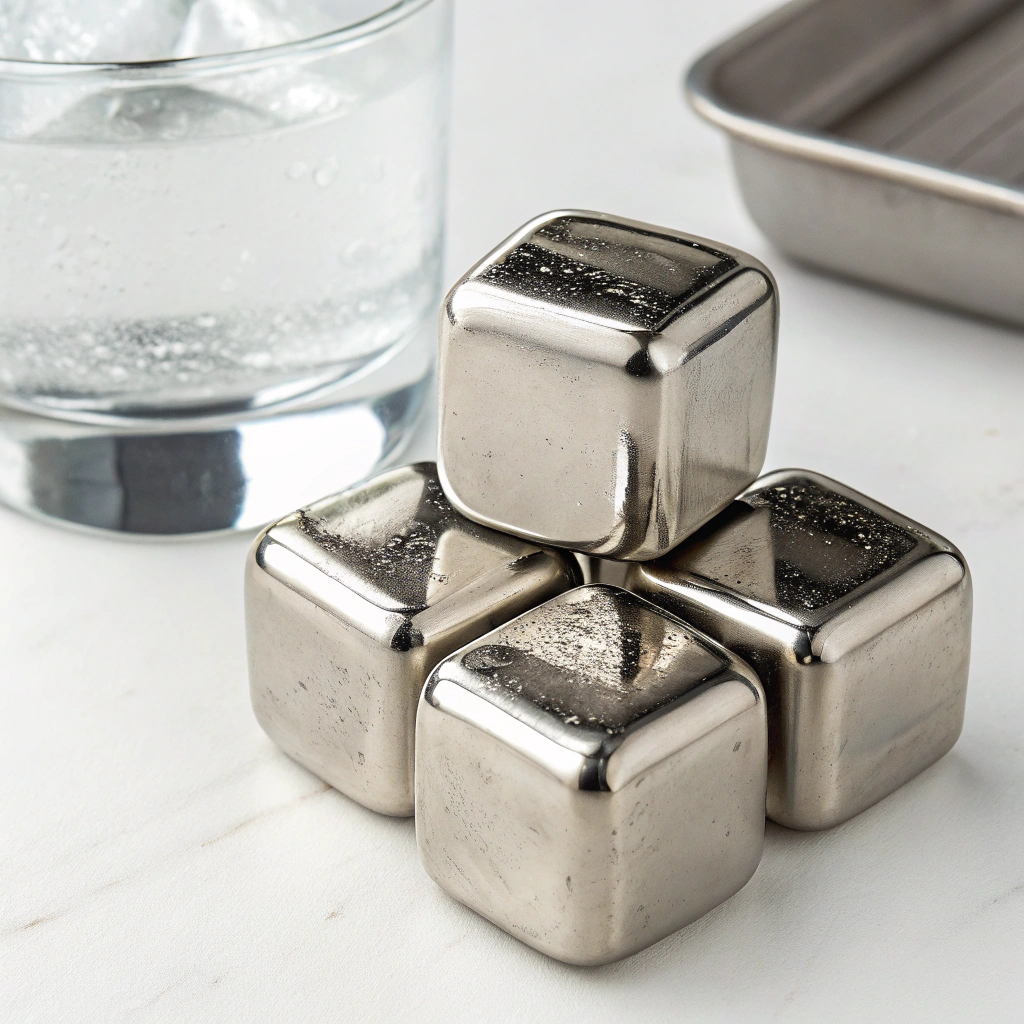
I always warn my clients to check the "finishing" of these cubes. If they have sharp edges, they can scratch expensive glassware or even hurt someone's teeth. At Latitude, we only source rounded, polished cubes. I remember a project where a client bought cheap versions elsewhere, and the "seam" of the metal opened up after three uses. That is a nightmare for someone like Jacky. It ruins the brand's image of "high quality." Always look for "food-grade" certifications and "BPA-free" labels for the internal gel to protect your users.
Consider these safety and quality checks:
- Material: Must be 304 Stainless Steel to prevent any metallic taste.
- Sealing: Look for laser-welded seams that won't leak the internal liquid.
- Edges: Must be smooth and "weighted" so they don't float and hit your lips.
- Cleaning: Ensure they are dishwasher safe to prevent bacteria buildup on the surface.
| Safety Factor | Low-Quality Cube | High-Quality (Latitude) |
|---|---|---|
| Material Grade | 201 Steel (Can rust) | 304 Food-Grade Steel |
| Finish | Rough seams | Mirror-polished, seamless |
| Internal Gel | Unknown origin | Certified non-toxic glycerin/water |
| Durability | May crack in freezer | Built for thermal shock |
If you follow these rules, metal cubes are a perfectly safe and "eco-friendly" alternative to buying bags of ice. They are a great gift for people who value a "clean" taste without the chlorine or minerals often found in tap-water ice.
Why Is Hospital Ice So Soft?
Have you ever noticed that ice from a hospital or a fast-food place is much easier to chew? It feels different because it isn't made like a standard hard cube; it is designed for a specific purpose.
Hospital ice is soft because it is "nugget ice," made by scraping ice flakes off a frozen cylinder and compressing them into small, airy pellets. This process traps air pockets inside, making the ice soft, chewable, and much more efficient at cooling drinks quickly due to its high surface area.
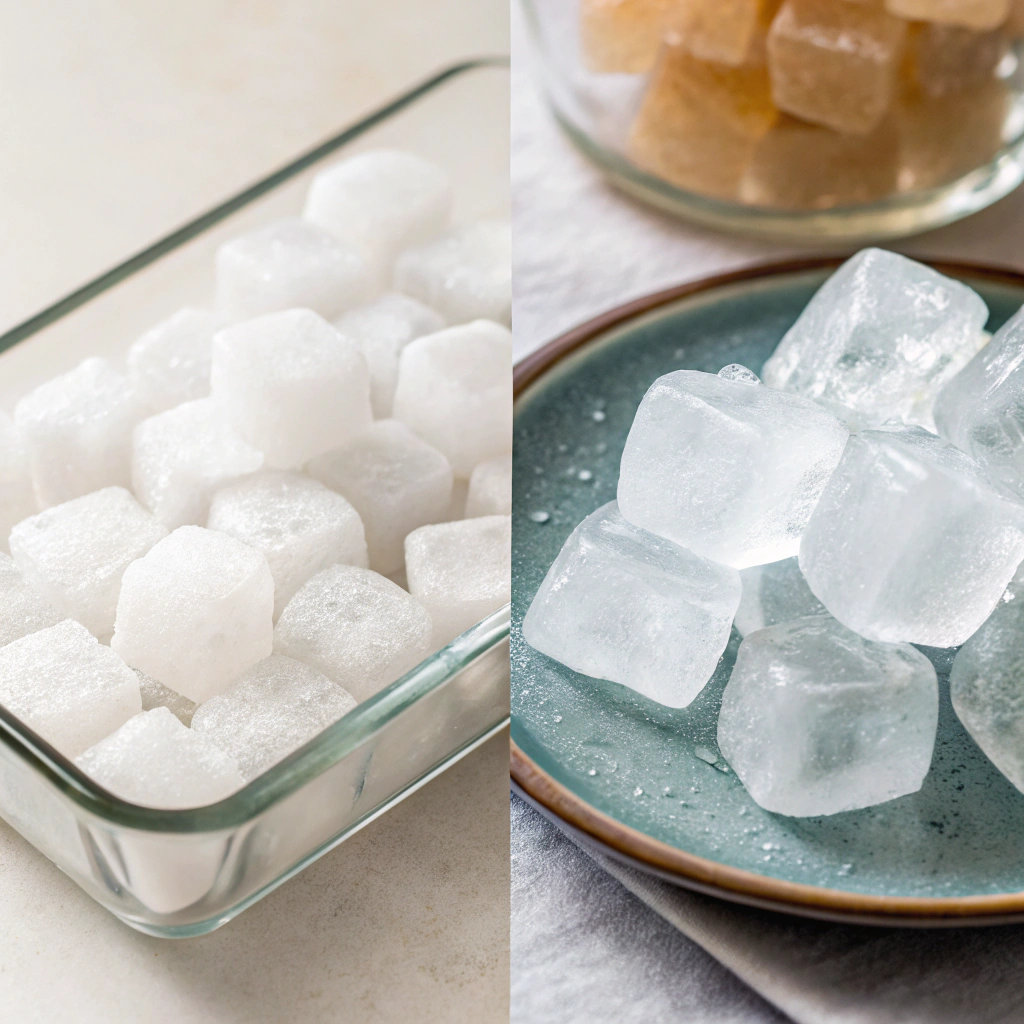
I find this fascinating because it proves that "texture" matters in gifting too. Hospital ice is designed for patients who need hydration but might have trouble swallowing or sensitive teeth. It is the opposite of a metal ice cube. While a metal cube has almost no "surface contact," nugget ice2 has a huge amount because it is porous. I often tell Jacky that if he wants a gift that feels "premium," he should look at how it interacts with the user's senses. The "crunch" of soft ice is a sensory experience that people actually love.
Why Nugget Ice is the "Good Ice"
- Chewability: It is easy on the teeth and fun to eat.
- Flavor Retention: Because it is porous, it soaks up the drink's flavor, making the last bite taste like the beverage.
- Fast Cooling: More surface area3 means it pulls heat out of the drink much faster than a solid block.
- Safety: It melts quickly, which reduces the risk of choking for patients or children.
When we think about branding, we think about "touchpoints." Even the type of ice in a drink at a company event says something about the brand. Soft ice feels "friendly" and "caring," while large, clear blocks feel "luxurious" and "formal." Metal cubes sit in the "luxury" category because they are reusable and keep a drink pure. They aren't meant for a fast-paced lunch; they are meant for a slow, thoughtful evening. Understanding these differences helps you choose the right gift for the right moment.
Conclusion
Metal ice cubes are a stylish, dilution-free cooling option, but they can't match the raw cooling power of melting water ice. Choosing them depends on whether you value a "pure" taste over a "freezing" temperature.