Is a Bullet Journal Useful for Your Daily Productivity?
Does your digital calendar feel like a constant source of stress? Many people find that apps and notifications create a feeling of noise rather than clarity. You need a system that helps you slow down and focus on what truly matters.
A bullet journal is highly useful because it combines a planner, to-do list, and diary into one analog system. It uses "rapid logging" to help you filter information and track your progress manually. This process forces you to be intentional, making it an excellent tool for clarifying your attention and reducing digital overwhelm.
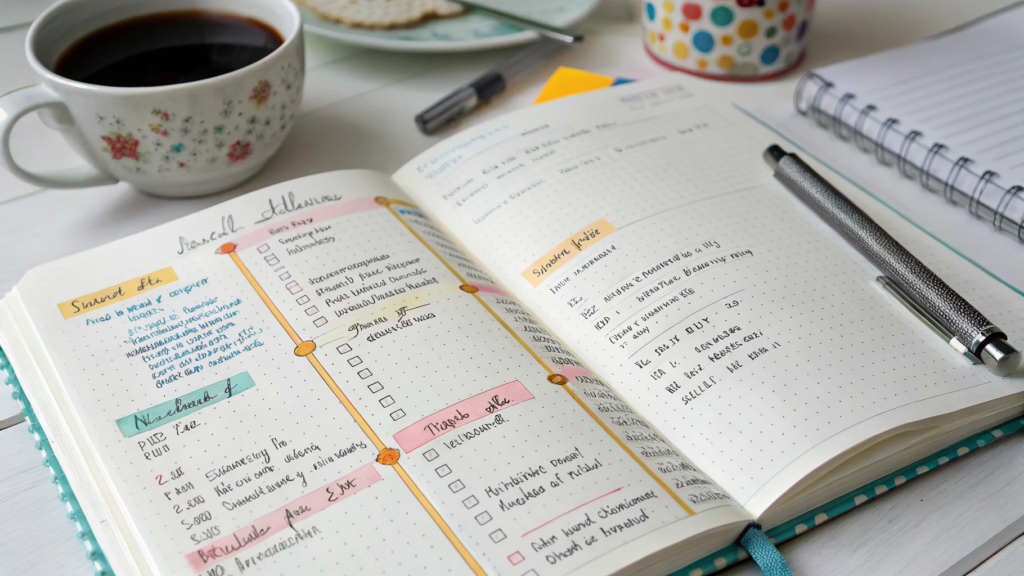
I have seen how people get lost in the endless scroll of digital task managers. A bullet journal acts as a physical pause button. It creates "valuable friction" by forcing you to write things down by hand. This simple act helps you decide which tasks are actually worth your time. Let’s look at how this method reshapes your thinking and why it might be the mental reset you need.
Is Bullet Journaling Good for You?
Do you feel like you are constantly reacting to life instead of leading it? Most digital tools are built for speed, but speed doesn't always lead to progress. You need a way to see the big picture of your habits and goals.
Bullet journaling1 is good for your mental clarity because it makes your decisions visible. By manually migrating tasks from one day to the next, you are forced to confront what you haven't finished. This reflection helps you identify patterns in how you spend your time, allowing you to cut out busywork and focus on meaningful goals.

From my perspective, the real power is in the "Rapid Logging" system. You use simple symbols—like dots for tasks and circles for events—to keep things fast. I find that when I write things down, I process them more deeply than when I type them. For someone like Jacky, who manages tight project timelines, this manual filtering is a lifesaver. It turns a cluttered mind into a structured plan.
Here is why bullet journaling often beats digital apps for personal growth:
| Feature | Digital Apps | Bullet Journal |
|---|---|---|
| Speed | Instant / High | Slow / Intentional |
| Focus | Prone to notifications | Distraction-free |
| Flexibility | Rigid templates | 100% Customizable |
| Memory | Low retention | High retention (Handwriting) |
I believe the "friction" of handwriting is a gift. It stops you from adding 50 things to your list that you will never actually do. It makes you honest with yourself about your capacity and your energy.
What Is the Dark Side of Journaling?
Can a tool meant for productivity actually become a source of stress? For some, a notebook can turn into a burden rather than a help. It is easy to fall into the trap of perfectionism.
The "dark side" of bullet journaling occurs when users prioritize aesthetics over function. Social media often shows overly decorated, artistic pages that can make beginners feel inadequate. If you spend three hours drawing a calendar instead of actually doing your work, the journal becomes a tool for procrastination rather than productivity.

I have seen many people abandon their journals because they felt they weren't "creative" enough. This is a mistake. The original method by Ryder Carroll is very minimalist and plain. I always tell my team: "A messy journal that gets work done is better than a beautiful one that is empty." If you find yourself obsessing over straight lines and colorful pens, you are missing the point of the system.
Common traps to avoid include:
- The Comparison Trap: Trying to match "Pinterest-style" layouts.
- The Maintenance Trap: Creating a system so complex you don't have time to use it.
- The Guilt Trap: Feeling bad for skipping a few days (the journal is there to serve you, not the other way around).
I see a bullet journal as a thinking tool. If it makes you feel anxious or tired, simplify it. Go back to basics—just a pen and a notebook—and focus on your tasks, not the decorations.
What Is the 3-2-1 Method of Journaling?
Are you looking for a quick way to start journaling without spending an hour a day? Sometimes you just need a simple framework to help you reflect on your progress.
The 3-2-1 method2 of journaling is a simple daily reflection technique. Each evening, you write down 3 things you achieved, 2 things you are grateful for, and 1 thing you want to improve tomorrow. This structured approach helps you end your day with a sense of accomplishment while preparing your mind for the next day's goals.
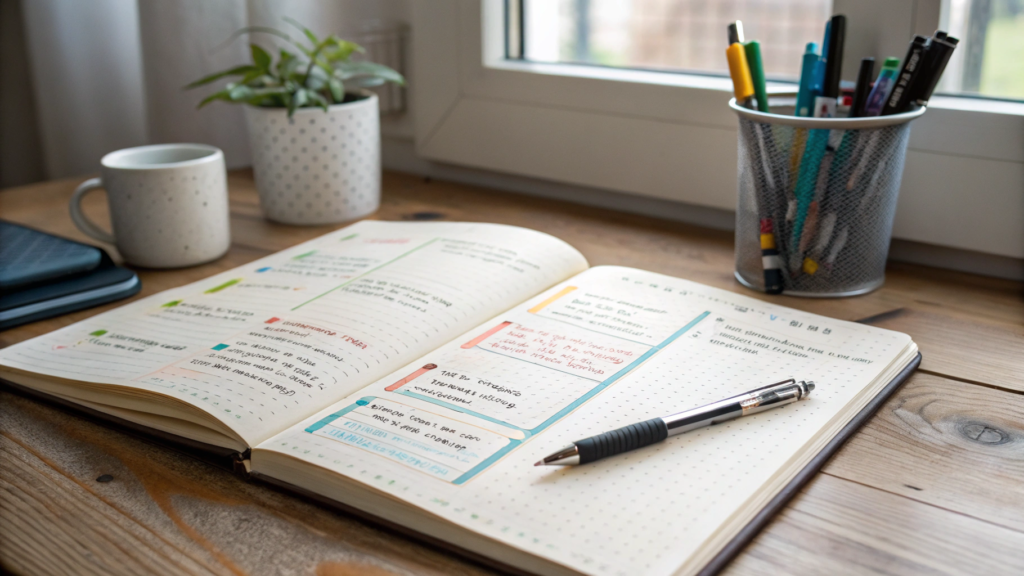
I find this method particularly useful for busy professionals who don't have time for long-form writing. It forces you to look for the "wins" in your day, even when things are difficult. For a marketing manager facing tight deadlines, focusing on three specific achievements can prevent burnout and build confidence. It’s a precision tool for your mindset.
Here is how you can implement it tonight:
- 3 Achievements: Even small ones, like "finished the report" or "walked for 20 minutes."
- 2 Gratitudes: Something as simple as "great coffee" or "a kind word from a colleague."
- 1 Improvement: A single, actionable change, like "I will start my hardest task first tomorrow."
Using this method inside a bullet journal is a powerful combination. You get the organization of a planner with the emotional benefits of reflection. My take is that a well-maintained journal doesn't just manage your time—it manages your energy.
Conclusion
A bullet journal is a powerful tool for clarity and decision-making when used for function over form. By embracing intentional friction and simple methods like 3-2-1, you can turn a simple notebook into a life-changing productivity3 partner.