What is a core water bottle?
Are you confused by the term "core" and how it differs from a standard thermos? Many people buy these thinking they are just regular bottles, only to realize there is a technical component inside that requires specific care and preparation.
A core water bottle features a central, non-toxic gel-filled rod that you freeze separately and then insert into the bottle. It acts as an internal heat sink, absorbing warmth from the liquid. This design is highly effective for rapid cooling and is often found in BPA-free plastic bottles1 designed for high-activity sports or office environments where flavor purity is a priority.
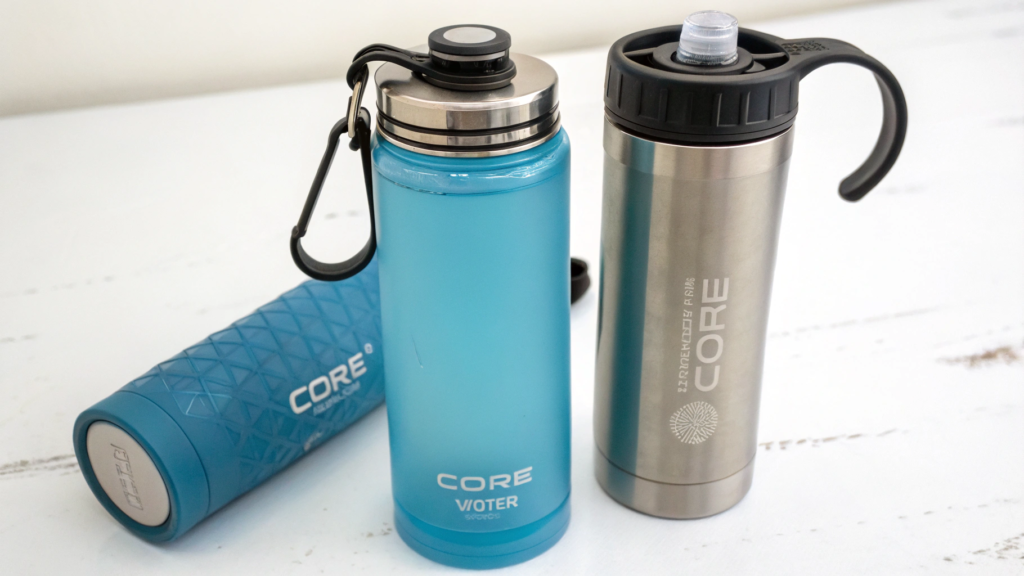
In my experience, the "core" is all about user psychology. I always tell Jacky that this is a "ritual" gift. If your audience is the type to enjoy the process of preparation, they will love the ice core. However, you have to remember the trade-off: the core takes up space. A 750ml bottle might only hold 500ml of liquid once the core is inside.
We use this table to help clients decide if the "core" lifestyle fits their branding:
| Feature | Ice Core Bottle | Standard Insulated Bottle |
|---|---|---|
| Cooling Method | Active (Freezable rod) | Passive (Vacuum barrier) |
| Drink Dilution | Zero | High (if using loose ice) |
| Preparation | Requires freezing ahead | Ready to go anytime |
| Capacity | Reduced by core volume | 100% Liquid volume |
| Best For | Flavored drinks/Juices | Water/Coffee/Tea |
My take? The ice core bottle is "smart infrastructure." It’s for the user who values control over simplicity. It turns hydration into a science.
Can you put ice in an insulated water bottle?
Do you worry that dropping ice cubes into your expensive insulated flask might damage the inner lining or break the vacuum seal? There is a common myth that hard ice can "crack" the steel, leading many to drink lukewarm water out of fear of breaking their bottle.
Yes, you can absolutely put ice in an insulated water bottle. High-quality 18/8 stainless steel2 is incredibly durable and designed to handle the impact of ice cubes. In fact, adding ice to an insulated bottle is the best way to achieve "24-hour cold" performance, as the vacuum seal prevents the ice from melting for an extended period.
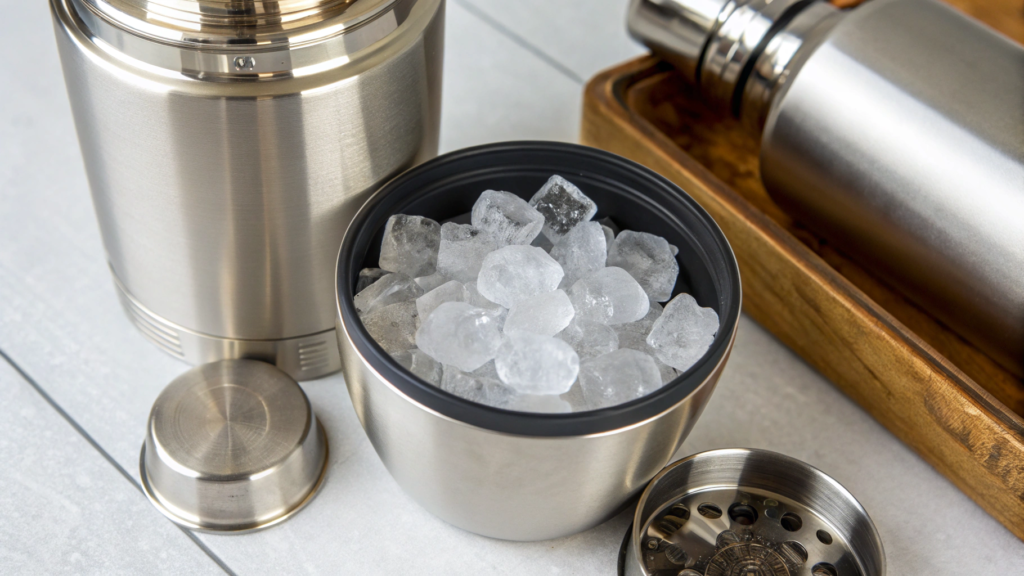
I’ve seen this concern many times at Latitude. I always tell Jacky: "Don't be afraid of the clink!" The only real "danger" is if you try to freeze a full bottle of water in the freezer—that expansion can bulge the steel. But dropping ice in? That’s what it was made for. I personally recommend using a wide-mouth insulated bottle if you plan on using ice frequently. It makes it easier to load and much easier to clean out any mineral residue left behind by the ice.
What is the best thermos to keep water cold?
Are you overwhelmed by the hundreds of "top-rated" thermoses on the market? Picking the wrong one can lead to "sweating" on your desk, leaked water in your bag, or a drink that stays cold for only two hours instead of twenty.
The best thermos for keeping water cold is a double-wall, vacuum-insulated 18/8 stainless steel bottle with a copper-lined interior. Brands like Latitude Experience focus on "thermal integrity3," using high-grade seals and narrow-neck designs to minimize air exchange. For maximum performance, look for a bottle rated for 24+ hours of cold retention.
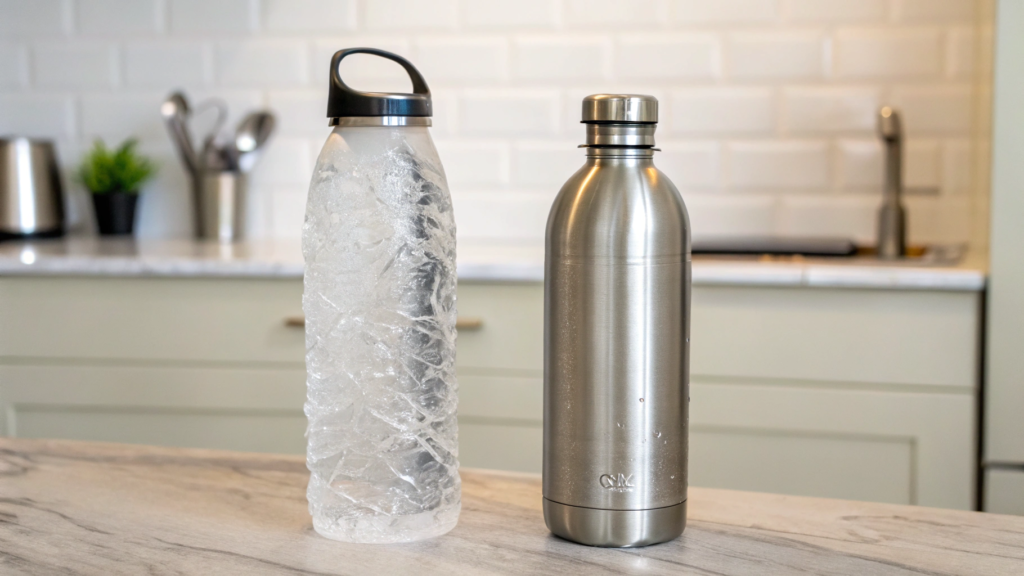
In the factory, we ran "heat gain" tests every day. The best-performing bottles always had three things: a thick vacuum gap, a high-quality silicone gasket in the lid, and a copper coating on the outside of the inner flask. This copper layer reflects heat radiation, adding an extra layer of protection. Jacky often asks for the "VIP" choice; I always point him toward these copper-lined models.
Here is what defines the "Best" in the 2026 market:
- Material: 18/8 (304) or 316 Surgical Grade Stainless Steel.
- Insulation: Double-wall vacuum (not just double-wall air).
- Lid Integrity: BPA-free, leakproof, and easy to sanitize.
- Surface Finish: Powder coating for a non-slip, "sweat-proof" grip.
Ultimately, whether you choose the "Ice Core" for flavor purity or the "Insulated Thermos" for pure cold-power, the best design is the one you’ll actually use. In hydration, consistency is everything. When a bottle feels dependable and fits your habits, it stops being a product and starts being a partner in your health.
Conclusion
A water bottle with an ice core is a specialized tool for those who want cold, undiluted drinks and don't mind a bit of preparation. For everyone else, a high-quality vacuum-insulated stainless steel bottle remains the gold standard for simplicity and long-lasting cold.
-
Discover the health benefits of using BPA-free plastic bottles and why they are safer for hydration. ↩
-
Learn about the properties of 18/8 stainless steel and its benefits for durability and safety in hydration. ↩
-
Discover the concept of thermal integrity and how it affects the performance of your hydration products. ↩