How Can a Small Enamel Pin Make a Big Statement About Your Brand?
It is frustrating when promotional items get tossed in a drawer and forgotten. Your brand deserves better than to be ignored after just one glance.
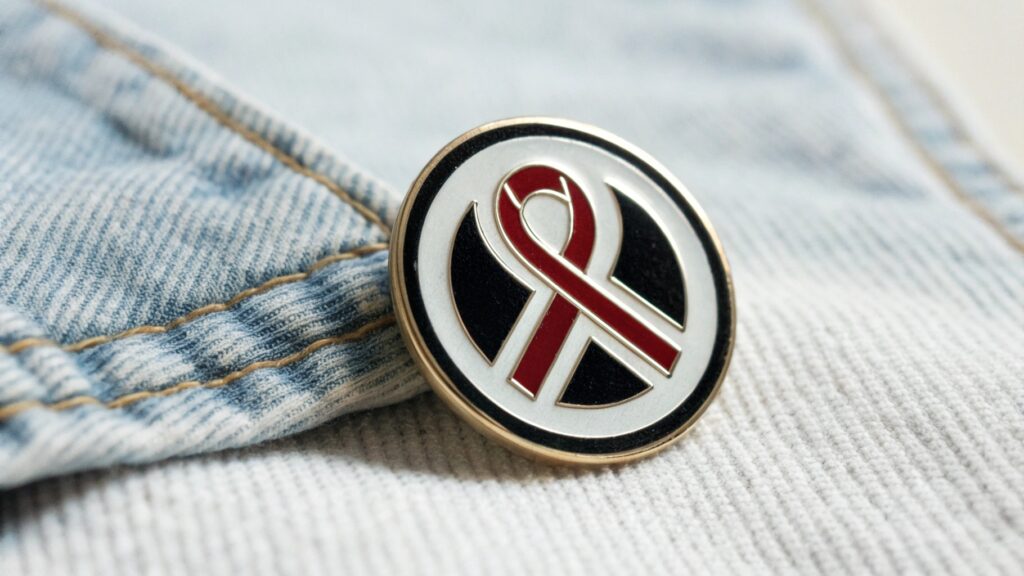
An enamel pin is different because it is a wearable piece of art that people choose to display. When designed with clear intention and restraint, this tiny item becomes a powerful, lasting symbol of your brand connection.
 ![]()
![]()
I have spent years in production, moving from the factory floor to running my own agency. I have seen thousands of designs, and I know that an enamel pin is often mistaken as just a simple visual exercise. It is actually a complex balance of art and engineering. A successful pin translates a big idea into a very small form. When done right, it is not just an accessory; it is a lasting symbol that people choose to carry.
How Do You Style Enamel Pins for Maximum Impact?
Many people receive a pin at a conference and do not know where to put it. If they don't wear it, your branding effort fails to gain traction.
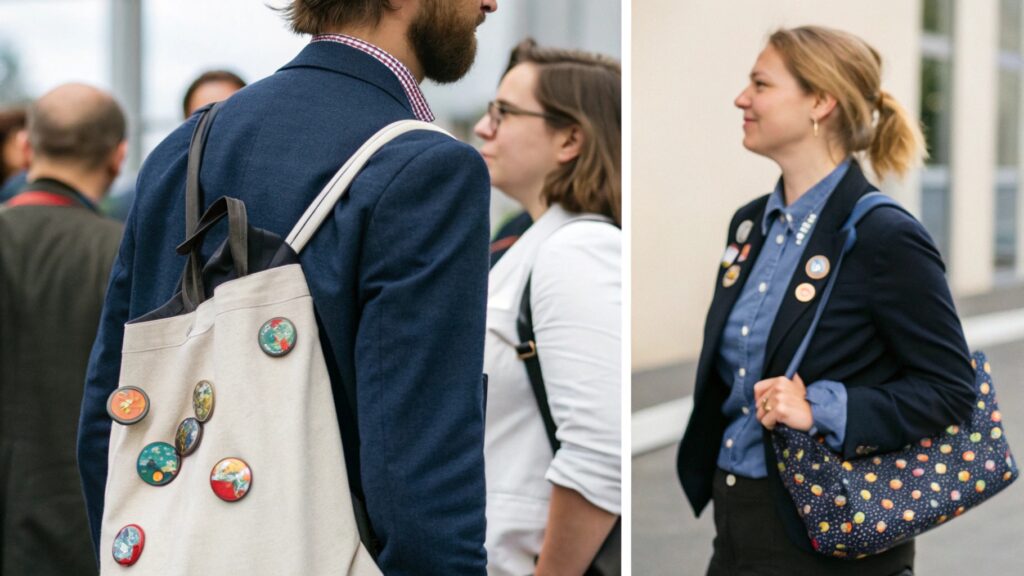
You must demonstrate that the pin is a versatile accessory, not just corporate clutter. Showing clients how to integrate it into their daily wardrobe increases the chances it gets worn regularly.
 ![]()
![]()
I always tell clients like Jacky that wearability1 is crucial. A pin is not just a logo; it is something personal for the user. Back in my factory days, I saw great designs ruined because they were too heavy or awkward to wear. You need to think about where it will live. A subtle lapel pin works for formal business meetings. A bold, colorful design might be better suited for a backpack or a denim jacket strap. The finish matters too. A shiny gold metal might clash with casual wear, while black nickel looks modern and sleek. Quando you give the pin, suggest these placements on the backing card. It helps the recipient see it as a lifestyle item, which keeps your brand visible in the real world.
| Placement | Best Pin Style | Brand Vibe |
|---|---|---|
| Suit Lapel | Small, subtle, hard enamel2 | Professional, understated |
| Denim Jacket | Bright colors, larger size | Creative, casual, bold |
| Backpack/Bag | Durable, fun shapes | Adventurous, visible on-the-go |
| Lanyard | Simple logo, clear text | Corporate identity, event focus |
What Is the Real Cost of Producing a Quality Enamel Pin?
Budgeting for custom items is difficult when prices vary wildly online. You might be tempted by the cheapest option just to save money right now.
The price depends heavily on the type of enamel used, the number of colors in the design, and the complexity of the metal mold. Investing a little more in the production process ensures the pin lasts longer and reflects better on your company.
 ![]()
![]()
I have learned that in manufacturing, you get what you pay for. A very cheap pin usually has thin metal plating that wears off quickly, or the pin clutch at the back is loose. This makes your brand look cheap. The main costs are the initial mold fee, which is a one-time expense, and then the unit price based on size and colors. Hard enamel is more expensive because it is polished flat and feels like jewelry. Soft enamel is cheaper and has textured, raised metal lines. Both have their place depending on your goal. You also need to consider packaging. A nice backing card adds value without adding much cost. It is better to order fewer, high-quality pins than thousands that end up in the trash.
| Feature | Soft Enamel (Budget-Friendly) | Hard Enamel (Premium Feel) |
|---|---|---|
| Texture | Raised metal lines, recessed paint | Smooth, flat, polished surface |
| Durability | Paint can scratch over time | Very durable, jewelry quality |
| Cost | Lower unit cost | Higher unit cost |
| Best Use | Casual giveaways, bright colors | Corporate gifts, years of service |
What Type of Artwork Works Best for Enamel Pins?
It is heartbreaking to see a beautiful digital illustration turn into a messy metal blob. Not every logo translates well to a tiny 3cm surface.
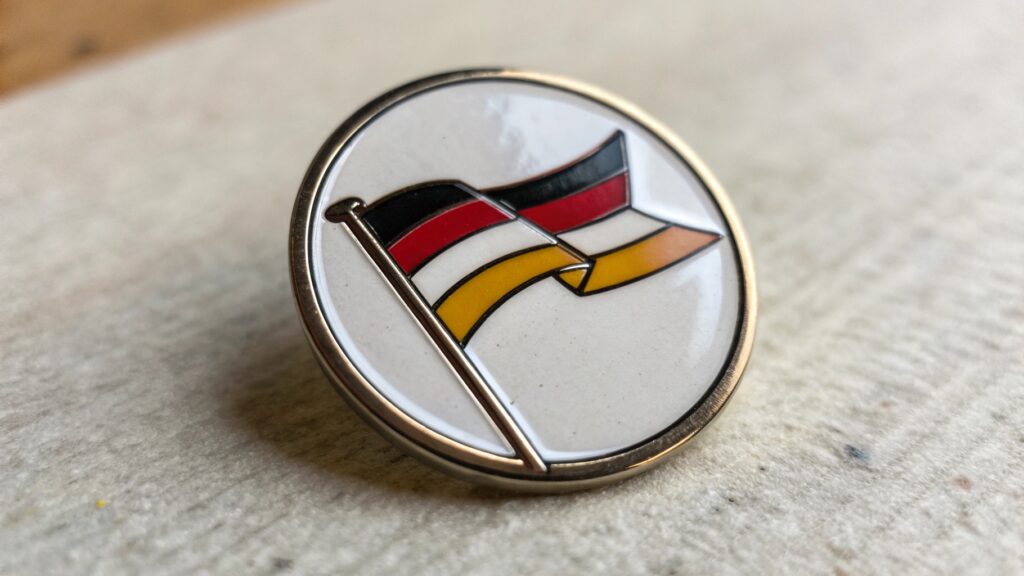
The most successful pin designs use restraint and clear intention. Artwork that is simple, has bold lines, and uses a limited color palette is easier to produce and looks much clearer in the final product.
 ![]()
![]()
This is the most critical3 part of my experience in this industry. Design here is built on intention rather than just decoration. You have to remember that every line you draw in Illustrator must become a thin metal wall on the pin to hold the liquid enamel. If those lines are too close, the metal breaks during production or the colors bleed together. Overcomplicated artwork looks great on a big screen but loses all clarity at a small scale. You must use restraint. Knowing what not to include is just as important as creativity. Stick to solid spot colors, as gradients are very hard to achieve well. Originality matters too because copied designs quickly lose credibility among collectors. A clean, authentic design connects better emotionally than a busy one.
| Design Element | Good for Pins | Bad for Pins |
|---|---|---|
| Lines | Thick, bold metal lines | Extremely fine hairlines |
| Colors | Solid, distinct spot colors | Gradients or photographic shading |
| Text | Large, clear, sans-serif fonts | Tiny script or paragraphs of text |
| Complexity | Simple shapes and icons | Intricate illustrations with tiny details |
Conclusion
Enamel pins are powerful branding tools when designed with technical constraint and intention. A high-quality, wearable pin becomes a lasting symbol that clients are proud to keep.
-
Understanding wearability can help you choose accessories that are both stylish and practical. ↩
-
Discover the advantages of hard enamel pins and why they are worth the investment. ↩
-
Understanding critical design principles ensures your enamel pins are visually appealing and effective, enhancing brand recognition. ↩