How to Start a Profitable Gifting Business: Niching, Scaling, and Unit Economics
Are you planning to launch a gift business that sells "a little bit of everything"? This lack of focus is the number one reason gift businesses fail.
**To start a successful gifting business, you must focus on three linked capabilities: narrow niching with clear product storytelling, repeatable and scalable operations, and measurable unit economics. Choose a narrow use-case (e.g., corporate welcome kits or regionally sourced food hampers) and design a small, high-margin catalogue. Obsess over your Average Order Value (AOV) and gross margin before automating fulfillment to convert a charming side hustle into a defensible, repeatable revenue stream.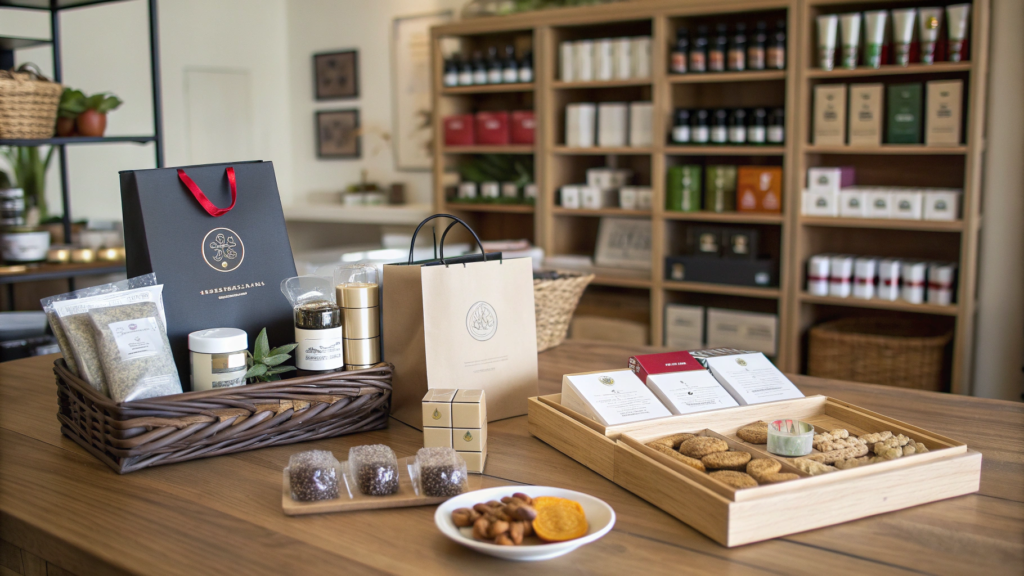
In my experience, a gifting business succeeds or fails on its foundational structure. Many founders are highly creative but overlook the practical demands of fulfillment and finance. They launch with "everything for everyone," which leads to bloated inventory, complex logistics, and thin margins. I advise clients to start hyper-focused. You must design a small catalogue that tells a clear story because customers buy the narrative as much as the items inside. Your primary goal is to prove that one single gift box can be profitable and repeatable. Once that core kit is validated, you can scale horizontally.
Is the gifting business profitable, and which small business is most profitable?
Are you wondering if the gift market is saturated or if it is a worthwhile business venture? Profitability depends on your niche and your margin discipline.
The gifting business is highly profitable when structured correctly, but it is not inherently the most profitable small business. The most profitable small businesses typically have low inventory overhead and high gross margins, such such as software (SAAS) or highly specialized services. For gifting, maximum profitability is achieved by niching into high-AOV markets like corporate gifting/retainers1 or luxury, regionally sourced hampers**, where high margins (40%+) support the inevitable labor and fulfillment costs.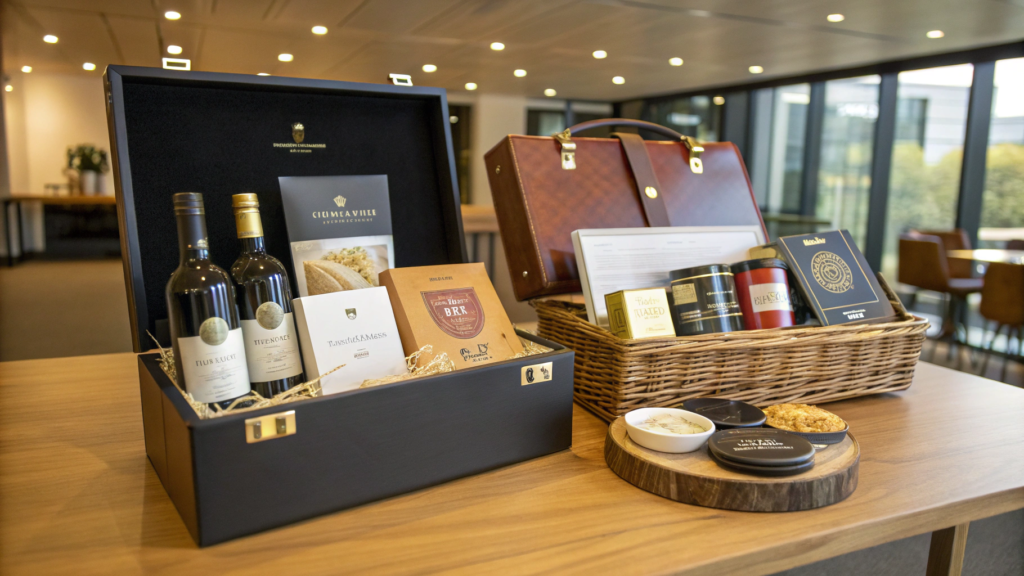
The profit margin for physical goods is defined by your unit economics. For a gifting business, your gross margin must be high enough to absorb the costs of picking, packing, and shipping.
The Profitability Equation for Gifting
To be profitable, your Average Order Value (AOV) and Gross Margin (GM) must work together.
$$\text{Profitability} = (\text{AOV} \times \text{Gross Margin \%}) - (\text{Fulfillment Cost} + \text{Customer Acquisition Cost})$$
Since fulfillment (labor and shipping) for custom boxes is relatively high, you must compensate with a high AOV and GM.
- Low Margin Niche (Generic): Selling cheap, mass-market boxes means low AOV (e.g., \$30) and low GM (20%). This requires massive volume and low labor costs, which is hard for a small starter business.
- High Margin Niche (Specialized): Focusing on corporate welcome kits or luxury events allows a high AOV (e.g., \$150) and a high GM (45%). This allows you to pay for your labor and still make a profit.
The Best Profit Niche: Corporate and Recurring Revenue
The most profitable gift businesses often target B2B (Business-to-Business) clients.
- Corporate Gifting: Selling 50 to 100 welcome or thank-you kits at once provides volume and high AOV. This is a one-to-many sale, which is highly efficient.
- Subscriptions/Retainers: Design a straightforward path to recurring revenue (e.g., monthly staff birthday boxes or quarterly client appreciation kits). This predictable income drastically lowers your Customer Acquisition Cost (CAC) and increases your Lifetime Value (LTV).
| Niche Market | Average Order Value (AOV) | Margin Strategy | Repeatability |
|---|---|---|---|
| Corporate Welcome Kits | High (\$75 - \$250 per box) | Bulk sales, high volume efficiency | High (Retainers, onboarding cycles) |
| Eco New Parent Kits | Medium (\$50 - \$120 per box) | Storytelling and perceived value | Medium (Second child, gift cards) |
| Generic Seasonal Gifts | Low (\$30 - \$60 per box) | Requires massive volume and very low labor | Low (High CAC) |
How to start a personalized gift business and build modular operations?
Are you struggling to offer personalization without creating a logistical nightmare? Scalable personalization requires strict operational design.
To start a personalized gift business that scales, you must build operations around modular curation**. Design your kits with interchangeable components (e.g., three tiers of coffee, three mug designs, three notebook colors). This prevents an explosion of SKUs while offering customization. Use simple packaging templates2 and invest in an order-management flow early on. This automation converts your creative energy into repeatable, revenue-generating actions instead of manual busywork.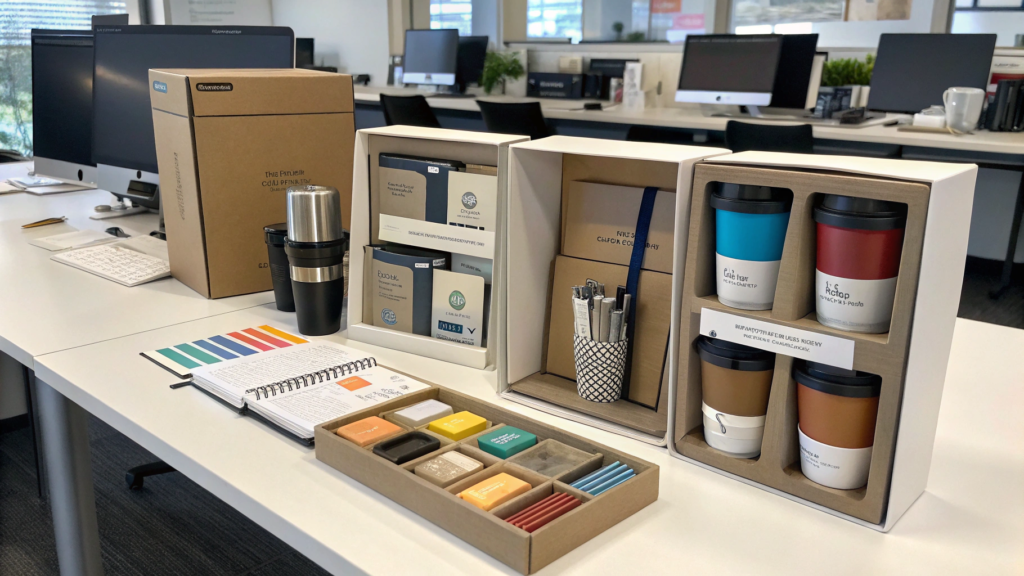
The founder's trap in personalization is trying to offer too many custom options. You end up with 50 unique items and only one of each in stock. This complexity kills efficiency.
Modular Curation for Efficiency
Your catalogue should be designed like building blocks:
- Limit SKU Choices: Do not offer 20 different candles. Offer 3 scents (A, B, C) and 3 mug colors (1, 2, 3). This creates 9 options (A1, A2, A3, B1, etc.) for the customer, offering choice without creating inventory chaos for you.
- Packaging Templates: Design 2-3 standard box sizes and use them for 90% of your products. Automate the label printing and shipping process with a simple order-management system (like Shopify/SquareSpace plus a shipping integration).
Product Storytelling and Validation
Customers are buying the narrative. Your packaging must be the first chapter of that story.
- Packaging as Marketing: Design the unboxing experience to feel luxurious and thoughtful. Invest in high-quality, branded packaging (a simple branded sticker and a handwritten-style note). Unboxing videos are free marketing.
- Cheap Validation: Before buying heavy inventory, prove demand. Use preorders, soft launches at local markets, or pitch a small corporate pilot kit. These methods validate demand and reveal your true fulfillment costs before you commit to large inventory buys.
Technical Automation Investment
Invest early in the automation that turns creative work into cash flow:
- Template Invoices: Use professional invoicing software from day one.
- Order Management: Integrate your e-commerce platform with a shipping label generator (ShipStation or similar).
- Reporting Dashboard: Track your AOV, GM, and CAC from the beginning. You cannot fix what you do not measure.
My Take: From Hustle to Defensible Business
The journey from a charming gift idea to a defensible business requires shifting your focus from creativity to repeatability.
- Start Hyper-Focused: Don't launch 30 products. Launch 3 perfect, high-margin, high-AOV kits for a single niche (e.g., The "WFH Productivity Kit" for tech companies).
- Obsess over Unit Economics: Know your Gross Margin after paying for labor and shipping. If a kit sells for \$100 and costs \$70 to source and ship, your 30% margin is thin. You need 40%+ to build a real business.
- Scale Horizontally: Only once Kit A proves profitable and repeatable (you can fulfill 50 orders efficiently) should you launch Kit B for a different niche.
This disciplined approach ensures your creative energy is channeled into sustainable revenue, making your gifting business resilient and profitable.
Conclusion
Start your gifting business by niching deeply into a high-AOV market like corporate clients. Build modular kits to offer scalable personalization, and prioritize automation and measuring unit economics3 to ensure profitability.
-
Explore how corporate gifting can enhance client relationships and boost your business's profitability. ↩
-
Learn about the importance of packaging templates in maintaining efficiency and brand consistency. ↩
-
Understanding unit economics is crucial for managing costs and maximizing profits in your business. ↩