Enamel Pins: More Than Just a Decorative Metal Badge?
Are you looking for a subtle, high-impact way to express your personality or promote your brand? A generic accessory often lacks emotional connection.
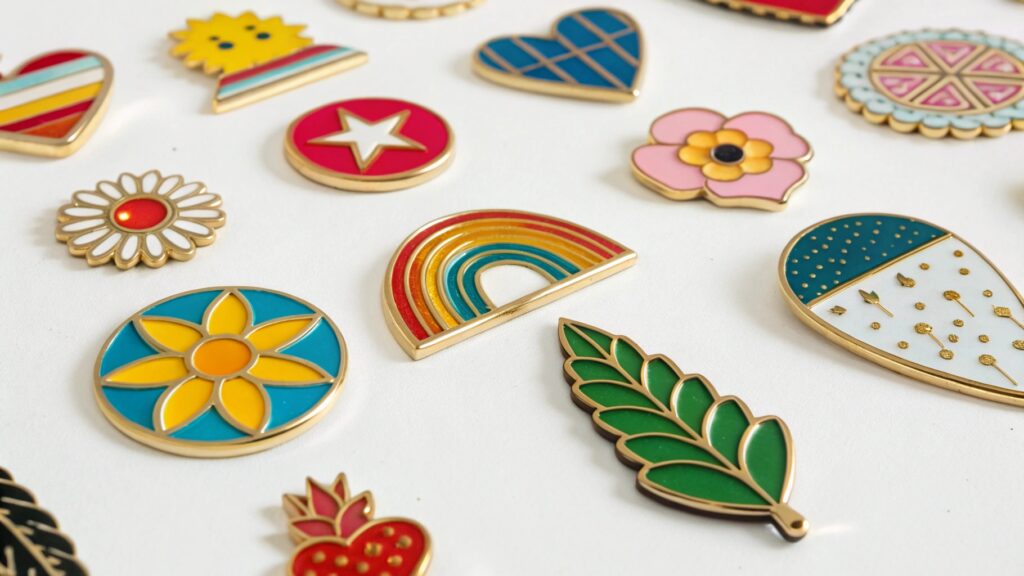
Enamel pins are far more than simple badges; they function as portable identity markers and powerful branding tools, condensing complex stories, beliefs, and humor into wearable, collectible artifacts. They offer an affordable way to signal belonging and generate repeated, organic brand exposure over years.
 ![]()
![]()
My experience creating custom merchandise taught me that the smallest items often carry the biggest emotional weight. Enamel pins are the perfect example. They sit at the intersection of personal expression, fandom culture, and brand storytelling. Unlike a T-shirt that makes a loud statement, a pin conveys meaning with subtlety. Now, let's explore what these tiny artifacts are made of and why they hold such significant value.
What Are Enamel Pins Made Out Of, and Why Does it Affect Quality?
Are you unsure what materials give enamel pins their characteristic shine and durability, or why some pins feel higher quality than others? The wrong material affects longevity.
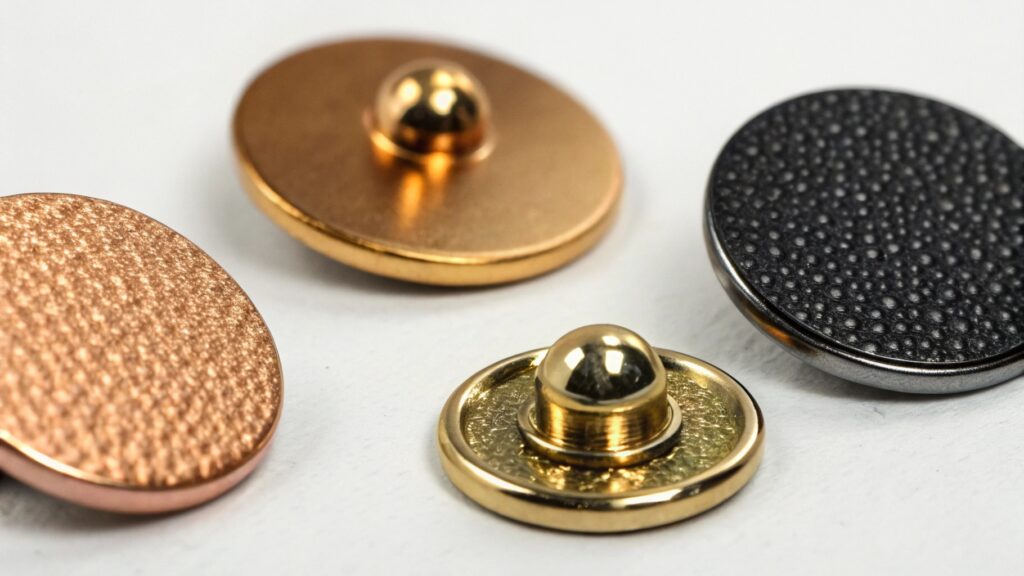
Enamel pins are typically made from copper, brass, or iron, which are then plated with nickel, gold, or black dye. They are colored using either hard enamel (providing a smooth, flat surface) or soft enamel (giving a textured, recessed look). The choice of metal and enamel type determines the pin's final quality, texture, and durability.
 ![]()
![]()
Understanding the components of an enamel pin is the key to understanding its cost and quality. When I discuss pin production, I focus on two core components. First, the Base Metal. Pins are usually stamped or cast from a relatively soft metal like brass, copper, or iron. Brass is often used for higher-end pins because it etches very cleanly. This metal structure is what gives the pin its shape and weight. Second, the Coloring Enamel. There are two main types. Hard Enamel is ground, glass-like powder filled into the metal cavities, heated at a high temperature, and then polished down to create a smooth, level surface. This results in a premium, highly durable finish. Soft Enamel1 involves filling the cavities with liquid enamel and baking it, but the surface is not polished, leaving the color recessed below the metal lines. This gives a textured, tactile feel and is often more affordable. Choosing the right combination—for instance, a brass base with hard enamel—guarantees a collectible artifact that resists scratching and fading, ensuring the pin lives on jackets and backpacks for years, generating repeated organic exposure for a brand or artist.
| Pin Component | Material Used | Impact on Final Product |
|---|---|---|
| Base Metal | Brass, Copper, or Iron | Determines weight, strength, and clarity of the metal lines |
| Plating | Gold, Nickel, Silver, Black Dye | Provides the protective, cosmetic finish and shine |
| Coloring | Hard Enamel or Soft Enamel | Affects texture (flat vs. recessed) and durability |
The quality of the materials ensures the pin functions as a long-term, high-engagement branding tool.
Why Are High-Quality Enamel Pins Often Perceived as So Expensive?
Are you surprised by the cost of custom enamel pins, wondering why small metal objects cost more than expected? The cost lies in the labor, not the material.
Enamel pins are often expensive due to the complex, multi-stage manufacturing process, which is primarily driven by labor and technical setup costs, not material cost. High expenses come from creating custom molds (tooling), detailed manual color filling, multiple baking stages, and the high skill needed for quality finishing and polishing.
 ![]()
![]()
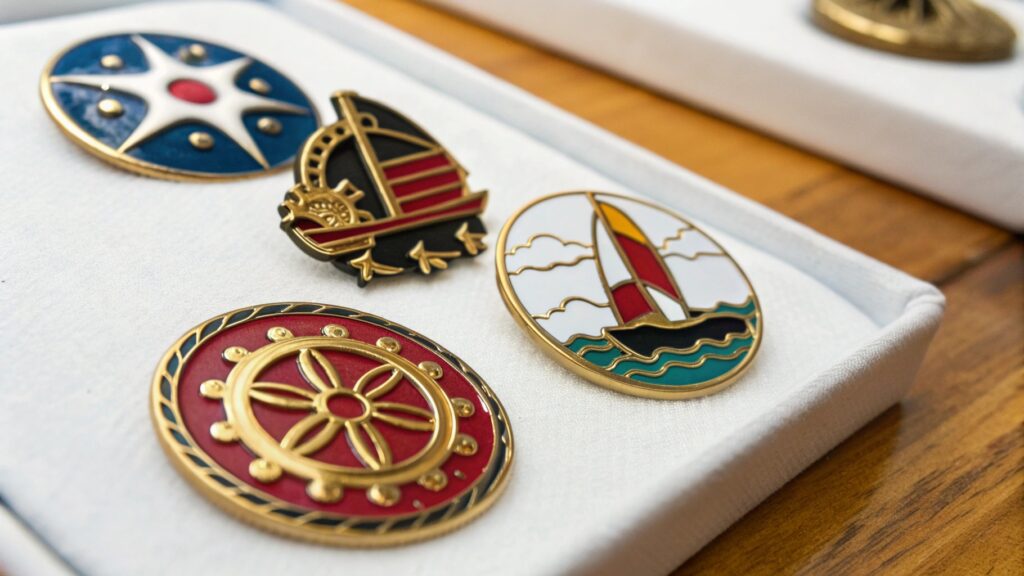
From a commercial perspective, many businesses overlook why enamel pins cost what they do. It’s not about the size of the item; it’s about the intricate process. When I explain pricing to clients, I stress that pins are essentially small, wearable sculptures. First, consider the Tooling Cost. Every unique pin design requires a custom metal mold (or tooling) to stamp the base metal. This initial setup cost is significant and is the reason pins are often only cost-effective in larger batches. Second, look at the Manual Labor. The coloring process is often done by hand. Liquid or powdered enamel must be carefully filled into the tiny, detailed metal compartments—a process that requires skilled labor and precision to prevent colors from bleeding. Third, the Multi-Stage Finishing. Each pin goes through several cycles of heating, curing, and polishing (especially hard enamel pins) to achieve that high-quality finish. This labor-intensive work, combined with strict quality control to catch flaws, drives up the per-unit cost. For creators and brands, this cost transforms the pin from disposable merchandise into a collectible artifact. The price pays for the precision, the durability, and the high-engagement quality that the final product delivers.
| Cost Driver | Description | Impact on Final Price |
|---|---|---|
| Tooling/Mold Setup | Creating the custom stamp for the metal base | High initial investment; Makes small orders costly |
| Manual Color Filling | Skilled labor required to carefully apply the enamel | Drives up unit cost; Ensures color accuracy and clean lines |
| Plating/Finishing | Multiple baking, cooling, and polishing cycles | Guarantees premium look and long-term durability |
The cost reflects the pin's intended role as a non-disposable, high-value representation of the brand.
Why Do People Love and Collect Enamel Pins So Passionately?
Are you trying to understand the psychological draw of enamel pins, or why they inspire such loyal collecting behavior across different groups? They tap into a deeper need.
People love enamel pins because they operate as physical social media posts, offering tactile symbols of belonging, identity, and personal history in an increasingly digital world. They transform abstract identity (fandom, humor, belief) into something affordable, portable, and shareable, allowing collectors to curate their personal brand with subtlety and emotional stickiness.
 ![]()
![]()
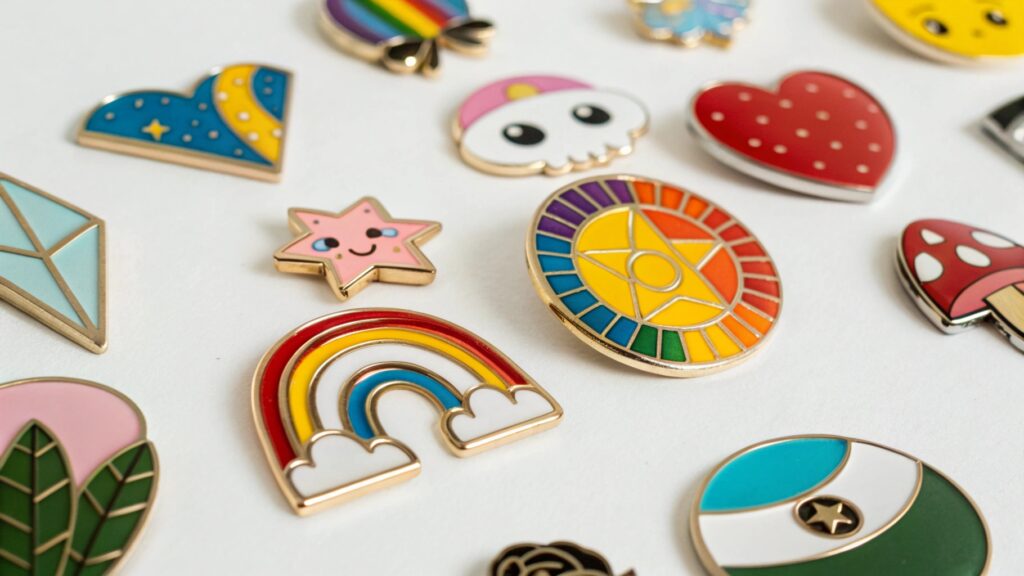
The enduring relevance of enamel pins is psychological, not purely decorative. In a world saturated with digital notifications, people crave tactile symbols of belonging2. A pin is something you can touch, trade, and display—an object that anchors abstract identity in a physical form. First, they facilitate personal expression. A single pin can represent a niche community, a favorite memory, or a sense of humor, often conveying something a large graphic or logo cannot match. This allows people to signal who they are without making a loud statement. Second, they are collectible artifacts. Pins are relatively affordable, creating a low barrier to emotional ownership. This affordability encourages micro-collecting economics, where people curate a collection that tells a unique story about their life. Third, they are highly shareable. Pins are condensed stories in wearable form, making them effective conversation starters and event souvenirs. This psychological component is why they thrive across generations and subcultures, from corporate branding to Gen Z collectors. They are not just metal badges; they are small, potent carriers of identity and connection.
| Psychological Need Met | How Enamel Pins Satisfy It | Cultural Relevance |
|---|---|---|
| Identity Signaling | Allows subtle, curated personal expression3 of beliefs and fandoms | Highly valued by subcultures and artists |
| Tactile Connection | Provides a physical, tangible object in a digital world | Appeals to Gen Z and creators seeking authenticity |
| Affordable Ownership | Low cost allows for accessible collecting and trading | Drives collector communities and brand loyalty |
The pin's power is that it serves as an anchor for personal and brand identity.
Conclusion
Enamel pins are powerful identity markers made from durable metals and enamel through a detailed manual process. Their cost reflects the skilled labor, and people love them because they offer a tactile, subtle way to express and collect personal stories.