Wholesale Paper Shopping Bags: Are They Still a Smart Investment?
Are you looking to upgrade your packaging from plastic? Wholesale paper shopping bags offer the perfect blend of branding power and sustainability.
Wholesale paper shopping bags are a strategic branding asset that merges eco-consciousness with aesthetic storytelling. Ordering in bulk significantly reduces cost, ensuring a consistent brand experience that communicates quality and environmental awareness to the customer effectively.
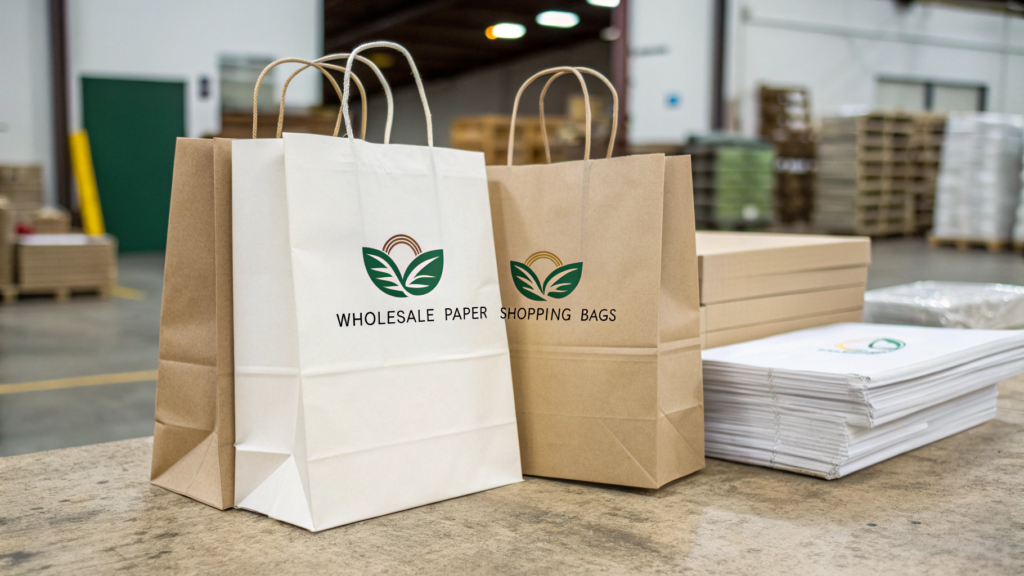
Wholesale paper shopping bags are no longer just a packaging option $\text{—}$ they’re a strategic branding asset. In today’s marketplace, where consumers judge brands not only by their products but by their principles, paper bags have become a tangible expression of corporate responsibility. From my point of view, what makes wholesale paper bags so powerful is their ability to merge eco-consciousness with aesthetic storytelling. A well-designed paper bag, whether matte, glossy, or embossed with a logo, can subtly communicate quality, care, and environmental awareness $\text{—}$ all without saying a word. For small businesses, ordering in bulk not only reduces costs but also ensures a consistent brand experience across every customer touchpoint. It’s this harmony between sustainability and scalability that makes wholesale paper bags a smart investment. They prove that sustainability isn’t a marketing trend $\text{—}$ it’s the new standard for brands that want to be remembered, respected, and chosen again.
Is Paper Bag Printing Expensive?
You worry about the initial cost of custom printing. The truth is, custom printing is cheaper than you think, especially when you buy in bulk.
Paper bag printing costs are driven by volume and print complexity. Ordering wholesale significantly lowers the cost per unit. Simple one-color print1s on a standard white bag are inexpensive, but complex, multi-color, or specialty finishes (like embossing) increase the price.
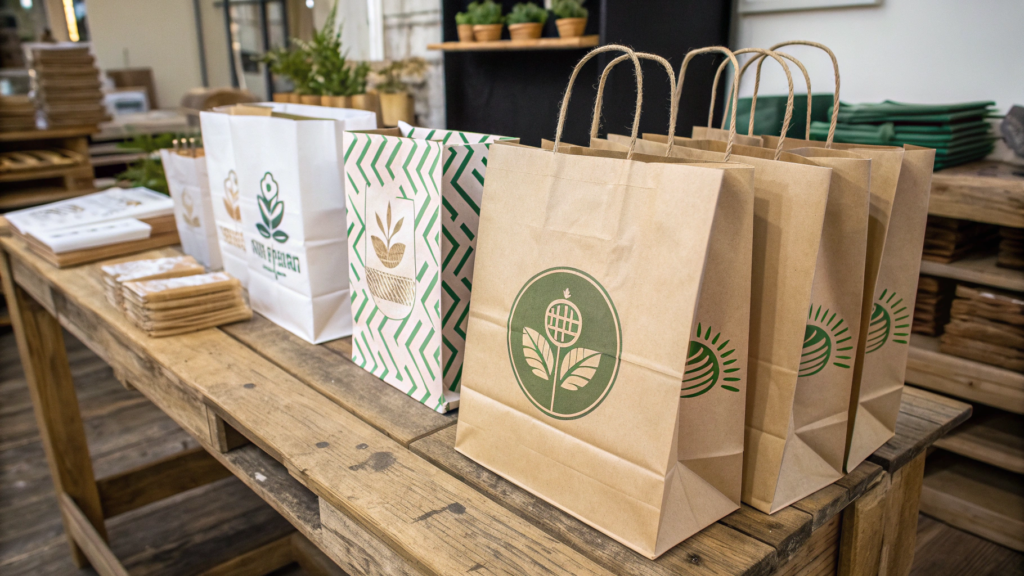
When Jacky evaluates costs for his marketing materials, he must separate the unit cost from the setup cost. For paper bags, the major expense isn't the ink; it is the setup cost for specialized printing plates or screens, especially for finishes like embossing or hot foil stamping. If you only need 100 bags, the fixed setup cost makes the price per bag high. This is why ordering wholesale2 is vital; it spreads that fixed cost over hundreds or thousands of units, driving the final cost down significantly. For instance, a simple one-color print using basic black ink on a standard brown kraft bag is the most economical route. If you need a high-end look, choosing a matte lamination with spot UV varnish adds a premium feel, but it costs more than plain printing. I always guide clients to prioritize the handle and bag structure first, then choose the most impactful, yet cost-effective, print finish. A well-structured bag with simple, clear branding sends a stronger message of quality than a cheap bag with complex, messy printing. The cost is relative to the volume you commit to.
Cost Factors in Paper Bag Printing
| Cost Factor | High Cost Implication | Low Cost Implication |
|---|---|---|
| Order Volume | Small runs (under 500 units). | Large wholesale runs (over 2,000 units). |
| Color Count | Four-color process or specialty inks (e.g., PMS). | One or two solid colors, usually black or white ink. |
| Finish | Embossing, debossing, or foil stamping. | Standard ink printing directly onto the bag stock. |
| Bag Material | Thick, recycled, or luxury textured paper stock. | Standard brown kraft or white coated paper. |
Is Paper Bag a Good Business?
Thinking of entering the packaging supply business? Paper bags have strong potential, but success depends on service and scale.
Yes, the paper bag business is good, especially when focused on serving the B2B market with customization and bulk supply. Success relies on offering reliability, competitive wholesale pricing, and expertise in branding finishes, not just the bags themselves.
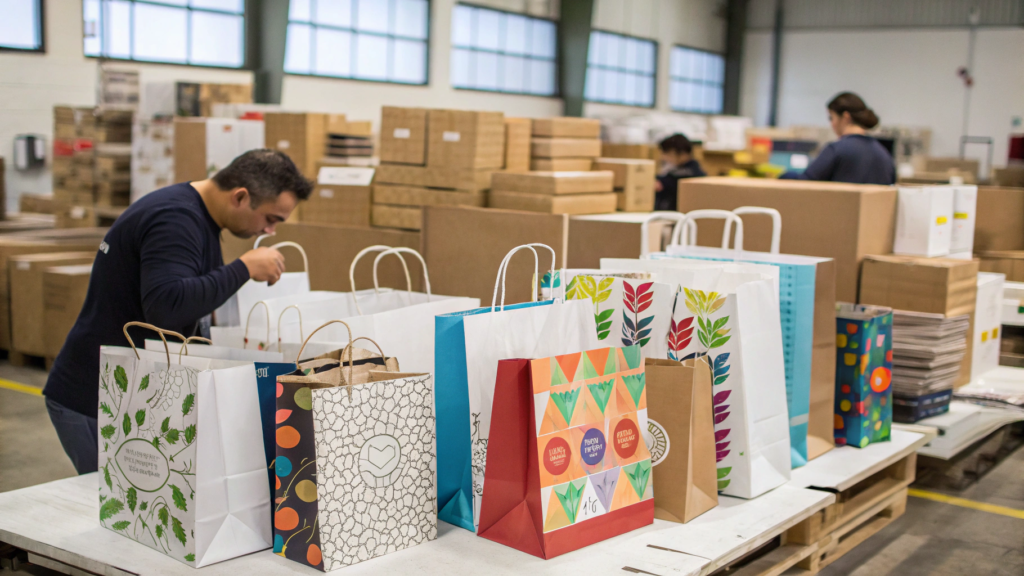
For a business entering this market, the key is moving beyond being a simple distributor to becoming a strategic packaging partner. The market is strong because environmental regulations are forcing retailers away from plastic. However, the competition is high. To stand out, a supplier must offer more than just the bags; they must offer supply chain expertise and design advice. For example, advising a client like Jacky on the right gusset size or the strongest handle material (like woven cotton rope over twisted paper) adds significant value. My experience showed me that clients pay a premium for reliability and quality control. Managing lead times for bulk orders and ensuring color matching across different batches are major pain points for businesses. Therefore, a paper bag supplier who can offer end-to-end service $\text{—}$ from sourcing eco-friendly stock to custom printing and reliable delivery $\text{—}$ will thrive. This moves the conversation from "How much are the bags?" to "How much value does your service add to my brand experience?"
Which Bag Has the Highest Resale Value?
If you are talking about the bag itself as an item to resell, you must move away from simple shopping totes. The resale market values rarity.
No standard wholesale shopping bag has a high resale value; that market is reserved for luxury brand handbags like the Hermès Birkin. However, a paper shopping bag can carry high perceived brand value if it's part of an extremely limited or exclusive luxury launch.
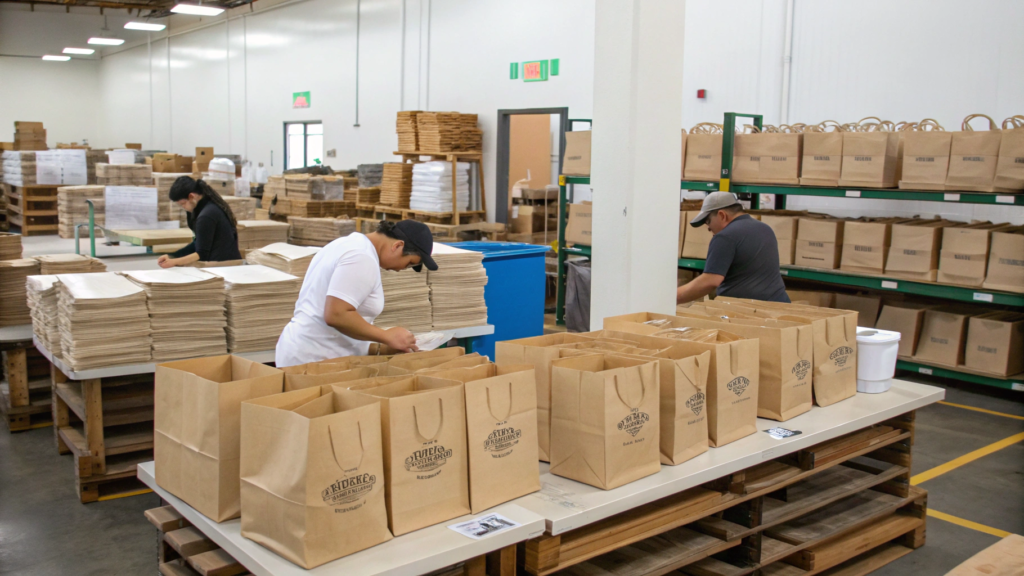
This question brings up an interesting contrast between mass-market utility and high luxury, much like comparing a canvas tote to a leather tote. In the general sense, a wholesale paper shopping bag is an expendable item. Its value is realized when it is used by the customer to carry a purchased item, reinforcing the brand. It is not an asset meant for resale. The bags that command high resale prices are those that embody extreme scarcity, high material cost, and cultural cachet. Think of the Hermès Birkin or highly sought-after collectible items like the New Yorker tote mentioned in my previous thought, which sell for high markups due to their exclusivity, not their material cost. A paper shopping bag only achieves high perceived value if it is associated with a hyped, limited-edition retail drop from a major fashion house. For example, the shopping bag from a rare sneaker launch might be kept by collectors. For a wholesale supplier, the goal should not be resale value but brand equity3. A high-quality, well-printed paper bag increases the perceived value of the product inside it, which is a far more direct return on investment for the business purchasing them in bulk.
Value Comparison: Utility vs. Collectibility
| Bag Type | Primary Value Realization | Resale Value Potential |
|---|---|---|
| Wholesale Paper Shopping Bag | Brand experience, carrying capacity, sustainability statement. | Negligible; intended for single-use/short-term utility. |
| Luxury Collectible Bag (e.g., Birkin) | Investment, status, craftsmanship. | Extremely High; value increases over time. |
| Limited Edition Promotional Tote | Customer loyalty, brand hype. | Moderate (if rarity is very high and maintained). |
Conclusion
Wholesale paper bags are a smart investment because they effectively communicate sustainability and quality at a manageable cost, provided you purchase in high volume for the best printing rates.