Are You Using Tote Bags for Branding, or Just Giving Away Canvas?
Are you just giving away a piece of cloth? Many companies choose the cheapest tote bag possible. This choice tells your clients that you prioritize low cost over quality. This is a missed opportunity.
A corporate tote bag is not just a carrier; it is a reusable, walking billboard whose true value is measured in brand credibility, longevity, and the quality of the materials used. The smartest branding strategy uses a tote to tell a story of ethical production and lasting quality, ensuring it becomes a valued lifestyle accessory.
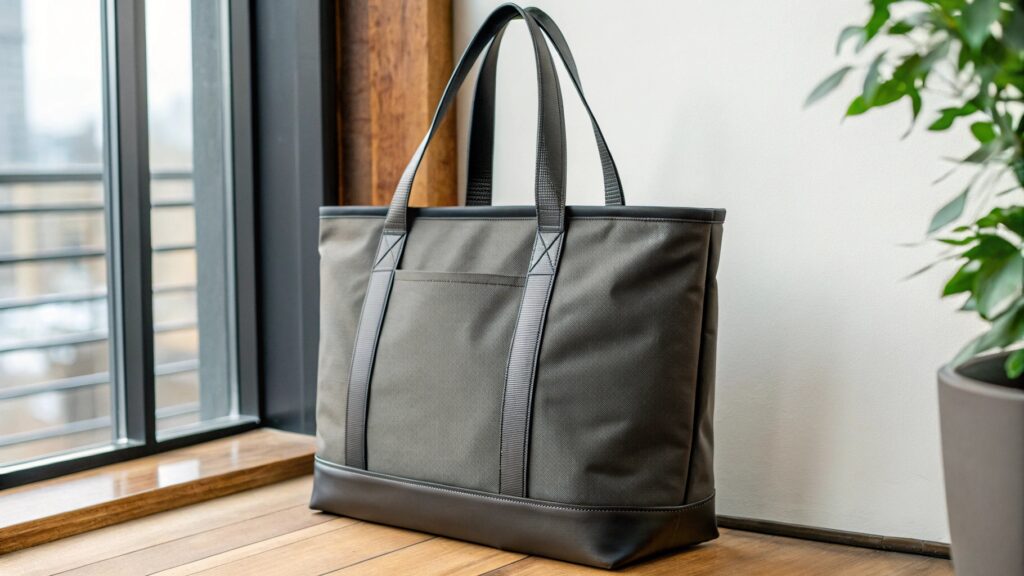
When clients first come to me and ask for a tote bag, they usually ask for a number. They want to know the lowest price possible. I always tell them that they are asking the wrong question. In my years starting at a printing factory and now running Latitude, I learned that the real cost is not the canvas or the ink. The real cost is what people think of your brand when they use your gift. I want Jacky, the marketing manager, to see the tote bag not as a cheap giveaway, but as a powerful, everyday marketing tool. We must look at the decisions that turn a disposable item into a memorable asset.
Are Tote Bags in Style in 2025?
Some people still think tote bags1 are just for groceries. They worry the style is old or outdated. This thinking limits the bag's potential as a modern branding tool.
Tote bags are absolutely in style and highly relevant in 2025, driven by a global shift toward sustainability and reusable products over single-use plastic. Modern, well-designed totes made from quality, eco-conscious materials are seen as fashionable, socially responsible, and practical lifestyle accessories.
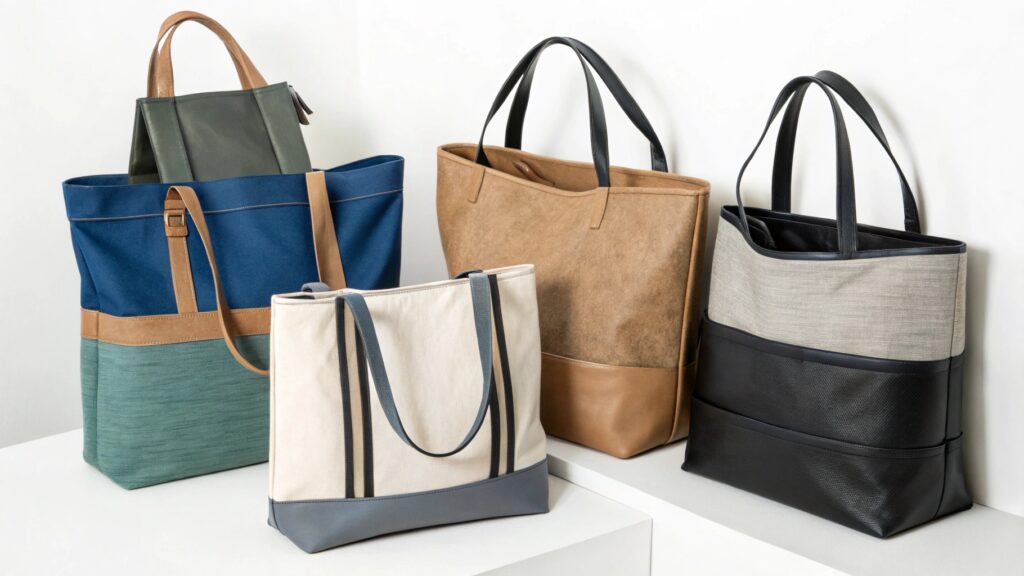
I see tote bags everywhere now, on the street and in professional settings. Their "in style" status is not a fashion trend, but a reflection of a deeper consumer value shift. People today want to be seen as environmentally aware. Carrying a quality reusable tote signals this awareness. This gives the corporate tote bag great power. It means that when someone uses your branded tote, they are publicly linking your company to a positive, modern value like sustainability. But here is the critical point: the style factor depends on the quality of the construction and the design2. A light, flimsy, poorly stitched bag does not say "style." It says "cheap giveaway." Jacky is right to value high-quality design. To stay relevant in 2025, the bag must use a heavier canvas, maybe a sturdy 12oz or 16oz material. The straps need to be reinforced for carrying laptops and heavy items. The print must be sharp, maybe a custom silk-screen or a full-color digital print that catches the eye. The tote needs to move from a casual item to a respected accessory. By ensuring this high standard, your bag is not just in style; it is part of a responsible, modern lifestyle.
| Tote Style Trend | Material Choice | Brand Message Conveyed | Relevance in 2025 |
|---|---|---|---|
| Minimalist Professional | Heavy 16oz Cotton Canvas or Jute | Reliability, Durability, Premium Quality | High utility for hybrid work/laptops. |
| Eco-Conscious Utility | Recycled PET or Organic Certified Cotton | Environmental Responsibility, Ethics | Appeals to consumers' social values. |
| Subtle Customization | Colored Canvas with Tone-on-Tone Print | Sophistication, Attention to Detail | Avoids looking like a cheap, logo-heavy advertisement. |
How Much Canvas for a Tote Bag?
The material quantity is just one part of the cost question. Focusing only on how much canvas you need ignores the overall story and environmental impact of the fabric choice.
The actual canvas required depends on the size and material weight (measured in ounces or grams), typically ranging from light 6oz for promotions to heavy 16oz for premium use. The key decision is not just quantity, but the fabric type—conventional, organic, or recycled—which defines the bag's true brand value and longevity.
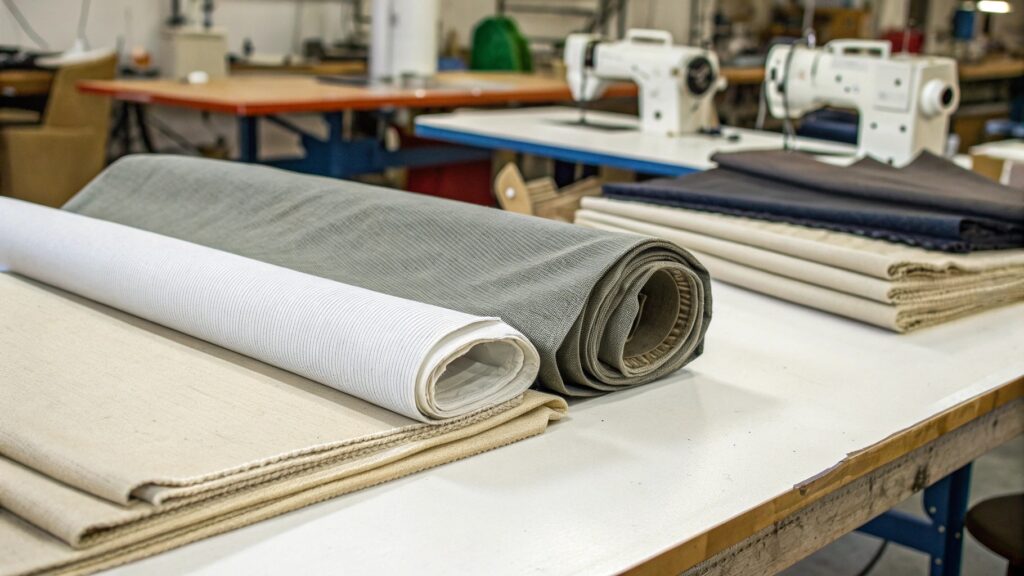
When people ask, "How much canvas?" they are often looking for the price of the raw fabric, which can range from $1.50 to $8 per bag on paper. But I tell clients that the most important number is the ounce weight of the fabric. This weight is the signal of your intention. A light 6oz cotton canvas is cheap and good for mass promotions or giveaways at a huge event. It does the job once. A 12oz to 16oz canvas is an investment. This heavier fabric feels good, lasts for years, and holds its shape better. It makes the item feel like a reusable lifestyle accessory, which is what Jacky needs. The canvas choice also must connect to your brand's ethical story. Organic cotton or recycled materials cost more upfront. I have seen costs rise by 20% to 50% for these sustainable options. However, this higher cost pays off in brand reputation and environmental benefit. Consumers today read labels. They notice if you used standard cotton or organic cotton. This transparency in sourcing becomes a powerful part of your marketing story. So, we do not just calculate the square footage of fabric. We calculate the value proposition of the canvas itself.
Why Are Tote Bags So Expensive?
It is common for clients to see a quote and think, "It's just a simple cloth bag, why is the price so high?" This misunderstanding often leads to choosing a lower-quality supplier.
Tote bags can seem expensive because the price reflects not just the material cost, but the investment in longevity, ethical sourcing, quality printing, and brand perception. You are paying for features like heavy-duty canvas, reinforced stitching, and certified sustainable production that transform a cheap item into a trusted, long-term brand ambassador.

I always tell people that the price tag on a quality tote is a story about values, scale, and intention. The difference between a $2 bag and a $7 bag is not $5 worth of extra canvas. It is a commitment. The major factors driving up the cost are usually hidden in the details. First, there is the ethical labor cost. Choosing local production or factories with strong labor certifications increases the price but guarantees ethical practices. This is a non-negotiable cost for conscious branding today. Second, the printing method3 matters. A simple, single-color screen print is cheap and fast. A complex, multi-color print or a high-quality digital transfer that ensures accurate brand color matching costs significantly more. Third, the sustainability sourcing adds to the cost. Organic canvas and recycled PET materials have higher acquisition costs than basic, non-certified cotton. Finally, there is the longevity investment: reinforced seams, quality zippers, or an inner pocket. These small manufacturing details make the bag last longer. In the end, the cost is a direct reflection of the story you want the tote to tell. Is the story, "We are cheap," or is the story, "We prioritize quality and ethics"? For a manager like Jacky, the higher price is actually an investment in brand credibility, and that credibility is priceless.
Conclusion
The true cost of a tote bag is not the cloth, but the brand story it carries. Focus on high-quality, usefulness, and ethical sourcing to create a powerful, walking billboard for your business.