Which is Best: Copper or Stainless Steel Water Bottles for Daily Use?
Are you deciding between a traditional, therapeutic bottle and a modern, high-performance one? Stop choosing a water bottle based only on looks. Find the material that truly fits your lifestyle and health goals.
The best water bottle depends on your priority: Copper is best if you value Ayurvedic tradition and potential trace mineral infusion, while stainless steel is superior for modern needs like durability, low maintenance, and temperature insulation. Stainless steel, particularly the vacuum-insulated type, wins on practicality and longevity, but copper brings meaning and a mindful hydration ritual.

I have seen how a simple choice of material can reflect a company's entire philosophy. The debate between copper and stainless steel is not just about metal; it is about tradition versus performance. Just as Jacky needs products that tell a story, I advise clients to choose a bottle material that aligns with their brand message. Let me break down the facts behind both materials so you can choose the right one for your sustainable hydration strategy.
Is a Copper Water Bottle Better Than Stainless Steel for Your Health?
Do you wonder if ancient health claims about copper water are truly valid for modern life? Stop relying on incomplete information. Compare copper's trace mineral benefits against stainless steel's hygienic stability.
A copper water bottle1 is believed by Ayurvedic tradition to offer health benefits, primarily by infusing trace amounts of copper, which has antimicrobial properties. However, stainless steel is better for general hygiene and neutral taste because it is an inert material that does not react with water or leach anything. The "better" choice depends on whether you seek potential wellness benefits (Copper) or absolute neutrality (Stainless Steel).
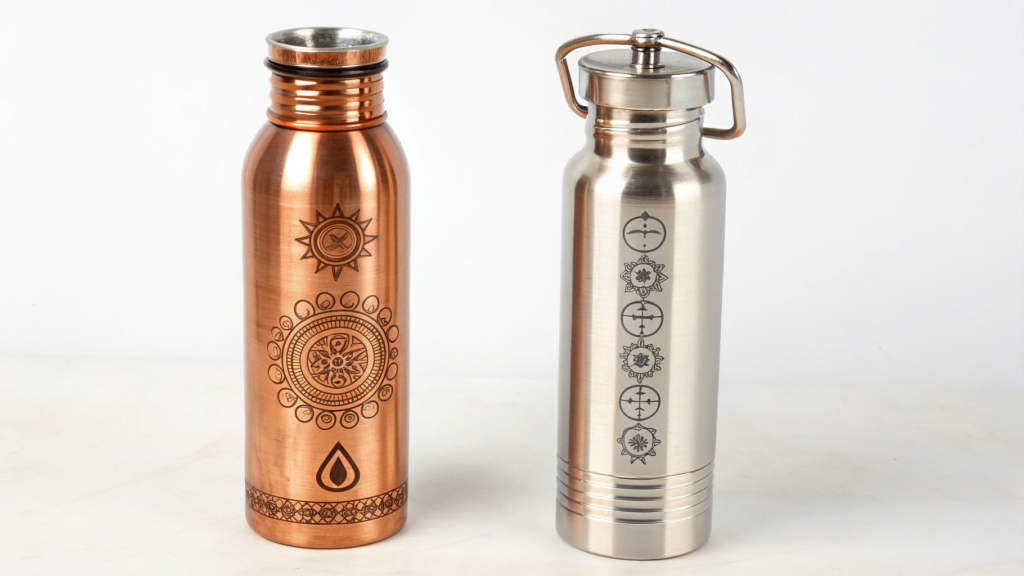
My experience in sourcing and production taught me that metal purity matters, especially when it touches what you consume. Copper bottles draw from ancient Ayurvedic wisdom, which suggests storing water in copper vessels (Tamra Jal) can purify and energize it. Copper does have antimicrobial properties—it kills certain bacteria. However, this interaction means the copper actually leaches into the water over time. The key is balance. Too much copper can be harmful. The benefit is tied to the trace mineral infusion, making the water feel "different." Stainless steel, specifically Food-Grade 18/8 (Type 304), is the industry standard for hygiene. It is an inert material. This means it does not react with acidic drinks (like juices or coffee) and will not leach any flavor or compound into the water. For a corporate gift, stainless steel is the safer, low-maintenance choice because it requires no special care and works for all types of drinks. Copper is a ritual, something that connects you to mindful hydration. Stainless steel is pure performance and hygiene. Many consumers seek a balance, using stainless steel for daily, non-stop hydration and reserving the copper bottle for slow, intentional drinking routines at home.
| Tertiary Heading Example | Copper Water Bottle | Stainless Steel Water Bottle | Primary Advantage |
|---|---|---|---|
| Material Reaction | Leaches trace copper over time | Inert, does not leach or react | Hygiene and safety for all drinks |
| Health Claim | Antimicrobial, mineral infusion | Neutral, maintains purity of water | Reliability and universal use |
| Maintenance | Requires regular cleaning to avoid oxidation | Dishwasher-safe (single-wall) or easy hand wash | Low maintenance, high practicality |
Which Metal is Healthiest for Storing and Drinking Water?
Are you looking for the safest, most stable material for your family's daily drinking water? Stop prioritizing novelty. Choose the metal proven for its stability, hygiene, and neutral interaction with water.
Stainless steel is the healthiest and safest metal for daily drinking water storage because it is non-toxic, non-leaching, and does not rust or corrode. Food-grade stainless steel is the standard used in kitchens and medical equipment worldwide for its stability and hygienic properties. While copper offers a mineral benefit, stainless steel is the best choice for everyday, all-purpose safety.
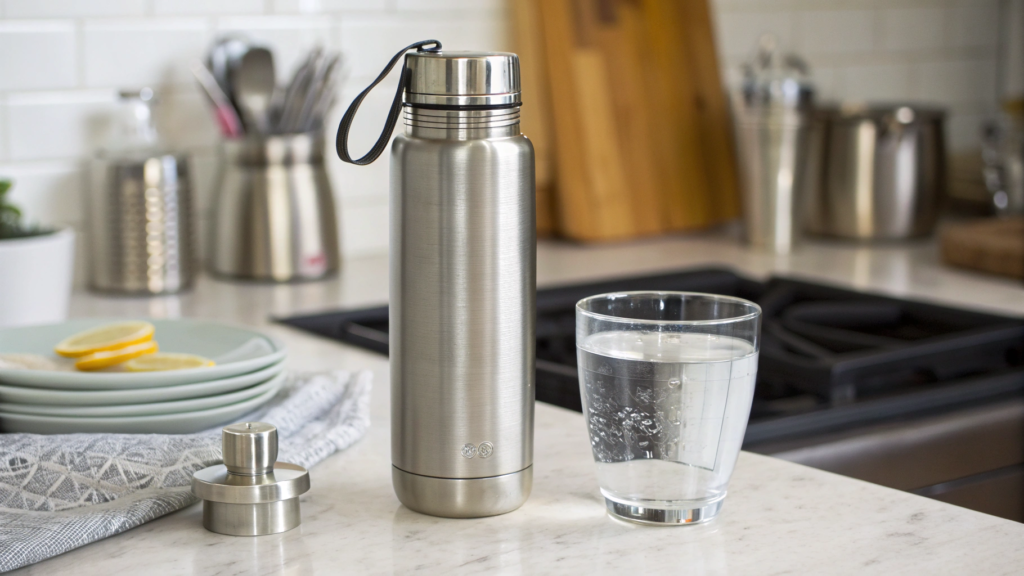
When judging health, we must prioritize stability and non-toxicity. Stainless steel is an alloy—a mixture of iron, chromium, and nickel. The chromium component forms a protective, invisible layer that prevents the metal from reacting with water or oxidizing (rusting). This makes it the most hygienic and long-lasting choice. This is why it is the standard for food service and medical tools. Copper, on the other hand, is a reactive metal. It will oxidize, turning green over time (patina), and it must be stored away from acidic liquids. The health risk with copper comes from potential over-consumption, especially if the water is left too long or if the bottle is not made of pure copper. With stainless steel, there is no risk of over-consumption of the metal itself. Furthermore, modern double-wall vacuum-insulated2 stainless steel bottles maintain the water's temperature, which is a major factor in hydration comfort and safety in hot climates like Singapore. The key difference here is that copper brings meaning (ritual and tradition), but stainless steel brings performance (insulation and purity). For a gift from a trading company like Jacky's, stainless steel ensures the highest level of resilience3 and low maintenance, which are qualities that reflect reliability in a brand.
| Tertiary Heading Example | Health Factor | Copper (Reactive) | Stainless Steel (Inert) |
|---|---|---|---|
| Chemical Stability | Sensitivity to acidic drinks | Cannot hold juice or coffee | Can safely hold any drink type |
| Corrosion/Rust | Oxidizes (patinas) and tarnishes | Highly resistant, non-corrosive | Long-term hygienic storage |
| Temperature Control | No insulation properties | Excellent vacuum insulation | Comfort and safety in hot weather |
Can I Drink Copper Water Daily Without Worrying About Overdose?
Are you considering making copper water a daily habit but are worried about exceeding safe limits? Stop worrying about potential toxicity. Learn the necessary precautions and moderation for copper water consumption.
You can drink copper water daily, but you must use it in moderation and avoid keeping water in the bottle for longer than 8-12 hours. Health experts suggest a limited daily intake to avoid symptoms of copper toxicity. It is important to remember that copper water is meant to be a wellness supplement and not the only source of hydration.
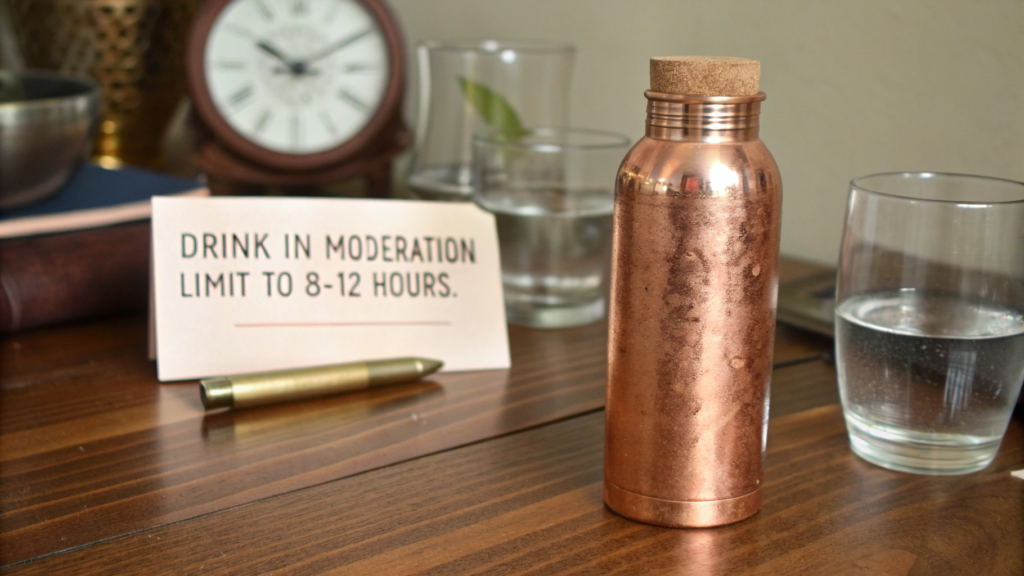
As an advocate for thoughtful gifting, I always stress responsibility. Drinking copper water is a matter of conscious use. The World Health Organization (WHO) and other bodies set guidelines for copper intake. When you store water in a copper vessel, the water absorbs copper ions, increasing the mineral concentration. The simplest rule is: do not keep water in the bottle for more than one night. You should drink it first thing in the morning and then refill with fresh water, or switch to a non-leaching bottle. If you are drinking from a copper bottle all day, every day, without breaks, you risk exceeding safe limits. Symptoms of excessive copper can include nausea or stomach issues. This is why copper bottles are often recommended as a ritualistic tool—used first thing in the morning—rather than the primary water carrier for a busy workday. For continuous daily hydration, the stainless steel bottle remains the practical winner. Its inert nature allows for all-day consumption without any concern for mineral leaching. The ultimate choice depends on the user's intent: copper for mindful, intermittent use, and stainless steel for performance-driven, all-day hydration. The best bottle is defined not by material alone but by how consciously you use it.
| Tertiary Heading Example | Usage Guideline | Risk Mitigation | Health Perspective |
|---|---|---|---|
| Duration Limit | Do not store water for over 12 hours | Reduces excessive copper leaching | Treats copper water as a supplement |
| Drink Type | Only use with plain, non-acidic water | Avoids accelerated leaching | Prevents potential stomach irritation |
| Conscious Use | Use intermittently, not all day | Ensures intake stays within safe limits | Promotes mindful hydration ritual |
Conclusion
Write a conclusion that summarizes the entire text (max 30 words).
Stainless steel is best for daily, hygienic hydration and insulation. Copper is best for mindful, intermittent wellness rituals. I recommend choosing the material that aligns with your purpose and ensuring conscious use.