Why is a custom enamel badge the best item for corporate branding?
You are looking for a small, high-impact item to represent your brand. Something that shows attention to detail and a sense of pride. Have you thought about a custom enamel badge, also known as a lapel pin?
A custom enamel badge is the best item for corporate branding because it is a high-quality, long-lasting symbol of identity and membership. It is small enough to be worn every day. It is durable. It turns your logo into a piece of wearable art. It carries emotional weight and represents your company's values.
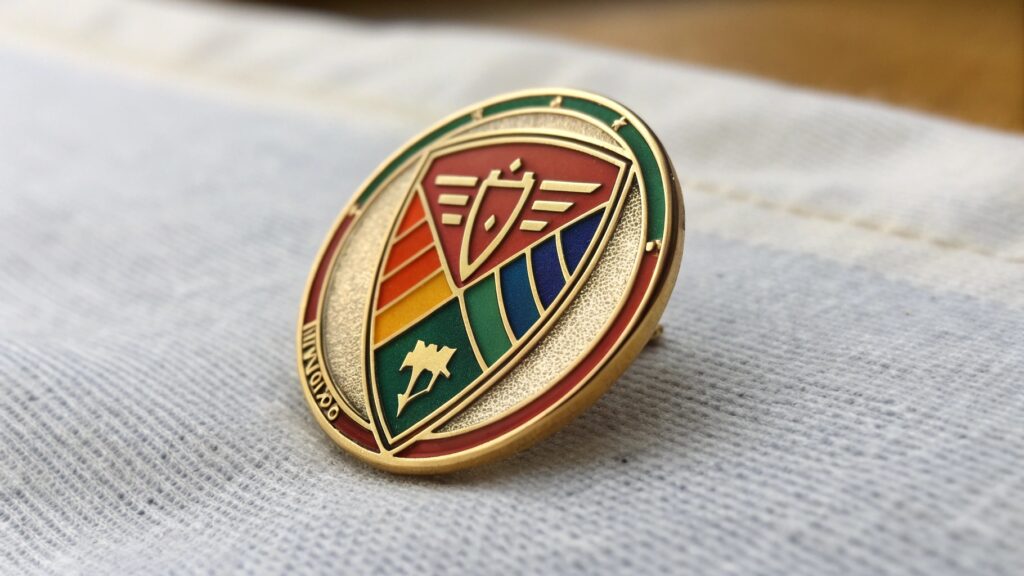
I had a client who was launching a new employee recognition program. They were going to give out certificates, but I told them to add a custom lapel pin. They did. The employees loved the pin more than the certificate. They wore it every day. It created a feeling of pride in the company. I saw then that small things can have a big impact.
Why are lapel pins so expensive?
When you look at a lapel pin, it is a very small item. You might wonder why it can cost more than a pen or a keychain. Why is the cost of a lapel pin sometimes higher than expected?
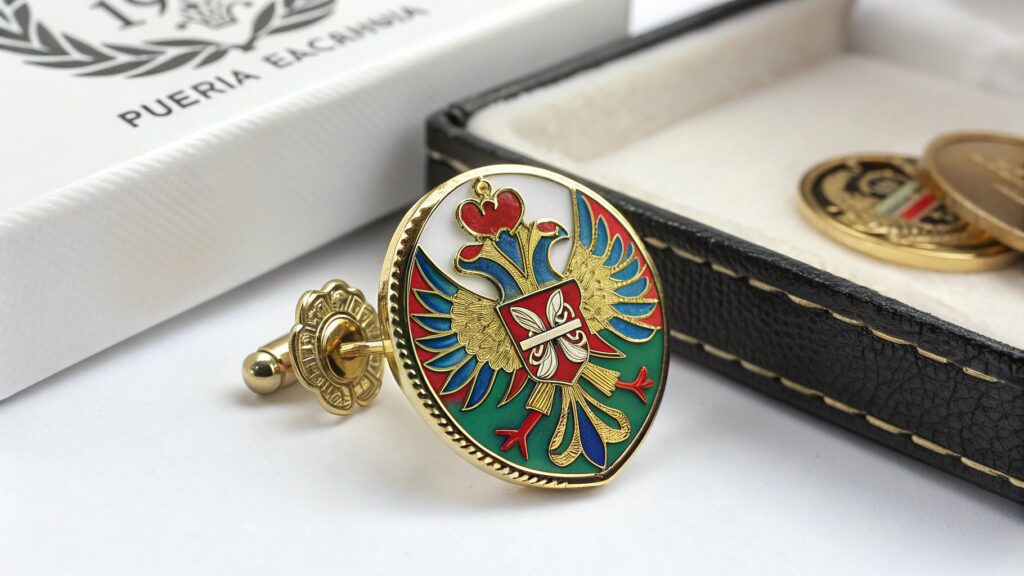
Lapel pins are often expensive because they involve a complex, multi-step production process. They are custom-made, not mass-produced like plastic items. The process includes design, mold creation, stamping metal, hand-filling enamel1 colors, and careful polishing. This craftsmanship and the use of durable metal materials2 increase the cost.
Dive deeper Paragraph:
I have been in the factory and seen exactly how these pins are made. It is not a simple machine process. It is a form of small art. The main reason for the cost is the custom mold. Every lapel pin design needs its own unique metal mold to be created first. This mold is used to stamp the design into the metal. The mold takes time and skill to make. This is a one-time setup cost that can be high. After the mold, the pins are made of metal, often brass or zinc alloy, which is more costly than plastic. Then, if the pin uses enamel, the colors are filled by hand, one color at a time, into the small recessed areas. This requires trained workers and a lot of care. The pins are then baked in an oven to set the enamel. Finally, they are polished and plated. All of these steps make the pin very high quality and durable. They also make the pin more expensive than a simple printed item. The cost reflects the craftsmanship and the longevity of the final product.
| Cost Factor | Description | Why It Increases Price | Benefit to Customer |
|---|---|---|---|
| Custom Mold | Creating a unique metal die for the design | High initial one-time setup fee | Ensures precise, professional reproduction of the logo |
| Metal Materials | Use of brass, iron, or zinc alloy | Material cost is higher than plastic or paper | Pin is durable, heavy, and long-lasting |
| Hand Filling Enamel | Colors are often filled manually into small areas | Requires skilled labor and time | Gives a vibrant, high-quality finish to the design |
| Plating and Polishing | Applying gold, silver, or nickel finish | Adds extra steps and material cost | Gives the pin a shiny, professional, high-end look |
The cost of a pin is an investment in quality and craftsmanship.
What is the best size for a lapel pin?
You want your pin to be noticed, but you do not want it to be too big. Choosing the right size is important for the pin to look professional. What size is the best for a lapel pin?
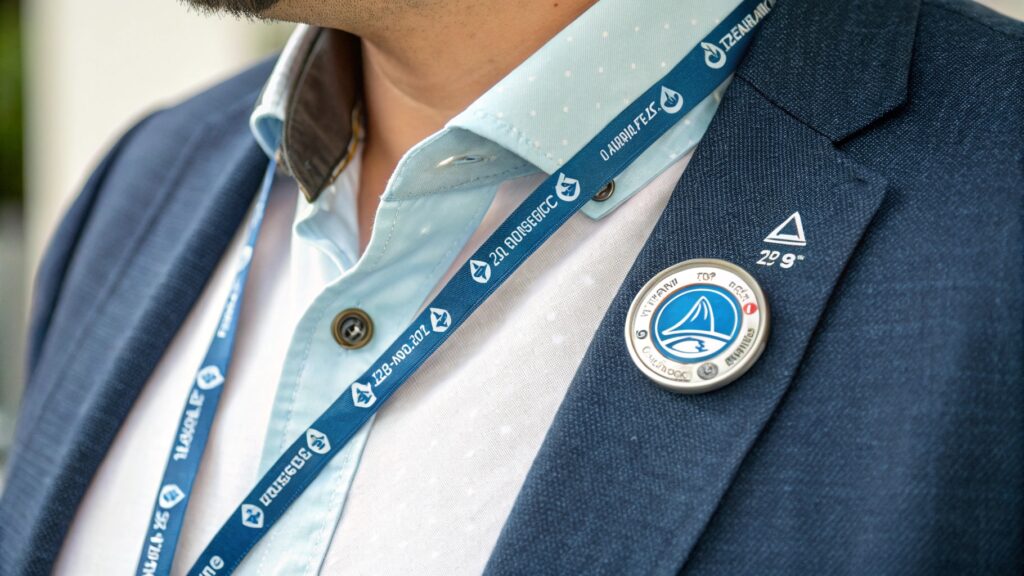
The best size for a lapel pin is usually between $0.75$ inches and $1.25$ inches (or $1.9$ cm to $3.2$ cm). This size range is large enough for your logo to be clearly seen. It is small enough to be worn comfortably on a shirt lapel, a jacket, or a lanyard. The size should be based on the complexity of your logo.
Dive deeper Paragraph:
I advise my clients to think about two things when choosing the size: visibility and wearability. If the pin is too small, people cannot read the logo or the text. If it is too big, it looks cheap or too heavy on the fabric. The $1$ inch size is the most popular because it is the perfect middle ground. If your logo is very simple, like a single letter or a small shape, you can go a little smaller, maybe $0.75$ inches. If your logo has a lot of fine text or many different colors and elements, you should go closer to $1.25$ inches. This extra space helps the details stand out. For event lanyards, people often choose a slightly larger pin, around $1.5$ inches, so it is easier to see from a distance. However, for a high-end corporate gift to be worn on a business suit, a smaller, more subtle pin is always better. A small pin shows confidence and class. A big pin can look like a badge.
| Pin Size (Inches) | Best Use Case | Visibility | Wearability |
|---|---|---|---|
| $0.75''$ (Small) | Business suits, subtle branding, simple logos | Low, only close up | Very comfortable, lightweight |
| $1.00''$ (Standard) | Most popular size, general corporate gifts, uniforms | Medium, easy to read | Comfortable, not too heavy |
| $1.25''$ (Large) | Complex logos, club pins, event giveaways | High, noticeable from a distance | Slightly heavier, more visible |
| $1.50''$ (Extra Large) | Large events, collectible pins, novelty items | Very high, immediate attention | Can be too heavy for some shirt fabrics |
The right size makes the pin look professional.
How long does it take to make custom pins?
You need the pins for a big event next month. You have the design ready. You need to know how long it will take to get them. What is the usual time it takes to make custom pins?
The average time it takes to make custom enamel pins is about $3$ to $5$ weeks, not including shipping time. This time is needed for the careful production steps. The time includes designing the proof, making the mold, filling the enamel colors, baking, and polishing. Rush orders can sometimes be completed in $2$ weeks, but this will increase the cost.
Dive deeper Paragraph:
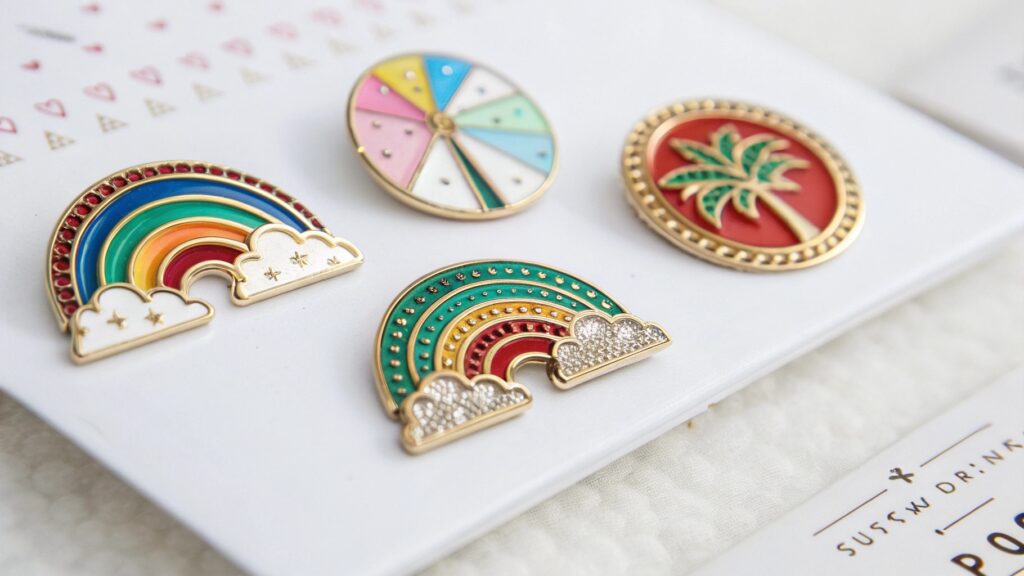
I always tell my clients to plan ahead for custom pins. It is not like printing a business card. The longest part of the process is the mold creation. It takes a few days to get the mold perfect. This step cannot be rushed because a bad mold means a bad pin. After the mold is made, the metal is stamped. The enamel filling3 is the next step that takes a lot of time. If you have many colors, it takes longer. The pins must be filled carefully by hand. Then they have to be heated to set the color. If the color is filled too fast, the colors can bleed into each other. The whole process is based on precision, not speed. You can get rush orders, but this usually means we put your order ahead of others. This is why it costs more. If your event is in two months, you have plenty of time. If your event is next week, it will be impossible to get a high-quality, custom-molded pin. A good pin takes time to make. You should always aim to have your design ready and approved early.
| Step in Production | Time Required | Rationale | Why You Cannot Rush It |
|---|---|---|---|
| Design and Proofing | $1-2$ days | Finalizing the digital file with the client | Must be approved to avoid expensive mistakes |
| Mold Creation | $4-7$ days | Creating the metal die for stamping | A complex machine and manual process that must be precise |
| Metal Stamping and Cutting | $2-3$ days | Stamping the design into the metal sheet | Waiting for the metal to cool and be prepared |
| Enamel Filling and Baking | $5-10$ days | Hand-filling colors and multiple baking cycles | Time needed to apply color precisely and let it cure |
| Plating, Polishing, Packing | $3-5$ days | Final cleaning, plating the metal finish, and quality control | Ensuring a smooth, perfect, professional finish |
Always start your custom pin project early.
Conclusion
A custom enamel badge is a powerful branding tool. Its cost comes from its craftsmanship. The best size is around $1$ inch for good visibility. Always plan $3$ to $5$ weeks for production.
-
Explore the intricate process of enamel filling to appreciate the craftsmanship behind high-quality lapel pins. ↩
-
Learn about the different metal materials used in lapel pins and how they affect durability and cost. ↩
-
Learn about the enamel filling process and its role in creating vibrant lapel pins. ↩