What is the best stainless steel vacuum insulated water bottle?
Searching for the best stainless steel bottle can be confusing. With so many options, how do you know which one to choose? The answer is not as simple as picking a single brand.
The best stainless steel vacuum insulated water bottle is not a single product. It is the one that best fits your needs. The ideal bottle combines the correct stainless steel grade, proven vacuum insulation performance, and a leak-proof lid. You should always choose one engineered for a specific use case and supported by a strong warranty.
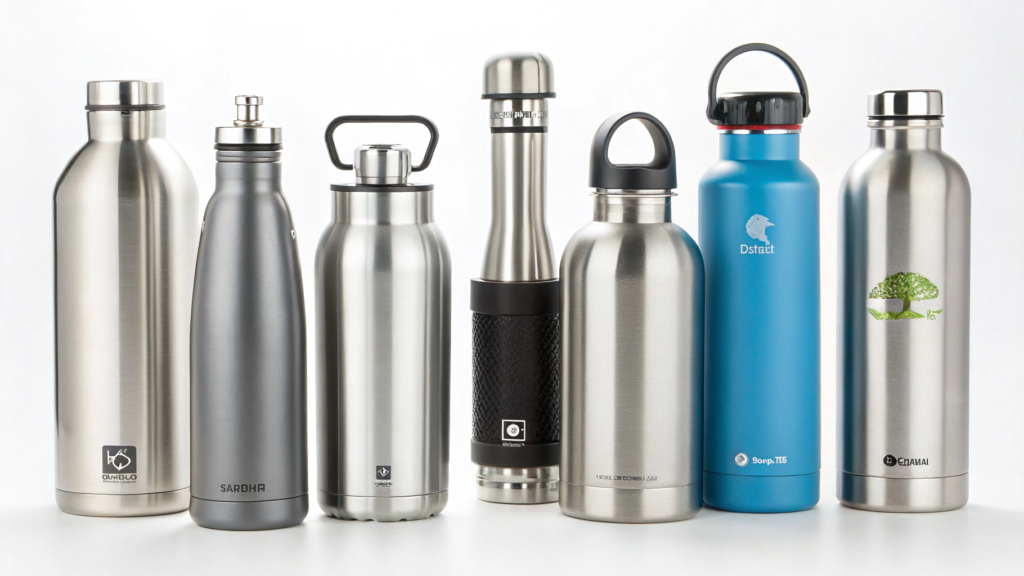
When I first started in this business, I thought all stainless steel bottles were the same. I quickly learned this was not true. It is easy to get caught up in marketing, with promises of bottles that keep drinks hot or cold for a very long time. My friend Jacky, a branding manager, faces this all the time. He wants to give his team a high-quality gift. He needs to know what really matters. I have found that the real value of a bottle is in its engineering and its materials. The right bottle becomes a long-term part of someone's daily life, not just a one-time gift. Let me share some key insights I've gathered to help you make a smart choice.
What is the best quality stainless steel for water bottles?
Curious about the quality of steel in your water bottle? The type of stainless steel matters a lot. It affects everything from safety to durability.
The best quality stainless steel for a water bottle is food-grade 18/8 stainless steel1, also known as Type 304. This is the standard for drinkware because it is safe, durable, and resists corrosion. For special cases like use in marine or very salty environments, Type 316 stainless steel is a better choice because it has higher corrosion resistance.
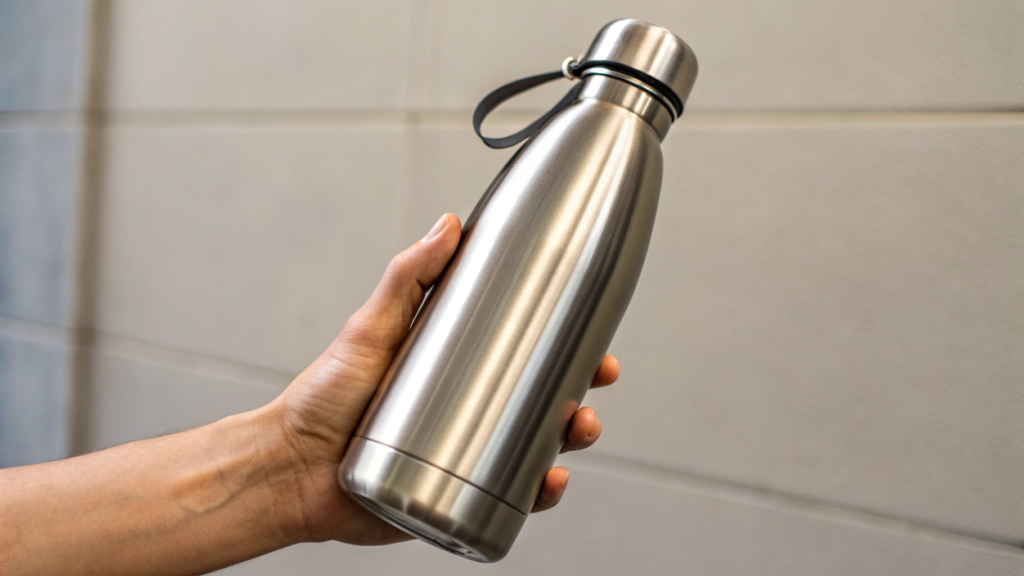
In my years of helping clients, the first thing I look at is the material. The most common and best choice for a water bottle is 18/8 stainless steel. This number tells you the metal contains 18% chromium and 8% nickel. The chromium is what makes the steel "stainless," because it creates a protective layer that stops rust. The nickel makes the steel stronger and more resistant to corrosion. This combination is why 18/8 stainless steel is used in so many kitchen products. It is the food-grade standard. However, I have seen some specific needs that require a different material. If a bottle is going to be used near the ocean or for very acidic drinks, I will suggest Type 316 stainless steel2. This type of steel has an extra element, molybdenum. This molybdenum gives it even better protection against chlorides and acids. It is sometimes called "marine grade" steel. For most everyday uses, this extra protection is not needed. But for a client who lives and works near the sea, this small detail can make a big difference. It is important to know that a good bottle does not need an inner coating. The steel itself is what provides the safety and durability. I always look for suppliers who can show proof that their materials meet these standards. It is a good way to be sure of the quality.
Comparison of Stainless Steel Grades
| Feature | 18/8 (Type 304) Stainless Steel | 316 Stainless Steel |
|---|---|---|
| Composition | 18% Chromium, 8% Nickel | 16% Chromium, 10% Nickel, 2% Molybdenum |
| Corrosion Resistance | Excellent for most daily use. | Superior, especially against salts and acids. |
| Cost | More affordable and widely available. | Higher cost due to added elements. |
| Best For | Everyday water, coffee, and tea. | Marine environments, very acidic drinks. |
What is vacuum insulated stainless steel3?
Heard the term "vacuum insulated" and wonder what it means? This technology is the secret to a bottle's performance. It is what makes a great bottle truly great.
Vacuum insulated stainless steel is a construction method where two layers of stainless steel are separated by a space where all the air has been removed. This vacuum creates a barrier that prevents heat from moving in or out of the bottle. This technology is what allows a bottle to keep cold drinks cold and hot drinks hot for many hours.
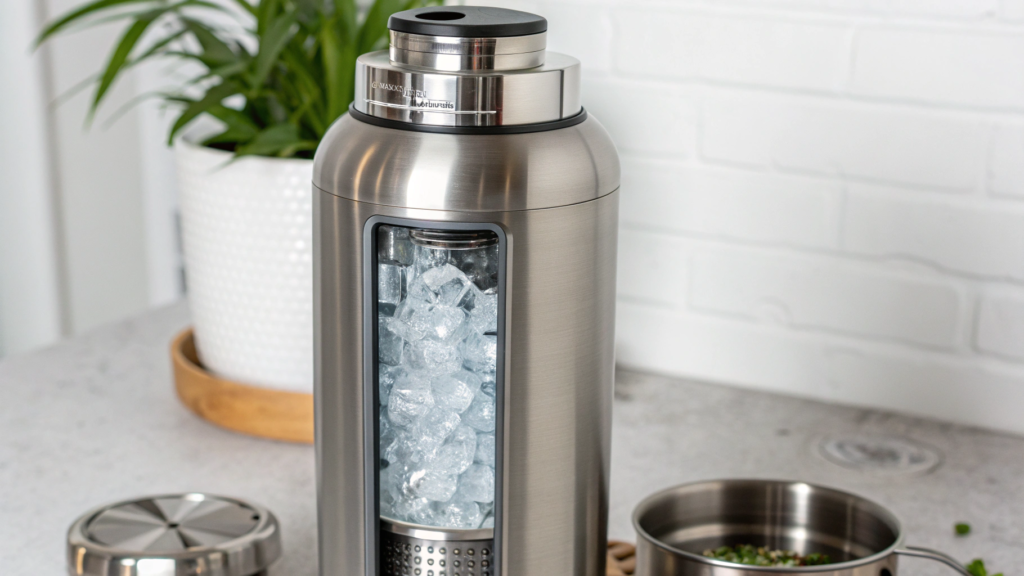
This is a core part of what makes a bottle good. The vacuum is the real hero. When there is no air between the two layers of steel, heat has a very hard time traveling through the bottle walls. This means the temperature of the liquid inside stays the same. The science is simple. Heat travels through conduction, convection, and radiation. The vacuum stops two of these. It stops conduction and convection. There is no air for the heat to move through. The third way is radiation. To stop this, many manufacturers add a thin layer of copper or a special coating to the outer wall of the inner bottle. This helps to reflect heat. I have tested many bottles. I will pour hot water into a bottle and check the outside. If the outside of the bottle is warm, the insulation is not working well. The bottle is leaking heat. A well-made vacuum insulated bottle will feel room temperature on the outside. It will not get cold when filled with ice water. It will not get hot when filled with coffee. This is how you know the product is high quality. I always tell my clients to ask about a bottle's test data. A good brand will have clear, honest numbers, not just a promise. They will be able to tell you how long the bottle keeps things hot and cold based on real tests, not just marketing.
How Vacuum Insulation Works
| Method | How it works |
|---|---|
| Conduction | Heat travels through solid materials. The vacuum space stops this. |
| Convection | Heat travels through air. The vacuum space removes the air. |
| Radiation | Heat travels through waves. A special coating reflects these waves. |
Is 304 or 316 stainless steel better for water bottles?
Choosing between 304 and 316 stainless steel can be confusing. Both are good materials. But one might be better for your specific needs.
For most people, 304 stainless steel is the better choice for a water bottle. It is a safe, durable, food-grade material that is more affordable. 316 stainless steel is only better in specific situations where the bottle will be exposed to high salt content or very acidic liquids, such as in marine environments or chemical labs.
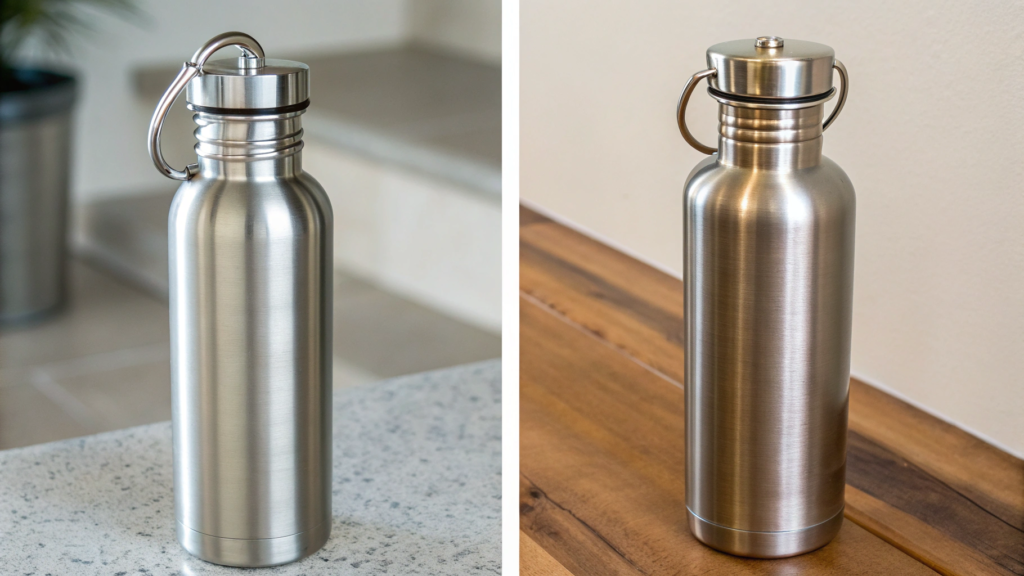
As I mentioned earlier, the choice between 304 and 316 is about the specific use case. I recently helped a company that works with marine biology. They needed a bottle that could stand up to the salty air and water. For them, I knew 316 stainless steel was the right choice. The extra molybdenum in the 316 grade gives it an amazing resistance to corrosion from salt and chlorides. This means the bottle will not pit or rust even in a very harsh environment. For an office worker, a student, or a person who uses their bottle at home or the gym, a 304 stainless steel bottle is perfectly fine. It will not rust, and it is very strong. You do not need the higher-cost material. I always tell my clients to think about the total cost. A 316 bottle costs more to buy. If you do not need its extra properties, you are just spending more money for no reason. It is like buying a truck for a city commute when a car will do. It is important to match the product to the person. My job is to make sure clients do not overspend. I also want to make sure they get a bottle that lasts. A good quality 304 bottle from a reliable brand with a good warranty is a much better value than a cheap, no-name 316 bottle that might have bad insulation or a lid that leaks. Lid performance is very important. Many bottles fail because the lid is not good.
Key Factors for Choosing the Right Bottle
| Factor | Description |
|---|---|
| Purpose | What will the bottle be used for? For daily life or a special hobby? |
| Environment | Where will the bottle be used? Is it a salty or acidic environment? |
| Warranty | A good company will stand behind its product with a strong warranty. |
| Lid Design | The lid must be leak-proof and easy to use. This is a common failure point. |
Conclusion
There is no single "best" bottle. The best one is the one that meets your specific needs. Think about the material, insulation, and lid design. A quality bottle is a good investment.