Why is a custom enamel badge a good marketing tool?
Do you need a new way to promote your brand? You might think of big things. But small things can be very powerful. A custom enamel badge is a great example. It is a small item with a big impact.
A custom enamel badge is a good marketing tool because it is highly visible, durable, and personal. It can tell a story about your brand. It can also help build a community around your product.
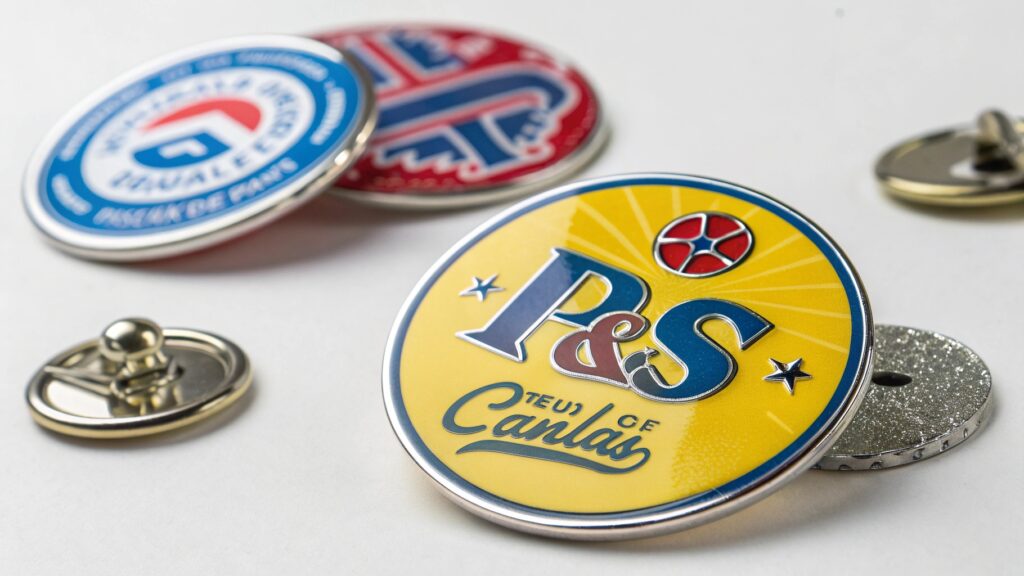
I have seen many marketing trends come and go. But the custom enamel badge has stayed. It has even grown in popularity. My clients are always looking for new ways to connect with customers. I tell them about enamel badges. People love them. They are fun to collect. They are easy to wear. They are a great way for a brand to get noticed. A pin is a small item. But it can live on a jacket or a bag for years. This means your brand is seen over and over again. It is a constant reminder. This is much better than a digital ad that is seen for only a few seconds. An enamel badge is a small piece of art. It is a modern artifact that connects creativity, community, and commerce.
What is the difference between an enamel pin and a badge?
You see enamel pin1s and badges. Are they the same thing? Many people use the words for the same item. But there are some small differences. Knowing this can help you pick the right item for your needs.
The terms "enamel pin" and "badge" are often used for the same thing. An enamel pin is a small item with a pointy back to attach it. A badge is a more general term. A badge can be an enamel pin, or it can be a button, a patch, or a simple clip.
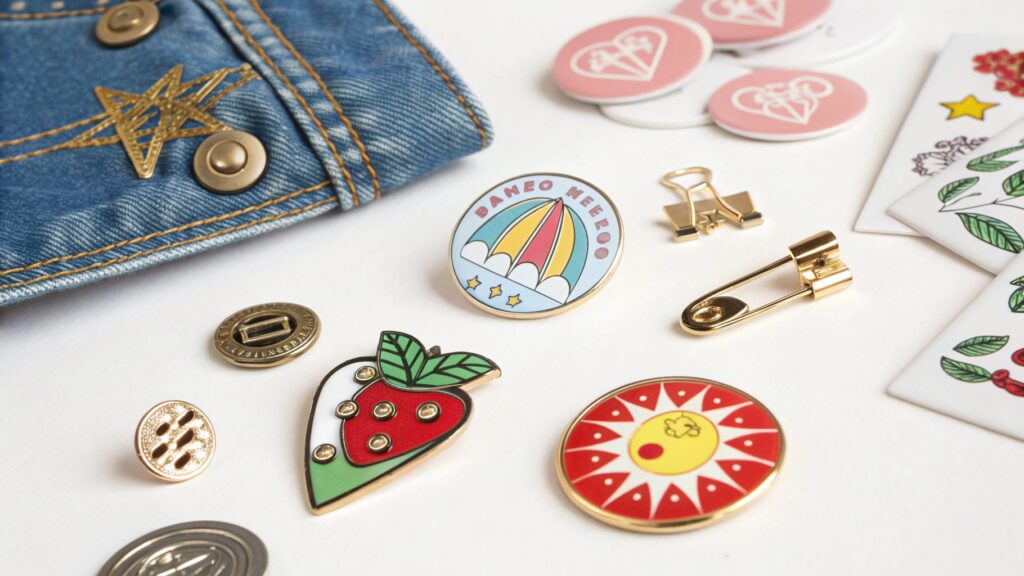
I get this question all the time from my clients. A few years ago, a client came to me with a very specific idea. He wanted to make "lapel badges" for his company's event. He was worried about the name. He thought a "pin" was too casual. I explained to him that in the world of custom items2, the words are almost the same. People use them interchangeably. The item he wanted was an enamel pin. It was small. It had a sharp point on the back to attach it to a shirt or jacket. I told him we could call it a badge. The main point is how the item is used. The name does not matter as much. A pin is a tool for self-expression. It is something a person chooses to wear. It signals their identity, their values, or a sense of belonging to a group. For a business, a custom enamel pin is a miniature billboard. It is cheap to make. It is easy to customize. It can build long-term brand loyalty if the design is good. The real value is in their dual role. They are personal and they are promotional. The person wearing the pin is showing their support for your brand. This is a very powerful type of marketing. It is not just a digital impression that disappears. It is a physical item that stays.
Pin vs. Badge differences
| Feature | Enamel Pin | Badge (General Term) |
|---|---|---|
| Common Name | Often used for collectibles or fashion. | Used for a wide range of items for a specific purpose. |
| Attachment | Usually a sharp metal post with a clutch. | Can be a pin, clip, magnet, or a sew-on patch. |
| Material | Often made of metal and enamel. | Can be made of metal, plastic, cloth, or paper. |
| Primary Use | Personal expression, collecting, brand promotion. | Identification, awards, or to show membership. |
| Common Design | Detailed and colorful, often with a unique shape. | Can be simple, like a round button with a logo. |
| Cultural Context | Part of modern fashion and subcultures. | Has a more traditional or formal feel. |
| Brand Impact | Can create a community and long-term loyalty. | Often a one-time use item or a simple logo. |
Why do enamel pins cost so much?
You might look at an enamel pin and think it is just a small piece of metal. But then you see the price. You wonder why it costs so much. There are good reasons for this.
Enamel pins cost a lot because of the complex process to make them. They are not mass-produced like plastic. Each one is made with careful steps, including molding, coloring, baking, and polishing. The high quality materials also add to the cost.
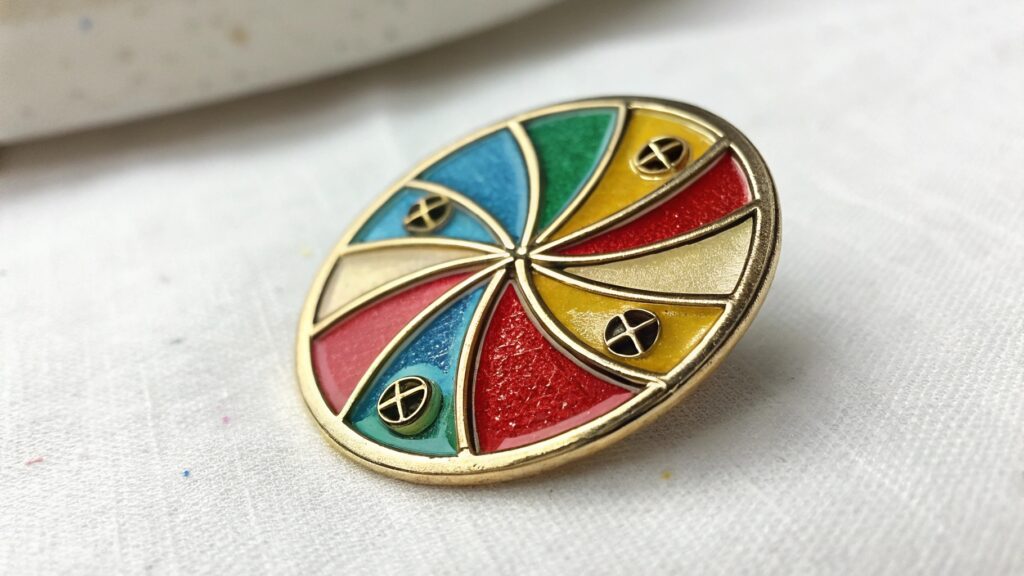
I have to explain this to clients often. A client named Jacky once asked me about this. He had a tight budget. He wanted to give out enamel pins at a trade show. He was surprised by the price. He thought they should be very cheap. I told him about the process. I explained that it is not like printing a flyer. First, we need to create a metal mold from the design. This is a special tool. It is expensive to make. Then, we pour the molten metal into the mold. After that, each color is filled by hand. A worker uses a small tool to put the enamel color into each section. Then the pin is baked in an oven. The enamel gets hard. Then the pin is polished. This takes a lot of time. The pin is not finished yet. We need to put the backings on. The final pin is a small piece of art. The cost is for all this work. The value of an enamel pin is in its quality. It is durable. The colors will not fade. The pin will not break easily. This means your brand looks good for a long time. A cheaper pin might break or lose its color. That would make your brand look bad. The cost is an investment in a high-quality item. It is an investment in your brand's reputation.
The cost factors of enamel pins
| Cost Factor | Description | Why it adds to the price |
|---|---|---|
| Mold Creation | A custom mold is created for each design. | This is a one-time, high-cost investment. It requires skilled labor. |
| Coloring Process | Each color is applied by hand, one by one. | This is a time-consuming process. It requires careful attention to detail. |
| Baking and Curing | Pins are baked to harden the enamel. | This step is necessary to make the pins durable. It requires special equipment. |
| Polishing and Plating | Pins are polished and plated with a finish. | This gives the pin a high-quality, professional look. It protects the metal. |
| Material Quality | High-quality metal and enamel are used. | Better materials ensure the pin lasts longer and looks better. |
| Shipping and Packaging | Pins are packed and shipped carefully. | Each pin is a small, fragile item that needs care in transport. |
| Design and Art | A good design is needed for the pin to be effective. | You pay for the creative work that makes the pin special. |
How to make enamel pin badge3s?
You want to know how a pin is made. The process is not a secret. But it is not simple either. There are a few main steps. Each step is important for a good final product.
To make enamel pin badges, you first create a design. Then, a metal mold is made. Molten metal is poured into the mold. The pin is then plated with a finish. Next, enamel colors are filled into each section. Finally, the pin is baked and polished to create a durable and beautiful product.
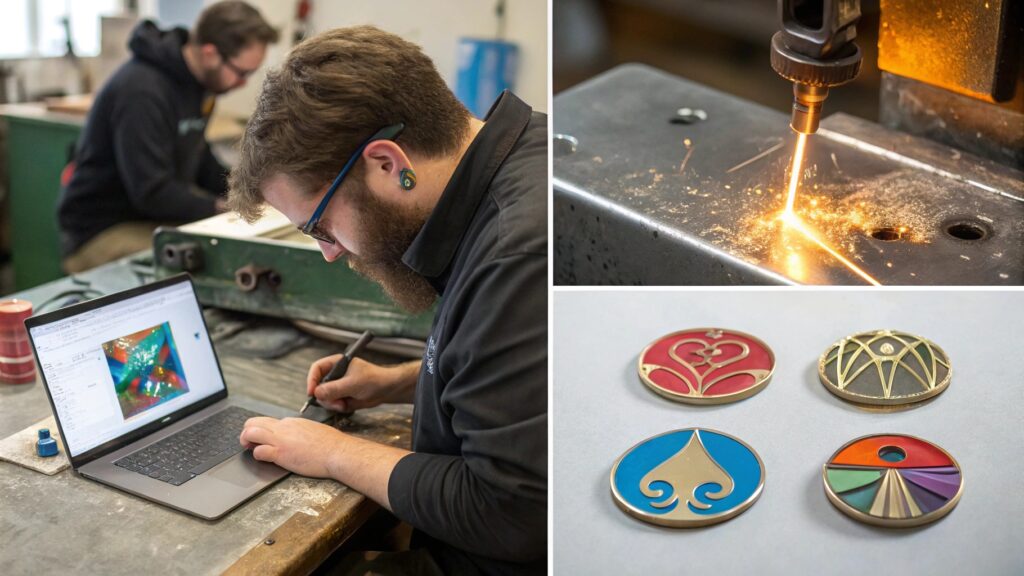
The process is a blend of art and manufacturing. The first step is the design. You need a simple but clear design. You cannot have too many small details. The colors must be clear. Once the design is ready, it is sent to a factory. The factory makes a steel mold. This is like a stamp. The mold is used to stamp the metal. Then, molten metal is poured. This metal takes the shape of the design. When the metal is cool, it is hard. The pins are then trimmed and polished. The next step is very important. The pins are plated. This gives them a shiny gold or black finish. After plating, the pins are ready for color. This is the most artistic part. A worker uses a tool to add the enamel color into the recessed areas. Each color is put in one by one. This is why the process is so slow. After the colors are in, the pins are baked in a high-temperature oven. This makes the enamel hard and shiny. Finally, the pins are polished again. This makes the surface smooth. The last step is to put the backings on. These are the small posts that hold the pin in place. The result is a high-quality product. This is why I see enamel pins not as passing trends. They are modern artifacts. They connect creativity, community, and commerce. They are a physical memory of a brand or an idea. They live on for years and spark new conversations. This timeless visibility is why they are so valuable.
The detailed process of making a pin
| Step | Description | Why it is important |
|---|---|---|
| Design Phase | Create a vector file with clear lines and colors. | This is the blueprint for the entire process. |
| Mold Creation | A steel mold is made based on the design file. | This creates the basic metal shape of the pin. |
| Metal Stamping | A metal sheet is stamped with the mold's design. | This is the main part of the production process. |
| Trimming and Polishing | Excess metal is removed, and the edges are smoothed. | This makes the pin look clean and professional. |
| Plating | The pin is plated with a metal finish like gold or silver. | This gives the pin its final look and protects the metal. |
| Enamel Filling | Enamel colors are hand-filled into the recessed areas. | This is the most time-consuming and artistic step. |
| Baking | The pins are baked to cure and harden the enamel. | This makes the enamel durable and shiny. |
| Final Polish | The surface is polished to a high shine. | This adds to the high-quality feel of the final product. |
| Backing Attachment | The pin post and clutch are attached to the back. | This makes the pin ready to be worn. |
Conclusion
A custom enamel badge is a powerful tool for your brand. It is visible, durable, and personal. It tells a story and builds a community. It is a small item with a big impact.