How do I choose a custom logo t-shirt?
Do you want to get custom t-shirts made? Many people focus on the logo. But the quality of the shirt is what truly matters. If you pick a bad shirt, your brand will look bad too.
To choose a custom logo t-shirt, you must check three main things: the quality of the fabric, the type of print, and the fit. These elements ensure your custom shirt looks good, feels comfortable, and lasts for a long time.
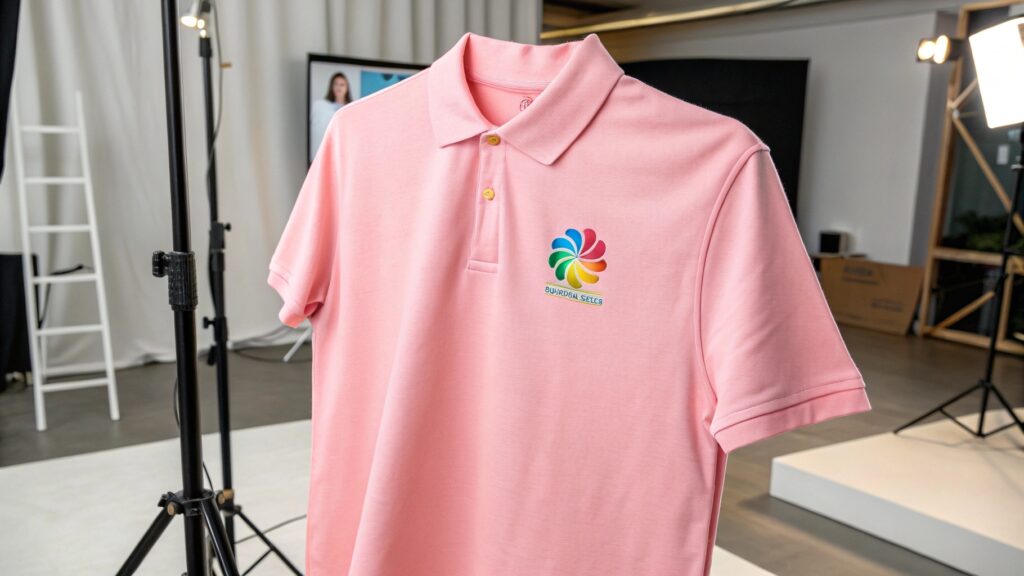
I have helped many businesses with their corporate gifts. A common request is for custom t-shirts. My clients often have a great logo. But they do not know what kind of shirt to put it on. I have seen companies spend a lot of money on a beautiful design. Then they put it on a cheap, thin shirt. The shirt shrinks after one wash. The print cracks. This makes the company look bad. I always tell my clients that the shirt itself is part of the brand. A high-quality shirt shows you care about details. A low-quality shirt shows you are cutting corners. A good shirt will be worn often. A bad shirt will be thrown away. You want your brand to be a part of someone's life, not a piece of trash.
How to measure t-shirt quality?
You are looking at a t-shirt. How do you know if it is good? It is not just about the price. You need to look at the details. These details tell you everything about the shirt's quality.
You can measure t-shirt quality by checking the fabric's material, its weight, and the stitching. A high-quality shirt uses good fabric like combed cotton. It has a good weight to it. The seams are neat and strong.
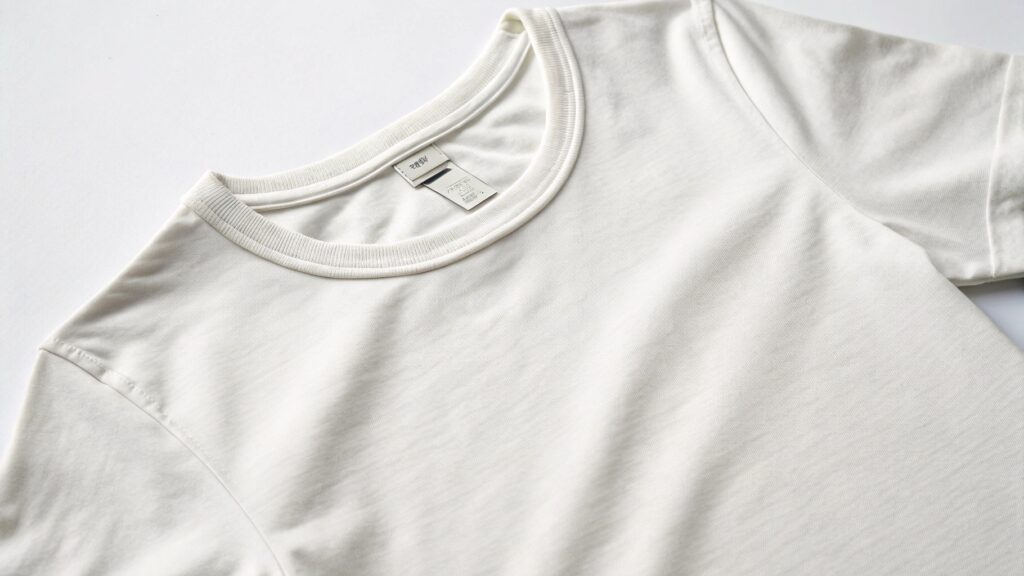
I had a client who was in a hurry. He needed 500 custom t-shirts for a big event. He found a very low-priced option from an online vendor. He was excited about the low cost. I asked him to get a sample first. He got the sample and brought it to me. The shirt felt thin and rough. The stitching1 was uneven. I could see some threads coming loose. I explained to him that this shirt would not last. The fabric would probably tear easily. The seams would come apart after a few washes. He would save money now, but his brand would suffer. People would wear the shirt once and then get rid of it. The brand message would be lost. We decided to find a better quality shirt. It cost a little more. But the new shirt felt soft. The stitches were perfect. The shirt was durable. My client told me later that people at the event kept their shirts. They wore them again and again. That is a success. This experience taught me that saving a few dollars on each shirt is not worth the risk to your brand's reputation.
Key quality indicators to look for
| Quality Factor | High-Quality T-Shirt | Low-Quality T-Shirt |
|---|---|---|
| Fabric Feel | Soft, smooth, and comfortable. Often made from ring-spun or combed cotton. | Rough, stiff, and scratchy. Often made from standard carded cotton. |
| Durability | Holds shape well after many washes. Color stays vibrant. | Shrinks or stretches out easily. Color fades quickly. |
| Stitching | Seams are straight, tight, and uniform. No loose threads. | Uneven stitches, loose threads, and weak seams that can unravel. |
| Material | Made from high-grade cotton, cotton blends, or performance fabrics. | Made from low-grade cotton or cheap synthetic materials. |
| Fit and Cut | Thoughtful cut that fits well. Maintains shape. | Baggy or awkward fit. Loses shape after a short time. |
| Print Quality | Smooth, flexible print that feels part of the fabric. Does not crack or peel. | Stiff, plastic-like print that cracks and peels over time. |
| Odor | Smells neutral or clean. | May have a chemical smell from low-quality dyes or treatments. |
What is the difference between high quality and low quality shirts?
You are trying to decide between two t-shirts. They look similar in a picture. But they are very different in person. The difference is in the details. These details matter for your brand.
High-quality shirts are made with better materials and more care. They are more comfortable and last longer. Low-quality shirts use cheaper fabric and fast production. They do not hold up well over time.
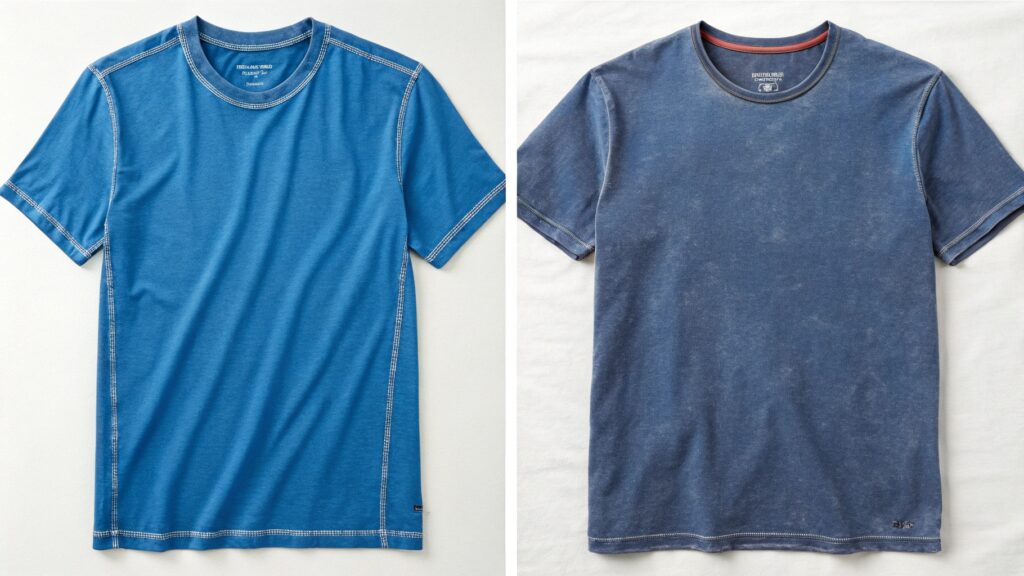
I remember a time when a new client, Jacky, came to me. He wanted to order t-shirts for his company. He had a tight budget. He showed me a sample from a low-cost supplier. The shirt was made of a cheap cotton blend. The feel was stiff. The collar looked flimsy. The color was a little dull. I told him this shirt would be a bad choice for his brand. He argued that it was just for one event. I explained that a t-shirt is more than just for one event. It is a walking billboard for his company. If the shirt looks bad, his brand looks bad. High-quality designs are not just about the art. They are about how the art interacts with the fabric. A premium design does not just look good on a screen. It drapes well on a body. The print survives many washes without cracking. The design feels part of the shirt, not just stuck on top. Low-quality designs often use big, heavy prints that feel like plastic. They peel off fast. A great t-shirt design should feel like it belongs to the person even after years. It should not just look good for one week. I convinced Jacky to use a slightly more expensive shirt. It was made of 100% combed cotton2. The fabric was soft and breathable. The print was integrated using a high-quality method. The result was a shirt that people wanted to wear again. It told a story. It showed that his company cared.
High-quality vs. low-quality T-shirts
| Feature | High-Quality T-Shirt | Low-Quality T-Shirt |
|---|---|---|
| Material | Ring-spun cotton, Pima cotton, combed cotton, tri-blends. | Carded cotton, polyester blends, cheap synthetic materials. |
| Construction | Side seams, double-needle stitching, taped neck and shoulders. | Tube construction (no side seams), single-needle stitching, simple hem. |
| Print Durability | Screen printing, embroidery, high-quality heat transfer. Stays vibrant and flexible. | Cheap heat transfer, low-quality vinyl. Cracks, peels, and fades fast. |
| Comfort | Soft to the touch, breathable, and comfortable for all-day wear. | Stiff, rough, and not very breathable. Can feel hot and scratchy. |
| Appearance | Holds its shape, drapes well, and has a premium look. | Loses its shape, looks baggy or cheap, and wrinkles easily. |
| Longevity | Lasts for years with proper care. | Wears out, shrinks, or falls apart quickly. |
| Value | Higher upfront cost, but a better return on brand investment. | Low upfront cost, but a poor return due to short lifespan. |
What is the best t-shirt thickness?
You are looking at different t-shirts. You see words like "heavyweight" or "lightweight." What do these mean? And which one is best for your custom shirt?
The best t-shirt thickness depends on your need. A heavier shirt is more durable and feels more premium. A lighter shirt is more breathable and good for hot weather. The right choice matches your purpose.
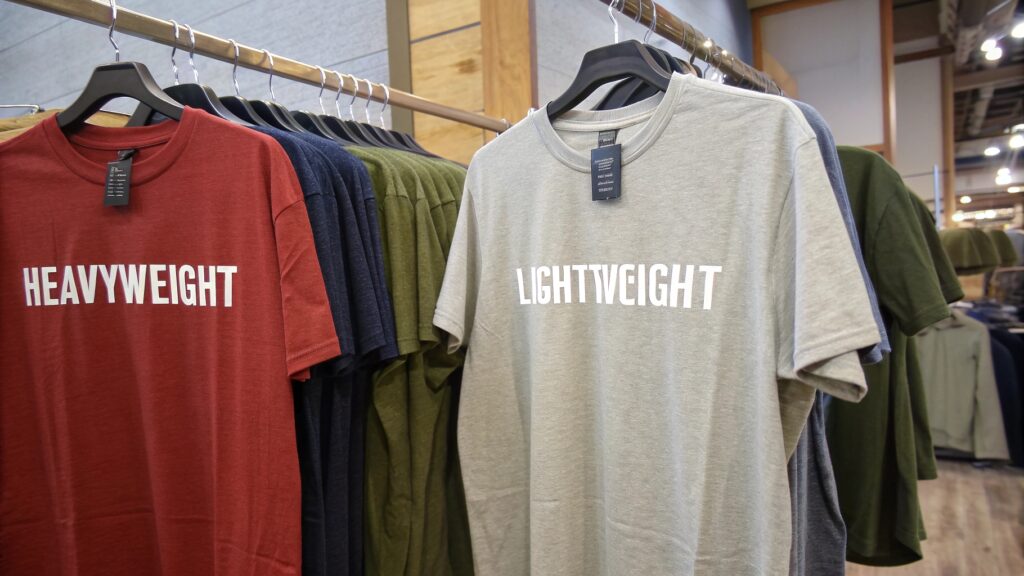
When I talk about t-shirt thickness3, I am talking about its weight. This weight is measured in grams per square meter (GSM). A lower GSM means a lighter shirt. A higher GSM means a heavier shirt. Most people think a heavier shirt is always better. But this is not always true. I once had a client who was doing a summer sports event. He wanted custom t-shirts for all the participants. He wanted the heaviest t-shirt we had. He thought a thick shirt meant good quality. I explained that a heavy shirt would make the athletes hot. It would be uncomfortable to wear while playing sports. A lighter, more breathable shirt was a better choice. It would still be a high-quality shirt, but it would be made for the right purpose. The lighter fabric would wick away sweat. It would keep the athletes cool and comfortable. A heavier shirt, on the other hand, is great for things like work uniforms. It is durable and long-lasting. It holds up well to a lot of use. It also gives a feeling of substance and quality. You have to think about who will wear the shirt and what they will do in it. The best GSM for a t-shirt for a Singapore climate is often lower. It is good to have a balance. You want a fabric that feels good and holds the print well. You also want it to be comfortable to wear. A GSM of 160 to 180 is a good middle ground for most uses.
T-shirt thickness and its use
| T-Shirt Thickness (GSM) | Common Use | Pros | Cons |
|---|---|---|---|
| 120 - 150 GSM | Hot climate, sports events, giveaways. | Lightweight, breathable, good for layering. | Less durable, can be see-through, feels less premium. |
| 160 - 180 GSM | General use, corporate uniforms, retail merchandise. | Good balance of comfort and durability, feels substantial. | May be too warm for very hot climates, not as light as lower GSM options. |
| 190 - 220 GSM | Workwear, high-end promotional gifts, outerwear. | Very durable, feels premium, holds its shape well. | Can feel heavy and hot, takes longer to dry. |
| 230+ GSM | Hoodies, sweatshirts, thick workwear. | Extremely durable, very warm, robust feel. | Not suitable for t-shirts in most climates, very heavy. |
| Print Quality | A medium weight shirt (160-180 GSM) is ideal for most printing methods. | Lighter shirts can show through prints. Heavier shirts can feel stiff with some print types. | Choosing the right thickness helps the print look its best. |
Conclusion
Choosing a custom logo t-shirt is a big decision. You must look at the fabric quality, the weight, and how it is made. These details make your shirt a good brand ambassador.
-
Learn how stitching quality impacts the durability and appearance of t-shirts, ensuring they withstand wear. ↩
-
Explore the advantages of combed cotton for t-shirts, known for its softness and durability, enhancing overall quality. ↩
-
Choosing the right thickness ensures comfort and suitability for various activities and climates. ↩